
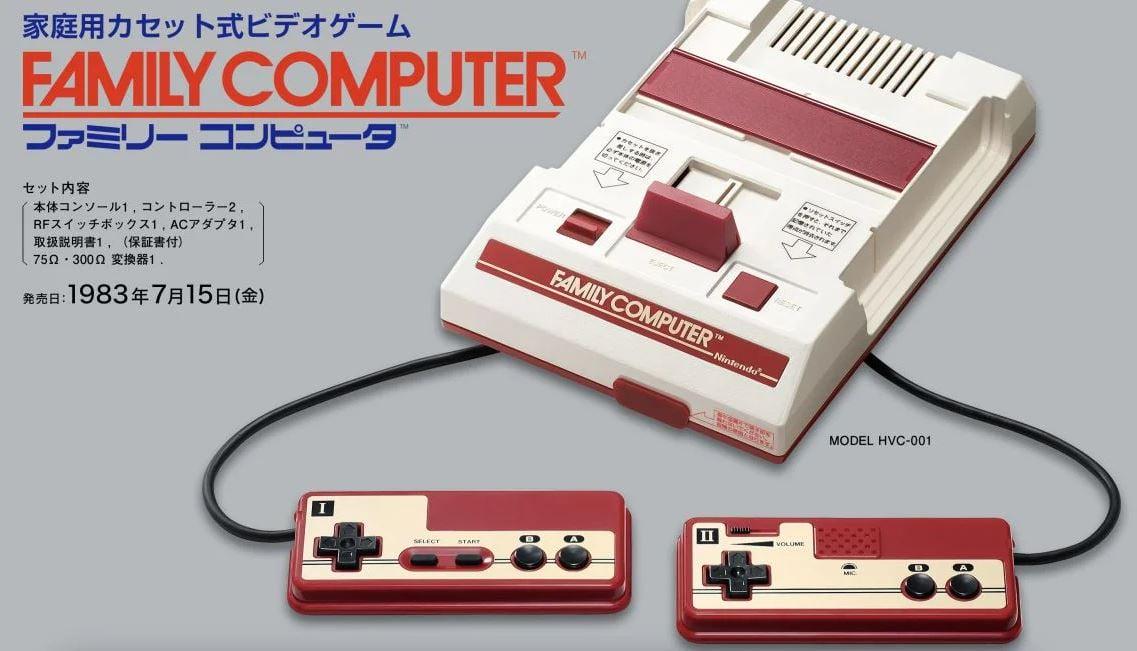
"Let's say a Famicom cartridge sold for 10,000 yen at retail. Out of that, 3,000 yen went to the retailer. 4,000 yen went to the software developer, like Capcom, and 3,000 yen went to Nintendo. Out of Nintendo's 3,000 yen share, about 1,500 went to manufacturing contractors. Since Nintendo got paid upfront for the exact number of copies, manufactured the cartridges, and delivered them, what happened after that didn't matter to them. In other words, only Nintendo had a guaranteed profit," Okamoto explains.
But for companies like Capcom, who were new in the industry and didn't have a lot of cash on hand, paying 3,000 yen per unit upfront was a big financial burden. The only solution was to take out bank loans to pay Nintendo. After receiving payment, Nintendo took between 1.5 to 3 months to deliver cartridges. Then, Capcom would send them out to distributors and issue invoices, but instead of getting paid immediately, they'd get a promissory note that would only turn into cash 90 days after a product was sold.
So, between the 3 months it took for production and 3 months of waiting on payment, Capcom would rack up 6 months worth of bank interest. When that interest was combined with development costs, marketing costs and other expenses, the company would, according to Okamoto, be left with a paper-thin profit margin.
These kinds of issues, according to Okamoto, are why the release of the PlayStation 1 was so revolutionary for third party developers. "Capcom's profits skyrocketed with the switch from cartridges to discs," he comments. The biggest factor was the difference in how Sony handled returns compared to Nintendo.
"Let's say Capcom paid Sony 1,800 yen per disc. The manufacturing cost of the CD was 200 yen, and the remaining 1600 yen was Sony's share." However, if Capcom were to return unsold CDs, Sony would give back the 1600 yen they took as their share, only charging the 200-yen manufacturing cost. Nintendo did not do this, which made leftover stock such a big expense for third parties.
Fun bit of history here. People forget just how insane nintendo's fees were due to a monopoly they had on cartridges and how dominant they were in gaming until Sony got in. This is also a big reason why SNES/N64 games were so expensive.
8 Comments
Ugh the quotes got all messed up somehow. It wasn’t like that on my end, thanks reddit.
Yeah, that sounds like a very Nintendo thing. They did some shitty stuff back then too.
How different was SEGA in handling cartridge manufacturing ? I imagine they were more relaxed than Nintendo
Retailers withholding payment until 90 days after the product sold is the real bullshit here. At least Nintendo has an excuse, with cartridges needing to be manufactured. Seems like Capcom got screwed from both ends.
Nintendo being absolutely shitty? No way. Say it ain’t so.
Just look at the price of their games and how they never drop in price. Nintendo is still a shitty company. And has always been one.
Also, wasn’t there a limit to the amount of games a publisher could release annualy? Like no nore than 6/7 games? Thats why there were complete games but never released
Fuck Nintendo every minute of every day for every reason.
Ah, time for some more Nintendo ragebait. It’s so funny how Nintendo fans are so desperate to cast this company as the literal devil, sourced entirely by ignorance.
Sony could afford to do this because not only did they have seemingly endless money, they also basically ran the CD/DVD/BD formats. Claiming that “Nintendo had a monopoly on carts” and comparing this to how Sony did things is really strange, when carts (by design) are an expensive single-purpose tool that have to expressly be designed by Nintendo for their specific game console, while CDs (by design) are a general purpose tool that can be used in many different ways.
Additionally, Sony was *never* a video game company, Nintendo had expressly converted their entire business to video games some time before this. I don’t think people appreciate the power imbalance at all, and I wish I were saying all this back in 2006~2009 when everyone hated Sony for a while.
It’s just sad how people will twist things to fit their worldview, while accusing anyone they don’t like of doing the same.