
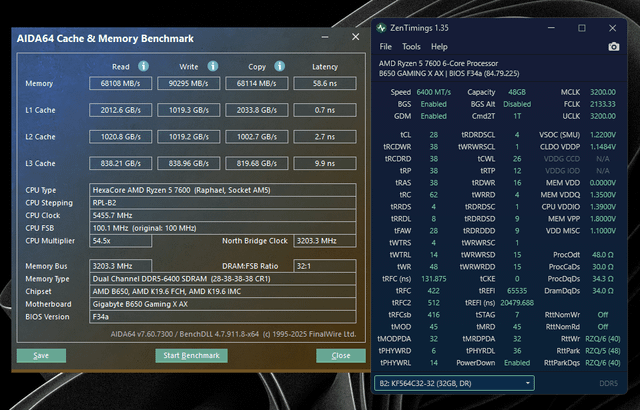
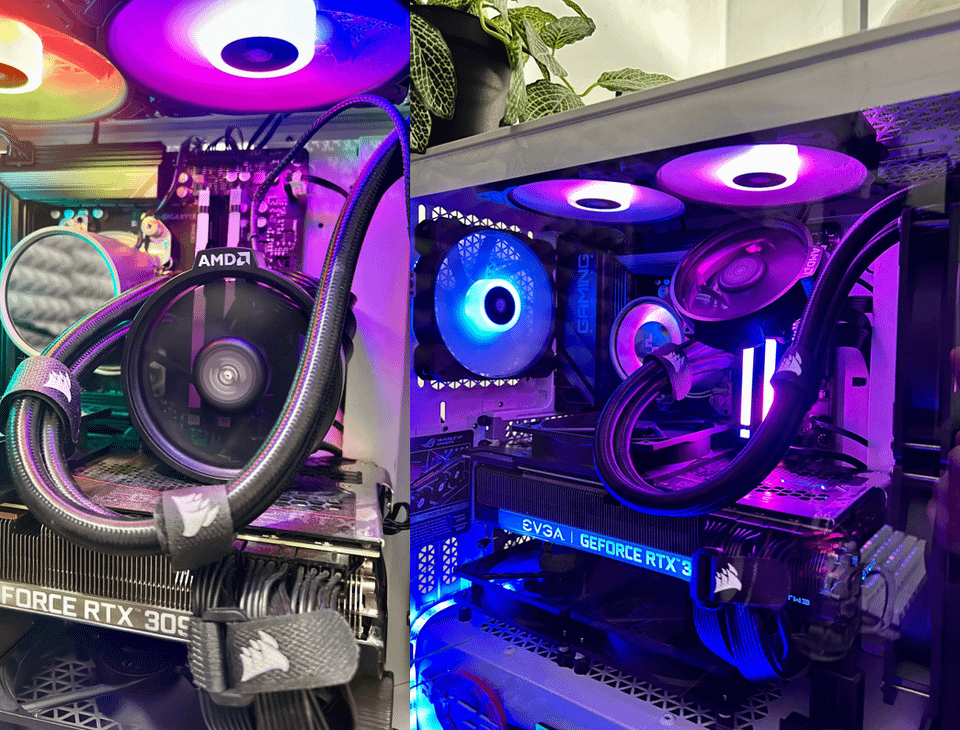
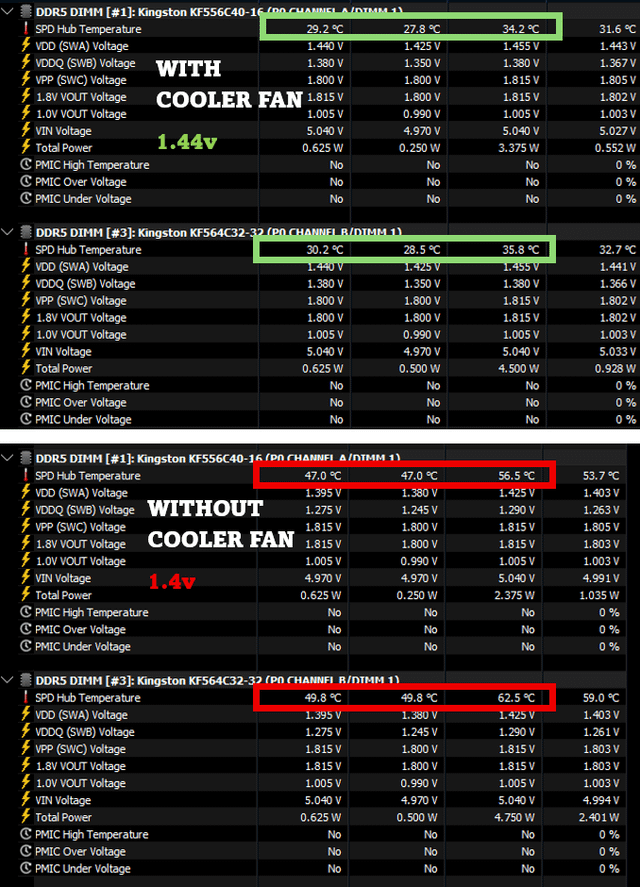
After many tests and attempts, I decided to repurpose the cooler I had left over from my AMD stock heatsink. I adapted it to improve airflow over the VRM/RAM area and saw a significant temperature drop. Many had warned me not to exceed 50–55 °C, and thanks to this, I was able to push my overclock even further: I raised the voltage to 1.44 V and set TREFI to the maximum value (65535).
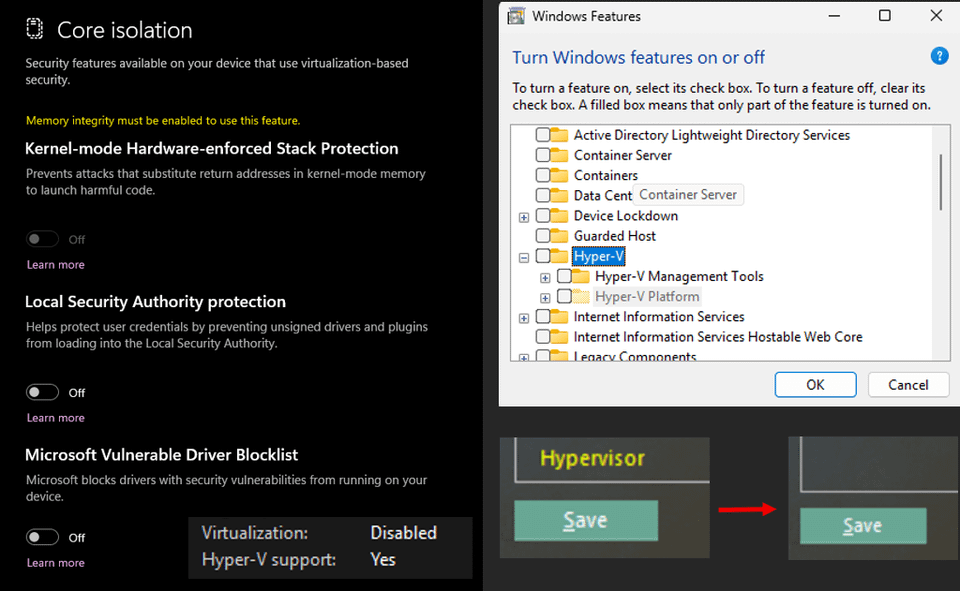
I also achieved major stability improvements by disabling a few system features: Hypervisor, Core Isolation, Memory Integrity, and especially SVM mode in the BIOS. This resolved several stability issues and write errors during AIDA64 benchmarks.
Just wanted to share my experience and results — big thanks to everyone who offered advice. Hope this helps someone out there.
A few lessons I learned along the way:
- Mixing RAM kits can work, but it requires extra tuning — don’t expect plug-and-play stability at high frequencies.
- Even a small fan can make a big difference when placed strategically (e.g., over VRMs or RAM).
- Stability isn’t just about voltages — thermals matter a lot, especially when pushing high TREFI values or tight RAM timings.
- SVM mode can interfere with certain programs or cause instability during extreme overclocking, especially on systems that don’t use virtualization.
- TREFI set to 65535 improves RAM data retention, but demands solid thermal management and voltage control.
- Disabling Core Isolation and Memory Integrity can help reduce latency, but does reduce system-level security.
1 Comment
What was your room temperature while runnig temperature test?