Such a weird article — comes off so sour, frustrated and jealous of the successes of newly released Indies like Expedition 33, Balatro, Schedule 1 etc.

Such a weird article — comes off so sour, frustrated and jealous of the successes of newly released Indies like Expedition 33, Balatro, Schedule 1 etc.
14 Comments
yep, whoever wrote that article, apparently named Bryant Francis, went full salty and super biased.
proof:
> My PAX trip validated my fear that three professions are especially vulnerable in this deprofessionalized world: artists, writers, and those working in game audio or music. These roles seemed vulnerable because on these small teams, they were the roles developers mentioned doing in some kind of shared or joint fashion. All three risk compartmentalization as “asset creators,” their work treated as products you can purchase off the store shelf.
i work in the game industry and NOBODY CALLS ARTISTS “asset creator”.
what a wonder – gaming journalism!
edit: i found the one who talked with this journalist, go check him out for a much, much better talk:
r/Games/comments/1ko30f7/the_deprofessionalization_of_video_games_was_on/msn0k45/
Legendary Drops dissects the article and says it out loud and clearly what the author himself is so afraid to say
>The GDC 2025 State of the Industry survey reported that of the 11 percent of developers laid off in the last year, 19 percent of them worked in game narrative, the highest of any responding demographic. Two diverging trends are hurting this field: the growth of successful games that don’t feature much narrative (either focusing on deep game mechanics or story-lite multiplayer) and the spread of story-driven games authored by the creative director and maybe one or two collaborators create conditions that lower the number of available jobs.
Hopefully we’ll see a drop in the “written by a committee” atrocities?
Yeah that was a well written article by someone who is *incredibly* salty with the fact that the traditional roles within the games industry are changing.
The fact they say that smaller dev teams are “Rewarding the success of the few, rather than the many” at a time when major Publishers and Developers are making Money hand over fist and are **still** laying dozens (if not hundreds) of people off every year is laughable; and really shows just what this author wants – a world where creatives work for the All Mighty dollar, and the benefit of a management class that cares about the results more than the team
This is a bold take, mostly because its just… terrible. you’re brave to share what are obviously terrible opinions in sub par fashion. professionalism in journalism is truly at risk if this is what passes these days.
lol sounds like someone’s mad they didn’t come up with expedition 33 first. small devs, big dreams!
Hasn’t PAX always been dominated by indie booths?
Bryant Francis being salty as fuds lmao
What? Dislike it? Lol
The person who wrote this clearly doesn’t know game development history. Iconic games like DOOM were created by small teams of 2-5 people.
Games were niche and indie way before they were AAA. The space changes with popular culture and should be allowed to.
Indie studios developing games that break records against AAA publisher suites of major dev studios which only care about printing money, is punk AF.
Oh this fucking article again. I run a game studio of 3 people, so it this is supposed to hit home I guess, but this guy’s opinions are just… Well, let’s talk about it.
Let’s start with a really clear example:
>Gone are the days where a chunk of the development team can get one-on-one facetime with players—shifts in supply and demand have simply moved where marketing takes place.
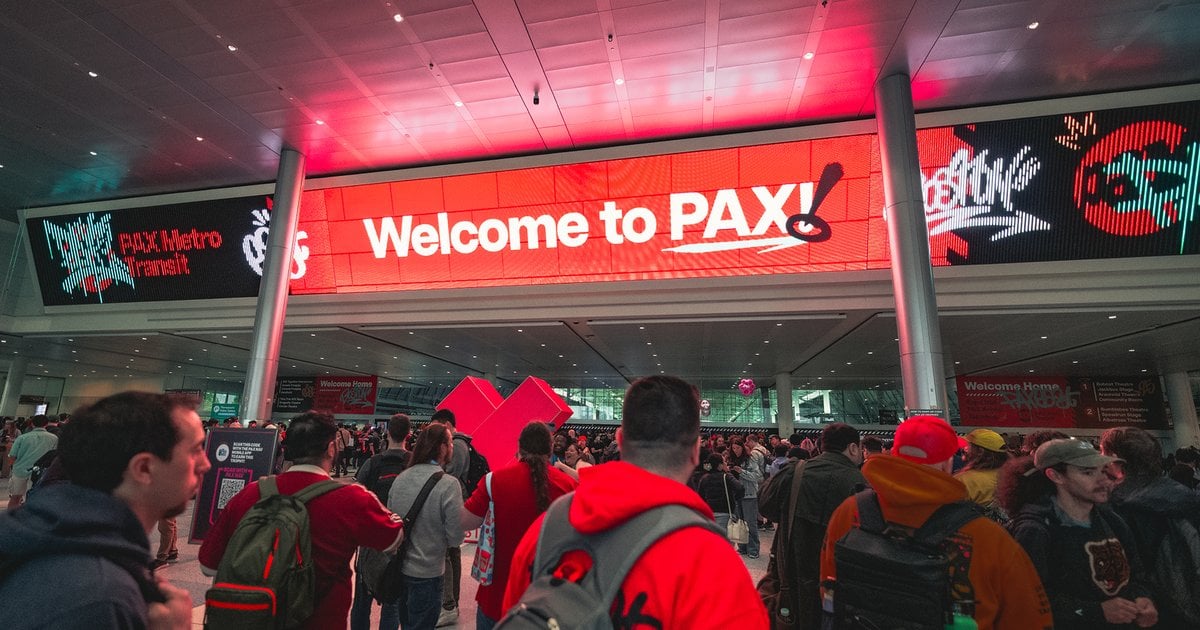
Yeah that’s a shame. Except… the expo hall seems pretty full to me from the pictures there? Seems like there are a ton of people from development teams on the floor, getting one-on-one facetime with players. So what’s the problem?
Oh right, those are the *small* studios. Those are the *indies*. This guy wants to talk to the *”*real devs”. It doesn’t matter to him that five small studios can run booths in the space that used to be the Xbox booth. He misses the Xbox booth.
>My PAX trip validated my fear that three professions are especially vulnerable in this deprofessionalized world: artists, writers, and those working in game audio or music. […]
>All three risk compartmentalization as “asset creators,” their work treated as products you can purchase off the store shelf.
First of all, no one’s buying their *writing* off the shelf, that’s insane. But second, more importantly… Purchase “off the store shelf” *from who?*
If I buy my game’s music off Fab or whatever, there’s still a musician on the other end, making money. Okay maybe it’s “deprofessionalized” but if people are doing what they’re passionate about while putting food on the table, who cares?
>part of the reason some indies are running circles around large companies is that those companies can mismanage creatives so badly they go for years without shipping a game. If someone smart could crack that problem—improve management at large organizations and make sure games make it out the door—that could be a way to balance the trend.
This is a fantastic piece of doublespeak. If only someone *smart* could figure out how to manage creatives and ship games in a reasonable timeframe! Instead we’re stuck with these indie studios, managing their creatives, and shipping their games. What a tragedy.
But that’s all just me getting shit off my chest, let’s talk about the heart of the issue here.
The real reason why I’m so viscerally enraged by this article is that it reflects an egregious ignorance of… “history”, for the lack of a better term. I say that because the history I’m referring to is *last year*. You know, “Year Of Our Lord” Twenty-Twenty-Four. You know, that year where there was a record-setting collapse of the video games industry across almost all dimensions. Publishers folded, studios folded. Projects got canceled. Scores of people were laid off, it’s still happening.
So when you walk through PAX and wonder where all these indie studios came from… **They’re the people who got fucking laid off.** You know, laid off **from those big studios you miss so much.** The “professional” studios this person is lamenting? They’re the ones who kicked all these scrappy indies out the fucking door.
Let the indie studios play. These people aren’t being excluded, they’re finally finding their place.
lmao its pretty funny how this “journalist” is interviewing a “marketing guy” about deprofessionalization
both of these useless hacks have jobs that rely on corporate structure to give them jobs
an indie dev or single dev (like Schedule 1 tyler) doesnt have the money or need for neither of these leeches
the only reaction people should have about “deprofessionalization of video games” is – good
This is very good for gamers, in my opinion. Both due to always improving dev tools and AI, small teams have it easier than ever to make a game with really high quality standards. And that’s amazing, because a small team means low production costs, which means the game doesn’t have to be as successful, which means devs are more free to experiment with ideas that won’t necessarily be mainstream.
The other extreme is something like Call of Duty or Assassin’s Creed, when you grew so risk averse with your expensive AAA franchise that you’re making the same game over and over again, with little to no room for innovation.
I think we’ll see even more games in the future that look like huge productions, but are actually passion projects of a few key individuals and a handful of freelancers.
Alternate title: “These indie developers are making my corporate overlords look bad so I’m gonna talk nonsensical shit about them.”
We need to stop paying attention to these kinds of games “”””””journalists”””””
>Small teams deserve success—but “deprofessionalization” risks damaging the industry.
Few things in life bring me more joy than the downfall of modern AAA gaming.
And btw, you know what’s bad for the industry and what really threatens professions?
FIRING THOUSANDS OF PEOPLE EVERY YEAR