I had this bad ass combo. Quake 3 looked out of the world.
Desperate-Grocery-53
Dude be like: let me debug your program *takes out a hole punch*
mecatman
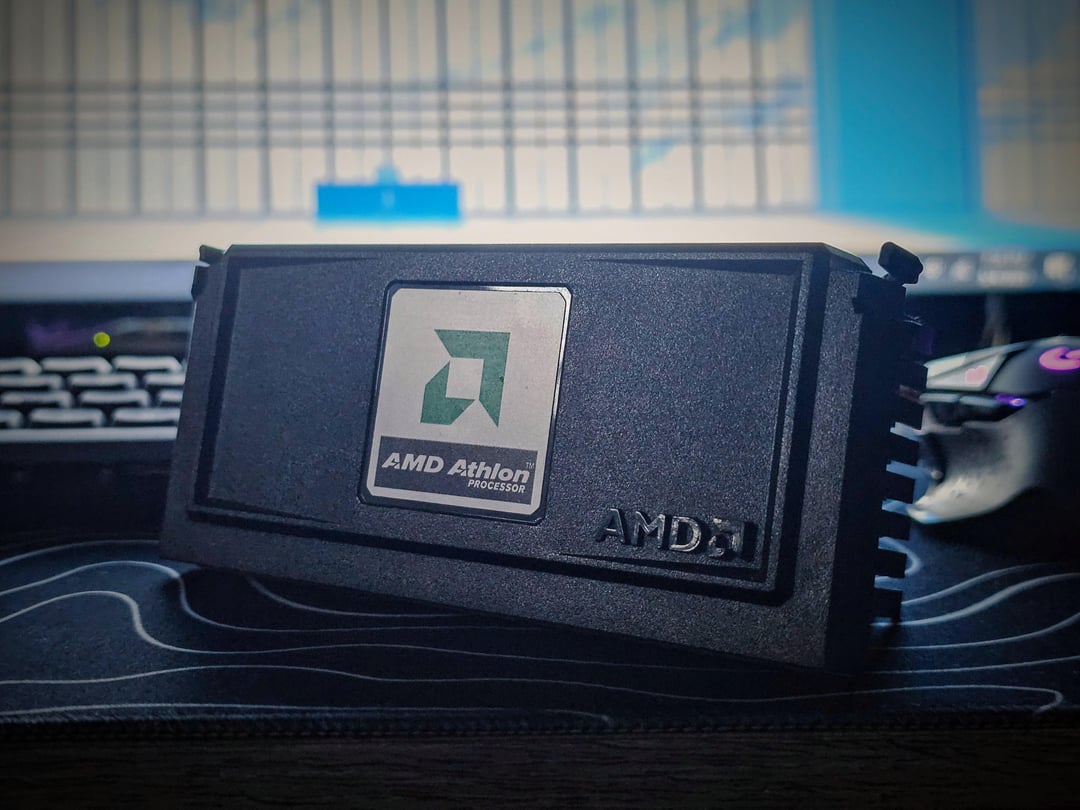
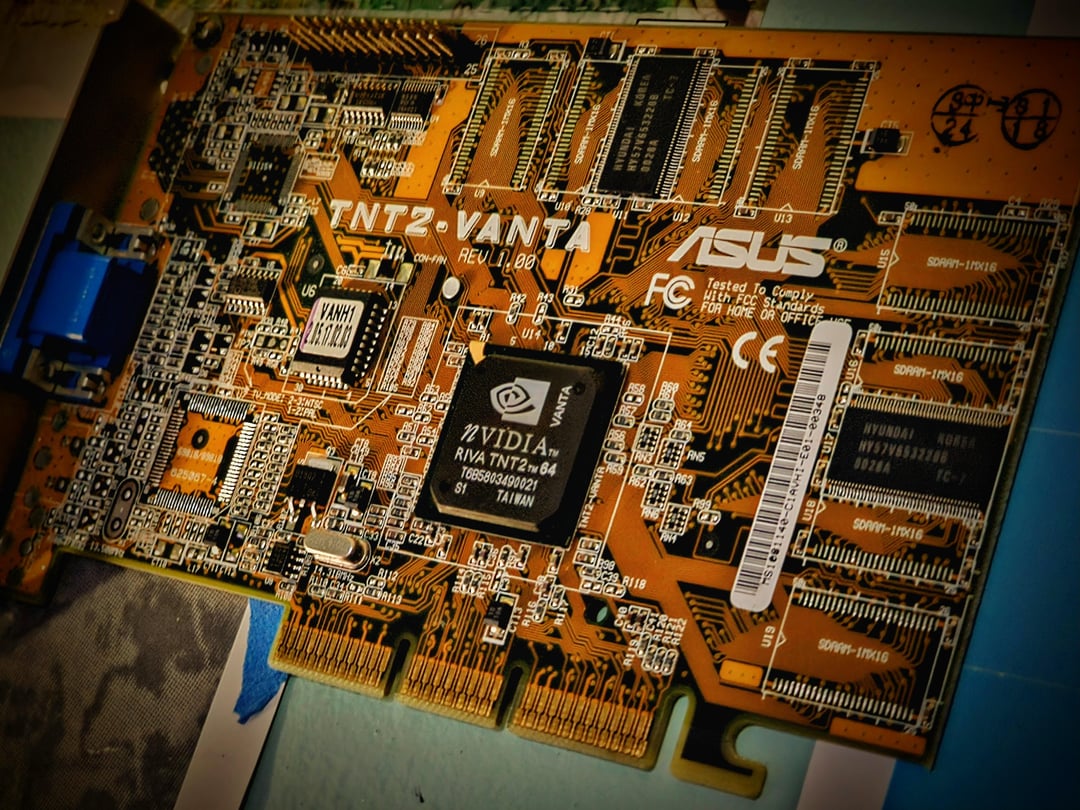
Nice! A slot A athlon and a Nvidia TNT.
Longjumping_Line_256
The AMD Nintendo 64 game! I remember these when I was younger, and the p3’s.
Bundabar
If you really want to confuse them tell them stories of the days when you could upgrade your Pentium to an AMD without changing the motherboard.
Going from my P1 75Mhz to an AMD K62 450Mhz was life changing.
RainyFoxUwU
I ‘member. Wasn’t there, but I ‘member
Luckbad
Should post a photo of an ATI Radeon and break brains.
My first 3D GPU was a Matrox Mystique because the Voodoo and Riva TNT2 didn’t exist yet.
sacredknight327
I had a Slot A processor on one of my early computers. 👍
apachelives
Confusion would be manually configuring FSB, multiplier, voltage and FSB:PCI/AGP ratios with jumpers/DIP switches (or a pencil), and using “slockets”.
Jackpkmn
Intel may have had Slot 1 but AMD had Slot A, totally different, 100% unique design. Definitely not piggy backing off manufacturer investment in Intel’s platform by repurposing the same connector but rotated by 180 degrees what are you talking about?
SojournerCrim454
It’s in storage, but I still have my dual 8mb VooDoo2’s
camomike

Want to confuse them even more?
redmasc
Slot processors. My very first computer was a Pentium 3, 1.0GHz with a slot processor. This was back in 2000. We have come a long way.
Vegetable-Source8614
I still remember when the only noise coming out of a PC was the CD-drive spinning or the hard drive crunching. It was pretty common for PCs to be fanless back in those days.
ptarrant1
Anyone remember the gold finger device to overclock your AMD slots? Loved them
Mr-Brown-Is-A-Wonder
Pentium 2 – 450Mhz – 250 nanometer process
I was so stoked over the heatsink I got for it. It’s about 5 times bigger than the one that was on my Pentium. It would run at 500 Mhz but not stable.
That first one is an AMD Slot-A CPU. I had one of those. They weren’t even popular when AMD made them.
stubenson214
For those wondering, there was a reson these were cards for a time.
It used to be that cache was something you installed on the motherboard, sort of a faster memory…and it was in fact the L2 cache. Sometimes it was individual chips, but it culinated into its own slotted form factor, much like a DIMM (in fact, my very first Corsair product was a 256KB cache module).
The Pentiums had external cache, and was the last Intel to do it. The Pentium Pro integrated the L2 cache on the package, but not on the die. It was a very fast way to implement L2, but very costly to manufacture. The process tech did not allow for L2 cache on die and still being able to offer a good price (and the Pentium Pros were already expensive).
Now, with the successorf to the consumer Pentium, L2 cache on the board was basically too slow, but on-package was too expensive. The middle ground is the cache was put on the same CARD as the CPU, so it was able to run at a faster speed (half speed, generally). So, CPUs came out on slots for the Pentium 2, which was the consumer Pentium Pro. Xeon became the Pentium Pro successor…just with even more cache.
Then, process tech caught up, and L2 cache was finally able to be put on the CPU die. The first product to implement this was the Celeron 300A, with 128KB. Soon after, Pentium 3 got on-die cache, and so the slot was no longer really needed, and back to sockets we went.
The Athlon was the same principle, external high speed cache. Same reasons for going back to sockets, too.
ratonbox
I have a Dell workstation in my homelab that uses an add-on card (with a basket caddy) for adding a second CPU.
grumblecakes1
My first PC was a PIII slocket running a a blazing 450mhz.
andoke
That CPU is a slot A. I had a Slot 1 Pentium II, and I had a TNT2 as well.
The reason for slot CPU is because back then the cache wasn’t on the die but soldered to the PCB.
StorageThief
You guys remember the debug port on the CPU? You had to crack it open and then you could overclock the CPU.
dontfeedthedinosaurs
I have an Athlon 550 MHz slot A CPU. It was cheap off of eBay. They go up to about 1000 MHz but those are expensive.
When I was 13, my parents got an IBM Aptiva tower with the same 550 chip, 128 MB of RAM, and 8 MB video card (forgot which one), a Soundblaster sound card, DVD ROM, 2x CD R/RW and a v.90 56k modem. While it wasn’t the first family PC, it was the one that helped sparked my interest in computers. The first upgrade I did was add an IDE Iomega Zip drive.
lunas2525
Pfft I got that beat a matrox millenia pci with 4mb of vram.
I also have a p2 233mhz, slot A 900mhz, socket 5 with a 200mhz winchip, and a socket 370 500mhz Celeron
Creato938
I guess only Intel and AMD did that, i never saw a Transmeta or a Cyrix processor in cartridge form.
NovelValue7311
Nice mid 90s stuff right there.
Moist-Tap7860
That was my first dgpu, TNT2 m64 with 32 mb vram. I was able to watch videos in it and play games in comparison my previous PC display had 3mb memory
BadatOldSayings
My first GPU was the Riva TNT. First cpu was a 4.77mhz 8086.
wreckedftfoxy_yt
1st cartridge processor (that is easy) and the 2nd one is the slot before pcie (i forgot the name)
the_Athereon
I still have the Cartridge Pentium 3 that came in my first ever PC.
Not sure if it works. But I have it.
voightkampfferror
I was there… 3000 years ago.
HardlyaDouble
Ahh. good ol Slot 1 CPU.
PnoyB0y
I remember being so jealous when a buddy of mine had a slotted pentium II cpu and could run half-life at 60 fps…at the time I was running a pentium 133mhz, 16 mb ram, with an S3 trio 64. so no go for me, although prior to that we had a commodore PC-XT, so that was honestly a pretty big leap.
i also remember saving up for a diamond stealth II S220 and finally being able to play quake 2, but then he got the 3dfx voodoo2 or w/e…le sigh

39 Comments
Yoooo, those things are legendary!!!!!!!!!!!
Is that an amd athlon
Athlon 900 BTW 😉
Gen-X here, I remember cartridge processors. Intel had them too.
That AMD is a Socket A CPU. That’s right kids. For a time we had CPUs that slotted in to a motherboard like a graphics card.
https://preview.redd.it/3q4nk92yvuye1.jpeg?width=1600&format=pjpg&auto=webp&s=300eb66587097d0be71d084470f032c3b176ad4c
I had this bad ass combo. Quake 3 looked out of the world.
Dude be like: let me debug your program *takes out a hole punch*
Nice! A slot A athlon and a Nvidia TNT.
The AMD Nintendo 64 game! I remember these when I was younger, and the p3’s.
If you really want to confuse them tell them stories of the days when you could upgrade your Pentium to an AMD without changing the motherboard.
Going from my P1 75Mhz to an AMD K62 450Mhz was life changing.
I ‘member. Wasn’t there, but I ‘member
Should post a photo of an ATI Radeon and break brains.
My first 3D GPU was a Matrox Mystique because the Voodoo and Riva TNT2 didn’t exist yet.
I had a Slot A processor on one of my early computers. 👍
Confusion would be manually configuring FSB, multiplier, voltage and FSB:PCI/AGP ratios with jumpers/DIP switches (or a pencil), and using “slockets”.
Intel may have had Slot 1 but AMD had Slot A, totally different, 100% unique design. Definitely not piggy backing off manufacturer investment in Intel’s platform by repurposing the same connector but rotated by 180 degrees what are you talking about?
It’s in storage, but I still have my dual 8mb VooDoo2’s

Want to confuse them even more?
Slot processors. My very first computer was a Pentium 3, 1.0GHz with a slot processor. This was back in 2000. We have come a long way.
I still remember when the only noise coming out of a PC was the CD-drive spinning or the hard drive crunching. It was pretty common for PCs to be fanless back in those days.
Anyone remember the gold finger device to overclock your AMD slots? Loved them
Pentium 2 – 450Mhz – 250 nanometer process
I was so stoked over the heatsink I got for it. It’s about 5 times bigger than the one that was on my Pentium. It would run at 500 Mhz but not stable.
https://preview.redd.it/u9uw5id15vye1.jpeg?width=3002&format=pjpg&auto=webp&s=5e342a68a698ed8247d4aaee58e7e927b452f639
That first one is an AMD Slot-A CPU. I had one of those. They weren’t even popular when AMD made them.
For those wondering, there was a reson these were cards for a time.
It used to be that cache was something you installed on the motherboard, sort of a faster memory…and it was in fact the L2 cache. Sometimes it was individual chips, but it culinated into its own slotted form factor, much like a DIMM (in fact, my very first Corsair product was a 256KB cache module).
The Pentiums had external cache, and was the last Intel to do it. The Pentium Pro integrated the L2 cache on the package, but not on the die. It was a very fast way to implement L2, but very costly to manufacture. The process tech did not allow for L2 cache on die and still being able to offer a good price (and the Pentium Pros were already expensive).
Now, with the successorf to the consumer Pentium, L2 cache on the board was basically too slow, but on-package was too expensive. The middle ground is the cache was put on the same CARD as the CPU, so it was able to run at a faster speed (half speed, generally). So, CPUs came out on slots for the Pentium 2, which was the consumer Pentium Pro. Xeon became the Pentium Pro successor…just with even more cache.
Then, process tech caught up, and L2 cache was finally able to be put on the CPU die. The first product to implement this was the Celeron 300A, with 128KB. Soon after, Pentium 3 got on-die cache, and so the slot was no longer really needed, and back to sockets we went.
The Athlon was the same principle, external high speed cache. Same reasons for going back to sockets, too.
I have a Dell workstation in my homelab that uses an add-on card (with a basket caddy) for adding a second CPU.
My first PC was a PIII slocket running a a blazing 450mhz.
That CPU is a slot A. I had a Slot 1 Pentium II, and I had a TNT2 as well.
The reason for slot CPU is because back then the cache wasn’t on the die but soldered to the PCB.
You guys remember the debug port on the CPU? You had to crack it open and then you could overclock the CPU.
I have an Athlon 550 MHz slot A CPU. It was cheap off of eBay. They go up to about 1000 MHz but those are expensive.
When I was 13, my parents got an IBM Aptiva tower with the same 550 chip, 128 MB of RAM, and 8 MB video card (forgot which one), a Soundblaster sound card, DVD ROM, 2x CD R/RW and a v.90 56k modem. While it wasn’t the first family PC, it was the one that helped sparked my interest in computers. The first upgrade I did was add an IDE Iomega Zip drive.
Pfft I got that beat a matrox millenia pci with 4mb of vram.
https://preview.redd.it/khrezuncevye1.jpeg?width=2788&format=pjpg&auto=webp&s=7b17674bd4a2ad142edbc33270ae2d0ff6abdd2c
I also have a p2 233mhz, slot A 900mhz, socket 5 with a 200mhz winchip, and a socket 370 500mhz Celeron
I guess only Intel and AMD did that, i never saw a Transmeta or a Cyrix processor in cartridge form.
Nice mid 90s stuff right there.
That was my first dgpu, TNT2 m64 with 32 mb vram. I was able to watch videos in it and play games in comparison my previous PC display had 3mb memory
My first GPU was the Riva TNT. First cpu was a 4.77mhz 8086.
1st cartridge processor (that is easy) and the 2nd one is the slot before pcie (i forgot the name)
I still have the Cartridge Pentium 3 that came in my first ever PC.
Not sure if it works. But I have it.
I was there… 3000 years ago.
Ahh. good ol Slot 1 CPU.
I remember being so jealous when a buddy of mine had a slotted pentium II cpu and could run half-life at 60 fps…at the time I was running a pentium 133mhz, 16 mb ram, with an S3 trio 64. so no go for me, although prior to that we had a commodore PC-XT, so that was honestly a pretty big leap.
i also remember saving up for a diamond stealth II S220 and finally being able to play quake 2, but then he got the 3dfx voodoo2 or w/e…le sigh
Great, now my knees hurt