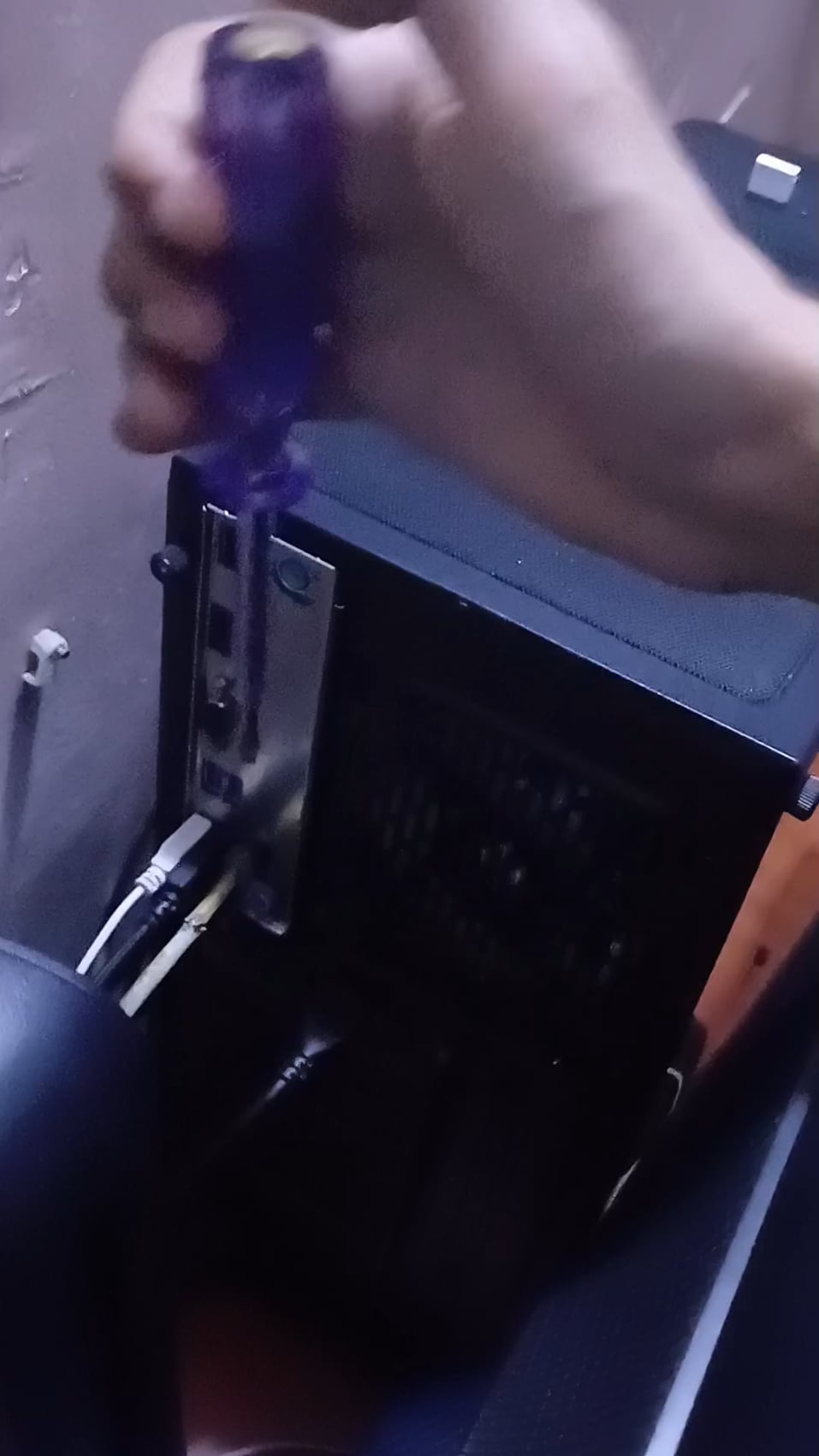
Even it's off from the plug and psu switch is off there's an electricity and it shocks me whenever I touch it. Is there any solution?

Even it's off from the plug and psu switch is off there's an electricity and it shocks me whenever I touch it. Is there any solution?
17 Comments
Unplug all USB/Visual cables and DC and perform a power cycle does that help
because your oldschool apartment/basement doesnt have grounded electrical sockets. its actually relatively dangerous. there is no good fix for it other than renovating the electrical in your home. but sht can shock you or even kill you.
That tester is trash
What power supply are you using?
ground it!
You don’t have ground wire in your power outlet probably, be careful, this shit can be dangerous
Same. There’s 110v on my PC case and I sometimes feel it on metal parts with wet hands.
Looking at your other comments; you are UK based.
It also looks like in the picture of your back box you have twin+earth cables feeding your sockets. I think your main issue is that the earth conductor(bare copper wire in-between the red/black ones in the cable) is either not connected at all or is only connected to the earth in the metal back back. If it’s the later all you should need do is get some green/yellow single core 2.5mm or 4mm cable, connect this to the terminal in the back box and then bring it into the earth terminal on the socket. Remembering to isolate everything before doing this.
I’d also get rid of that voltage tester; look for a non-contact one; you can pick them up pretty cheap if you aren’t interested in the amount of volts being detected.
Connect the third wire yourself from your pc case to the ground.
Sometimes positive and ground are inverted in the outlet, try if flipping the cable help.
Relax its ok, lived in a house with same issue for 10 years. PCs, electronics were fine, just dont touch them while plugged in
Do you check grounded wire? It happens bcz of grounded wire misconnection.
Your apartment doesn’t have grounded electricity.
A quick solution is to attach some cables to your PC case and connect them to the ground or wall.
However, it’s important to note that this method may still pose a danger, and it’s advisable to properly ground the entire electrical system.
Could solve it with surge protector or UPS device.
If there is no ground (earth) like many people are suggesting, then how is there an electrical flow when touching metal surfaces with the screwdriver?
Seems to me like you should get a bipolar tester and see if what you’re seeing is actual dangerous 110/230 V or some induced voltage with no danger to it at all.
If it really is the case, that metal parts of your PC i.e. Mainboard IO shield or USB ports are connected to the dangerous live wire of the electrical socket, then your power supply is broken.
Normally a power supply completely separates the 110/230V from your house from any electricity inside your computer through coils, it’s a galvanic barrier.
Just go and get a reading on what kind of volts you’re experiencing here.
Cheers
If I understand you correctly, you still get a shock when the computer is *unplugged from the wall?* In that case, there may be a huge earthing problem in your house, which ought to be rectified as soon as possible. If it happens only when it is plugged in, you may have cheap/defective parts. In particular, from the pictures you provided in the comments, your earth is not properly hooked up. Maybe someone thought they’d get cute and connect it to neutral, but accidentally chose live, or there’s a loose connection somewhere in the earthing chain in your PSU, and charge is allowed to build up on your machine. Either way, I’d highly recommend calling an electrician to verify and possibly fix up your installation. It sucks to pay for professional work, but losing your stuff, your house, or possibly your life sucks even more.
I have the same type of installation in my home. I’ve replaced some of the sockets with the 3 pin sockets. You can connect the ground pin to the neutral pin. You have 2 wires connected to your socket, one is live (the one that if you touch it with the probe, it will light up), the other one is neutral. Neutral wire should be grounded (physically connected to the ground) in this type of installation. That’s why it is possible to connect the same wire to both, ground and neutral pins. Just make sure that your neutral wire is connected to the ground pin FIRST and then it goes from the ground pin to the neutral. In case there’s something wrong, ground should be the last one that is disconnected.
Just a small disclaimer, this is not as safe as having 3 separate wires, so you should plan on replacing your whole electrical installation (I’ll be doing some parts of mine this year, but probably not everything at once, just 2 rooms for now), but it is safer than just having 2 wires. As I said, the neutral wire is grounded, but if it fails, you loose both ground and neutral and you are only connected to live, which can shock you, but if you loose neutral wire in your current state, it is the same, so having 3 pins is still safer as your current socket. Neutral will be connected to the case of your device and it will pull out any charges that can collect in it. It will also save you if the live wire touches the case of the device by creating short circuit and burning your fuse. Just make sure that your fuses are actually not modified and are suitable for the size of your wires, otherwise you can burn the whole installation and possibly your home (yeah, a lot of people modified the fuses and added thick wires inside so they wouldn’t burn, that’s crazy).