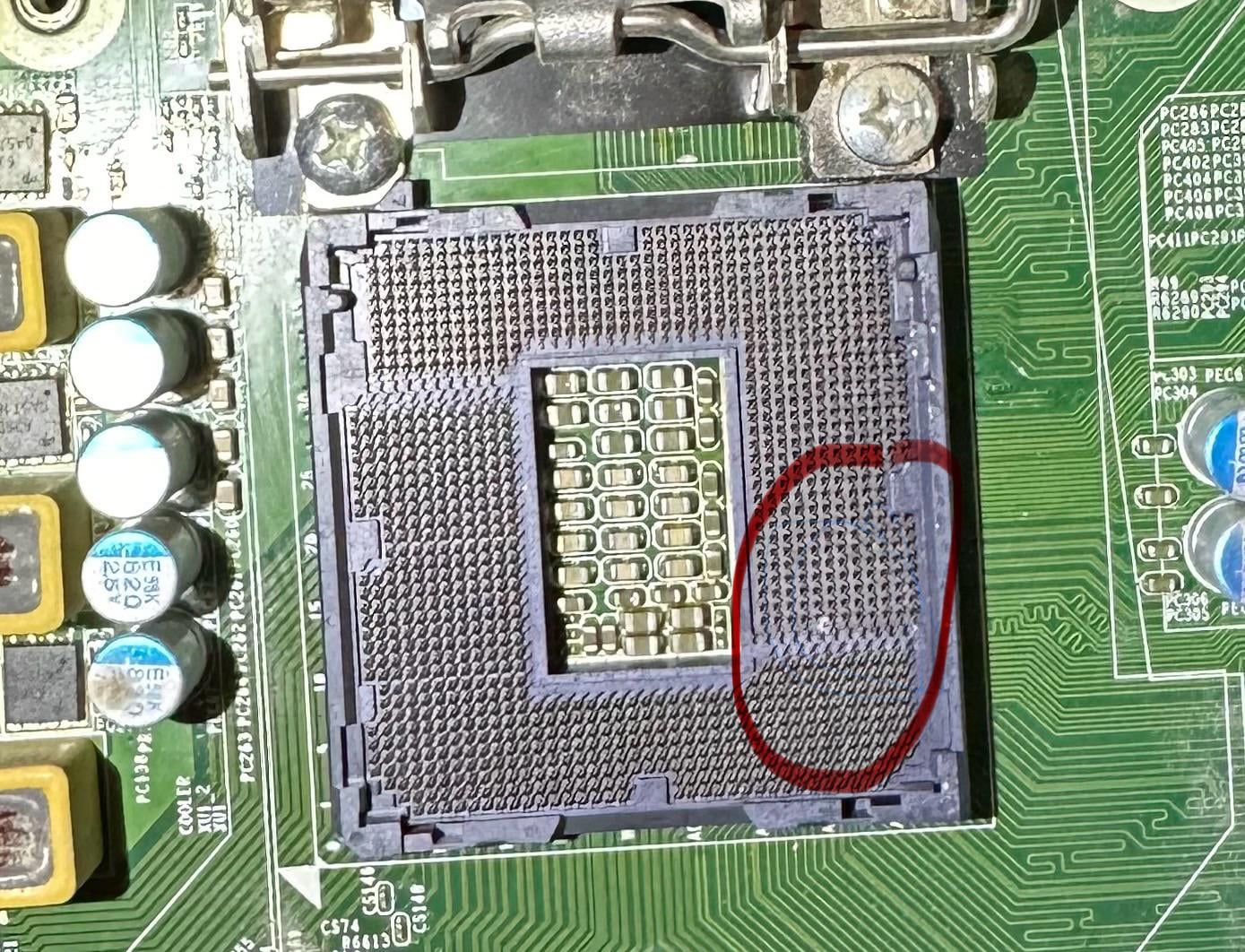
Normal thermal paste is non conductive. As long as the pin makes good contact it should be fine.
Ar_phis
Try to get it out, as good as you can.
While most normal thermal paste isn’t conductive, it can actually contain conductive particles which are isolated by silicon oil. Those might settle after a while. But that would be a really unlikely long term issue.
Now the silicon oil itself poses a bigger threat as it can actually isolate the pins from the grid array, which would prevent power from going where it needs to go and lead to instability, etc.
KommandoKodiak
Spray bottle with 99% rubbing alcohol set to the stream mode sprayed slowly and from a distance so as not to impart too much speed and force on the socket pin. it’ll dissolve the thermal paste with a couple shots. You’ll have to put a fan blowing on the socket to speed up the evaporation process and be sure to remove the battery first.
I dont think I need to tell you to uncover and power dump the board, right?
Deadeyemav
Take the board out put it face down where you can spay isopropyl alcohol in with melt and drip away after a few sprays leave to dry and should be fine. If the paste squishes onto contact pads could see smoke could just not boot. May luck be on your side
Alienhaslanded
Yes. It’s nonconductive and can insulate the pin.
This will sound unfamiliar but take the motherboard out and buy a can of flux remover. Go outside and flip the motherboard upside-down and spray it. That should remove the thermal paste.
Be careful with the flux remover around some plastics. Don’t worry, the motherboard plastics like the socket and headers should be totally fine.

10 Comments
Yeah….that’s not good.
If you have conductive thermal paste.. yes
Normal thermal paste is non conductive. As long as the pin makes good contact it should be fine.
Try to get it out, as good as you can.
While most normal thermal paste isn’t conductive, it can actually contain conductive particles which are isolated by silicon oil. Those might settle after a while. But that would be a really unlikely long term issue.
Now the silicon oil itself poses a bigger threat as it can actually isolate the pins from the grid array, which would prevent power from going where it needs to go and lead to instability, etc.
Spray bottle with 99% rubbing alcohol set to the stream mode sprayed slowly and from a distance so as not to impart too much speed and force on the socket pin. it’ll dissolve the thermal paste with a couple shots. You’ll have to put a fan blowing on the socket to speed up the evaporation process and be sure to remove the battery first.
I dont think I need to tell you to uncover and power dump the board, right?
Take the board out put it face down where you can spay isopropyl alcohol in with melt and drip away after a few sprays leave to dry and should be fine. If the paste squishes onto contact pads could see smoke could just not boot. May luck be on your side
Yes. It’s nonconductive and can insulate the pin.
This will sound unfamiliar but take the motherboard out and buy a can of flux remover. Go outside and flip the motherboard upside-down and spray it. That should remove the thermal paste.
Be careful with the flux remover around some plastics. Don’t worry, the motherboard plastics like the socket and headers should be totally fine.
How do people get thermal paste in the socket?
You need to clean it
No.