Probably because the leds have lower operating temperature, not the ics
pabloscrosati
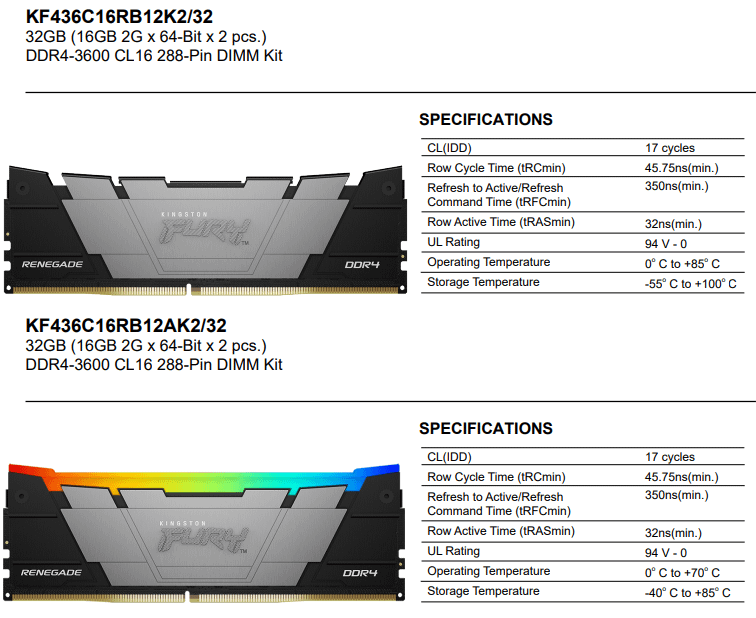
Operating temperature is the temperature in which the whole package will work, not the temperature of the sticks during operation. This change is likely due to the fact that many LEDs have operating temperature ceilings between 60-85 C. Evidently, Kingston chose LEDs with operating ceilings at 70 C.
Also, non-RGB models of RAM based on the same design use an opaque plastic piece instead of a diffuser, so non-RGB models do not have better airflow just for this, however there is *some* merit to saying that the LEDs and controller circuitry may *increase* operating temperatures (contrary to what you are asserting) due to the extra power consumed and the inefficiencies associated with that.

2 Comments
Probably because the leds have lower operating temperature, not the ics
Operating temperature is the temperature in which the whole package will work, not the temperature of the sticks during operation. This change is likely due to the fact that many LEDs have operating temperature ceilings between 60-85 C. Evidently, Kingston chose LEDs with operating ceilings at 70 C.
Also, non-RGB models of RAM based on the same design use an opaque plastic piece instead of a diffuser, so non-RGB models do not have better airflow just for this, however there is *some* merit to saying that the LEDs and controller circuitry may *increase* operating temperatures (contrary to what you are asserting) due to the extra power consumed and the inefficiencies associated with that.