

by Juandi
October 28, 2026
Everything you need to know about the new VCT Pacific 2027 format, explained like you’re five.
PACIFIC – VCT Pacific is undergoing a major overhaul in 2027, introducing regional qualifiers, new opportunities for non-partnered teams, and a competitive system where even partnered organizations must earn their places in the league’s biggest events.
The traditional Stage 1 and Stage 2 competitions are being replaced by two Cups, while Kickoff remains as the opening tournament of the season.
More importantly, Riot Games is introducing a regional qualification system that will allow teams across Pacific to consistently compete for a place at the highest level of VCT.
Here’s everything you need to know about how VCT Pacific will work in 2027.
1. What does the 2027 VCT Pacific season look like?
VCT Pacific will feature three major regional tournaments throughout the year, each leading to an international event.
Regional Tournament
Host City
International Event
VCT Pacific Kickoff (Jan 14-Feb 7)
Bangkok, Thailand
Masters Seoul (Feb 20-Mar 3)
VCT Pacific Cup 1 (Apr 29-May 23)
Manila, Philippines
Masters Valencia (Jun 5-Jun 20)
VCT Pacific Cup 2 (Aug 5-Aug 29)
Tokyo, Japan
Champions Austin (Sep 16-Oct 10)

Each regional tournament will feature 12 teams competing on LAN.
Kickoff will consist of eight partnered teams and four teams qualifying through Open Qualifiers. The top three finishers will advance to Masters Seoul.
Cup 1 and Cup 2 will operate differently, with all 12 participating teams earning their places through regional qualification rather than receiving automatic invitations based on partnership status.
The qualification formats for all three tournaments will create opportunities for teams outside the partnered system to compete on the VCT Pacific stage and chances to qualify for international events.
2. How many regions are there, and how many Cup slots does each get?
VCT Pacific will introduce six regional qualification circuits: Korea, Japan, Thailand, Indonesia, Vietnam, and SEA (RoSEA).
Each region will have a set number of slots for Cup 1 and Cup 2.
Region
Cup Slots
Korea
3
Japan
3
Thailand
1
Indonesia
1
Vietnam
1
Southeast Asia
2
Pacific Last Chance Qualifier
1
Total
12
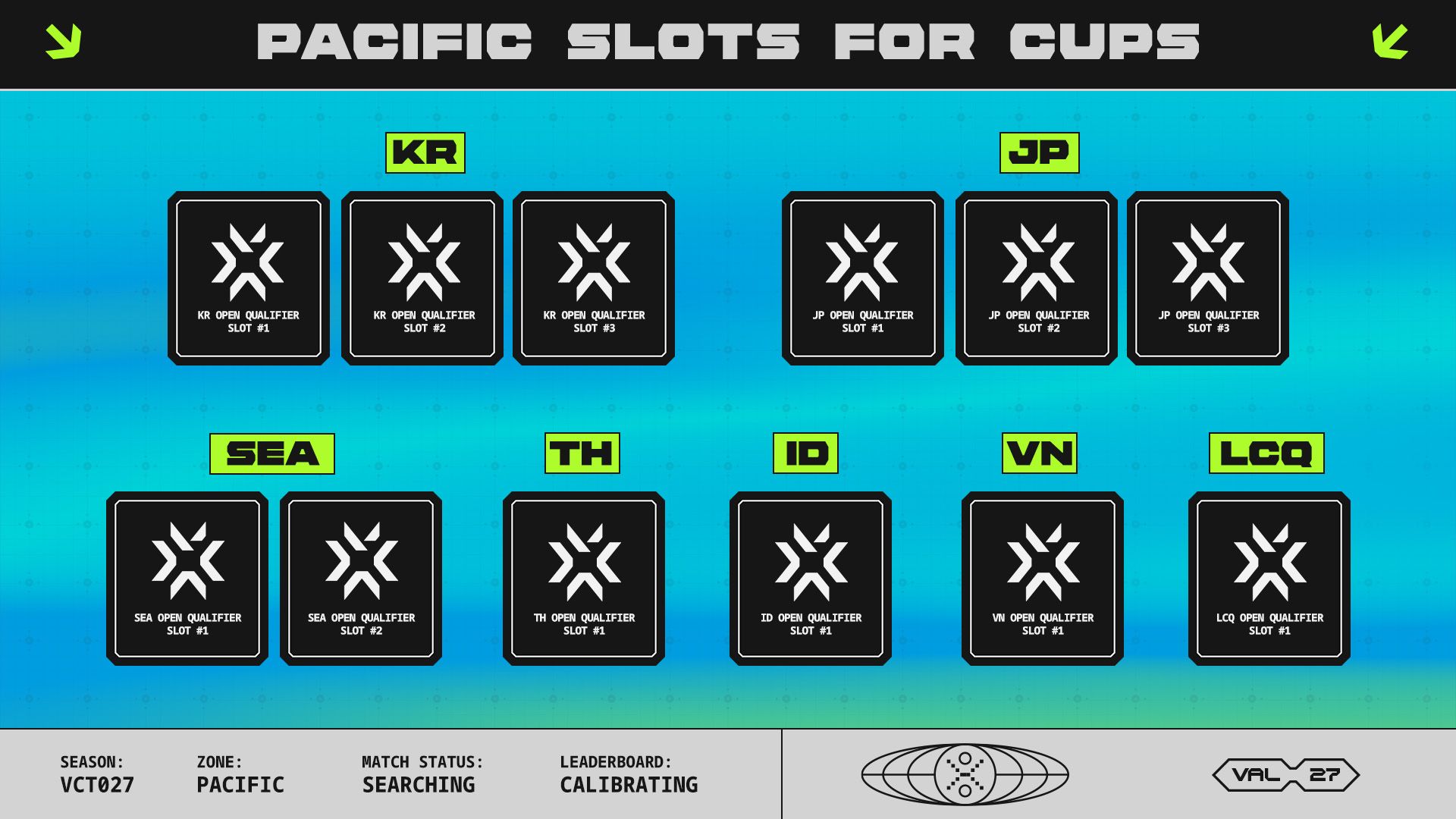
Korea and Japan receive the largest allocations, with three slots each. Southeast Asia receives two, while Thailand, Indonesia, and Vietnam each have one guaranteed regional qualification slot.
South Asia and Oceania will not have direct slots into Cups. Teams from those regions will have to qualify through the Pacific Last Chance Qualifier (LCQ).
This means even the eight announced VCT Pacific partnered teams won’t be guaranteed a place at the Cups in Manila and Tokyo. Instead, they’ll have to earn their spots through their performances, competing alongside the best teams emerging from Open Qualifiers across the Pacific region.
“APAC is unique in that we have the largest number of regions to accommodate in all of the VCT. So our regional structure is designed to create multiple paths and opportunities for teams to make it to Cups. Our slot allocations are also structured in a way to guarantee Open teams have a chance to qualify for Cups, even if every partner team in their region also qualifies.”
3. How does Kickoff qualification work?
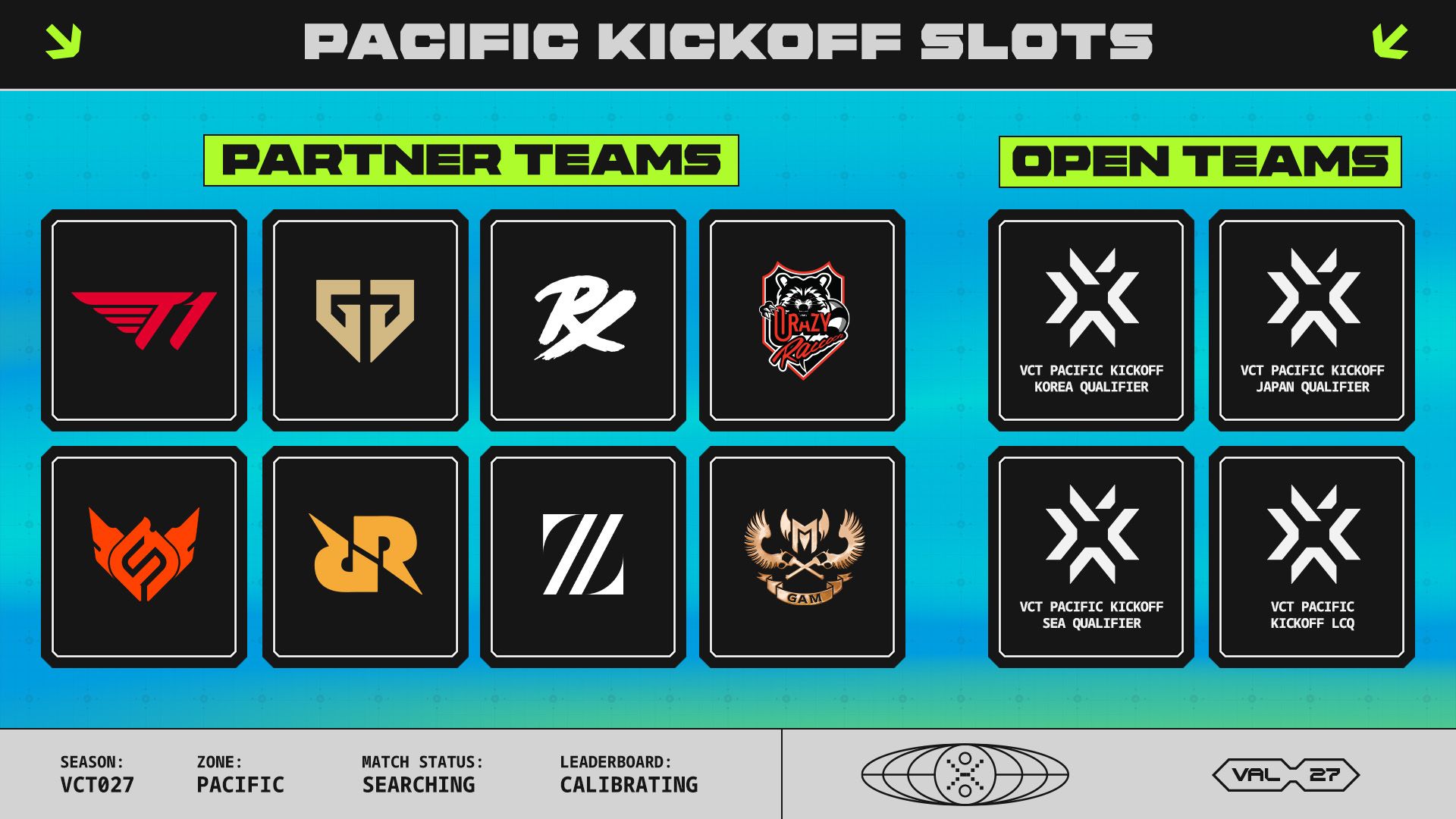
Kickoff in Bangkok will be the only VCT Pacific tournament where all 8 partnered teams are guaranteed a place.
The 12-team competition will feature:
8 partnered teams with direct invitations.4 Open teams qualifying through regional competitions.
The four Open slots will be determined through the following qualification routes:
VCT Pacific Kickoff Korea QualifierVCT Pacific Kickoff Japan QualifierVCT Pacific Kickoff SEA QualifierVCT Pacific Kickoff LCQ
The Kickoff LCQ will feature four teams, consisting of two representatives from South Asia, one from Oceania, and the runner-up from the SEA Kickoff. The winner will claim the final Open slot at Kickoff.
Once the 12 teams are confirmed, they will compete in Bangkok, with the top three of that advancing to Masters Seoul. The Kickoff Open Qualifiers will begin later in November 2026.
4. How do teams qualify for Cup 1 and Cup 2?

Unlike Kickoff, neither Cup will provide automatic slots to partnered teams.
Instead, teams must qualify through their respective regional Playoffs.
The qualification system involves three main stages: Open Qualifiers, Play-ins, and Playoffs.
Step 1: Open Qualifiers
Open Qualifiers serve as the main entry point for teams looking to compete in VCT Pacific.
Eligible teams, including those from the Premier ecosystem, can register and compete in their respective regional Open Qualifiers.
Multiple Open Qualifiers will be held throughout the season, giving teams more than one opportunity to progress. For example, a team eliminated from one Open Qualifier can register for another available qualifier rather than having its entire season end after a single unsuccessful attempt.
Teams can earn places in their regional Playoffs or Play-ins through the designated qualification routes.
Step 2: Play-ins
Play-ins provide an opportunity for teams to secure a higher seed in their regional Playoffs.
Up to four places in the top half of the eight-team regional Playoffs bracket will be determined through Play-ins.
Teams can reach Play-ins through designated Open Qualifiers. Additionally, teams that competed in Kickoff or Cup 1 but did not qualify for the corresponding Masters event will automatically receive a place in the next Play-ins.
However, a Play-ins appearance does not guarantee a place in the regional Playoffs. Teams that fail to advance through Play-ins can still attempt to qualify through another available Open Qualifier.
Step 3: Regional Playoffs
Regional Playoffs are the final stage of qualification before Cups.
Each of the six regions will host an eight-team Playoffs tournament, with the best-performing teams earning qualification to Cup 1 or Cup 2 based on their region’s slot allocation.
For example, Korea and Japan each send their top three teams directly to Cups, while Indonesia, Thailand, and Vietnam each send their regional winner.
Some teams that do not earn direct Cup qualification will still have another opportunity through the Pacific LCQ.
What happens to teams that qualify for Masters?
Teams that qualify for Masters Seoul or Masters Valencia receive an important advantage.
Instead of competing in the next Open Qualifiers or Play-ins, they will automatically advance to the top four of their next regional Playoffs.
5. What is the Pacific Last Chance Qualifier?
The Pacific LCQ provides one final opportunity for teams that have not earned direct qualification to Cups. Held after the regional Playoffs, the LCQ will feature eight teams competing for the final Cup slot.
Region
LCQ Teams
Qualification
South Asia
2
Regional Qualification
Oceania
1
Regional Qualification
Vietnam
1
Playoffs Runner-Up
Thailand
2
Playoffs 2nd and 3rd
Indonesia
2
Playoffs 2nd and 3rd
Total
8
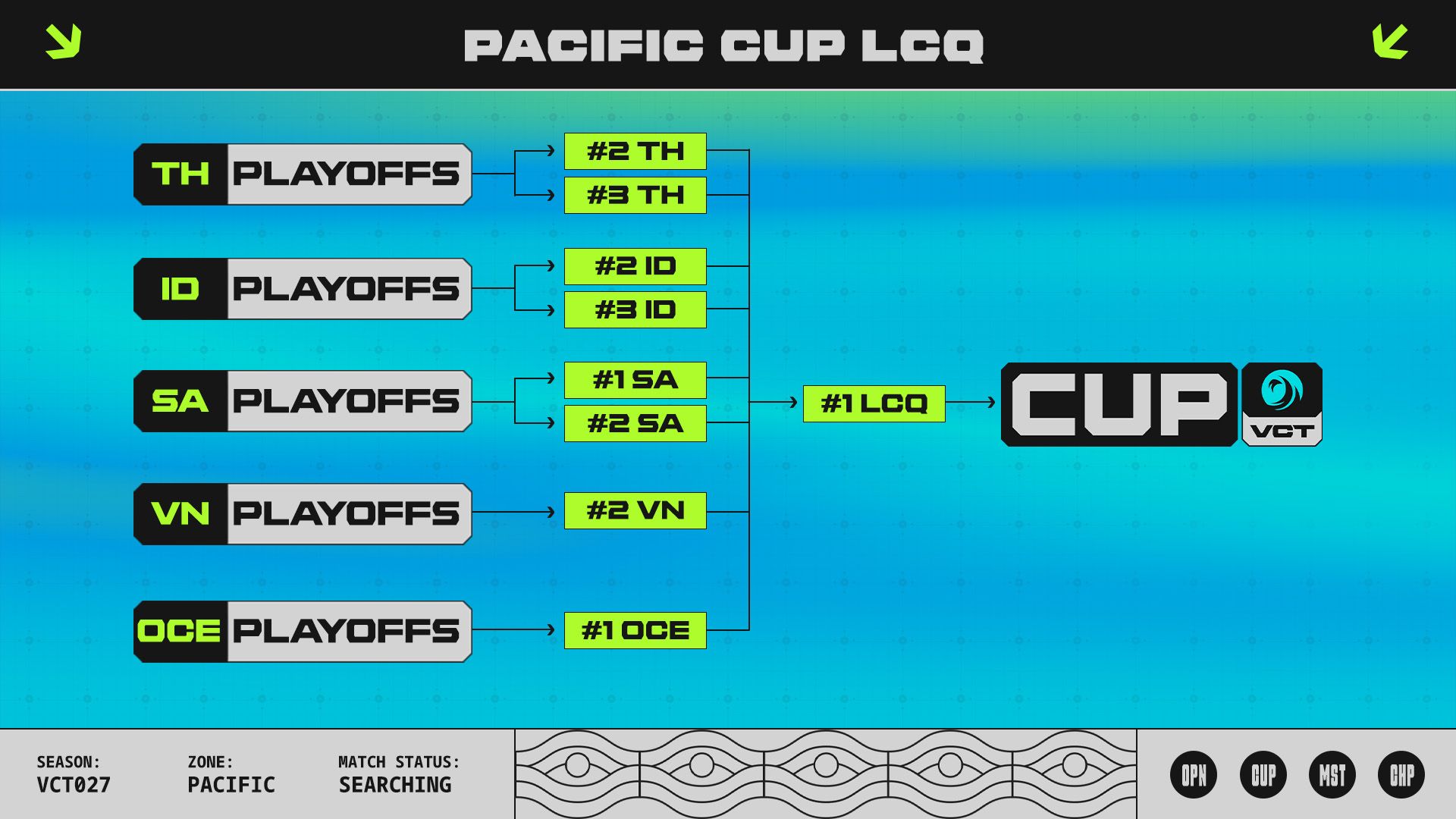
The winner of the Pacific LCQ will become the 12th and final team to qualify for the corresponding Cup.
This is particularly important for South Asia and Oceania, which do not have direct Cup slots but still have opportunities to reach VCT Pacific’s highest level.
It also gives regions such as Indonesia and Thailand the possibility of sending more than one representative to a Cup.
6. What happens to the eight partnered teams?
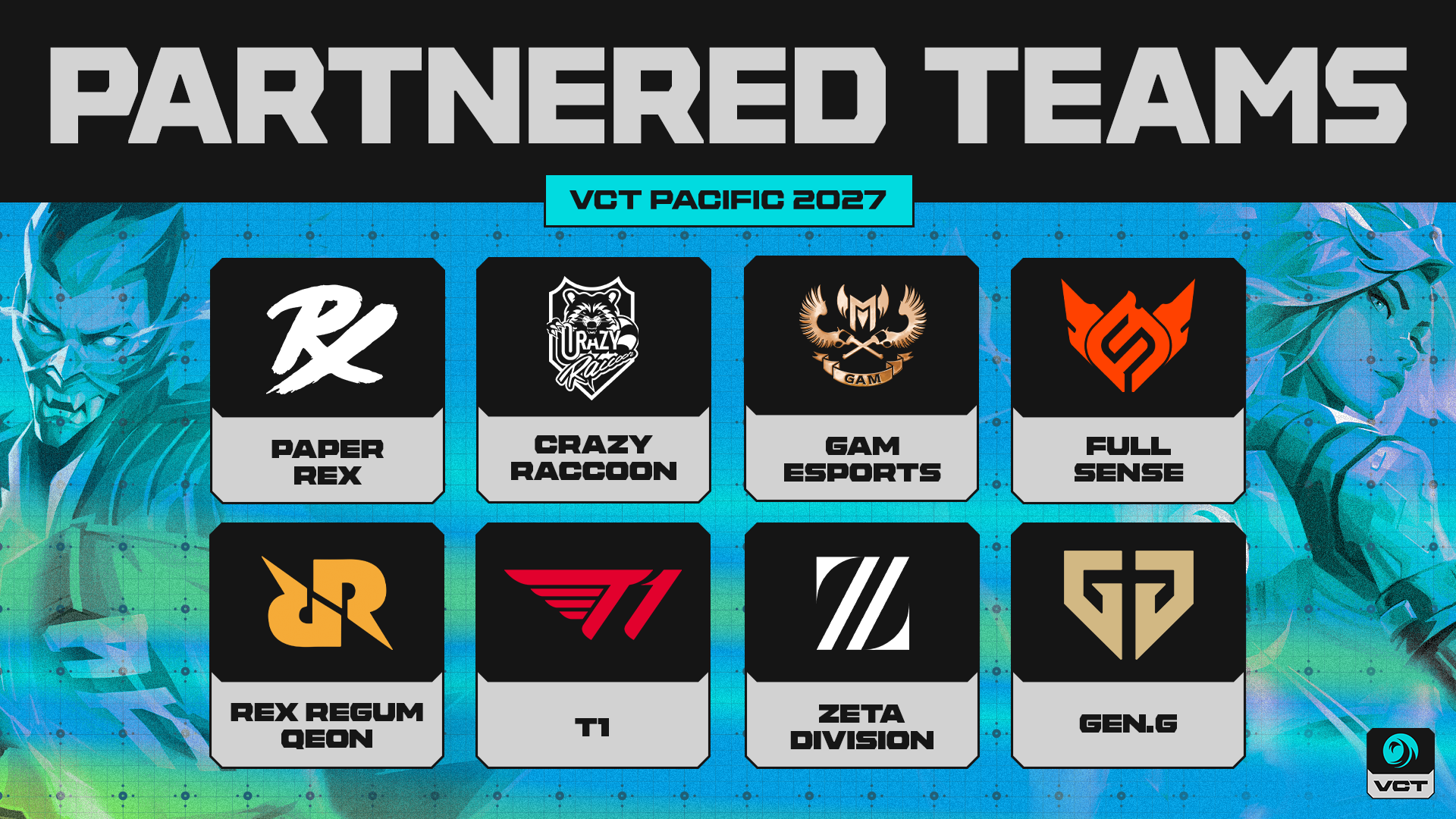
One of the biggest changes in 2027 concerns the role of partnered organizations.
While all eight partnered teams are guaranteed places at Kickoff, they will no longer receive automatic invitations to Cup 1 or Cup 2. Instead, their ability to compete in those tournaments will depend on competitive results.
If a partnered team qualifies for Masters Seoul or Masters Valencia:
It will automatically receive a top-four seed in its next regional Playoffs, skipping Open Qualifiers and Play-ins.
If a partnered team competes in Kickoff or Cup 1 but fails to qualify for Masters:
It will enter the next Play-ins, where it can compete for a higher seed in its regional Playoffs.
If a partnered team fails to advance through Play-ins:
It will have to compete in Open Qualifiers to earn a place in its regional Playoffs, just like other teams.
A non-partnered team that performs better than a partnered organization can advance further through the qualification system.
7. What financial support will non-partnered teams receive?
Riot Games will introduce a fixed payment of US$100,000 for every Open team that qualifies for Kickoff or a Cup.
This payment is awarded per event, meaning qualifying for multiple events can provide additional financial support.
For example, an Open team that qualifies for both Kickoff and Cup 1 would be eligible for a combined US$200,000 in fixed payments. This is separate from any prize money teams can earn through their tournament performances.
For more insights on the Asian VALORANT scene and upcoming content like this, be sure to like and follow VALO2ASIA on Facebook, Twitter & Instagram.