
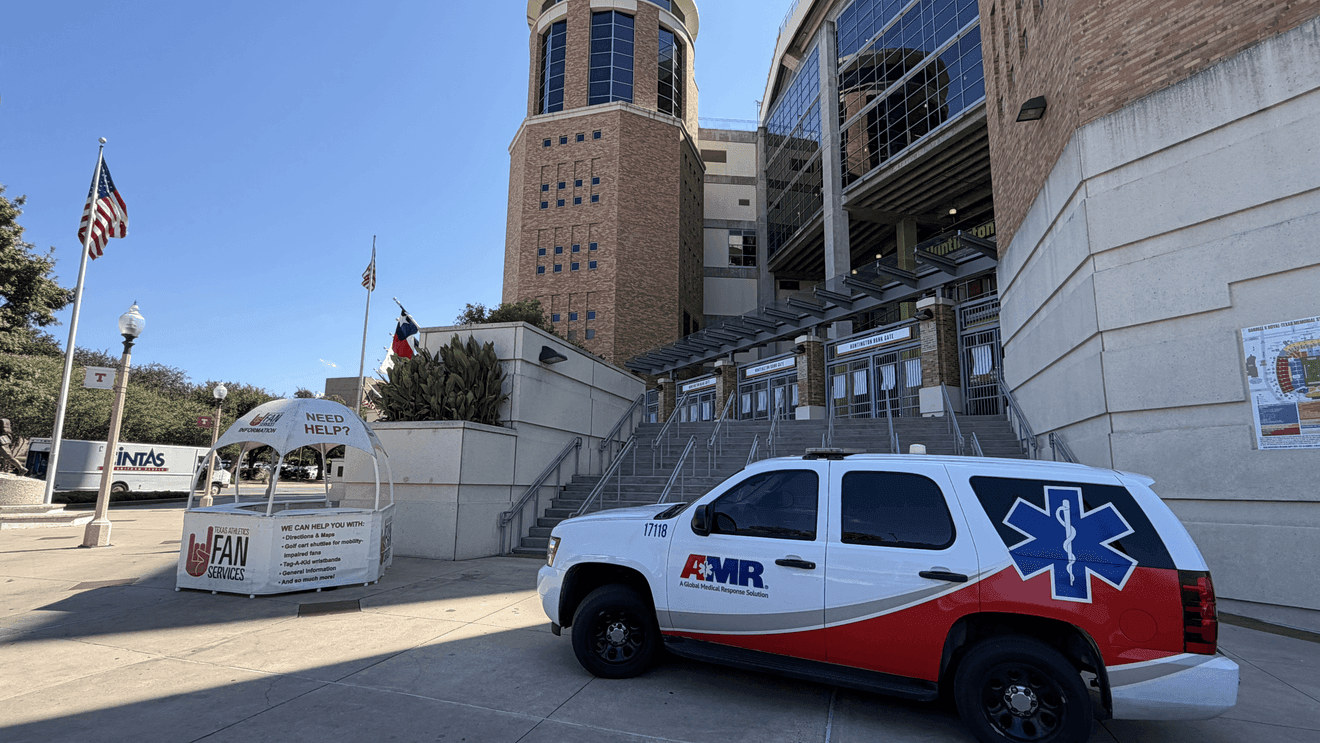
AUSTIN, Texas — Fans braved triple-digit heat to watch Texas Football’s home opener against Texas State last Saturday, but conditions became dangerous for some.
Austin-Travis County EMS reported that 13 people were taken from the game to surrounding local hospitals. At least three of those patients’ cases were related to the extreme heat.
PREVIOUS COVERAGE | Austin-Travis County EMS reports 13 people transported from season’s first football game
“I had family friends who went to the game,” said UT freshman Rafaella Merland-Roa. “A ten-year-old girl right next to them passed out, had a heat stroke, and was transported to the hospital.”
“I saw someone… not pass out, but she definitely seemed like she was about to pass out,” said Timothy Hong, who said many fans began leaving the student section near halftime.
Hong and others are calling for organizers to provide more resources for fans to stay safe in the heat during future games.
“I think more water stations and more emergency services on hand, for sure, because I was going out to see where the water stations would be. It was right near my entrance, but I noticed some entrances didn’t have one immediately right next to it,” said Hong.
Texas Athletics declined to comment on this story, but Athletics Director Chris Del Conte replied to concerned fans on X.
In the posts, Del Conte said organizers would discuss additional locations for water stations, as well as more tents and chairs outside the stadium, specifically for ADA use.
Are there long-term solutions for hot game days?
Dr. Kevin Lanza, an assistant professor at UTHealth Houston, said a crowded game day environment can intensify the heat felt by fans.
“What’s happening in these bowl-like stadiums with one hundred thousand people is that heat from individuals is coming off on other people, the sun is hitting you the entire game if there’s not enough shade, and the materials around you are radiating or emitting heat onto you as the individual,” he said.
Lanza said there are preventative measures that fans can take to reduce their risk of suffering from heat-related illnesses, such as staying properly hydrated and wearing light, loose-fitting clothing.
However, he also said there are ways to engineer stadiums to mitigate the heat.
“We could environmentally change our stadiums to be cooler,” said Lanza. “For example, the Q2 stadium was purposely designed with architecture that captures prevailing local winds and shunts them through the stadium to cool their fans and also players, and has also a shade canopy over where the stands are. Another thought is having mesh seats. So if you have those aluminum metal seats, those get hot, and that heat then gets transferred to your body, which heats you up.”
ALSO | Lamar Middle School students released early Tuesday due to HVAC issues
He said that while stadium modification is not always feasible, there are immediate changes that organizers can implement.
“We do have a PA who calls the games. They can kind of brief folks on where there are emergency services, where there are free water buckets, and maybe even mandate breaks at certain temperatures at certain times of the game. That could be for the players as well as the staff as well as the fans,” he said.
The Longhorns host Ohio State this Saturday, Sept. 12. The game kicks off at 6:30 p.m., which fans hope will quell the heat.
“I think that because it’s a night game, some of the safety issues that maybe they had at this 2:30 game probably would be a little better. And as it gets cooler, come November… I think this season should be really fun,” said UT freshman Everett Etie.