
PC Guide is reader-supported. When you buy through links on our site, we may earn an affiliate commission. Read More
DLSS 4.5 Ray Reconstruction just launched, upgrading RTX GPU owners to a second-gen Transformer model, further improving ray-traced and path-traced visuals with neural rendering. The feature launches with support for 30 games, and we’ve been testing a couple of them, courtesy of an early driver from Nvidia. We put it to the test using Nvidia’s flagship GPU, specifically the ROG Astral RTX 5090 BTF OC.
The difference between bog-standard ray tracing and path tracing can be immediately obvious, and Ray Reconstruction pushes it further. Jumping from first-gen RR to the new second-gen model offers more subtle improvements, but it can stand out in the right scenes, especially when there are many moving parts involved. We’ve compiled some comparisons for you to scan through.
DLSS 4.5 Ray Reconstruction in Cyberpunk 2077 and Resident Evil Requiem
Cyberpunk 2077
Cyberpunk 2077 has been one of the go-to games in Nvidia’s video demos throughout the history of DLSS updates, so we figured it was a good place to start. There’s also plenty of neon lighting and reflective surfaces around Night City to play around with ray tracing and path tracing. Static screenshots don’t do it as much justice, but here are the comparisons.
Latest PC & Tech deals
Prices correct as of August 20th, 2026.

First-generation Ray Reconstruction, image by PC Guide

Second-generation Ray Reconstruction, image by PC Guide
Previous
Next
Previous
Next
Resident Evil Requiem
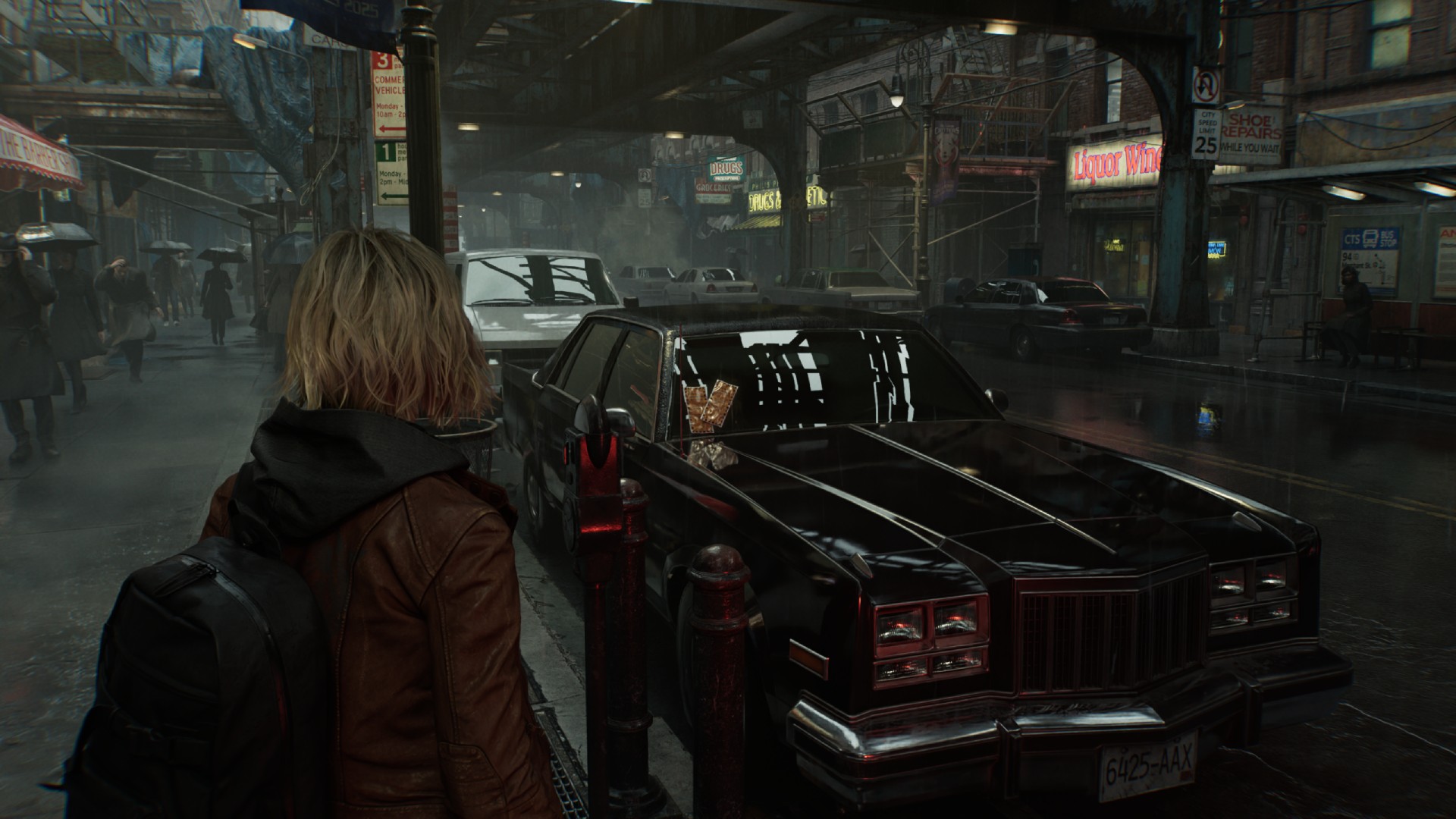
The latest entry in the Resident Evil franchise has quickly become a good place to test new DLSS features, too, notably featuring in the DLSS 5 reveal earlier this year. As for Ray Reconstruction, it offers much improved visuals compared to standard ray tracing. The second-generation model’s improvements don’t seem to stand out as much in its environments, but stunning nonetheless.
Previous
Next
Previous
Next
Side-by-side comparisons

Triple comparison in Resident Evil Requiem, image by PC Guide

Triple comparison in Cyberpunk 2077, image by PC Guide
Previous
Next
How does performance change with DLSS 4.5 Ray Reconstruction
As far as performance goes, Nvidia says, “The second-generation transformer architecture manages 20% more parameters and delivers a 35% boost in compute capability, yet maintains performance parity with its predecessor,” adding that the performance impact of the more advanced model is “expected to be negligible on GeForce RTX 40 and 50” graphics cards.
We cannot speak for RTX 30 or 20 series cards, but the performance difference was indeed negligible in our RTX 5090 benchmarks, running on DLSS Quality mode with 2x Frame Generation. Average FPS, 1% lows, and 0.1% lows hold up equally well when comparing regular path tracing, path tracing with Gen 1 RR, and path tracing with Gen 2 RR (the new DLSS 4.5 version).
Previous
Next
Overall, the upgrade from DLSS 4 to DLSS 4.5 Ray Reconstruction with a 2nd-generation Transformer model is more than welcome, even if you have to pay attention to the finer details to really feel the difference. Our testing revealed no performance issues to worry about, though we would be keen to see how it holds up on older RTX series cards. If you’re looking for more comparisons – in video form – we recommend taking a look at Nvidia’s introduction below, featuring Pragmata and Alan Wake 2.