
Bandai Namco Entertainment
The 1970s were a pivotal decade when it came to the video game industry, marking the start of the arcade scene and home consoles with platforms like the Atari 2600. Many major companies that dominated the industry over subsequent decades produced successful and groundbreaking titles throughout the ’70s. But as foundational and iconic as this era was for the video game medium, not every title is as fondly remembered now as “Pong” or “Space Invaders.” There are many hit ’70s video games that no one remembers today, forgotten over the passage of time.
With this article, we’re focusing more specifically on arcade titles released in the ’70s that have fallen out of wider public recognition and discourse. Some of these titles could have been popular with contemporary gamers, helping to solidify the arcade scene’s growing commercial viability. In other cases, we’re including titles that helped launch major video game companies or presented new gameplay features and technology that became influential in their own right. Here are five forgotten arcade games from the ’70s that started everything for the medium and gaming industry as a whole.
Space Wars
Before “Star Wars” eventually made its way to arcades in 1983, gamers had “Space Wars,” released in 1977. The game pitted its two required players against each other, navigating spaceships to blast the other into stardust. The spaceships have multi-directional movement and the ability to randomly teleport around the level, while the presence of celestial bodies affects the gravity of a given stage. The time limit is contingent on the amount of money players insert into the cabinet, with whoever having the high score at the end of the session being declared the winner.
“Space Wars” predates a lot of space shooters that have achieved global recognition, including “Asteroids,” which features similar multi-directional gameplay. The game also used vector-based graphics, which would be refined in many subsequent late ’70s and early ’80s games, like the 1983 “Star Wars” arcade title.
Gamers flocked to “Space Wars,” with 10,000 arcade units shipped in 1978 alone, generating over $6 million (unadjusted for inflation) for developer and publisher Cinematronics. Setting the template for many space shooters to come, “Space Wars” needs more recognition for its influential place in the industry.
Gee Bee
Bandai Namco Entertainment
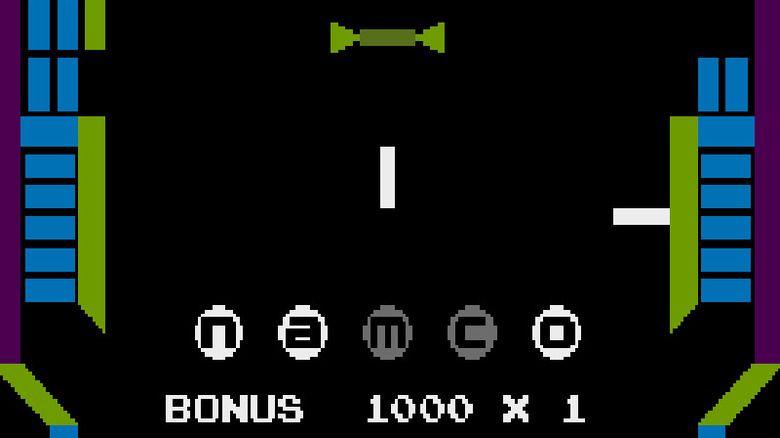
After publishing video games developed by outside studios, like “Periscope,” Namco tried its hand at developing and publishing its own game in-house with “Gee Bee.” An early block breaker game, the 1978 title’s arcade cabinet uses a rotary dial for players to control on-screen paddles. Mixing gameplay experiences with previous titles like “Breakout” and a pinball cabinet, “Gee Bee” had players clear out blocks with balls propelled by the paddles. Temporary score multipliers can be gained by achieving certain objectives, while other features can affect the trajectory of the balls.
“Gee Bee” sold nearly 10,000 arcade cabinets in Japan in 1978, later receiving a North American release in January 1979. The game’s designer, Toru Iwatani, went on to create “Pac-Man” for Namco shortly thereafter, with that franchise later worth billions. “Gee Bee” proved that Namco could develop its own games, which it did with increasing frequency and success moving forward. After merging with Bandai in 2006, Bandai Namco Entertainment remains one of the biggest powerhouses in the video game industry.
Football
Atari
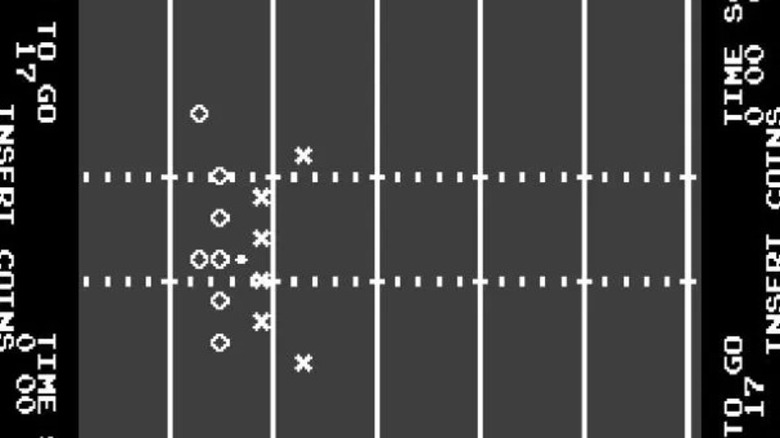
Sports games had been around in various forms throughout the ’70s, but Atari brought some innovations to the genre with “Football.” The 1978 arcade game has players control opposing teams in a crude facsimile of a football game. Teams are represented by x’s and o’s on-screen, while the game features vertical scrolling as players run up and down the field. To provide more intuitive mobility, players use a track ball on the cabinet, rather than a joystick or button inputs to move.
As a testament to how foundational “Football” is in the video game industry, it was one of the first games of its era to feature multiple moving objects on-screen simultaneously. It’s also one of the first non-racing games to feature a vertical scrolling display, showing the presentation’s viability in other genres. Arcade games have obviously come a long way since the ’70s, so it’s easy to take for granted how revolutionary some of these gameplay experiences were. Other arcade sports games would follow suit after “Football,” but none in the ’70s were as groundbreaking.
Galaxian
Bandai Namco Entertainment
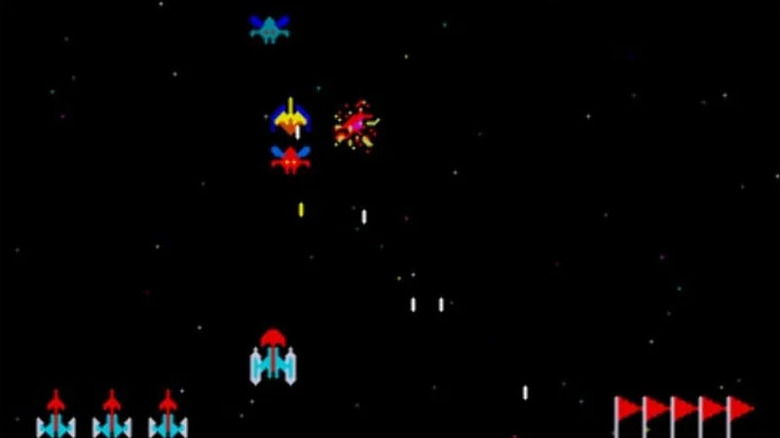
As space shooters continued to prove popular draws in the arcade, buoyed by “Space Invaders” in 1978, Namco provided a genre title of its own in 1979 with “Galaxian.” Like “Space Invaders,” the arcade game featured enemies that descended towards a player-controlled spaceship limited to moving left and right. However, there are no barriers separating the player from the enemies, who regularly break formation and swoop in with varying attack patterns. Destroying the flagships at the top of the screen awards the player with bonus points as they build their high score.
In contrast to contemporaries like “Space Invaders” and “Asteroids,” “Galaxian” is a vibrantly colored space shooter featuring various types of enemies. Gamers took notice, and by 1980, the game was the second highest-earning arcade title in North America, second only to “Asteroids.” Namco followed up this success by producing the standalone sequel “Galaga,” which became an even bigger arcade success in the ’80s. A hit ’70s video game that no one remembers today, “Galaxian” set the stage for even more sophisticated space shooters to come.
Radar Scope
Nintendo
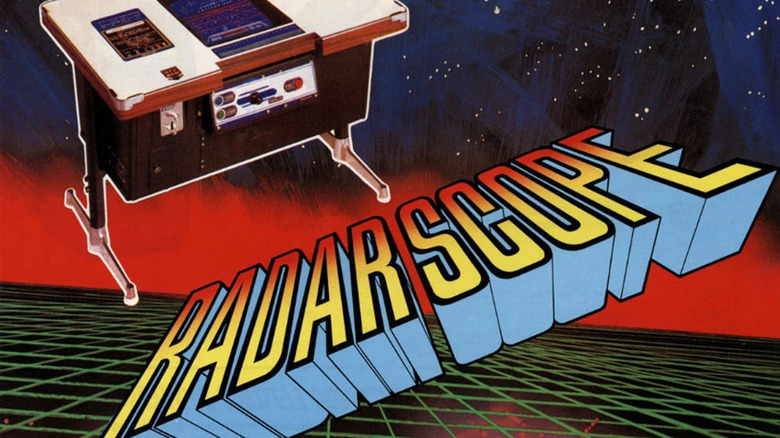
Still making in-roads into the North American market in the late ’70s with its arcade games, Nintendo was sure its 1979 game “Radar Scope” was going to be a hit, manufacturing thousands of cabinets for its release in the United States. The game was a table-format space shooter that used a rudimentary 3D perspective as enemy ships advanced on the player. In addition to avoiding incoming attacks and destroying enemy ships, players had to defend a base at the bottom of the screen.
“Radar Scope” was actually a huge commercial failure in North America, although it has a surprising legacy beyond the game itself. Nintendo of America workers, including future visionary Shigeru Miyamoto, decided to use the thousands of unsold cabinets to make a completely different game. The resulting hardware was used towards the creation of “Donkey Kong” in 1981, which became an enormous success. So not only did “Radar Scope” inadvertently lead to the creation of iconic gaming properties, but it helped Nintendo become the company we know and love today.