
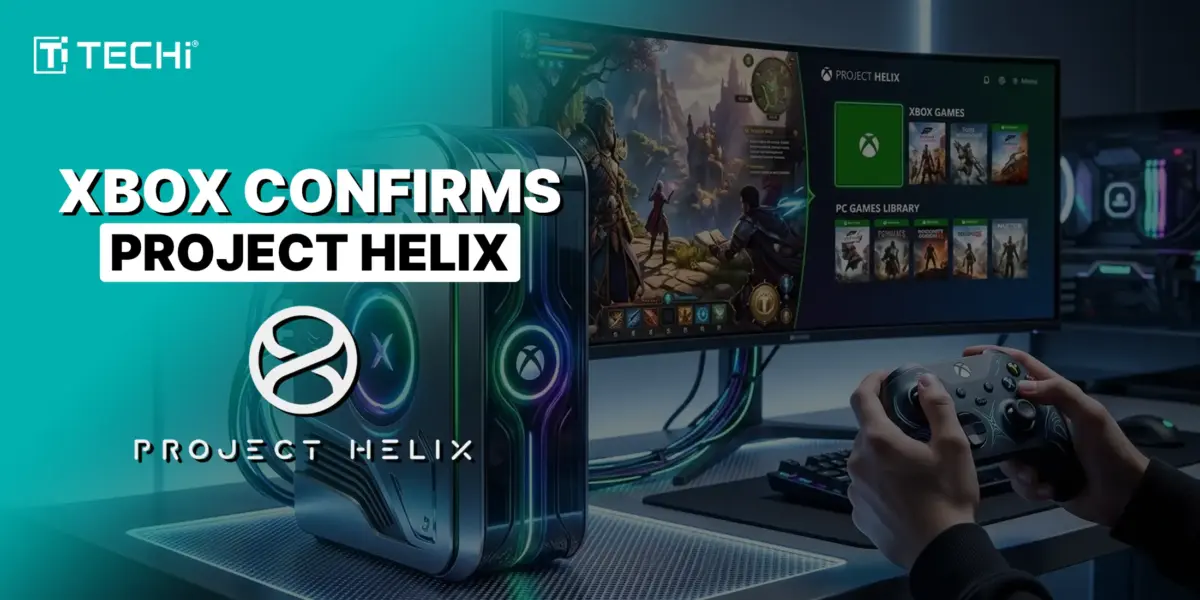
Xbox made a huge announcement with regard to its next generation console, which has been dubbed Project Extra Helix, and is expected to offer new levels of performance, as well as be able to successfully run both the Xbox and PC titles.
On March 6, 2026, in the social-media platform X (previously twitter), the newly named Chief Executive Officer, Asha Sharma officially verified the revelation, which created a lot of excitement before her appearance in the Game Developers Conference (GDC).
Sharma’s Announcement
Team Xbox Was a great start to the morning where we discussed the commitment to the comeback of Xbox including Project Helix, the code name of our next generation console, Sharma wrote on X.
“Great start to the morning with Team Xbox, where we talked about our commitment to the return of Xbox, including Project Helix, the code name for our next generation console,”
Sharma posted on her X account:
“Project Helix will lead in performance and play your Xbox and PC games. Looking forward to chatting about this more with partners and studios at my first GDC next week!”
Xbox‑PC Fusion Background
The conjecture of a gaming ecosystem was made several months back due to the leaks of Windows Central that occurred at the end of 2025.
By June 2024, Microsoft Gaming had 500 million monthly active users across PC, console, and mobile platforms, a 150% increase in just six months.
In fiscal 2024, the gaming division brought in $21.5 billion, of which 65% came from content and services.
While Xbox Series X|S console sales reached 34.1 million units by December 2025, Game Pass maintained between 35 and 37 million subscribers in Q1 2025.
Future Outlook
The industry observers expect that there will be an announcement of more details about Project Helix on upcoming presentations at the Game Developers Conference. More importantly, Project Helix seems to be aimed at recreating the contact between console and PC gaming.
This would allow users to play both Xbox and PC titles on the same platform and Microsoft would blur the historic boundary between the two platforms and create a single game library that is backed by cloud services.
In case such a strategy is successfully implemented, it will help strengthen the position of Microsoft in the gaming field through the expansion of the player base and make its ecosystem more attractive to game developers, publishers and other gamers that require cross-device flexibility.