


I had every reason to write off Pokémon Pokopia before I first demoed it last month. Now, with the opportunity to test the full game, I ended up sinking 20 hours into this evocative, engrossing, and surprisingly deep remodeling of the Pokémon formula over a single weekend. It may be the surprise hit the Switch 2 desperately needs in early 2026.
Pokopia borrows heavily from games I don’t vibe with. It takes many of the same design elements of Animal Crossing, where I normally can’t stand that series’ lack of stakes or achievable goals. It’s also inspired by Minecraft, a game I abandoned long ago when I realized I didn’t care about a world empty of any creatures that made it feel like it was inhabited (without having to shove Jack Black into the mix). Now I’m writing this review with a sudden pang of longing. I wish I were back on my Switch 2, helping my Poké-pals revitalize a blasted landscape devastated by humans. I wish I were back in a healing land, discovering more creatures and critters and helping them do more than simply survive but also thrive.
While Pokémon Winds and Pokémon Waves received the lion’s (Pyroar’s) share of Pokémon fans’ attention during last week’s games showcase, Pokopia is the kind of game devotees and detractors alike can enjoy. Instead of running around, capturing creatures from their native environments for the purpose of letting them maul each other into unconsciousness, you’re crafting their habitats so they can live in beautiful harmony with nature.
Pokémon Pokopia for Nintendo Switch 2
There are few games that manage to showcase what’s best about the Switch 2 like Pokémon Pokopia.
A wonderful revision of the Pokémon formula Switch 2 mouse controls makes building easier Calming and relaxing music and tone All Pokémon have strong personalities Mouse controls don’t work for all powers Restrictive day and night cycle A Poké-paradise in the making 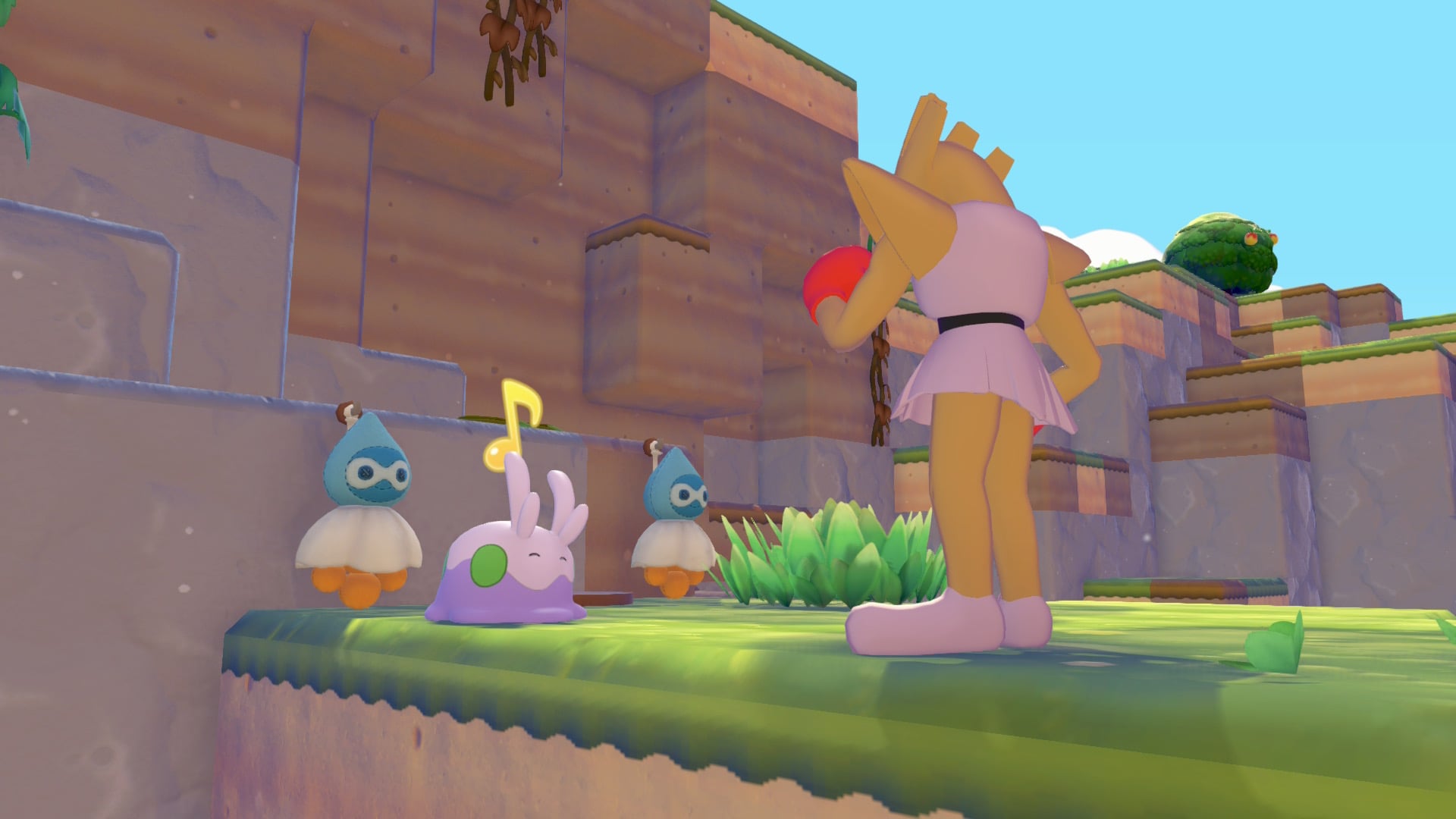 Pokémon will interact with each other, chase each other around, and talk about how great friends they are. © Pokémon Company; screenshot by Gizmodo
Players launch into the desiccated world of Pokopia as a pudgy-faced Ditto. Unlike other creatures of its kind, this Ditto has somehow managed to take the guise of a human. Your button-eyed, slack-mouthed human simulacrum then wakes into a world where all the humans and Pokémon have mysteriously vanished. The area is a wasteland of dead trees and dried grass. The remains of human civilization litter the nearby vistas with a post-apocalyptic sense of desolation. The only creature remaining is a single Tangrowth, a creature that knows enough about humans that he’s referred to as “Professor,” despite not knowing how a human PC even works.
Through your actions, as you bring life back to the destroyed environments, you slowly start recreating the habitats where Pokémon can crop up. A few squares of grass may spawn a Bulbasaur or a Piplup. Less common Pokémon require more specific habitats, such as a stack of boxes next to a pile of wooden block toys, which might spawn a cute, bouncy Azurill. This is Pokémon in reverse, and it feels so much more joyous because of it.
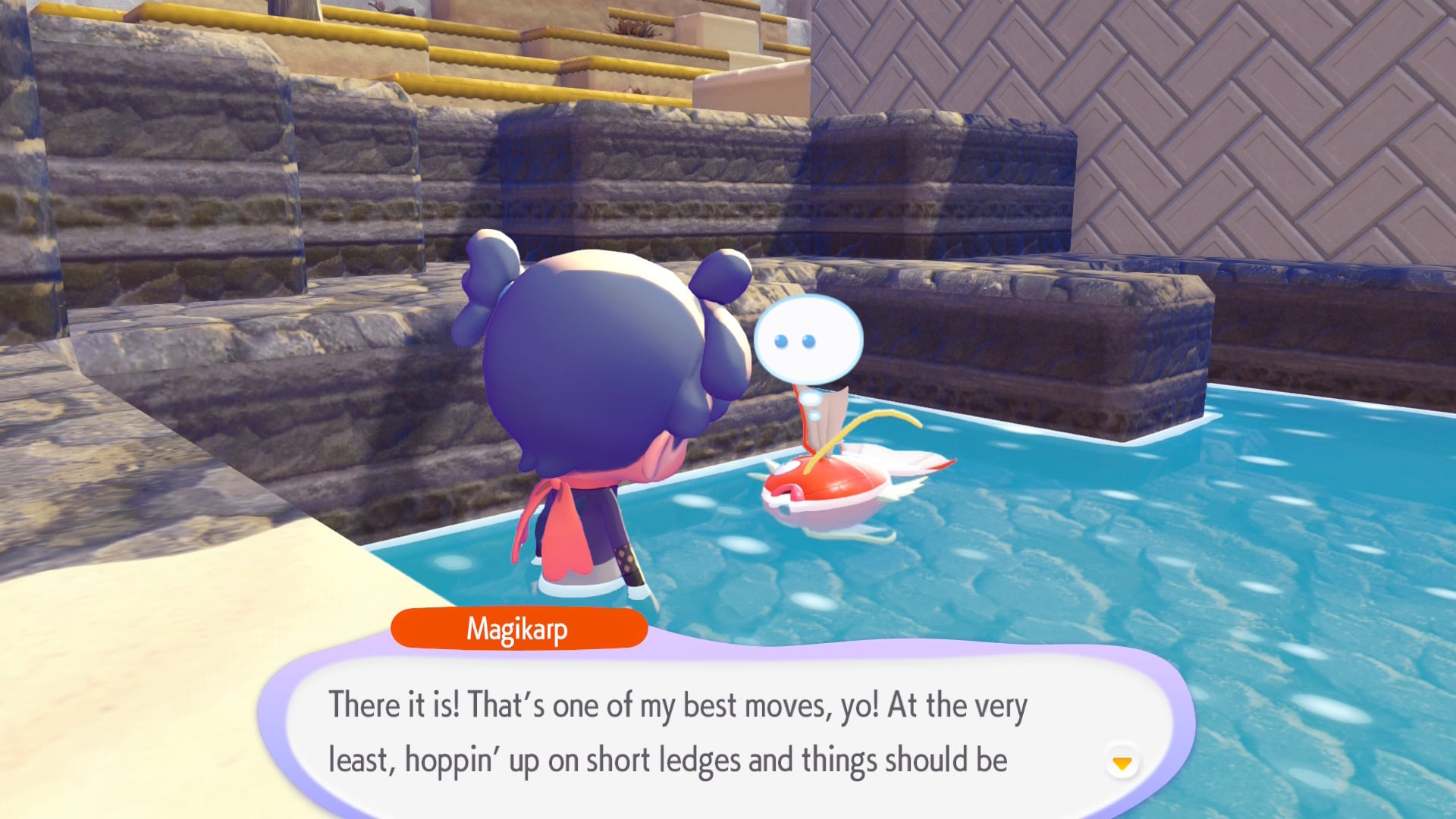 I won’t tell you which move Magikarp teaches the player. Let’s just say its it’sir most famous move. © Pokémon Company; screenshot by Gizmodo
Pokopia is full of small references to the games, from the Pokédex entries for every creature to the bits from the soundtrack reminiscent of the Pokécenter themes. What’s even more evocative is how every creature speaks with its cries you remember from the games, and each has its own off-kilter personality. For instance, the Magikarp I found on a beach next to an abandoned Team Rocket base would start every sentence with “yoooo.”
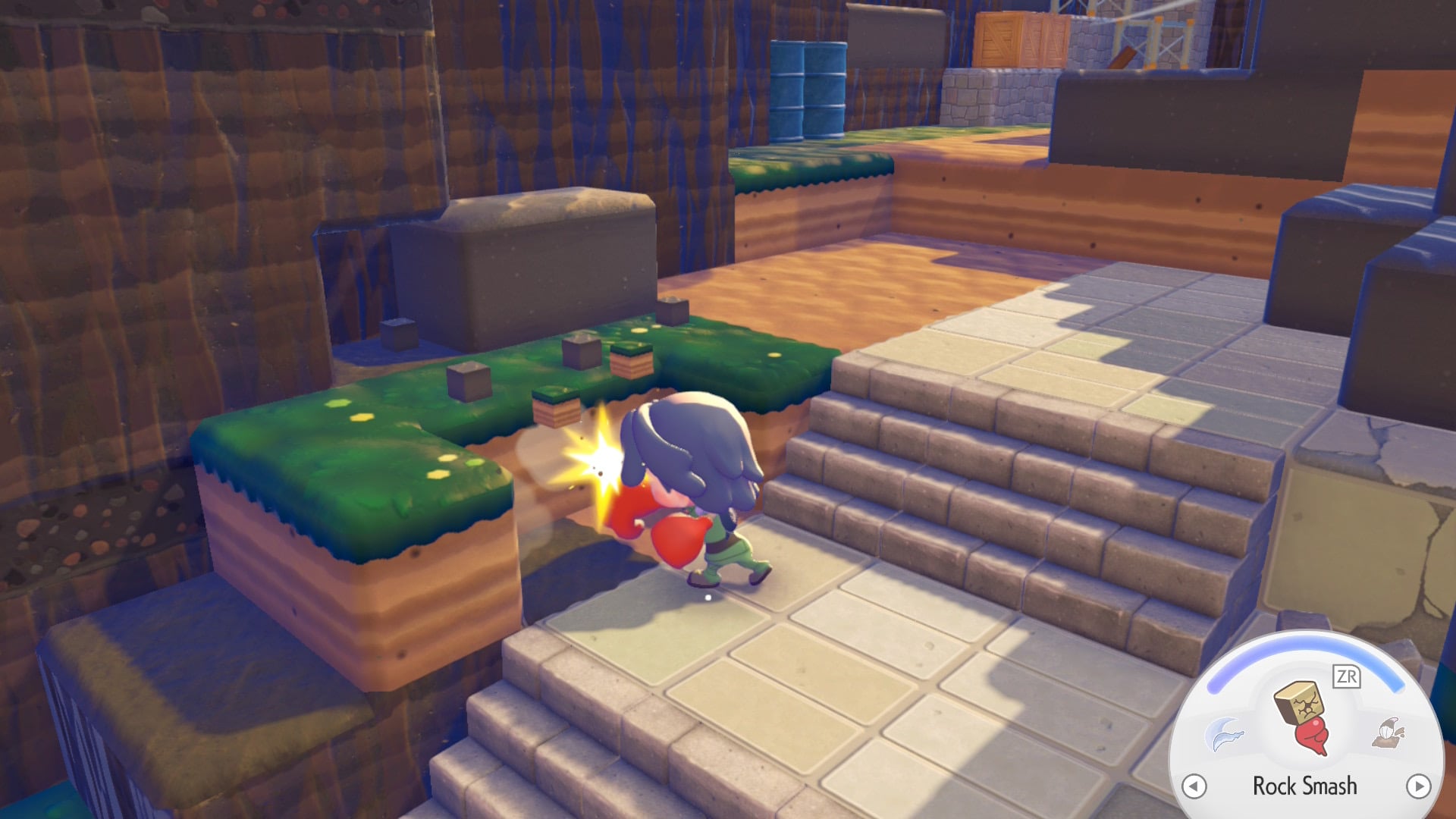
Throughout the game, you also acquire various powers that help you transform the environment to your liking. Your Ditto can copy abilities that will help you water dead trees, shrubs and more that can help you till the soil or shuffle around large boulders or heavy objects. The most important move is “Rock Smash,” which enables players to demolish the blocks that make up the world.
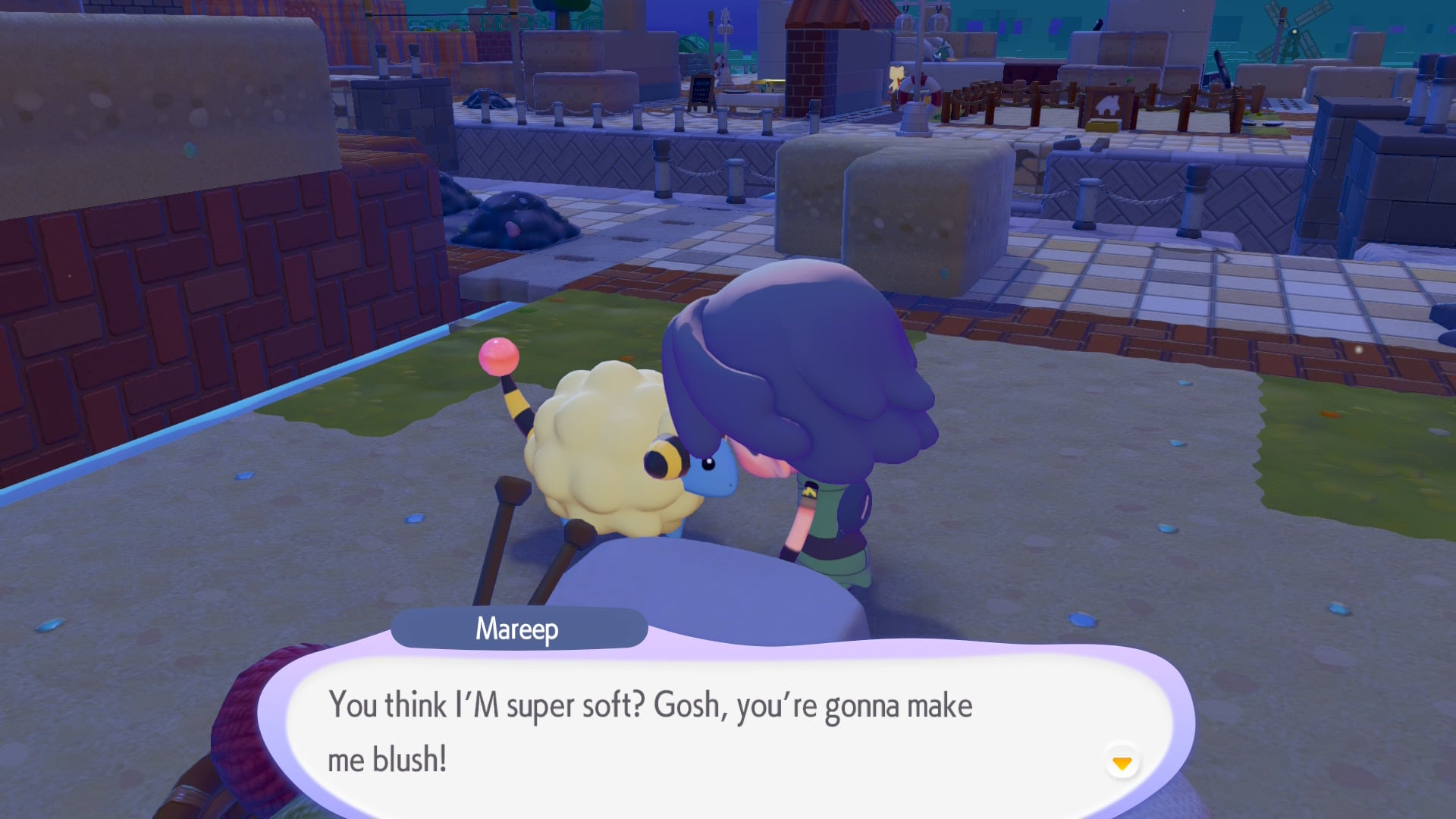 Some Pokémon will grant players extra resources, like the Mareep’s wool. © Pokémon Company; screenshot by Gizmodo
The game wears its influences on its sleeves. Pokémon Pokopia, developed by Koei Tecmo and published by The Pokémon Company, draws its sense of community building and real-life time scale from Animal Crossing: New Horizons. It cribbed Minecraft’s block-breaking and building mechanics while (thankfully) eschewing all the survival elements. It’s all in the service of becoming a Pokémon ecologist. And once you accept the flow of the game, the minute-to-minute activities become meditative. There’s a subtle joy in watching your Poké-pals smile as you add more light, decorations, or toys to their preferred habitats.
The one issue with borrowing so heavily from these two disparate games is that the developers had to make a control scheme that lets you explore and pal around with Pokémon and build up your environment. The game almost mitigates the worst issues thanks to a clever use of mouse controls. It just doesn’t go far enough.
We should stop sleeping on mouse controls 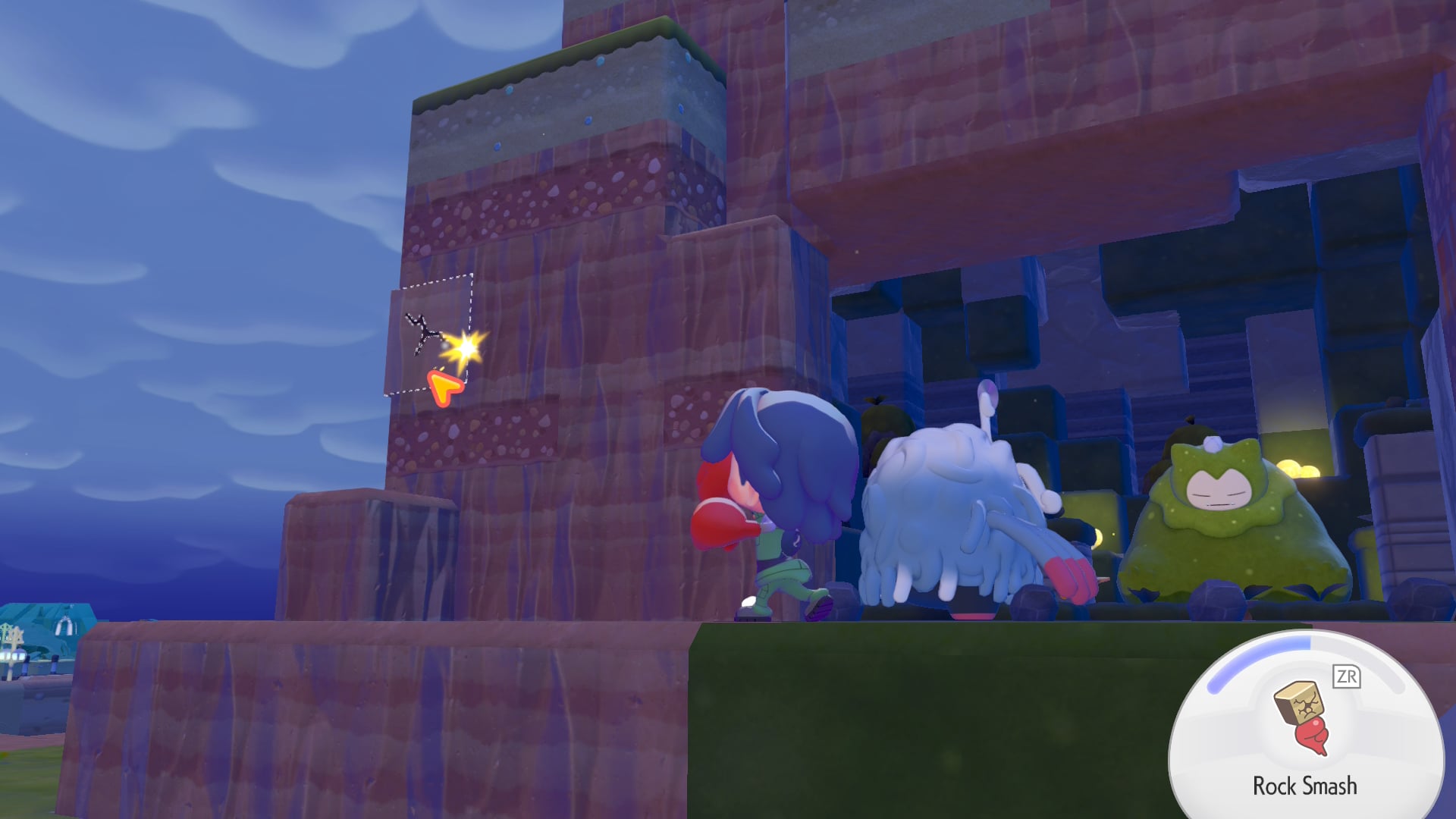 Mouse controls make remodeling the environment far easier than without. © Pokémon Company; screenshot by Gizmodo
We’re more than eight months into the Switch 2 life cycle. So far, we’ve seen few first- and third-party developers willing to make use of the Switch 2’s major hardware upgrade over the original Switch. Both Joy-Con 2 controllers include an optical sensor that enables mouse-like controls in menus and games. This was useful in a top-down strategy title like Civilization VII. It was one of the added control schemes in the excellent Cyberpunk 2077 port.
In Pokopia, the mouse controls work for two scenarios. When bashing blocks with the Rock Smash power, you can use a mouse to select blocks in a wide sweep, rather than just whatever is directly in front of your Ditto. Without the mouse control, I was struggling to smack blocks two stacks above my character’s head. This was necessary in some parts of the game, like when I had to dig out an Onix who was trapped behind a large mound of dirt.
 © Pokémon Company; screenshot by Gizmodo
  © Pokémon Company; screenshot by Gizmodo
The game usually centers the block selection based on the orientation of the character and on the center of the screen. Since Pokémon Pokopia lacks a reticle, this can lead to some situations where you think you’re pointing at the right block, but then you end up placing your decoration or plant in the wrong location. This lack of fine controls may be less aggravating to some players. Inevitably, the most creative gamers will want the extra fine control to build grand structures. And you’ll need the mouse controls to do that.
 © Raymond Wong / Gizmodo
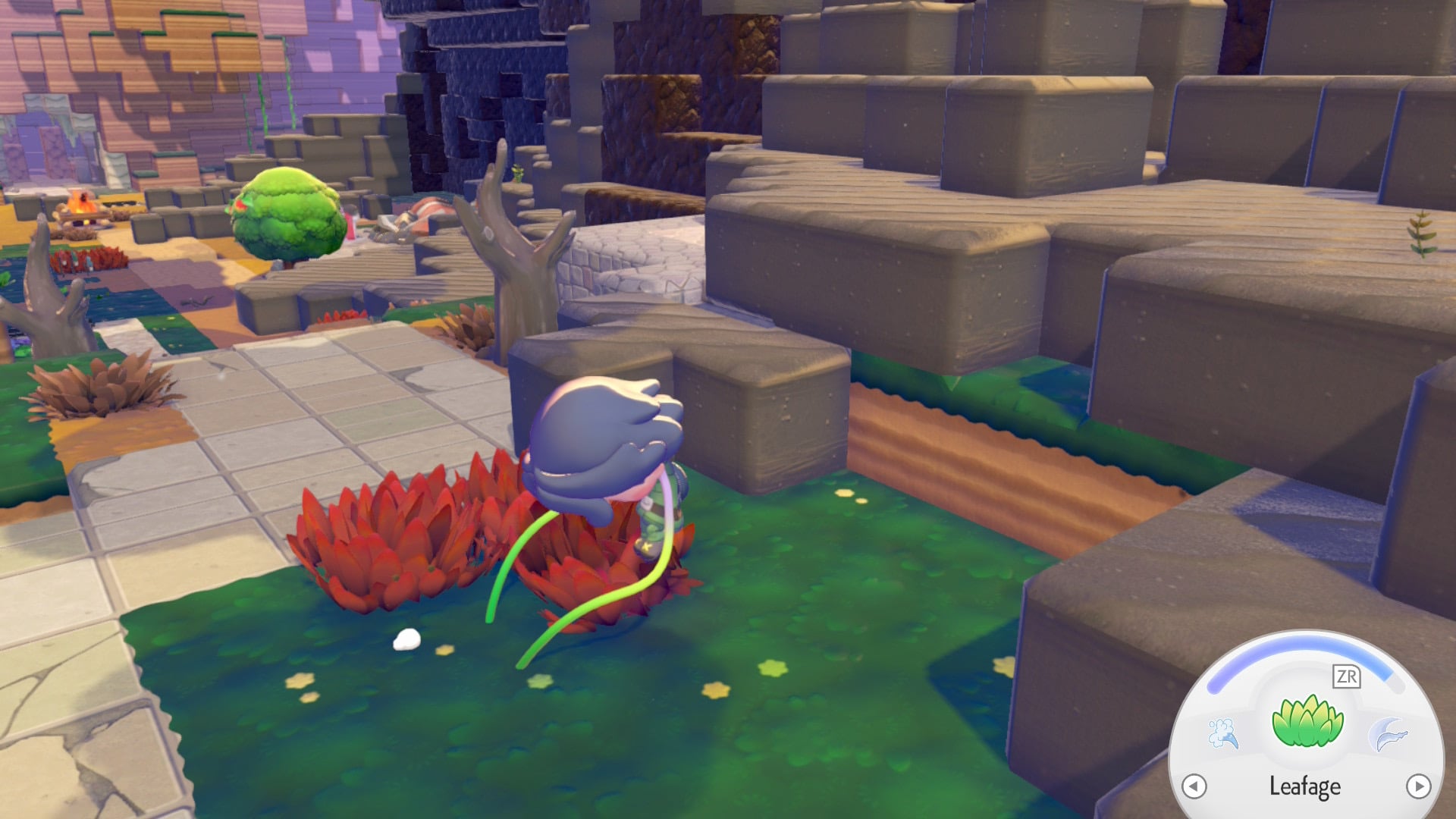
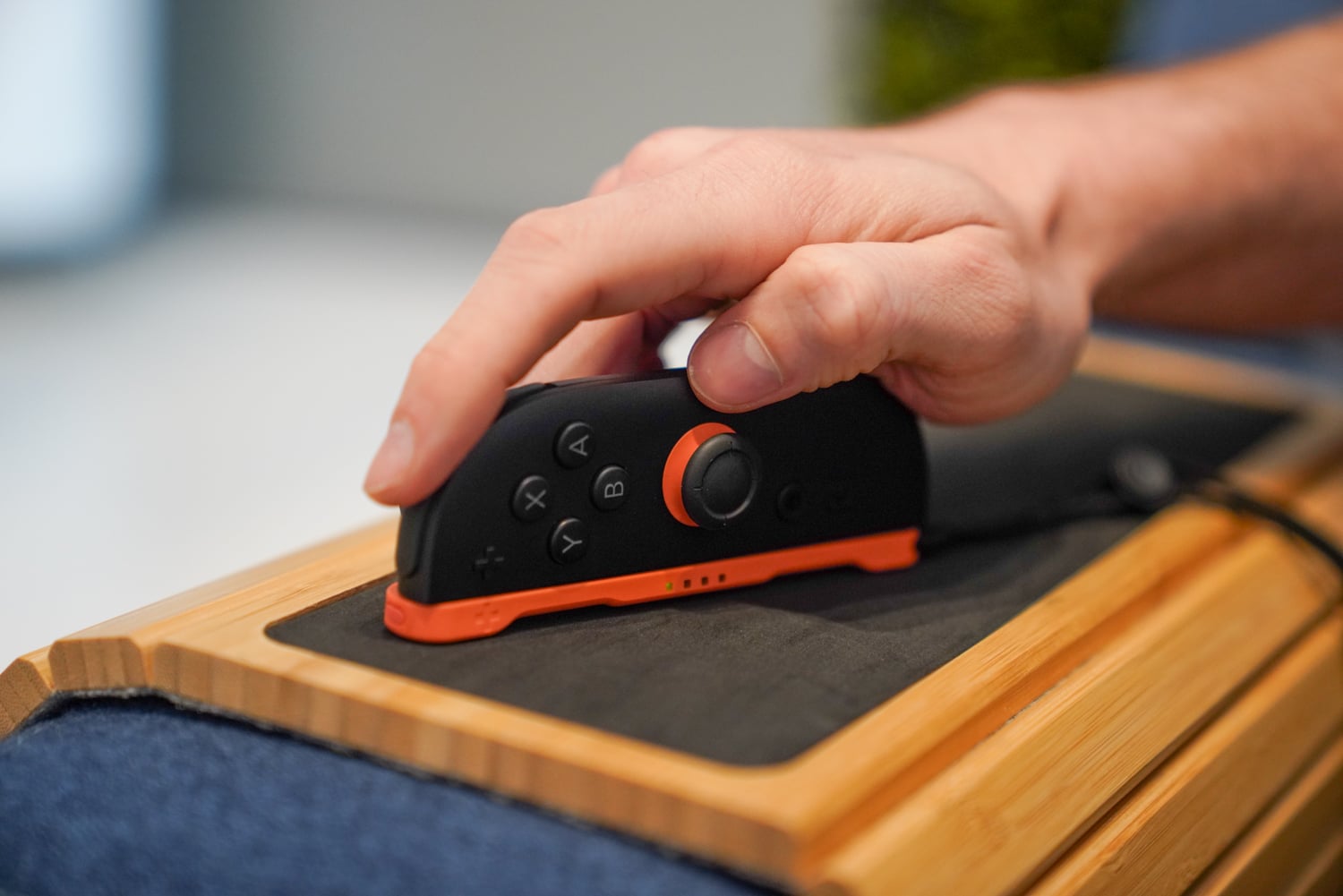
Even then, these mouse controls aren’t seamless. It takes approximately half a second for the mouse cursor to appear on-screen after you set the Joy-Con 2 down on your couch or pants’ leg. Then, the mouse controls don’t work for every one of the powers you pick up throughout the game. If I want to use moves like “leafage” to dig up grass or “rototiller” to plow fields for my next Pokémon’s habitat, I have to maneuver my character into just the right position. It’s more aggravating than it should be, considering the controls available on Switch 2.
Otherwise, recent titles like Resident Evil Requiem eschewed mouse controls altogether. Despite the game running well in handheld and docked mode, you’re limited to thumbsticks or gyro-based controls for shooting in either first- or third-person. The game’s producer, Masato Kumazawa, told Press Start that adding mouse controls “confused and convoluted the gameplay.” However, we’ve seen how mouse controls can be integrated seamlessly into the first-person game, Metroid Prime 4: Beyond. Retro Studio’s return to the Metroid franchise didn’t require mouse aiming much beyond the opening mission. I think there is even more room to use the handheld’s most unique feature.
A crafting game done right 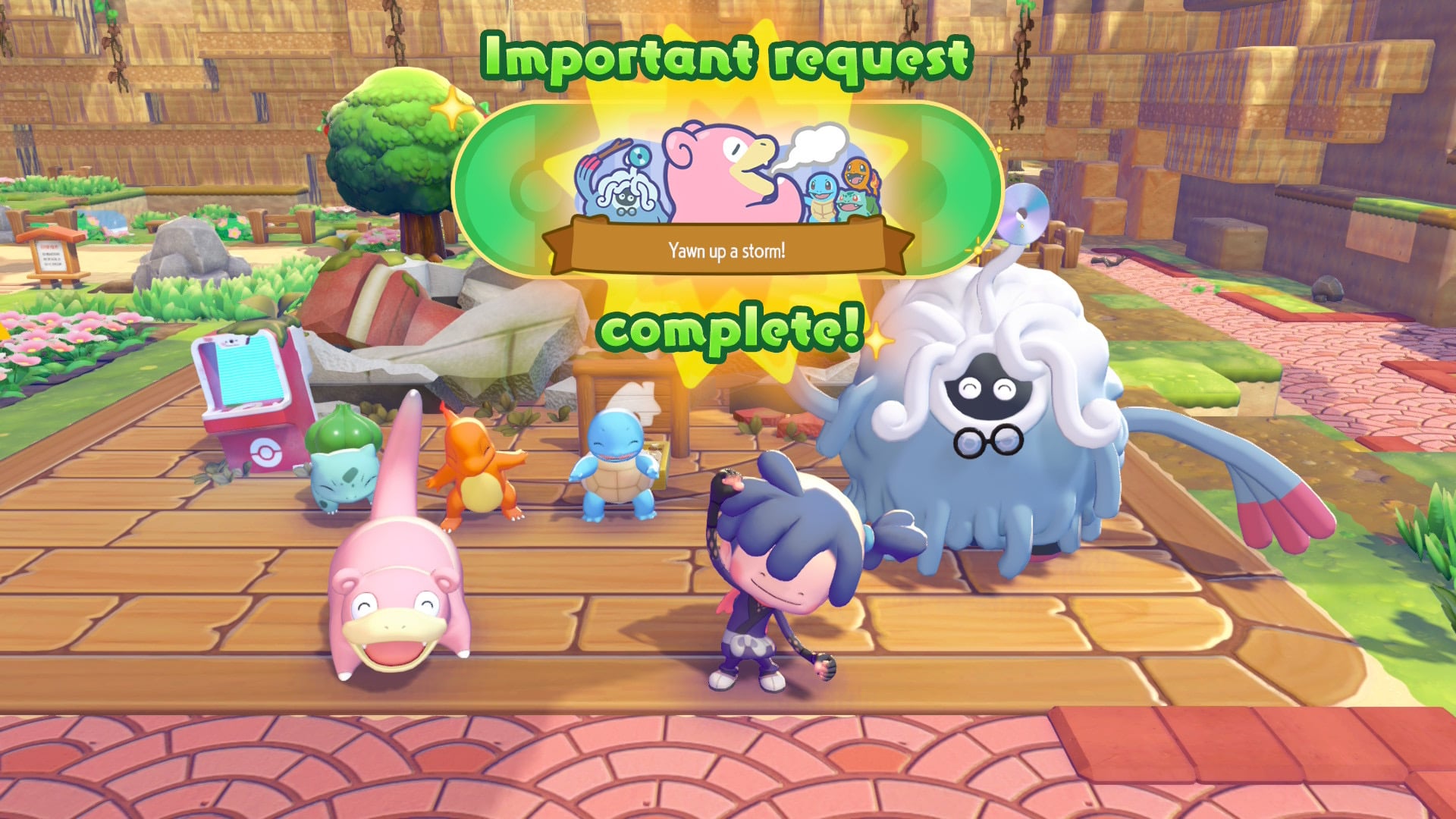 Finally, a crafting game with clear, achievable goals and a story worth persuing. © Pokémon Company; screenshot by Gizmodo
Even with the issues with controls, Pokopia is a game I don’t think Switch 2 owners should sleep on. I came into the game fully expecting to be put off. I spent my Saturday night after playing Pokopia running through a gaggle of demos for Steam Next Fest with a friend. Practically all the co-op games we tried had some variation of survival crafting mechanics glued onto a different setting—pirates, floating islands, an idealized mountain hiking trail. We bounced from each game one after another. So many of these games enter with the same mechanics. You build a fire; you build a crafting bench; you make a shelter; you hit a crab until its meat spills out.
And somehow, Pokopia stands above all of them. The game presents you with constant, clear goals. In one area, players need to increase the environment’s humidity by watering plants and trees. In another area, you need to increase the area’s brightness by hooking up remaining lights to renewable energy sources—or just ask your friendly Mareep to shock a few lamp posts. Through the gameplay loop, you slowly craft an environment where creatures of the world can live in peace.
 I won’t spoil all the Pokémon who make an appearance, but I will say there are creatures that show up from across the frachise’s many generations. © Pokémon Company; screenshot by Gizmodo
Throughout the game, you pick up lost journals and news clippings left over by the humans who lived there. There’s a subtle sense that something went awry, whether it was an environmental disaster or something else man-made. When I turn back to real life, I’m forced to comprehend a world that is being mauled by human activities and a U.S. government that has effectively ended any and all hope of environmental remediation. I don’t exactly feel keen on finding out where the humans went in Pokémon Pokopia. I’d rather huddle in the grass and flowers with my Pokémon friends as we work to clean up the mess left by the world’s supposed caretakers.
Pokémon Pokopia launches March 5 on Switch 2 for $70.