

Call of Duty and Battlefield have long reigned supreme over the multiplayer first-person shooter genre, selling incredibly well year after year and proving seemingly untouchable. Of course, they’ve each wrestled for the top spot for quite some time, but largely they’ve shared an equal split of the market, cleverly appealing to different subsets of the broader genre’s fans. It used to be that Call of Duty was almost always guaranteed the top spot on the charts every year, Battlefield not too far behind it, despite, or perhaps as a direct result of the largely throwaway nature of each title.
However, it would appear, at least from a cursory glance, that this golden era of Call of Duty and Battlefield is coming to a rather abrupt end. Of course, there is a lot that has led to the dwindling sales of Call of Duty and the divisive sentiments surrounding Battlefield as an IP, so one can’t quite call their apparent demise unexpected. Still, for what were once considered untouchable and unbreakable franchises, it would appear that the expected success has run its course, and in its place, a desperate battle to reclaim the throne.
Call of Duty’s Reign May Be Coming To An End
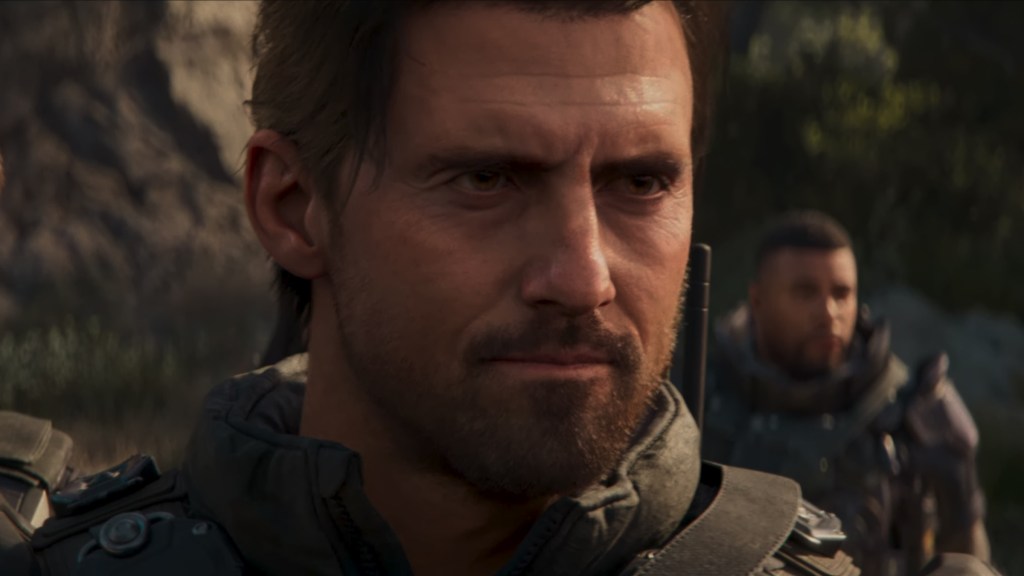 Image Courtesy of Activision
It can often feel that Activision has taken Call of Duty’s seemingly unlimited success for granted, going as far as to say that it is “too big to fail.” While the relative success of the Modern Warfare reboot seemed to put it in good standing, the subsequent releases all felt rather iterative, with the abysmally bad Modern Warfare 3 exposing the inherent flaws with annual releases. It was practically DLC for its predecessor, a rushed campaign, and a disappointing selection of maps evidence of this; yet, Activision nevertheless saw it fit to charge full price for the game, garnering a considerable amount of backlash from fans.
In the following years, Call of Duty has done little to recoup its lost goodwill, with the most recent Black Ops 7 proving so disastrous that Activision more or less had to swallow its previous comments about COD’s resistance to failure. Its sales figures were uninspiring to say the least, setting a terrible new record for Call of Duty and establishing one of the lowest player counts in the series’ history.
Battlefield is not exempt from this level of failure either. While Battlefield 6 proved to be the triumphant return to form that the series needed, it took a lot of work to undo the damage caused by Battlefield 2042. That game almost single-handedly killed the franchise, one that was already floundering in the face of the rather disappointing Battlefield V. However, even Battlefield’s recent success cannot prevent the collapse of the era once squarely dominated by it and Call of Duty.
Battlefield May Be Successful, But It Cannot Bring Back Its Glory Days
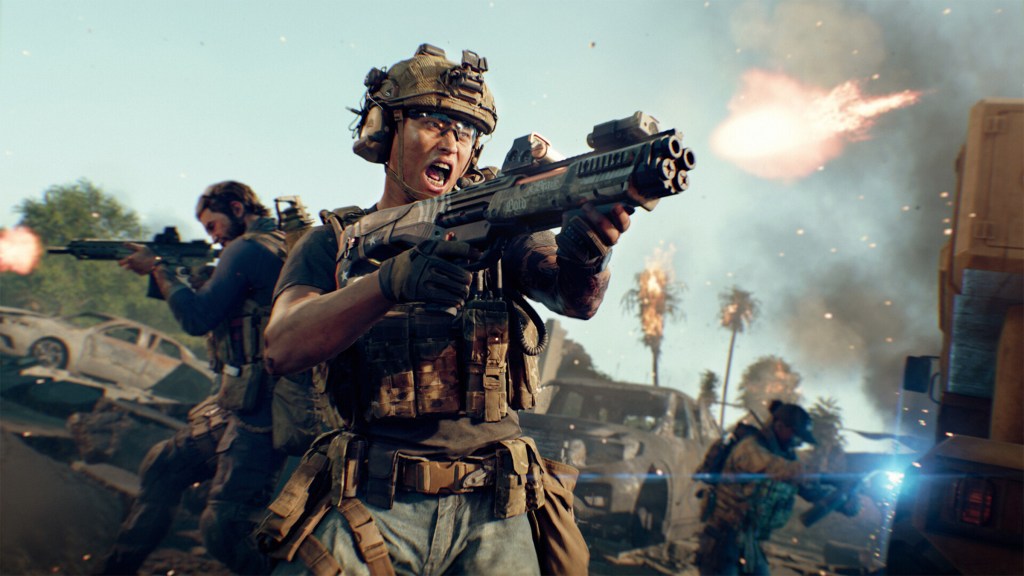
When Call of Duty and Battlefield were initially proving to be very successful franchises and had carved a significant portion of the first-person shooter market out for themselves, the industry responded with a flurry of copycats. Some were desperate attempts at capitalizing on the hype surrounding these two behemoths; others were genuine efforts to try and get a new, innovative multiplayer shooter off the ground. Regardless, everything from the bargain bin frequenters to the moderately successful showcased a desire to ape the success of Call of Duty and Battlefield, respectively.
Even Activision and EA were in on the action, developing more games in the style of their masterpieces in the hopes of landing yet another moneymaking franchise. Unfortunately, very few of these ever took off or got anywhere near as successful as the series they were imitating. The more of these that launched, the fewer that managed to survive longer than a handful of months, until, eventually, the multiplayer first-person shooter market became immensely oversaturated and players began searching for the next innovative shooter.
In 2016, Overwatch entered the fray and popularized the hero shooter genre. It became so successful that, for a short period, it was the dominant multiplayer experience. Following its success, the hero shooter genre took off and spawned its own cavalcade of Overwatch copycats desperate for a piece of the action. Then, PUBG and Fortnite arrived to offer yet another alternative within the multiplayer shooter arena, cementing the battle royale genre as one of the most popular of all time.
Meanwhile, both Battlefield and Call of Duty were continuing to be enormous successes, but saw fewer and fewer copycats of their own. Indeed, Call of Duty shifted to a hero shooter model fairly quickly, adopting operatives into its gameplay loop. It would later cater to the battle royale market with Black Ops 4 and later Warzone. Similarly, Battlefield switched lanes, adding its own take on heroes rather unsuccessfully in Battlefield 2042, as well as introducing a battle royale mode no one talks about. This shift more or less cemented the end of either game exclusively reigning over the market, its power diverted between numerous other titles and sub-genres vying for everyone’s attention.
Call Of Duty & Battlefield Still Have Fight Left In Them
 Image Courtesy of Activision
To be clear, when I talk of COD and Battlefield’s era being over, I am not exclusively referring to their dwindling player bases, sales, and success. Even Call of Duty’s worst-performing game continues to sell incredibly well and garners a rather large player base. Similarly, Battlefield 6 was the best-selling game of 2025 by quite a margin; so it would be incredibly disingenuous to state that its era is over merely because of 2042‘s failures.
Rather, their era is over because, while they continue to be successes independently, they no longer dominate the market in the same way. People aren’t really making Call of Duty clones in the way they used to, and even fewer, especially within the AAA space, are attempting to copy Battlefield. Instead, the industry has shifted its sights onto newer and fresher genres, albeit with similar levels of success as when it tried to ape COD and Battlefield. We’ve long since left the golden era of either of these titans, and now enter a period of reflection, reinvention, and, one can hope, innovation.
Because, while they may no longer be the most talked-about multiplayer shooters, both Call of Duty and especially Battlefield have a lot left to give. Activision has stated it wants to learn from the mistakes of Black Ops 7, and EA has clearly shown the capacity to grow with the success of Battlefield 6. It is certainly possible that the next Call of Duty will offer something completely fresh and original, the likes of which we haven’t seen in quite some time. It is also possible that this will all come full circle, and both Call of Duty and Battlefield will reign supreme once more.
I would very much like to see a new era of Call of Duty and Battlefield, one in which they feel confident in their own strengths, offering meaningful innovations that keep them ahead of the competition, and once again further work to popularize their own approach to the multiplayer shooter genre, rather than leeching off of others. Battlefield 6 is very much a step in the right direction, and hopefully, Activision will be inspired to begin its own journey of reinvention. However, at least for right now, it is clear that the zeitgeist no longer regards either Call of Duty or Battlefield with the same level of respect as it once did, and both franchises will need to do a lot to regain it.
Do you think Call of Duty and Battlefield have waned in popularity? Leave a comment below and join the conversation now in the ComicBook Forum!