
Over the past months we have been working on an AI-assisted remote diagnostics research project focused on thermal interface behavior in consumer GPUs. As part of this work, we documented a controlled baseline vs repaste case study on a Gigabyte RTX 2080 (TU104) that had never been opened and was still running on factory interface materials.
For transparency, we are both the authors of this case study and the manufacturers of the materials used. All raw benchmark outputs and HWINFO telemetry logs are published openly so that anyone can independently review or challenge the findings.
Methodology
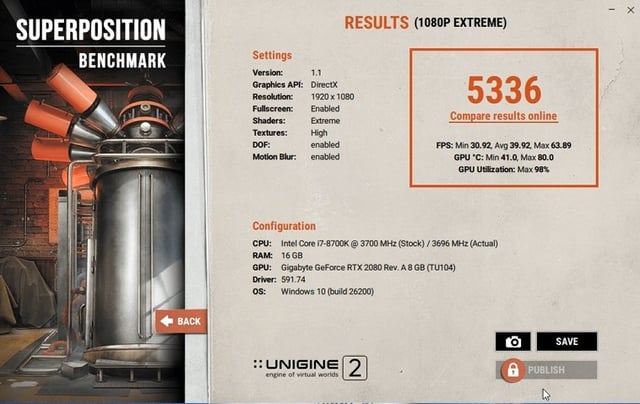
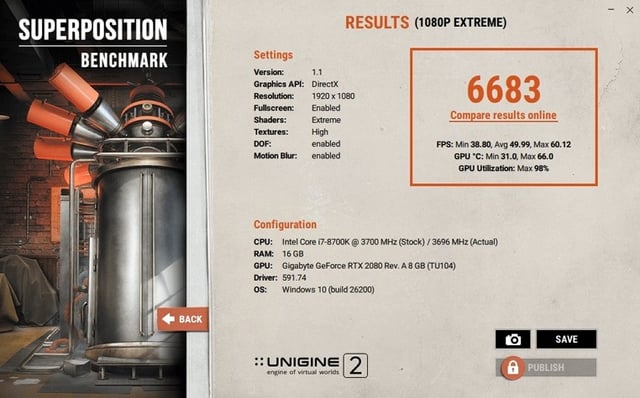
The card was evaluated under identical conditions using Unigine Superposition 1080p Extreme with full telemetry logging before and after intervention. Ambient temperature remained stable between 21.2°C and 21.6°C. Baseline, repaste and validation were completed within the same day.
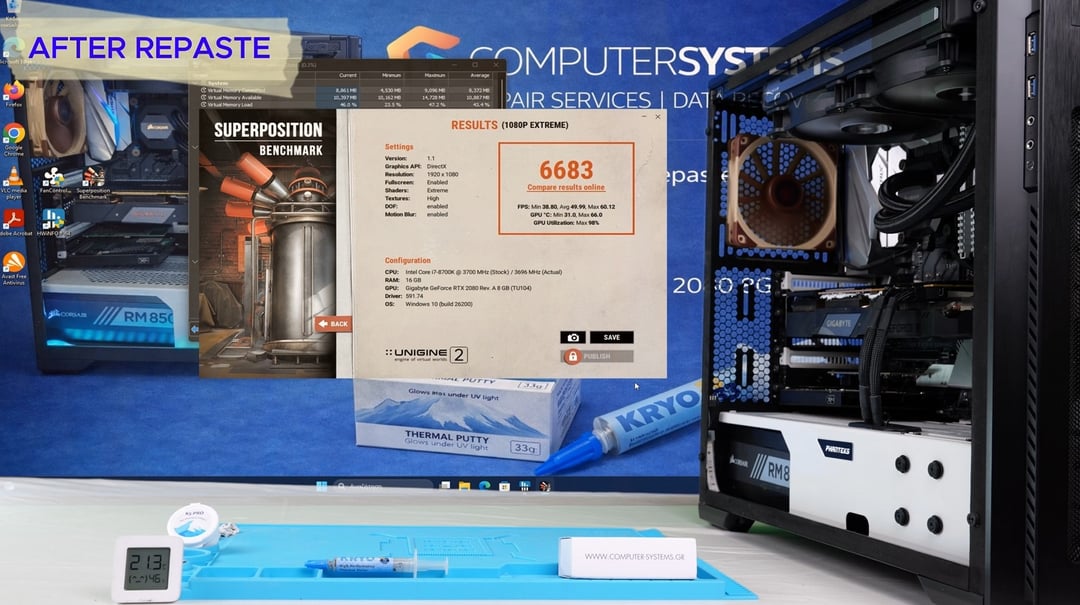
The intervention consisted of KRYO33 on the TU104 package and K5 PRO Mt. Olympos Edition on VRAM and VRM contact regions.
UV inspection was used as a pre-final validation step to verify interface coverage and contact uniformity. After mounting under full, symmetrical pressure, the assembly was disassembled and inspected under UV. Only areas showing incomplete coverage were corrected before final installation.
Results (automatic fan profile)
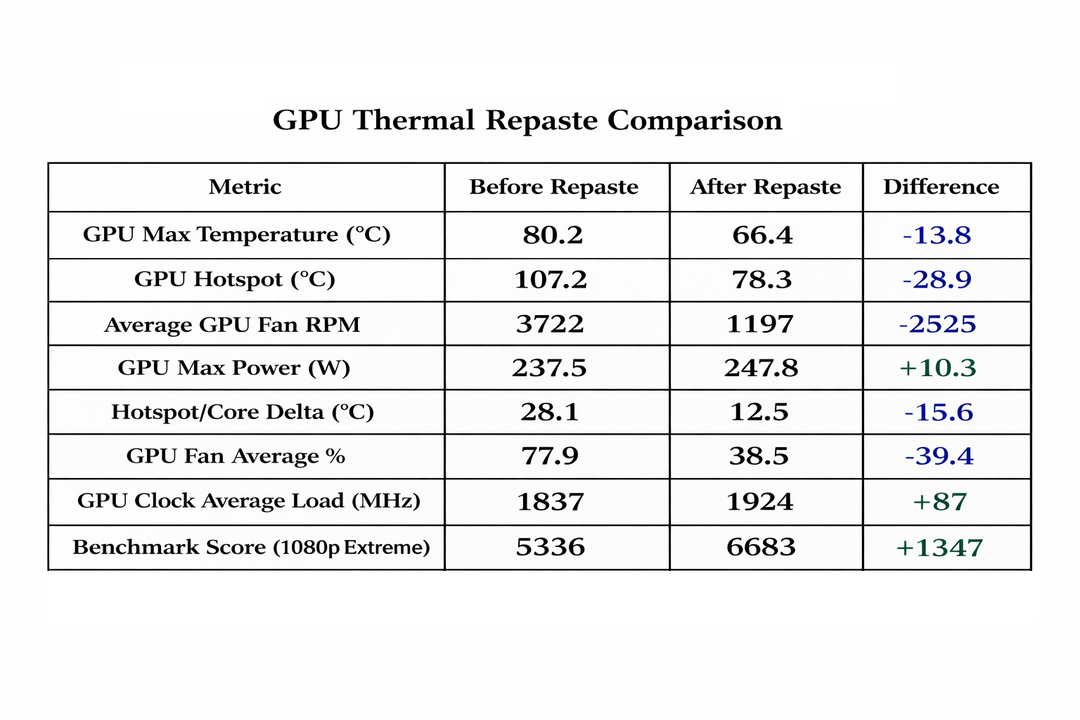
Baseline hotspot peaked at 107.2°C with a hotspot-to-core delta of 28.1°C. After interface optimization, hotspot dropped to 78.3°C and ΔT reduced to 12.5°C.
Average fan usage decreased from 77.9% to 38.5%. Sustained clock increased from 1837 MHz to 1924 MHz. Superposition score improved from 5336 to 6683 (+1347 points). At the same time, GPU max power increased from 237.5 W to 247.8 W.
The simultaneous increase in sustained frequency and power draw, combined with a significant reduction in hotspot and delta, indicates removal of thermal constraint rather than reduced workload. The performance gain reflects recovered boost headroom.
Context
At 107°C hotspot and a 28°C hotspot-to-core delta, the card was thermally constrained under sustained load. The owner was considering retiring it due to inconsistent boost behavior and high fan noise. After restoring interface contact uniformity, boost stabilized and the card regained usable headroom.
Full video (process + validation):
https://www.youtube.com/watch?v=4KnmlgQQv-U
Open dataset (HWINFO logs + benchmark files):
https://zenodo.org/records/18823747
Feedback from other TU104 or RTX 20-series owners who have measured hotspot deltas under sustained load would be very welcome, especially comparisons between factory and repasted interface behavior.