
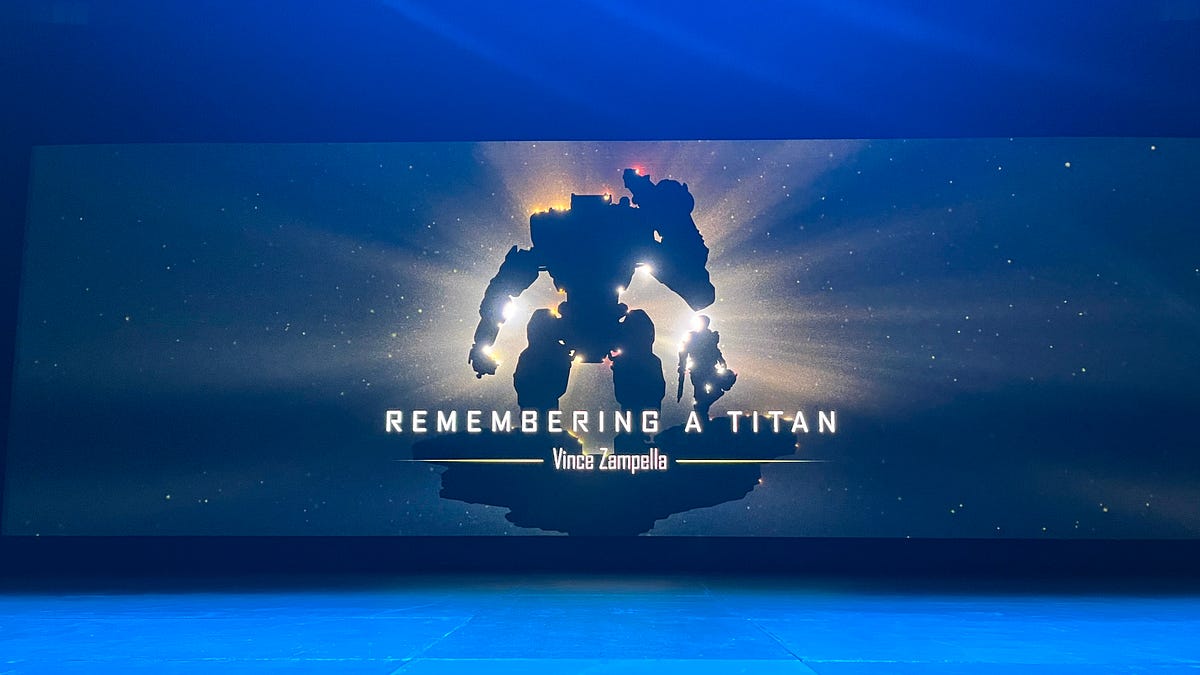
 The stage for today’s Vince Zampella tribute at the DICE Summit. Photo: Game File
Las Vegas, Nevada – Video game developer and industry leader Vince Zampella was remembered today at the DICE Summit, a relatively intimate annual gathering of a few hundred gaming executives and developers, through an extraordinary series of tributes.
“Vince Zampella changed how games are made,” said EA Entertainment president Laura Miele, on a darkened stage at the Aria Resort.
“But, more importantly,” she said, “he changed how people are treated while making them. His legacy isn’t just in the franchises or awards. It lives in every studio that chooses trust over fear, craft over shortcuts, people over ego.
The Game Award host Geoff Keighley described Zampella as “one of the most consequential leader our industry has ever known.”
Zampella died in a car crash on December 21, in an accident that also claimed the life of his passenger. His death immediately prompted online tributes and reflections in the media of Zampella’s legacy.
His resume is extraordinary: from leading the team that pioneered the military shooter through 2002’s Medal of Honor: Allied Assault, forming the Infinity Ward studio to create one of gaming’s biggest franchises in Call of Duty, rebounding from an acrimonious split with Activision management to create another hit-making studio in Respawn (Apex Legends, Titanfall, Star Wars Jedi) and steering EA’s Battlefield series to its biggest success with last year’s Battlefield 6.
Tributes in December and again today at DICE in Las Vegas focused on Zampella’s achievements as a leader, someone who focused on crafting acclaimed games, steering successful teams and prioritizing players’ experience.
 Bethesda’s Todd Howard speaking about Vince Zampella at the DICE Summit today. Photo: Game FIle
Keighley began the tributes with a run-through of Zampella’s early years, growing up as a game-loving kid in Florida, dropping out of community college, working in a bulk food shop and designing greeting cards for friends before entering the games industry by taking a job as a tester.
He recalled talking to Zampella in 2013 as Respawn’s debut game Titanfall was releasing.
“What struck me most was his restlessness,” Keighley said. “Nothing was ever quite good enough. That relentless hunger for excellence drove him to believe he could always make a better game, a better company, be a better leader.”
In pre-recorded messages, peers such as Gearbox founder Randy Pitchford and Insomniac Games’ Ted Price marveled at Zampella’s acumen at consistently leading successful teams. Respawn veterans spoke of the trust Zampella showed them to build their games.
“You knew he was going to be the one who was championing for this to be the best game it could be,” Respawn general manager Daniel Suarez said in a pre-recorded statement. Zampella would fight for the team to be given space to do their best work, he said: “People loved him for that.”
“He was the best servant-leader I ever knew,” said Stig Asmussen who directed two acclaimed Star Wars games at Respawn before leaving to form a new studio Giant Skull.
On stage in Vegas, Microsoft gaming chief Phil Spencer recalled getting to know Zampella over a decade ago initially as friendly rivals, bantering over whose games would turn heads at E3. “He was always able to work with the team, to set the bar even higher, and inspire such great work,” Spencer said.
“He was direct, impatient with nonsense and fiercely loyal to the people doing the work,” Keighley said. “As he liked to say, he was always a few days away from quitting every job he ever had. And somehow that’s what made him invaluable. He could be inside the system without becoming it. That independence led him to always put the player first, to push even the biggest organizations to take risks.’“
In recorded marks delivered in Japanese, game developer Hideo Kojima marveled over the impact of Call of Duty and Medal of Honor. He said Zampella had offered him valuable advice when Kojima, in a spot similar to Zampella, split from his long-time employer—in his case Konami—to form a new studio.
“He gave me a lot of support and advice,” Kojima said. “He showed me his studio, and I incorporated some of the good aspects into our own studio.” (Kojima also shared that he’d had preliminary talks with Zampella prior to his departure from Konami about creating a Metal Gear first-person shooter, but the project never came to be).
 Photo: Game File
“Vince was the real deal,” longtime Bethesda games designer and leader Todd Howard said on stage at DICE, describing their 20 year friendship.
“I would always seek his advice with every game that I did, or how to maneuver on all that is going on in the industry.”
Howard and Zampella were both on the board of directors for DICE’s annual awards. The event honors industry one or two figures each year as gaming pioneers. In the last meeting they shared, Howard nominated Zampella for a lifetime achievement award.
“But of course he said no,” Howard said. “It was never about him. It was always, always about the team.
“But I felt he deserved this, not just the games, but his leadership, his relationships, his ability to spot and nurture talent, most of all for defining the industry we have today and the one of tomorrow.”