
The gaming landscape is changing.
The governor of Arizona wants to raise the tax on sports betting to 45 percent. She is one of several governors looking to sports betting to bulk up their budgets. Illinois added a new wager tax last year; Illinois collected $479.6 million in sports betting tax in 2025. Sports betting is seemingly low-hanging fruit and events like the Super Bowl raise the visibility even more. The Atlantic had a headline: “You’ve Never Seen Super Bowl Betting Like This Before.” In 2025, sports betting in 35 states generated an estimated $15.8 billion in gross gaming revenue (GGR). The intense focus on sports gambling whets the appetite of hungry governors and lawmakers.
Igaming is like sports betting; it started to take off after COVID and has grown to be a mini monster in just five years. Maine just legalized igaming, bringing the total number of states with legal online casino games to eight. In 2025, igaming in seven states generated $9.9 billion in GGR. For whatever reason, igaming has been slower to expand than sports. It never seems to be on top of anyone’s list, except one state senator in New York.
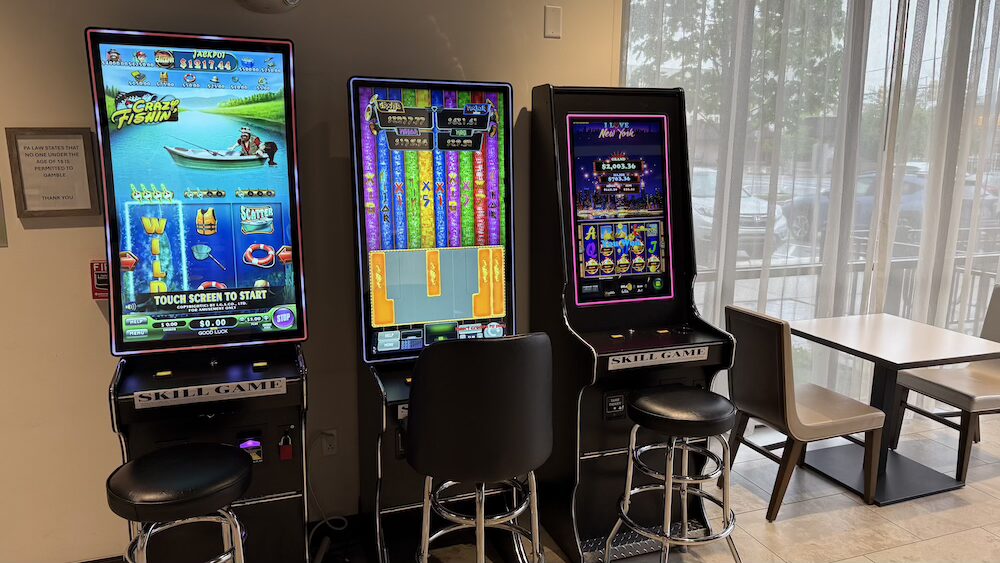
Besides sports and igaming, politicians have other gaming options to raise money for their pet projects. In Pennsylvania, Governor Josh Shapiro has fallen in love with skill games. He is the third or fourth governor of Pennsylvania seeking gaming taxes to fund some grand plan. Like the others, Shapiro would like to collect half of the revenue as tax. Skill games exist in Pennsylvania already, thousands of them. They operate in convenience stores, bars, and clubs and they’re not legal, not regulated, and not taxed. Shapiro would like to change that status, making them legal and regulating them. And of course, imposing a 50 percent tax.
Illinois is a step ahead in that market too. Illinois legalized video lottery terminals in 2009; play began in 2012. In 2025, 8,861 establishments hosted 49,450 VLTs. The games generated $3.1 billion in revenue and paid $1.1 billion in taxes. Shapiro thinks Pennsylvania could end up with 50,000 skill games and anticipates eventually collecting a billion dollars or more a year for the state’s budget. Given the Illinois model, that is not unreasonable, although it took a few years for the VLTs in Illinois to begin to generate the tax revenues Governor Pat Quinn had predicted and wanted in 2009.
There is another option, new licenses, but the opportunities are diminishing. Legalizing casinos or adding additional casino licenses has just about played out after nearly 40 years. Illinois is also a player in this field. In 2019, the Land of Lincoln authorized six new casinos. In 2025, 17 casinos in Illinois generated $1.9 billion in revenue and paid $500 million in taxes. Kentucky, Virginia, New Hampshire, and New York are coming into the fold.
New York City was the highest-profile case of expansion in 2025. Three licenses were granted in December. The Big Apple casinos are expected to generate billions in revenue and taxes, but it will be a while before we see the results and count the tax money. There is always a gap between the wish and the fulfillment.
One last story of change is Pueblo, Colorado, a would-be new casino city. City Council Member Brett Boston has proposed regulated gambling in downtown Pueblo. Boston said, “I don’t want Pueblo to be a casino city, but I do want maybe two, three, five at most casinos all centrally located downtown that’ll help revitalize that area.”
Those are not all of the ideas for using gaming to solve financial problems in play as 2026 begins. But they’re enough to make the point. Whenever politicians need money, gaming is fair game. Casinos work, but so do slot machines (VLTs, skill games, and HHRs), sports betting, and igaming. None of this is new. Gaming has been expanding into new jurisdictions since 1990 and into radical new forms since 2018. In 2025, the gaming industry generated a bit less than $80 billion in GGR. In 2019 before COVID, igaming, and sports betting, it was $45 billion. In 1980 when there were casinos only in Nevada and New Jersey, the GGR was approximately $4 billion.

It is a phenomenal growth streak. But because of its size and the extent of its reach, gaming does not have much opportunity left; in the United States there is a finite amount of disposable income and a finite number of casino customers. New gaming will come at the expense of existing operations. Reno and Atlantic City lost business to new gaming jurisdictions and New York City will be another blow to New Jersey. If Pueblo gets casinos, Cripple Creek will pay the price. Anticipating the changes in competition and taxation has become an important element in casino planning.
Las Vegas Sands and Wynn Resorts opted out of New York City. Both questioned the potential and stability of the market. The gaming landscape has been changing and shifting for over three decades. For years, it was manageable. But the industry has reached a point when those shifts are life threatening. If New York City casinos prosper, a casino or two someplace else will die. Operators in Atlantic City question that statement, but no one in Cripple Creek would doubt that casinos in Pueblo would sound a death knell for someone.
New taxes, skill games, new casinos, HHRs, sports, and igaming will ring a bell. For whom does the bell toll? Only time can answer that question, but it is worth contemplating everywhere.