
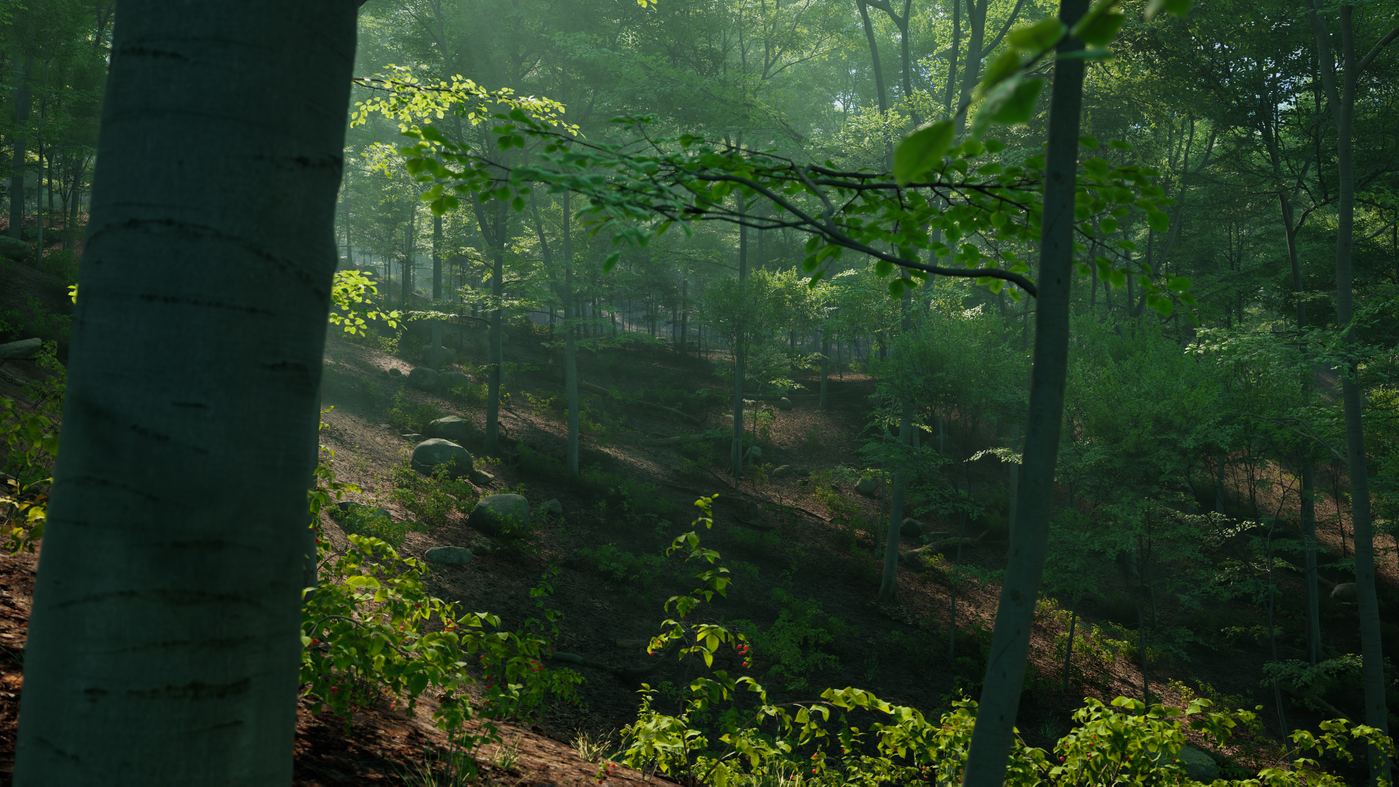
Unreal Engine 5 continues to roll out improvements, cementing its place as one of the best game development programs as well as a powerful tool for, visual effects and 3D visualisation. One of the most exciting recent features was the arrival of procedural content generation (PCG) out of beta in Unreal Engine 5.6 and 5.7.
PCG in Unreal Engine 5 provides a node-based framework for creating expansive, complex environments and allows dynamic, runtime-generation of assets and landscape elements without the need for external software. To help you get started, Epic’s posted a new explainer video delving into key updates and how they work (also see our roundup of Unreal Engine tutorials and Unreal Engine courses.
A First Look at Procedural Content Generation in Unreal Engine 5.7 – YouTube

Watch On
PCG in Unreal Engine can be used to quickly populate environments with assets. That could mean adding more buildings to a cityscape or more trees and other vegetation to a forest. It was introduced to Unreal Engine 5 as a Initial Experimental Release in 2023 and moved to Beta in Unreal Engine 5.4.
You may like
The explainer video above highlights time-saving new updates, including templates, enhanced viewports and biome improvements.
The video also highlights the new PCG Editor Mode with interactive and customisable graph-driven tools like spline drawing, point painting and volume creation. It also mentions the new data types and polygon operations for surface generation and shape manipulation and advanced spline operators for intersections and splitting.
It goes on to outline the support for custom data types to build proprietary PCG toolsets and presents the Experimental Procedural Vegetation Editor for creating Nanite-ready vegetation with wind animation and voxelization.
You can learn more about PCG in Unreal Engine on the dev site , which explains the procedural node graph in full.