
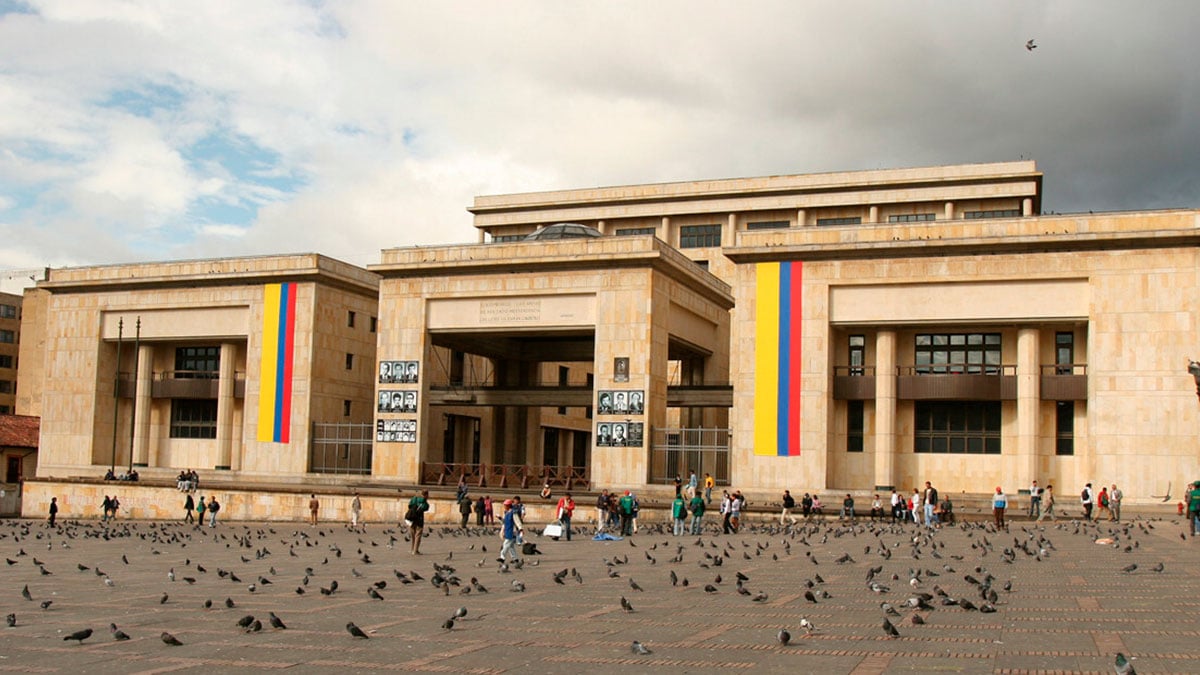
Colombia’s Constitutional Court has provisionally suspended Decree 1390 of 2025. The move suspends the imposition of a 19% VAT on gross gaming revenue (GGR) from online gaming.
Through the decree, the government of President Gustavo Petro had declared a “State of Economic and Social Emergency throughout the national territory” in order to complete the 2026 budget, which had been rejected by Congress in early December 2025.
The decision was adopted after six of the Court’s justices voted in favor of the suspension, while two justices voted against it.
As clarified by the high court in a statement, the suspension also renders ineffective Legislative Decree 1474 of 2025, which established the imposition of the aforementioned 19% VAT on GGR, applicable to both domestic and foreign operators. That decree also imposed a 19% VAT on alcoholic beverages and on wealth.
As a result of this measure, the tax on online gaming cannot be applied, at least until the Court’s Full Bench issues a final ruling on the constitutionality of the decree in question. As for the funds that had already been collected, they will remain intact.
This marks the first time the Constitutional Court has halted a presidential decree while assessing its constitutionality, and it comes at a sensitive moment for the government, as it could have significant implications for fiscal and economic policy.
It should be recalled that, through the decrees issued during the 30-day emergency period, the Ministry of Finance sought to secure around COP 12 trillion (USD 3.2 billion), which required an extension and additional measures to make up the remaining COP 16 trillion (USD 4.3 billion) missing from the 2026 budget.
For now, industry associations representing the sector in Colombia have not issued any statements on the matter. However, in recent days, in an exclusive interview with Yogonet, Evert Montero, president of Fecoljuegos, had stated that shifting VAT from player deposits to GGR was a starting point for the sector’s sustainability.
Meanwhile, attorney Juan Camilo Carrasco, managing partner at Sora Lawyers and an adviser to the industry in Colombia, said on social media that the decision generates both “relief and uncertainty.”
President Petro responds
In response to the measure, President Petro stated on social media that the pause of the economic emergency was intended to protect the “mega-rich, the only ones with the duty to pay more taxes.”
In a lengthy post, the Colombian president said the goal was to restore the country’s finances to a healthy state; however, the Court struck down this “last attempt.”
Among his arguments, the president stated: “Our call was always for the mega-rich—who alone have the constitutional duty to pay more taxes—but they rejected it and mobilized Congress and the Court to reject the emergency, which is in fact an emergency (sic).”