
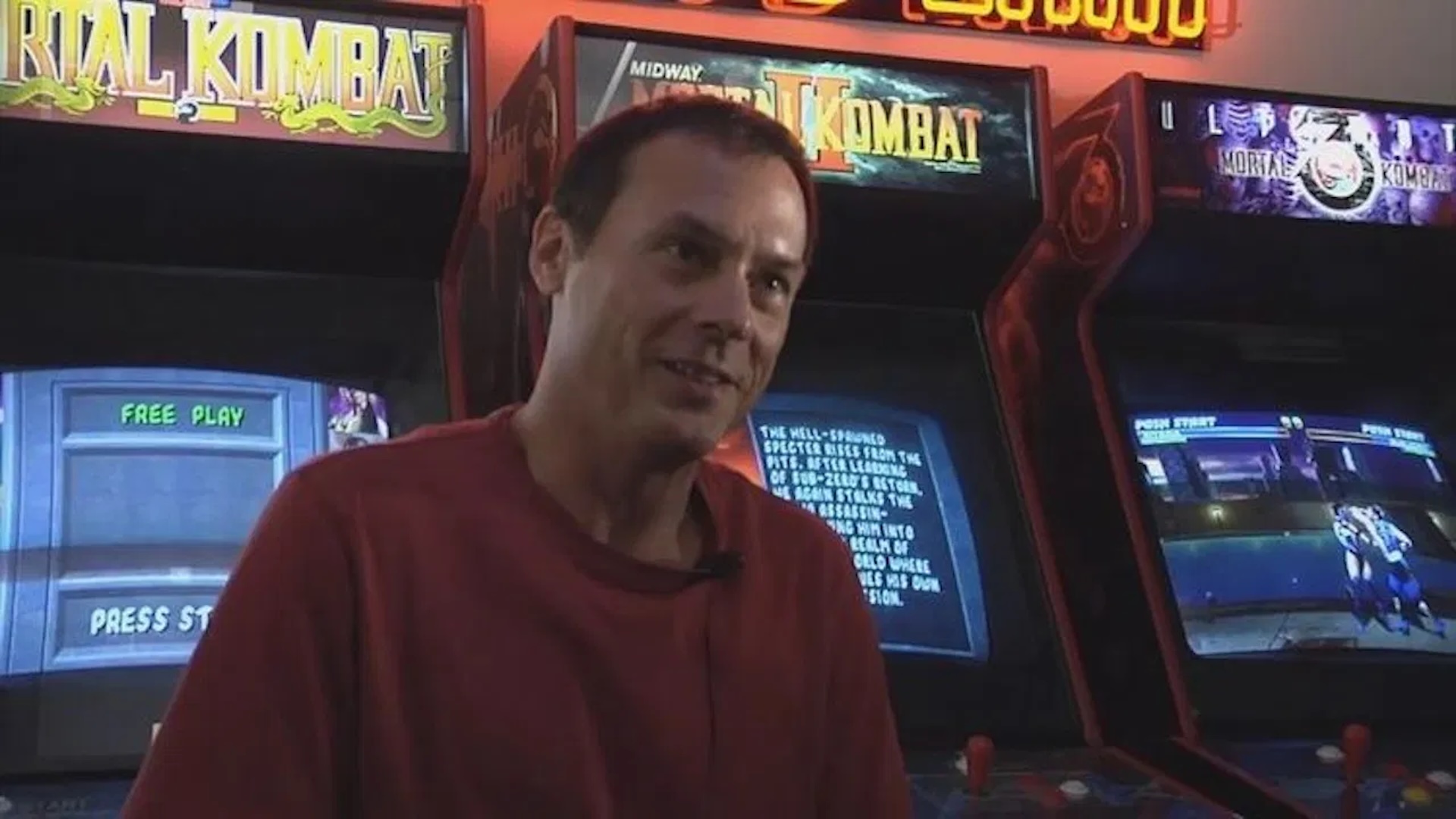
It’s hard to imagine Mortal Kombat without Dan Forden’s music and soundscape. All the grunts, the screams, the ominous fatality sounds, the tracks that set the mood on each stage—in the arcade era, those were Forden’s creations. He continued from there, helping to define the 3D era of MK in the 2000s and the franchise’s glorious return to form that lasted from 2011’s Mortal Kombat through 2023’s Mortal Kombat 1.
That era, and all that follow it, will have to continue without him. Forden retired in October 2025, leaving fans wondering: What will MK sound like now? There are more sound producers working on the franchise, of course, but fans rightfully looked to Forden as the conductor of that band.
I can’t answer the question of how MK will sound in the future, but thanks to this lengthy interview, I can tell you more about how Forden defined audio from Mortal Kombat through MK4. Dan and I discussed his childhood, his interest in music and formal training, his early years at Williams, and, of course, lots of Mortal Kombat.
Source: Shacknews
David L. Craddock: Where did you grow up, and what did you like to do as a kid?
Dan Forden: I grew up in a number of places. I was born in Argentina and lived there for about nine months. Then to Virginia in the USA for a little bit. Then we went to Poland and lived there for two years, so I was probably learning English and Polish at the same time. Then we went back to the US and bought a house in Potomac, Maryland, and lived there for a couple of years. In 1970, we went to Mexico City and lived there for three years. At that point, I was conscious. We were in Mexico for my second, third, and fourth grades. Then back to Potomac, Maryland, and at that point, we pretty much stayed there.
You’re probably wondering if my dad was in the military. No. He was in the CIA. That’s a whole other thing, and there’s stuff out there in the world that’s super interesting. There’s a book called A Secret Life about a Polish general who had had it up to here with the Soviet Union imposing their will on Poland and the other Eastern Bloc states. He contacted naval intelligence initially, but one thing led to another, and my father—since we lived in Poland and he knew Polish—was designated the person who would be this Polish general’s handler. For years, this Polish general turned over massive amounts of intelligence: Soviet plans for bunkers, nuclear bunkers in Poland, martial law. Anyway, my dad was involved in that, and the book was written about that. There’s been at least one movie released about it.
After we came back to Potomac, we stayed in the States. I finished elementary school, junior high, and high school, and went to college.
Craddock: When did you start playing music?
Forden: At one point when I was in junior high, my mom said, “You have to pick an instrument.” I said, “Why?” She said, “Because you’re going to play in the band.” I said, “Oh. Okay.” So I picked the flute because I think Jethro Tull’s awesome. I started playing flute and took it pretty seriously throughout high school and into college. I got better and better, practiced lots through private lessons. Just loved playing music. Later on in high school, I met some people, my sister’s friends. They were playing jazz, and they learned I could play flute. I’d never played jazz before, so I started learning that and playing in rock bands and jazz bands. Also picked up saxophone along the way, and had also been playing guitar all that time just as a hobby, not really seriously. Now I’m playing it much more seriously than I ever did, so that’s fun.
So I’ve always been musically involved. I always liked it when I was a kid, and basically wanted to listen to a lot of music and learn how to play it, learn how to play it with other people. I went to Oberlin College because they had a very strong music program. Tried to get into the Conservatory as a flute player. It was very stiff competition, and while I got close, I didn’t get in. But they said, “Hey, you’re close, so if you want, you can study with our secondary teacher.” She as a professor at Bowling Green in Ohio and would come by once a week and teach a stable of students. I studied with her for a couple of years.
I got more interested in electronic and computer music while I was at Oberlin and basically had a concentration in computer music. That [area of study] was fairly nascent at the time, but Oberlin had a pretty good facility and some expertise in it, so I definitely learned a lot. Wanting to continue those studies, I went to MIT for one year after that. I got a master’s degree in computer music. While I was there, I made this friend who didn’t think the MIT program was that great, and said, “We should go to Northwestern. Those people are great, plus they’ve got more money.” MIT had given me a half stipend and half tuition, but Northwestern was offering full for both. I went there, and that’s how I ended up in the Midwest. I finished all the coursework. I never got a degree, but at a certain point I needed to get a job.
Craddock: Since you had an interest in computer music, did you perceive a career in video games as a viable option? Or were you thinking something else?
Forden: I was thinking rock star, being in a rock band or something like that. At that point I was playing bass in a band and was way into that. Music was still a big focus. Still, I needed to get a job, and I knew Brian Schmidt, who was in the program at Northwestern ahead of me. He had gone off and became the audio director at Williams Electronics, where a bunch of video game and pinball legends started their career. They were making great games, and after I started working there, I got to work with those people. Working with Steve Richie on Black Knight 2000, which Ed Boon was programming, was how I got to know Ed. After that, Ed and I worked on a couple of games before we did Mortal Kombat.
Craddock: How many people at Williams worked on music? Or were you one of just a few guys, hopping between projects as needed?
Forden: Back then, for the most part, a person would own a game, so they were responsible for all the sound in that game. Every once in a while, there’d be a bunch of games going on, and we’d have to shuffle things around because a game might be too much for one person. We could split up a game. For Riverboat Gambler, a pinball machine, Paul Heitsch and I split that one up. I did some music for it, and he did a little bit of music. Maybe I did some of the speech and sound effects, but I just don’t remember. The Bride of Pinbot, which was also called The Machine, is a famous pinball game. I just did the music on that one; other people did the voice and sound effects. But that was an exception. For the most part, if you were doing a game, you did all the sound for that game.
When I started, Chris Granner was there. He was a contractor but was present a lot. Brian Schmitt was there; me; Paul Heitsch; Jon Hey; and Robin Seaver. So there were maybe five or six of us there doing games because there were a lot of games going on all the time—lots of pinball, and then, more and more, arcade video. This was in the time of NARC; Brian was finishing up on that. SmashTV came out. I worked on a game called Arch Rivals, a super-fun basketball video game. The same design team produced a game called Pigskin 621 A.D., kind of like medieval rugby with goofy stuff. It was such a fun game. Those guys did super-fun games.
Craddock: Coming to video and pinball games, did you find yourself restricted by the hardware in terms of what you could do? And if so, did you like those restrictions, or were they more obstacles?
Forden: In retrospect, yes, I did like it. I’m not sure I liked it at the time. You want to work in a medium with really great sound, and to be honest, when I started, they were still using the Yamaha FM chip for most of the sound. And it’s a very powerful thing and actually really cool to figure out a way to make it do even cooler things—to make a rock band out of it, or even something orchestral, even though you’re only dealing with eight voices. You could at least imagine in your head, okay, that’s what [the sound designer] intended here. Constraints are really good in a way, because it was like, okay, this is what I’ve got to work with, so all I can do is try to get the most performance out of it as I can and try to make the game as cool as possible. It was always a really cool challenge given that you didn’t have a studio [at your disposal], and you couldn’t record any sounds you wanted and put them in the game. You’ve got to make this sort of intractable chip do things that it probably doesn’t know how to do. Definitely a challenge, and rewarding, too.
Craddock: What was your workspace like in terms of equipment and instruments?
Forden: In the very beginning, the office had a couple big tables, a desk, and a pinball machines. But strapped on the playfield was all the dev hardware—mostly proprietary circuit boards, chips, a speaker, things like that. Basically, we could audition our stuff as if it were playing out of a pinball speaker. It didn’t really do much for you if you were doing a video game, but close enough, right?
The computer I did all my work on was hooked up to that, so I’d go into some program and type in numbers that corresponded to the sounds I wanted to hear, and they would play. I did have a cheap keyboard I could play stuff on, just so I could figure stuff out. There was a point where I tried doing a sequencer with a MIDI sequencer program on the PC, and then take that data, read through the file, and spit out the commands we’d use to play notes and things like that. I did that a little bit, but at the end of the day, it was easier to type everything out and copy and paste. The reason I did that was because I wanted to do one of those piano glissandos where you sweep your hands down the keys. It sounds kind of random, and was actually cool to do a gesture like that because I was getting the MIDI data and punching it in. So that was cool, but I really didn’t end up using that at the end of the day. I would type our stuff into an editor, and then compile that, and it would play.
Craddock: What did you think about working on video games versus pinball? Was it more freeing?
Forden: I remember feeling a little bit constrained by pinball. Now that I think about it, I’m not really sure what my problem was. It was something about you always had to be accounting for things you weren’t expecting, something like that. I felt like video games were maybe simpler in a way because you didn’t have the mechanical components that could screw stuff up sometimes. I’m not even sure that’s what I was thinking in the moment. But at the end of the day, they were both fine. When you look at it from the standpoint of, “I’ve got to create a queue for this thing,” it shouldn’t really matter whether it’s a pinball or video game.
Craddock: How did you meet John Tobias?
Forden: He came into the company a year or so, maybe two, after I got there. Also after Mark Turmell showed up. Mark was putting together the team for SmashTV. I think Steve Beran came in around that time, too, because I think Steve might have worked on that before he went over to Mortal Kombat 3, maybe part of II; I don’t remember exactly. After Ed and I had done High Impact and Super High Impact video games, John and Ed got together and John was talking up this idea of, hey, how about a mythology-based, large-character-based fighting game with Asian tropes, kung fu and things like that. Ed got interested in that. They’d probably been sussing this whole project out. Eventually, Ed or both of them came to me and said, “Hey, do you want to work on our game?” And I was like, “Sure!” I liked working with Ed. He worked on good games; he liked what I did, and I liked the games that those guys made, so I said, “Let’s do it.” That’s how I got to know that.
Craddock: How far along was Mortal Kombat when you joined?
Forden: I don’t think it was very far along at all. I started making sounds and music for it pretty much right away, and there wasn’t much of a game yet to attach them to. After they’d gotten the actors in, they took the videos, digitized them, did what they needed to do to take out the frames they needed, and they got [Johnny Cage] going and could play with him. What I remember is at the very beginning, I’d gotten a suite of punch sounds, some attack yells and reactions, and maybe a couple of other things. I don’t remember if we even had music playing in the game at that point. You start beating up on each other, and it was hilarious. I just started cracking up. It was funny because Ed was kind of upset, like, “What are you laughing at?” It just blew me away because everything was so over the top. We actually toned that down in later years because it was so ridiculous, but I thought it was funny. And clearly it resonated with the game-playing public.
Craddock: How did you go about creating music with the game not very far along? Were you given concept art or some videos?
Forden: Definitely. This may have not been at the very beginning; probably for MKII. At that point, I was working from home as a contractor. I would go in twice a week to check out what was new, deliver my latest work, help people get it into the game, and evaluate and talk. Then I’d go back home, make some more stuff, rinse and repeat. In that case, Ed would give me videos of scrolling through a background. I could look at that and start thinking of stuff.
In the very beginning, though, I was still in-house when I started working on MK. When I ended it, I was working from home plus recovering from knee surgery. Williams set me up with a [workspace] at home. So I’m sure I had some visuals. Also, we were using kung-fu movies as a source of inspiration, as something to emulate. Getting these way over-the-top smack and punch sounds you hear, that are way out of proportion to what is happening. In the movies, a punch might sound like someone getting hit with a two-by-four or a gunshot. It’s just crazy. We tried to go over the top with that stuff, and I feel like it paid off because it made everything feel extreme.
Craddock: Jumping ahead a bit, John told me that he and Ed found the uproar over the violence kind of funny because the game was so over-the-top. They didn’t know how anyone could take it that seriously. Did you feel the same way about the controversy?
Forden: Yeah, pretty much. When you’re talking about the uproar in Congress, it was a bunch of old, out-of-touch people not understanding what the thing is. But being a parent, I also got it to an extent. I was like, wait, should any child be able to see this stuff? I don’t know about that. I think the outcome of all that, where the ESRB was created and video game violence was controlled by the industry instead of by Congress, was the right way to go.
Craddock: For MK, did you work on sound effects and the soundtrack at the same time?
Forden: I’d write a tune for a level, get it in the game, and then all the while, they’re saying, “We’ve got this new move or this new character.” I had a list of things I needed to do. Every time a new character comes in, there are sounds that need to be made for their impacts. New backgrounds are going to introduce additional needs for sound. What is it we say? “The game tells you what to do.” You look at the game, and it’s like, okay, I see what I’m supposed to do. You’re seeing how they’re playing it and saying, I see a thing there that needs a sound. There’s an action or impact happening, and it looks like this, so the game tells you what to do to make sound. It’s a matter of playing the game, figuring out what you’re missing, take notes on what I need to make, make it, get it put in, experience it. Is it good? Is it good enough? And then rinse and repeat.
It’s like Ed says about making games: Making games is about the thousands of little decisions you have to make along the way to figure out what the game is going to be. Except in this case, you’re making a list of stuff, and it’s a really long list because it’s every sound that needs to be in the game. You’re building that as you go through the process, going through the list and crossing stuff off the list until you’re done. I go back to that statement, “The game tells you what to do.” I think different people would have different opinions about what the most important thing to happen is, given the setpiece or whatever. But that’s fine. People are going to approach that differently and make their own choices. That’s what I did: what’s missing? what’s implied by a certain reaction? And then I’d do my best to make that sound.
Craddock: The uppercut sound is iconic. Do you remember anything about how you chose the sound for that, and what was involved in bringing that together?
Forden: I think it was very messy. It was like, okay, we have to make something that’s louder than everything else, and will always be louder than everything else. I think you had three sources of sound in that first game: a data chip that did voices, a converter that let you store maybe two or three drum sounds—I might have put punch sounds or something else crunchy in there, I don’t know—and then you’ve got the eight voices of the Yamaha FM. I know for sure I used some big bass, almost a sine wave, a bass sound as part of the uppercut that really rocked the cabinet. If the game was loud enough, you’d almost feel it in your chest, this kind of sub-bass kind of thing. Then there was probably some messy punch sound that got compressed so it sounded like garbage, but when you put it together, it sounds like an explosive punch. That’s kind of what that ended up being.
Source: Shacknews
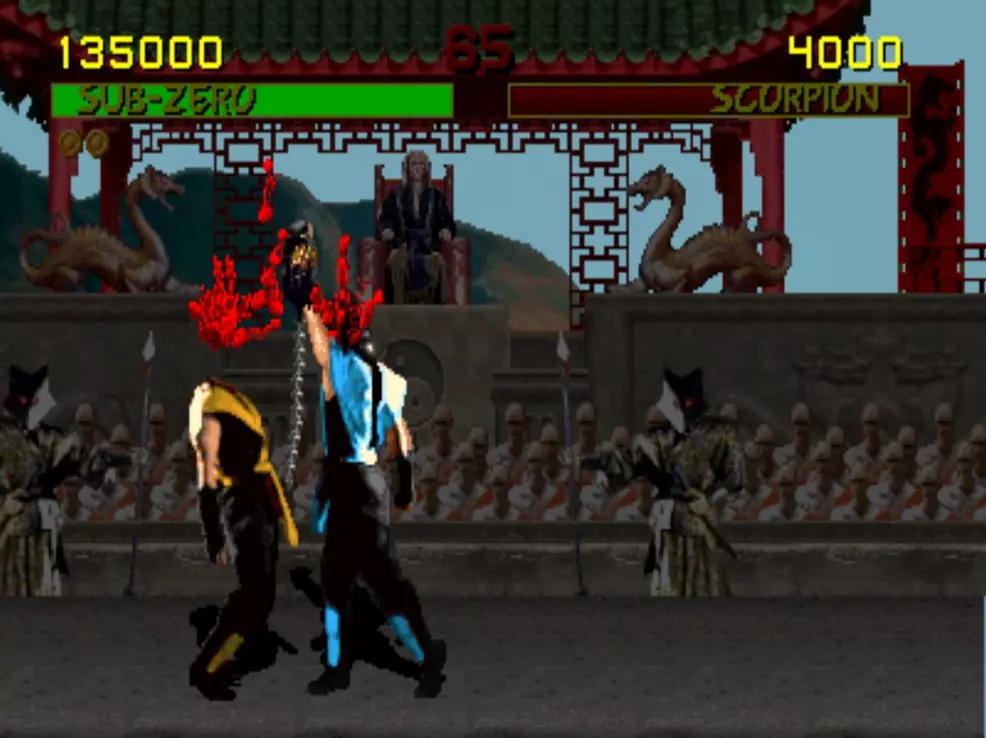
Craddock: Well, it’s like what you said: The game tells you what to do. You see this animation of someone getting punched under the chin and flying 20 feet into the air, you’re like, oh, this must be high impact.
Forden: Yes, absolutely. And then going with that, you’ve got to pick the right yell. We had gradations of reaction yells, and you want the biggest one for that. We developed these categories of vocal reactions and attacks that grew and grew over the years of Mortal Kombat. It started with a short attack, medium attack, long attack, huge attack, small reaction, medium, and then huge reaction if you get hit by an uppercut. Ed talks about this a lot: The question is, “When did you know you had something special? Or did you know?” Ed talks about, “We wanted to do an uppercut, so we got all the stuff together for an uppercut: animation, sound, maybe a screen shake. And then we put it all together, and everyone was like, ‘Whoa! That’s cool! We’ve got something.'” It was very exciting to get to that point.
Craddock: And that was your feeling, too.
Forden: Yes. It was pretty unanimous. And then when we did the first fatality, it was like, “Oh. Okay.” Again, we had everything working together. That’s where Ed says, “You’ve got to get all these little pieces moving in the same direction, and then you actually have something.” You’ve created a cool thing.
Craddock: John Tobias and Ken Fedesna told me about the hallway where games were put on test. What was it like seeing the reactions from your colleagues?
Forden: Yeah. Once they put it in arcades and started testing it, then it pretty much confirmed that it would be huge. I remember the buzz around the company was pretty good.
Craddock: Did you work on anything, such as a stage track, that didn’t make the cut?
Forden: I don’t think in the first game. There’s a tune in MK4 I did that never got in, that I put on the soundtrack CD later on. I did a slower tune and thought, Maybe this doesn’t make sense for this game.
Craddock: How did the Asian mythology direction for MK1 influence your music?
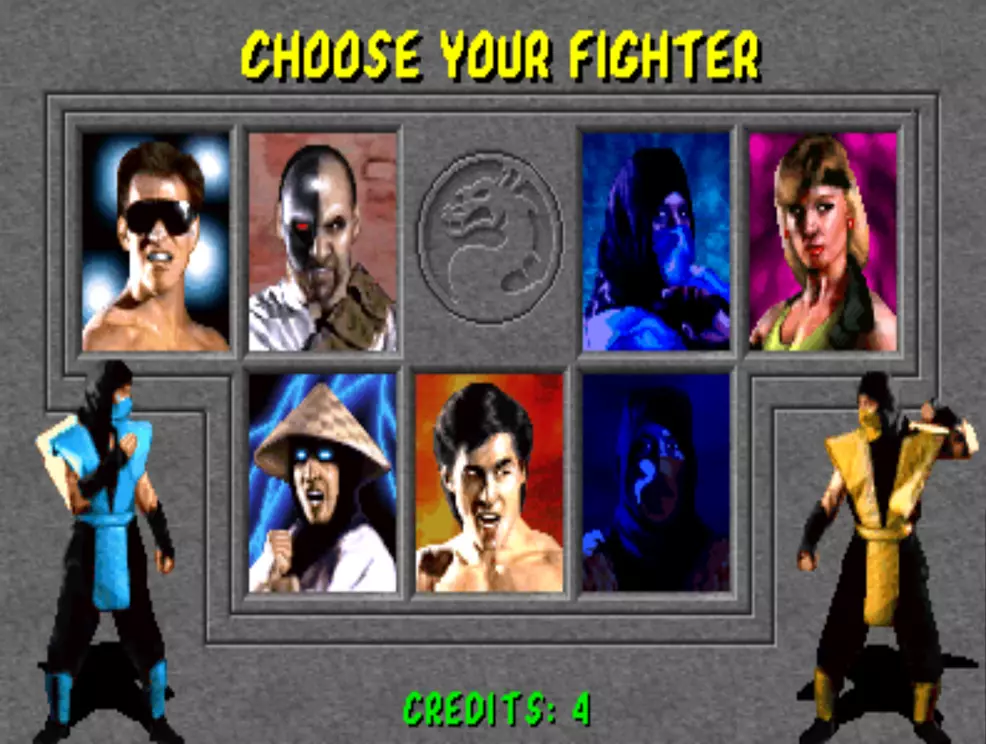
Forden: In a big way. I would listen to some kung-fu movies and got a sense of what that music was like. I didn’t want to do the same thing; I wanted to make it allude to that kind of stuff rather than hit people over the head with, “Oh, this is Asian music!” I wanted it to be modern, dark, and kind of scary, but have that [kung-fu] edge to it, too. I used some of the twangy, koto sounds: flutes, violins, and things like that, at least later on for sure, because the quality of those virtual instruments got really good. Earlier on, I was working with a much more limited palette. But for me, I wanted to have an amorphous Asian influence but didn’t need it to be authentic or academically the same as some classic Chinese music. I wanted Mortal Kombat to allude to that sound without being dominated by it. I wanted the more dominant pieces to be the groove, maybe the baselines, those things that kind of carried it. Most of the time, they weren’t really strong on melody, but more feeling. Some tracks have overt melodies for sure, but what I was going for was more of a feeling rather than, oh, I can sing this melody. Sometimes that was there for you, but not always.
Craddock: That’s something about Mortal Kombat that struck me even as a kid. There was a certain vibe that I couldn’t put my finger on. It was this mélange of the music, the sound, the graphics—everything came together in a certain way to create that vibe.
Forden: Yeah, I agree. A lot of things came together well. People had cool ideas and could execute on them; that’s what made that work.
Craddock: Do you have a favorite stage track from the first game?
Forden: Yeah, for sure, but it’s tough. There are two or three I could bring up. For the very first [stage], I like the melody a lot. I harmonized it in fifths or fourths, I don’t remember. It was totally like a King Crimson kind of homage, really. And then there’s the Temple Gates, where I was trying to emulate Bill Bruford’s drumming and some Crimson things. But it was also a thing that was very dark, foreboding. It starts up kind of slow but then kicks in and rocks out. The Pit was pretty fun, too. A bunch of those tracks were really fun.
The Pit was this odd time signature synth thing. I don’t know if you saw, but some guy learned it and then played it on a keytar, the keyboard looks like a guitar. It’s so cool, and he nails it, too. It’s really fun. The Shang Tsung and Goro stuff was fun, too. Pretty much all the tunes in that game. I remember what I was thinking and trying to do, and it seems like they were effective.
Craddock: There’s the throne room stage where Shang Tsung is watching you fight. Did you think of characters when you were writing these tunes? Like, okay, here’s this sorcerer, he’s calm and confident because he’s just applauding these people who are killing each other for his entertainment.
Forden: Maybe not in that context itself, although there’s the sequence where you have to fight Goro, and then you have to fight Shang Tsung at the end. Both of those, like the Goro one—I was really happy with that one. I didn’t have an orchestra, but I felt like I was scratching the surface on being able to deliver something that has the impact of a large group. Even with the Yamaha, it feels kind of big. You could do a much bigger version of that now with real instruments, but it felt very good to me. I was able to go off and write crazy leads and stuff. For that one, I was definitely thinking of Goro: big, monstrous dude; big footsteps; everything’s big.
The Shang Tsung tune was more evil sounding. It wasn’t as big because he’s not a big guy, but he’s the worst guy. That was a fun one to do too.
Craddock: When you reach Endurance Match 3, you always fight in Goro’s Lair, because Goro is the next fight. And you can hear him growling and stomping around, complete with the screen shaking with each thunderous footstep. Did you help with the implementation of that presentation?
Forden: Back then, I wasn’t as involved in the implementation of the sounds. I don’t really remember that specific thing, so I don’t know. It sounds legit. Either he said, “Hey, can you make these sounds?” or he decided, “I’m just going to throw these in and make a scene.” That could have been his call to do that.
Craddock: Well, I loved it!
Forden: In that case, I’ll take credit for it. [laughs]
Craddock: Was there a track that you felt gave you the biggest challenge creatively or technically?
Forden: That’s a great question. I’ve never thought about it, but it would be much later stuff. Nothing from the first four games. Although the thing about MK4 was that I was making a concerted effort to do something different. The first three games sounded very similar, I think, so maybe I was feeling tapped out and wanting to do something new. So, I did. I got a bunch of different sounds and tried to do different things instead of the things I did before. I’m sure there’s a lot of continuity between the first three, but I felt MK4 hit a little different.
Craddock: In terms of the screams and voices, what was the rough divide between, say, Ed doing them—the voices and the “Get over here!” line—and using samples?
Forden: I recorded everything. In the first game, I’m sure we didn’t have enough memory to have unique voices per character. We didn’t get to that until MK Deception. For the early games, we would have needed at least one female voice, and then we’d have two or three male voices depending on the game. We had a template: “Every character has to have this set of things.” But then some characters would have one- or two-offs, like Scorpion having “Get over here!” and “C’mere!” That’s something we expanded like crazy when we moved to consoles and had enough memory to put tons of stuff in the audio package. In the earlier days, we were a lot more limited and couldn’t have a voice per character.
Craddock: Liu Kang was bespoke as well.
Forden: Yeah, he had to be.
Craddock: The fatality tune in that game is so memorable: short, ominous, impactful, especially with the sky darkening. What do you remember about coming up with that tune?
Forden: The very first one was very simple. It was just one note for whatever reason. Maybe one note was good, and it did seem to work. For the other [arcade] games, I don’t think it ever got to be more than three notes. Although there was a five-note one. It’s like an announcement before the action happens. That was always fun to do, especially the first game’s, because it was very simple. You have the music and visuals, and when the stage darkens, you have almost a spotlight on the characters. The implementation and execution were what really made it work.
Craddock: Since Street Fighter II had an influence on the gameplay, like taking dizzies and putting them at the end of a match instead of during one, I wondered in SFII had any influence on your music.
Forden: Just the martial arts stuff. I barely knew what Street Fighter did or was. When I looked at it, I didn’t like how it looked, and when I listened to it, I didn’t like how it sounded. So I didn’t take from it.
Craddock: I liked that each stage in both games had unique motifs. That gave each stage a personality. Were you thinking in terms of personality?
Forden: Absolutely. That’s why Ed provided me video of the backgrounds. I could sit with them a little bit and think, What’s the music going to sound like for this? We also didn’t get tunes for backgrounds until later. In some cases we would double up on tunes. For the most part, there was an identifiable tune targeted toward a specific background in those earlier games.
Craddock: When you boot up the machine, the first thing you see after the memory test is the title screen with that short but sweet, “Dun-dun-DUNN!” What goes into creating intro music that’s different from, say, a stage theme? Or is the process more or less the same?
Forden: There was a thing I needed to do for that sequence. It was like an announcement, a fanfare. That sound was the classic fanfare syllable. I did something like that, and then using my faux-Asian instruments to some extent, I added them on top. We had that same kind of fanfare, and a groove that went along with it, for MKII.
Craddock: We’ve talked about the first indication that you guys had something special, but what was your indication that the game was more than just a success—it was a global phenomenon?
Forden: That probably took a couple of years. It was like, oh, we did a successful game. But then Acclaim started advertising the home versions on TV; you had the commercial with the kids shouting, “MORTAL KOMBAT!” That ad campaign made me go, oh, this is something else, isn’t it? We definitely caught lightning in a bottle. Over the years, you just marvel: Oh my god, this thing’s still going.
Craddock: What does the game mean to you?
Forden: I enjoyed working with the group and where I was, and I liked doing sounds for video games and pinball games. It was a pretty great job. But the first Mortal Kombat means a lot. It’s by far the most important thing I’ve ever worked on. Nothing else really comes close. I’ve worked on other games and had a great time working on them, but that first game is head-and-shoulders above them in terms of relevance. NFL Blitz was a pretty cool, pretty successful game for a while, but clearly it didn’t last like MK did. The Grid, we did that game right after MK4. It was a great game to work on: Fairly different from MK in terms of tone and all sorts of other things. It was a chance to try things that had nothing to do with MK. It’s mind-boggling how successful that game was.
Craddock: John and Ed had strong opinions about the home versions of MK1. Did you play them at all?
Forden: I didn’t spend much time with them. I remember hearing the music and thinking, That doesn’t sound like what I did. I don’t know what the people had access to in terms of [hardware and sound libraries]. I know we made the materials we had available to them, but I don’t know to what extent they were useful. It just didn’t seem like the music was very close to what was done in the arcade. But to be clear, I didn’t spend more than five minutes with them. I was probably more focused on the next game we were working on.
Source: Shacknews
Craddock: What projects did you work on before MKII? Or did you go right into the sequel?
Forden: There were pinball machines. Star Trek: The Next Generation might have been in the works at that point; it was close to that time. We were firmly in DCS sound land.
Craddock: Midway got a new camera that John and Ed got to use for MKII. You mentioned DCS. What upgrades did you get on the audio side?
Forden: It was before that time that I became an independent contractor and worked from home. This was a transition from when we were using the Yamaha chip soundboard for MK1 and all the pinball machines. Then we transitioned to DCS, Data Compression System. That means you could put any sound you want into the game, and it’s not being generated by a synth algorithm. It’s just playing stuff out of memory. That’s basically how all games work now. I know some of the consoles have synth capabilities and stuff like that, but for the most part I think people are playing audio data off the disc the game comes on, or the hardware.
Our DCS was a very primitive version of that. We were still using chips, and we’d burn bigger versions of chips, so they had more data in them. We also had knobs we could turn for the amount of data compression we wanted to apply. With music, you needed to back off because it would mess with your sound. Speech, you could compress it pretty hard. If you heard it in isolation, you would hear all sorts of artifacts. But if the music is playing and other sounds are playing, and then you play the voice, those artifacts get masked out and you don’t hear them. That was one trick to stuff in as much content as we could.
But as I was saying, I became an independent contractor around that time because Williams didn’t really have an audio studio infrastructure. I was building that stuff at my own place, gear and stuff. I worked that way for about 10 years until 2002 when I came in-house to Midway to manage the sound department and work on sound. Every manager was a working manager who was contributing. There were very few people who just managed. At the beginning of that transition, Williams didn’t have a lot of infrastructure or gear for audio, but they started to build it up because there were people working in-house who needed more sophisticated tools, synthesizers, computers, maybe keyboards, effects processing, all that stuff. This was before everything turned into plug-ins; now everything’s pretty much in the box and you do everything on the computer.
Craddock: What was it you liked about working as a contractor? And were you doing work for anyone besides Williams?
Forden: Over that 10 years, I think I did one job with someone else. I recorded some raw VO and sound effects for WWF Raw [on the original Xbox]. They had all these different lines so I recorded some stuff for them. That was a case of doing some work and just handing stuff off. It was a very small project, so really, 99.9 percent of what I did as an independent contractor was with Williams and Midway. What I liked about it was being able to work from home and be more in control of my time. But I would go into the office at least twice a week just to say, “Hey, here’s some new stuff I worked on. Do you have anything new to show me?” Just talk to the people I’d been working with. I might be in conversation with two game teams at the same time, too, because the timeline of games would overlap a little bit. I might be finishing one game while starting to ramp up on another.
Craddock: What are some things John and Ed showed you that influenced the sound direction for MKII?
Forden: Like MK1, I got video recordings of the backgrounds and that kind of thing. Tony [Goskie]’s backgrounds in MKII were really something, and it was like, wow, there’s a new artist in town and he’s really good. I remember spending some time looking at The Wasteland and other stages, and I’d just go ahead and do some stuff that seemed to work, so I just went with it.
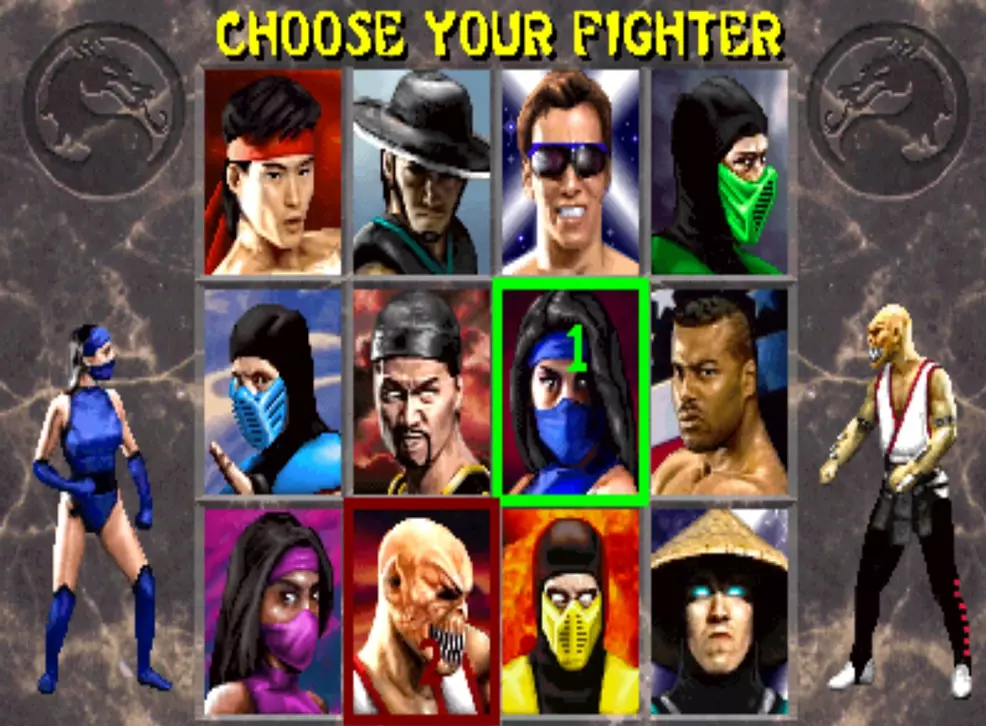
Craddock: We talked about how MK1 had more of an Asian, kung-fu movie motif. How would you describe the musical direction of MKII’s soundtrack?
Forden: It was interesting because I had a whole new palette to work with that was much more [diverse] than the palette I had before. That introduced a lot more options and a lot more decisions, too, such as what sound I should decide to use. I don’t know if I had in my mind anything like, okay, in this game we’ll focus more on this. This is true of every single game I’ve ever worked on: I don’t know what’s right, but I’m going to try to work on something that feels good to me, make it sound good, and throw it over the fence. If people like it, then that’s what we’re going with. That may be disappointing to some people, but I didn’t really overthink anything. It was about, what makes sense here? I wanted to get something I felt good about, which hopefully meant it was something other people would feel good about when they hear it. That’s kind of the modus operandi.
Craddock: The Dead Pool is a fan-favorite stage with this really ominous track. Could you talk about that?
Forden: It was definitely intentional. Everything I did for that game I hoped sounded ominous, evil, and dangerous. I tried to do sounds and musical figures and motifs, things like that, that got that across. For every single MKII stage, I was trying to make every track sound ominous. Now, Dead Pool is slower and more ethereal, while the rooftop [in MK3] is fast and dance-y, but also hopefully sounded somewhat ominous. I’m sure ominous, dangerous, and evil comprise a throughline that comes through in every game.
Craddock: I don’t hear people talk about this one a lot, but I love The Armory stage with all the weapons in the background and the flowing lava.
Forden: That’s one of my favorite tunes from that game. I had a very prominent metallic sound, some sort of a rhythm. I played bass on that one doing some slapping figures I like to do, and there was voice in there. Ed always liked voice stuff, so I’d always try to add it in because it does add a certain element, a choir-type voice, even solo human voices, sometimes screams. There was a tune in MK4 where I took one of the death screams from the female characters and reversed it to use it as a musical thing. Someone once said it sounded like a monster chicken. [laughs] It was like, okay, I’m fine with that. I thought it sounded really intense, so I went ahead and threw it in there.
Craddock: I wondered if you wanted to incorporate anything from The Pit into the Pit II. There was some anticipation around the new Pit, coming from the success and mystique of the first game’s stage.
Forden: Pit II was also a slow one with a beating bass drum, and these deep voices. That one I liked, too. It felt pretty good, and people seemed to like it.
Craddock: Is it possible to pick a favorite from among MKII’s tracks?
Forden: My favorite on that one was probably The Living Forest. I played flute on that one. I recorded that in my basement on an eight-track tape deck, an actual reel-to-reel deck. We’d never do that now. We’d record it digitally. That was fun, just bringing live flute into that. Also, it’s in this weird time signature, but it doesn’t really sound that weird. It’s in 13:8, but there’s something about the way that it rolls where it doesn’t feel like an odd time signature.
Craddock: As a writer, I’m burdened with the task of having to find words to describe anything and everything. [laughs] Do you find that harder to do as a musician? Is it more of a feeling or vibe?
Forden: It really is, and it’s even hard for musicians to talk to each other because we’re using words to describe physical phenomena that you can’t see, taste, or touch; you can hear it, but it’s such an abstract thing. It’s even harder, when talking to people who aren’t musicians, to find a common vocabulary. That is a difficult thing. The other thing I’d note that’s related to that is that people are very passionate about music, more so than they are about art or some effect in a game. People might like some cool visual effect, like, “Oh, that’s fucking cool. That’s great.” Same thing with sounds: “That’s cool.” But if there’s something in there, and usually it’s music—there’s something in music that turns someone the other way. People get bent out of shape about stuff. If they don’t like something, they really won’t like it. It’s an emotional thing. People respond to music emotionally more so than other aspects of game [design].
Craddock: I think you’re right. It’s also interesting where, for example, I love the sound in the Diablo games, but I’ve heard the sound effects and music so many times that I can turn them off and listen to a podcast while I play. But if you play a game like Mortal Kombat with no sound, you’re losing something visceral.
Forden: Oh, yeah. Absolutely. It’s the emotional backdrop of the game, so it’s a pretty important part of what’s going to project onto the player and be consumed.
Craddock: Shao Kahn’s arena had this gladiatorial feel to it. How did that influence your sound direction?
Forden: The roar of the crowd must have been a separate sound that Ed used. That would be the sort of thing where we had a separate conversation, like, “Okay, there’s going to be a crowd, so we need something in response to a hit” or something like that. But back then, the programmers were doing all the implementation, so it was up to Ed to do that. I would make the sounds, but sound designers didn’t do any implementation as far as how it would be used in the game. It wasn’t until after 2010 or so that I started implementing all the audio for just about all the MK games. There are all these nooks and crannies to games, like, well, UI is done this way, so UI might be handled in a different way. What I mostly focused on was the character-to-character interactions, like special moves and anything having to do with character audio, I would implement that. We had different pipelines for environmental audio and music.
Craddock: When you were directing sound design for MKII, what was the process of recording people to do lines and screams, things like that?
Forden: The main thing was, what’s the list of sounds and vocalizations that everyone needs to have. There’s like a default menu of attacks and reactions; everyone has to have those so that when the move happens, there will be a sound there. Different characters had custom sounds, too. Then, with that list, I would give the talent my interpretation of each sound: “Give me a medium attack” or whatever. Then they would do their version of that. That’s basically how those sessions would go.
Back then, we almost never hired outside people to do VO. It was always people who were around. Steve Ritchie is Shao Kahn. Ed was one. John Hey was one. Carlos [Pesina] always gave good VO.
Craddock: MK1’s stages were interesting because even though Shang Tsung’s island was a fantastic setting, many of the stages still felt somewhat grounded in reality. But MKII took place in a completely different realm. Is there anything different about creating music for a place that doesn’t exist versus, say, MK3, which is set on earth?
Forden: There wasn’t anything different to me. I approached it all the same way: What am I getting from this visual? Can I turn that into something coherent? Okay, now I’ll add drums, baseline, whatever, just flesh it out a little bit. When I’m writing a tune, I try to tailor it to a background as much as I can. That’s pretty much it. Now, obviously I’ve got a mind to, well, let’s try to make this all sound like it’s all in the same game, so I’m using a lot of the same instruments so there’s continuity of sound to some extent. There are outliers, too. The piano in The Dead Pool—I don’t think that appears anywhere else [in MKII]. It does appear in The Bank in MK3.
Craddock: You’ve probably been asked this question at least two million times, but for the sake of this interview, could you tell me how “Toasty!” came about?
Forden: Ed and I were working on Super High Impact Football. You pick your player, the menu goes away, and then the offensive and defensive lines come together. We’d trash-talk each other, and at some point as the lines were coming together, I’d say something like, “You’re going to be toast. I predict you’re going to be toast.” At some point, it became, “I predict toasty!” That became a thing we laughed about.
At another point, George Pietro, another game designer and programmer, he said to one of us or maybe both, “You guys should put some of that silly stuff you say when you’re playing into the game.” I kind of blew it off, and maybe Ed did, too, but I think it planted a seed. A week later, Ed called and said, “Wouldn’t it be cool if maybe one out of 100 uppercuts, your face comes out of the corner and says ‘Toasty!’ in your falsetto?” I was like, “Yeah, that would be cool.”
Ed had all the license he needed to put sounds into the game, and sometimes he would just do stuff he felt needed to be done. I may not have known about all the situations. I’m usually out of the loop at the end of a game’s development; I may not have any more room to put more sounds in, so they’d just fine something to put in. There are probably a lot of little easter eggs like that.
Craddock: We talked about how you all knew you had a hit once MK1 went out on test. What was the feeling during MKII’s development? Was there any sort of pressure or excitement, knowing this was now a franchise and an anticipated sequel?
Forden: At that point, yeah, we knew we had a hit and that this one would be successful as well. That feeling sounds familiar. It’s what I and others were feeling. It’s a good feeling in a way because, oh, we’ve got something, and having a high degree of confidence that it would be successful—rewarding for the company and for us.
Craddock: What does Mortal Kombat II mean to you?
Forden: It was the first DCS game, so I was able to do very different things than I was able to do before. That was a marker for me: Now I’m making real music. I mean, I was making music before, but programming music with a Yamaha chip is different than, oh, I can play my flute and have that in the game. That’s a big step from where we were.
Craddock: As you’ve worked over the years, what are some differences you’ve discovered between designing music and sounds for an arcade game versus a console game?
Forden: Off the bat, I would say there are different expectations from both types. Maybe this is just me projecting my opinions onto it, but I feel like an arcade game is more like rock and roll. Everything’s loud all the time. In a console game, you can make it loud all the time, but the nature of console games often is such that there’s a lot of dynamic range, not just in the audio but in the action and everything going on. MK, for the most part, is all gas, no brakes, all the time. You’re just fighting, fighting, fighting—it’s all very intense. That works great for arcade games. I don’t think there are a lot of arcade games that have long exposition and wandering about a huge arena or stage. That’s not conducive to arcade play. They’re more action based and twitch based.
A Mortal Kombat arcade game versus a Mortal Kombat console game, you’re going to have a lot of similarities. You’re going to have a certain type of energy that makes you say, okay, all the fights have a level of energy. But the console games have a lot of other stuff where it wouldn’t be appropriate to have that kind of music or audio. There are mellower, introspective, searching [types of music]—the kinds of ambient music we might write for more recent games. There’s the mode [in 2023’s Mortal Kombat 1] where you traverse environments and then go into a fight—that kind of paradigm. We wrote music for that stuff, but it’s not fight music. It’s very ambient to give you a mood and to be background, because there’s probably dialogue or pop-ups you’ve got to read. That’s the opposite of fight music.
Craddock: Did you like being able to have a more diverse palette?
Forden: Absolutely, and I think the game where that really came through was Mortal Kombat Deception. That was one of my favorite games ever to work on. We loved the puzzle game; we played it so much that I’m amazed we even shipped that game. [laughs] Then we had, for the first time, the Konquest mode where we could fool around with 3D audio. Then there was the chess game. It was an opportunity to write a lot of different kinds of music, not just fight music. The arcade games, most of the music was rock and roll, high energy, get the heartbeat up, you’re sweaty and worried you’re going to lose.
Craddock: I talked to Killer Instinct’s designers, and they said that game’s announcer was designed specifically for the game’s volume to be cranked so you could hear him from across the arcade and instantly think, Oh, that’s Killer Instinct. Did you have anything like that in mind when designing arcade sounds?
Forden: Actually, no. That’s a great idea. What happened was that the people who were producing games would go around and turn up their games, maybe surreptitiously lower the volume of the games next to them. [laughs] I’m sure that happened.
Source: Shacknews
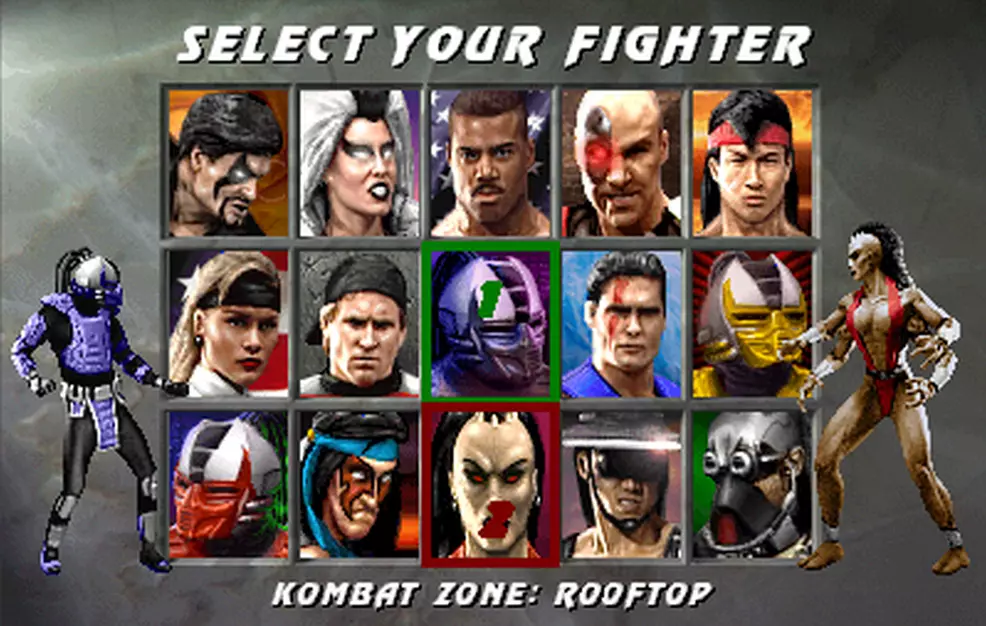
Craddock: MK3 was set on Earthrealm. Was this again a case of experimenting and seeing what worked for a stage?
Forden: There were a couple of backgrounds where I had very specific ideas. One, The Bridge, was a big band tune with brass and stuff, a fast ostinato keyboard. That’s a weird thing to have in a Mortal Kombat game, but it was using some of the tonalities that were already familiar from previous games I’d done. Similar chords, but in an upbeat, big-band setting.
There was another one, a street scene. What I did was a version of the very first Mortal Kombat tune, from the Courtyard. That became a motif for the entire game; it’s always there somewhere. For the street scene, I took that baseline but did it as a hip-hop tune. There was a point where the hip-hop aesthetic of the day had screams, like a James Brown scream. Basically, I just copied that, but instead of using James Brown, I used our reactions and screams. It’s a female sample; whoever played Kitana [Becky Gable], I grabbed two of those samples and then made those a percussive thing the same way this particular subgenre of rap was working. This was in the early ’90s.
Craddock: MK3 is even more over the top than the first two games. I loved that; it almost seemed like the team was poking fun at the continued uproar surrounding its violence, like, “If you thought that was bad, wait until you see all these exploding bodies.” It was also more comical, with characters shouting “Ow!” and things like that. Was that direction in your mind as you were making the sound?
Forden: No, I don’t think so. I think it was really, this was what we’ve been doing, so I’ll keep doing that. I probably should have tried some different things, but it felt like, well, if it’s not broken, maybe I shouldn’t. We are trying things, but it depends on what element we’re trying to mess with or evolve.
Craddock: What were some of your biggest challenges for MKII or MK3?
Forden: Creatively, it was a challenge to try to keep things fresh and come up with things that sounded good. Most of the stage backgrounds I really like a lot, while some of them make me go, I could have done a better job there. But at a certain point, I might have been running out of ideas and I’ve got to get this done. So it might not be the most inspired piece of music. I think an example is the Sky Temple in MKII: It’s not really my favorite, but some people to like it. I did a version of that [stage tune] in MK9 that I think was really good, but the original, not so much. [laughs]
Craddock: Since MK9 was a remake of the first three games, did you view it as an opportunity to go back and reimagine the soundtracks?
Forden: That was exactly what we decided on. Rich Carle and I were working together on that game, and I did a lot of music for it. Much of it was, oh, the Rooftop, so let’s reimagine it. I think the Rooftop track I did for MK9 was much better than the one I did originally. I also redid The Subway from MK3. We redid a whole bunch of that stuff in terms of backgrounds and music. Some of the tunes were kind of new, but I redid Living Forest, Subway, Graveyard. But some were really different, very unlike the originals. I did a remake of the original Pit. That was really fun to work on. For the ones that had been done with the Yamaha system, I could realize them with a full instrumental treatment.
Craddock: I noticed that in Ultimate MK3, some tracks were used on more than one stage.
Forden: I think that’s true for a couple of the other games, too. It was either a matter of not being able to get [new ones] in, or not being able to get them done.
Craddock: When you look back at MK3, what does it mean to you as a musician?
Forden: I’d probably go, “I wrote this, that, and the other tune, and I like them.” I listen to the stuff I like every once in a while, like if someone wants a piece of audio I have, I’ll start scanning through things and say, “Oh, yeah, I liked that one.”
Craddock: MK4 brought a lot of change the programmers and artists. They were learning how to make a 3D video game, which could be vastly different than making a 2D game. Did you undergo any major shift in your learning during that time? Not necessarily because of the shift to 3D, but in terms of anything such as hardware you were using, process—anything at all.
Forden: At that point, we were well into the DCS era, and MK4 was an arcade game, so we pretty much plowed through with the same platform, if you will. We probably had more memory because as time went on, memory got cheaper. When we first started using DCS, the memory was the ROM chip you would burn, that primitive thing. Back in the day, we would burn ROM chips, walk over to the programmer’s office, and put them in the board, like, “Here’s my latest stuff.” There’d be a file with all the numbers and descriptions of everything. I’m not positive, but by the time MK4 came around, I think we were starting to use hard drives. If there was a change, that was the innovation that audio had to work with. It was either that, or because memory got cheaper, we could put more stuff in.
That game had quite a bit of music in it, and then all the other sounds and things as well. We were also playing around more with cinematic efforts. The arcade MK4 is pretty funny because it’s got our own crude, first attempts doing movie snippets using whatever [assets] happened to be in the game. Have you seen these things?
Craddock: I have.
Forden: So you know what it is. [laughs] It’s like characters doing their idle stance, talking to each other. I think those things won some sort of unofficial award as the worst cinematics in a game ever. We had a good laugh about them because we had our inside jokes, and the people we would use to record. This was before we started hiring actual talent. [laughs] It was just people around the studio who did voices. So we had a lot of fun doing it, but it was pretty laughable.
But that did lead to the Dreamcast version, Mortal Kombat Gold. We actually did full-blown ending cinematics for the characters. That was pretty cool, because then I could do a full treatment with music, sound effects, dialogue, everything mixed in. It wasn’t exactly like how a proper movie would do it, but it we were getting there. That was one of the coolest parts. Mike Taran was an art lead [on MK Gold] and did a lot of environmental art stuff, and was pretty savvy about how to do art in the medium. He gave a great performance as Baraka. I don’t know if you saw that particular ending cinematic where Baraka goes in yells at Quan Chi: “What’s the point of living in a world with no one in it?” and then Quan Chi blows him up. [laughs] It was really fun for me to work on that stuff. It was great.
As far as the arcade version of the game, I remember getting kind of tired of my style on Mortal Kombat games and wanting to do something different. It was nothing specific, but I was trying to upgrade, refresh the sounds I used like the synthesizers and the samples I was using. There were a bunch of new sounds in the music for that, so for me, that was a good challenge. It was like, let’s try to break out of the mold I’ve been in and do something a little more evocative, a little more vocal. There’s more voice samples and weird samples used there, manipulated in different ways. To me, that was fun to do. Trying to find different drum sounds so I could skin that cat a little differently.
Craddock: When you talk about your style, or your mold, how did you define that?
Forden: I would describe it as Gothic pseudo-Asian; and then harmonically, a lot of diminished scale, playing around with major and minor tonalities all over the place, specifically in melodies that traverse major and minor. That’s sort of a loose description. Then in terms of instruments, specific types of bass sounds, guitar sounds—I wanted to mix it up and do something “not that.” It wasn’t anything very high brow, it was just, let’s try to do something that’s not what that was. I wouldn’t say I was in a rut, but there was a way I did things, and I wanted to throw a wrench into that.
Craddock: As a player back then, I picked up on that. It made sense: There was a new type of sound to go along with the new graphics and gameplay additions.
Forden: Yeah, and I think a lot of us were trying to do that, because, again, this was 3D. I guess that wasn’t a great direction to go in because we pulled back from it after four or five games. We did MK 4, 5, 6, 7, and 8, and then 9 went back to the original [2D-style gameplay].
Craddock: One thing widely reported on back then was that because the MK games had become so over-the-top in terms of comic violence, Midway wanted to return to its darker roots for MK4. Did you want to reflect that in the music as well, or did you feel the music always had ominous undertones?
Forden: I think the music always had an ominous and dark feel, for sure. I think the only thing that went somewhat away from that was the Bridge in MK3, which was more of a big-band thing. But the melodic and harmonic content of that was pretty dark; it was just brassy-er. The very first piece I did had an Asian vibe to it, and I was using a sample of these singers, the Tuvan throat singers who are able to sing two pitches at the same time—one super-low, which was almost a bass, but it’s got this high harmonic that goes up and sort of moves around, and it’s like this harmonic series jumping up and down, making their throat shaped in some weird way that was going over the edges of each harmonic partial while there’s this drone going on. You should check out some of that stuff. It’s pretty cool.
There weren’t a lot of thematic melodies [in the game]. It was more texture and rhythm than it was harmony and melody. I wanted to drive drums where applicable. The people I worked with, like Ed, really dug it when a vocal thing, like a choir, comes in. They really dug the stuff I did with The Pit II, I think it was. That seemed to resonate with people, and since it did, I was like, well, I could do some of that again. [laughs] I would reuse tricks when it made sense to do so.
Source: Shacknews
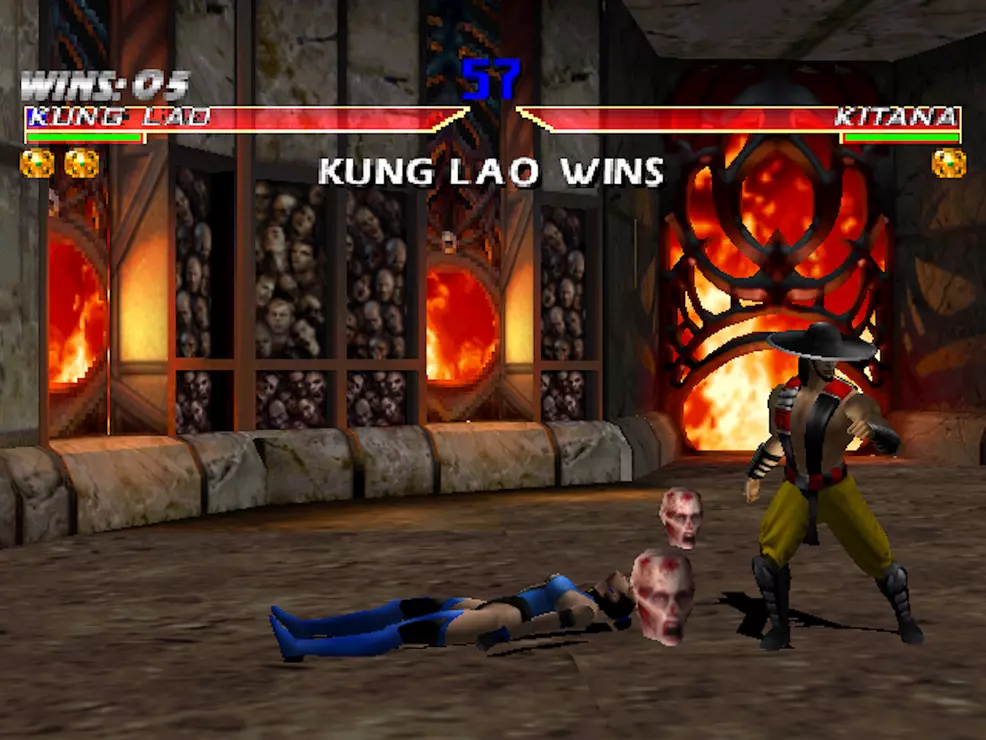
Craddock: When you look back on the arcade era of Mortal Kombat as a whole, how do you feel about it in terms of what you were able to do?
Forden: They were always really good, solid working experiences. We had a way of working that just really flowed. Honestly, things got more complicated when we started going to console. There’s more overhead, in a way. And it was too much for one person to do, so we’d have to split it up among people. But for the most part, I felt like the process of doing these games was mostly the same; we just had more people each time. To my mind, it was always a really solid, productive, and engaging experience working on the first four games because our mode of operation was just highly efficient and productive and enjoyable.
After that, everything changed. It wasn’t very different, but definitely different.

David L. Craddock writes fiction, nonfiction, and grocery lists. He is the author of the Stay Awhile and Listen series, and the Gairden Chronicles series of fantasy novels for young adults. Outside of writing, he enjoys playing Mario, Zelda, and Dark Souls games, and will be happy to discuss at length the myriad reasons why Dark Souls 2 is the best in the series. Follow him online at davidlcraddock.com and @davidlcraddock.