
Ahead of its long-awaited release, we sat down with Team Ninja to talk about how Nioh 3 is evolving the series while holding onto what longtime fans care about most.
The interview was conducted in November 2025 and originally published in Noisy Pixel magazine, where producer Fumihiko Yasuda and director Kohei Shibata break down the move to an open field structure, changes to combat flow, and how the team balanced new ideas with Nioh’s established identity. That magazine issue is available for free to readers who subscribe to our Patreon. Nioh 3 will be released for PlayStation 5 and PC via Steam on February 6, 2026.
Azario Lopez: Nioh 3 is following two very polished entries that already nailed a strong “die often, learn, and overcome” action loop. In Japan, the series is especially known for being tough but fair, where you die a lot and push through your worries to progress. From your point of view, what did Nioh 3 need to change about the series, and what did it absolutely have to protect?
Fumihiko Yasuda: Nioh 2 launched in 2020, about two to three years after the first Nioh. With Nioh 2 we evolved the action by adding yokai abilities and really expanding that side of combat. But as an overall experience, in terms of what players actually “felt” from playing, my own impression, and the team’s as well, was that maybe it did not feel fresh enough. We also sensed that some players had a similar reaction.
This time there is a five to six year gap between Nioh 2 and Nioh 3. In that span Team Ninja has worked on several other titles, and we have gained a lot of experience. We wanted to apply that experience and make a game where the overall gameplay experience itself takes a big step forward, not just the combat system. That is why we decided to introduce elements that did not exist in Nioh before, like ninja-style action and an open field structure.
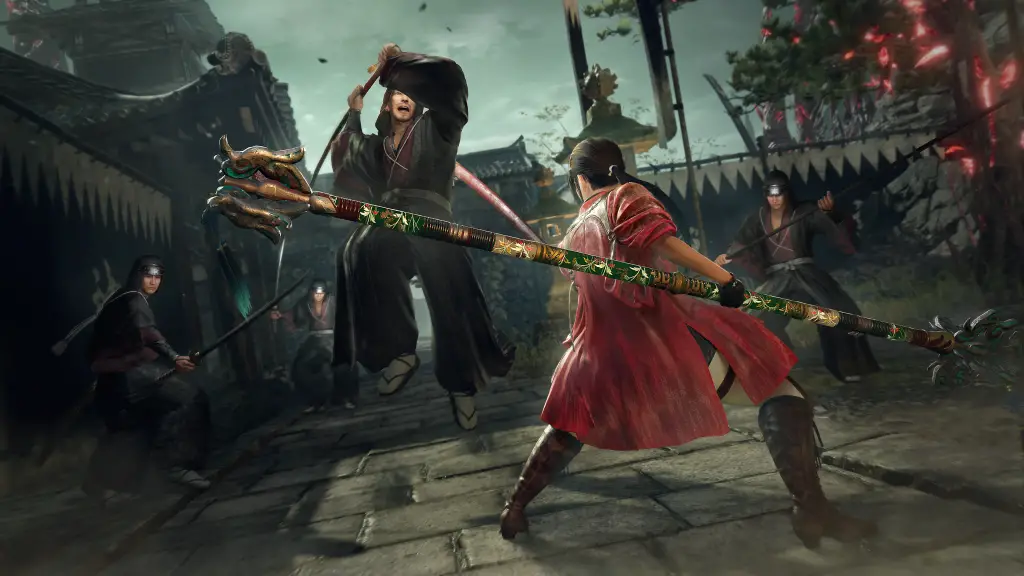
At the same time, there are parts of the series that we felt we must never change. Moving to an open field structure greatly increases the freedom of exploration and the freedom to choose your own route through the game, but we still wanted to keep the dense Nioh-style battles and the level of intensity across the whole game. Those could not be allowed to drop.
On the other side, even though we added ninja action, the stamina-focused back-and-forth with enemies is something series fans enjoy and something we as a team value. That had to stay intact. During development we constantly adjusted that balance, including releasing a demo and taking in feedback from players. Our goal was to respect what the series has treated as important until now while still evolving the game in ways fans would feel are new.
Azario Lopez: That leads into my next question. How did you decide where to draw the line between a more open structure and the tight, mission-based flow that Nioh is known for?
Kohei Shibata: There are two parts to that: why we chose an open field as a concept, and how we actually designed it so it would fit Nioh.
First, on the concept side, up to now the series has focused on evolving the battles. From Nioh 1 through Nioh 2 and now Nioh 3, we’ve added new systems and refined the action. For Nioh 3 we wanted to evolve another side of the experience too, so we decided to increase the freedom of exploration.
With the old mission-based, very linear structure, the good part was that you had a strong sense of tension and a chain of high-intensity fights. That is one of Nioh’s strengths. But the downside is that if you get stuck on a boss, your only real option is to keep banging your head against that same mission. In Nioh 3, by going to an open field, if you fail against a boss you now have options. You can go take on a different mission first, explore another area, find a different route, strengthen your character, then come back and try again. Adding that kind of breadth to how you can approach the game was one of the big evolutions we wanted.
Fumihiko Yasuda: From a design point of view, what we paid attention to is that Nioh’s density and tension are still very important, but if we tried to apply that same density across a huge field, the player would be stressed no matter where they go. That would remove the sense of choice.
So we focused on contrast. There are missions or parts of the field that are very tough and full of powerful enemies, and in between those we also have quieter zones with fewer yokai, or lighter content like chasing a little creature around. From a distance, something like the Crucible clearly looks like a dangerous place, so you can tell “if I go there, it will be hard,” and decide for yourself when to challenge it.
We wanted an open field that is not monotonous, where you can clearly see the difference between harsh areas and lighter ones, and sense that there are different things to do with different levels of difficulty. That way the player can read the field and make their own choices instead of feeling lost.
Azario Lopez: Team Ninja now has several different flavors of action under its belt. You have the loop-driven, stance-heavy action of Nioh 3, the martial-arts focus of Wo Long, the historical drama and open world of Rise of the Ronin, and the more combo-driven action of Ninja Gaiden. When you look at your schedule and teams, how do you stop these projects from competing with each other, while still letting ideas cross over inside the studio?
Fumihiko Yasuda: If everything were perfectly planned, maybe our release dates would not end up this close together, so I cannot say it is all perfectly scheduled. But for each title, especially when it is the first game in a series, the basic idea is that the team should play to its strengths. At the same time, there is no point in making the same thing again, so we always want to include something new.
For example, with Rise of the Ronin we took on the challenge of making a full open world for the first time. With Wo Long, we did not simply move the Sengoku period of Nioh to the Three Kingdoms era. We made the action much more focused and agile, and added things like jumping to our action RPG design for the first time. We also have more purely action-focused systems in titles like Ninja Gaiden. Each project has a different area that it emphasizes.
What we keep in common is that the action should feel good and be fun to play. That is a core strength of Team Ninja. Around that base, we change other parts of the game from title to title.
Our development speed is fairly fast, so in that sense the cycles between titles are short. That makes it easier for the experience from one project to flow into the next very quickly. We share not only what went well but also our failures and problems, and we feed that back into the next titles.
So with Nioh 3 we have not only everything we learned from Nioh 2, but also what we learned from Wo Long, from Rise of the Ronin, and even from Ninja Gaiden, which we supervised even though development was at another studio. We always want the newest Team Ninja title to be a kind of culmination of what we can do at that moment in time. For Nioh 3, five to six years after Nioh 2, we are trying to put everything we have learned in that span into this one game.
Azario Lopez: From where you sit, how do you see the current action game market? Do you feel like players are asking for higher skill ceilings, or more flexible difficulty and build options so they can tune the experience? How does Nioh 3 respond to what you think players want from action games right now?
Fumihiko Yasuda: That is a tough question. It really depends on the player, and it also changes with timing. But for the Nioh series specifically, what people expect is the action itself and, together with that, the RPG side of building out your character and enjoying customization.
So for Nioh 3, our basic thinking is not to change those foundations. We are incorporating elements that match what players ask for, but we are not throwing away the core things that define Nioh.
Azario Lopez: It has been six years since Dead or Alive 6, and in each year since then you have released something big: Nioh 2, Stranger of Paradise, Wo Long, Rise of the Ronin, and now Nioh 3. From the inside, how did that stretch feel for your teams? Was it carefully controlled and planned, or were there points where you had to rethink how you were supporting all these new IPs?
Fumihiko Yasuda: The honest answer is that it is partly a company secret and partly just hard work. As a basic policy, we do have a goal of releasing one new title each year for players, even though each one is not made in a single year. Each title still takes about three to four years of development before release.
As I mentioned, we use the experience from released titles in the next ones, and the development team grows through that as well. At the company level, we have also been increasing the number of new recruits we hire every year, so the base size of the team keeps growing. We are not only hiring fresh graduates but also bringing in experienced staff, which helps raise our overall skill level.
Right now we usually have around three or four large titles in development at once. That structure is what lets us release these games one after another while still making sure they are solid, not just “more games with more people.”
We also now have staff who played Nioh 1 and 2 as fans, then joined Team Ninja because of those games and are now involved in development. Seeing that cycle is very encouraging, and we want to keep it going.
So from the outside it may look like a sudden rush of many new titles, but internally these are projects we have been working on for several years. They are simply reaching players in this sequence.
Azario Lopez: I had assumed you were just quietly building up a whole new roster for Dead or Alive 7. That is a joke. But seriously, will there be a new Dead or Alive in this decade?
Fumihiko Yasuda: Right now there are no concrete plans. That said, since we are trying to release a new title every year, it is something we will need to think about at some stage. It could end up fitting into that overall plan, but nothing has been decided.
Azario Lopez: I want to talk about Nioh 3’s overall boss design. Compared to Nioh 2, how can players approach bosses in this more open structure? Can they fight bosses out of order, or is the order fully planned out?
Kohei Shibata: In areas like the Crucible there are bosses that are tied to progress gates, and in those cases you must defeat that specific boss to move on. So there are key bosses you have to beat in a set order.
But between those key points, we leave more to the player. In the wider field, you can decide which bosses you tackle first and what route you take through them. There is a certain amount of freedom in the order you defeat bosses as you move toward the main objectives.
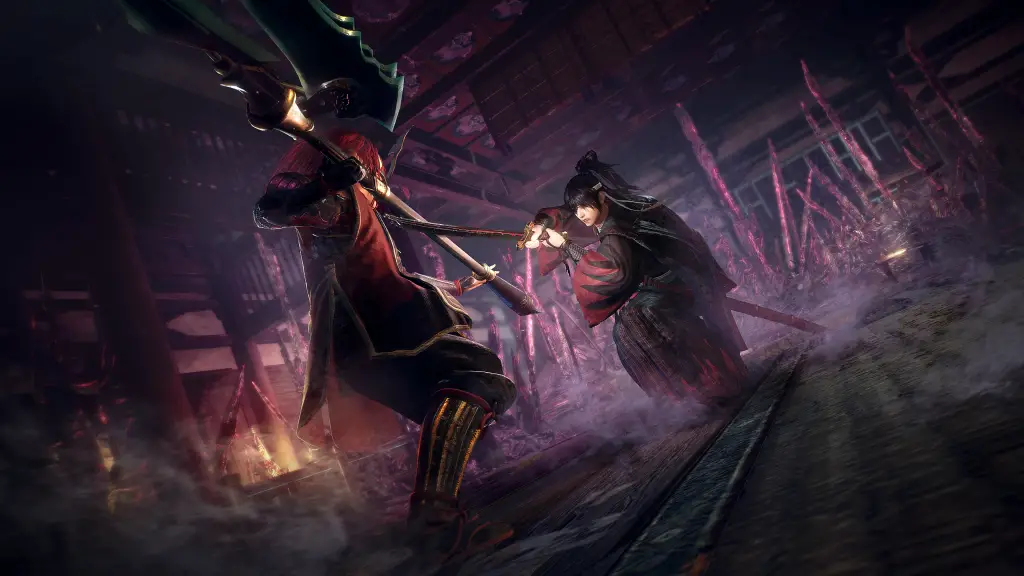
Azario Lopez: One thing I love about Nioh 2 and now Nioh 3 is the rhythm of the fights. It almost feels like a rhythm game. You are watching what is happening on screen and, at any given moment, you have maybe three options for how to respond. You might exhaust one or two of those options during a fight, but there is still a third one you can draw on in that half-second. Not every “Souls-like” gives you that sense of power and choice, but Nioh does. Was that rhythm and response system something you aimed for from the start?
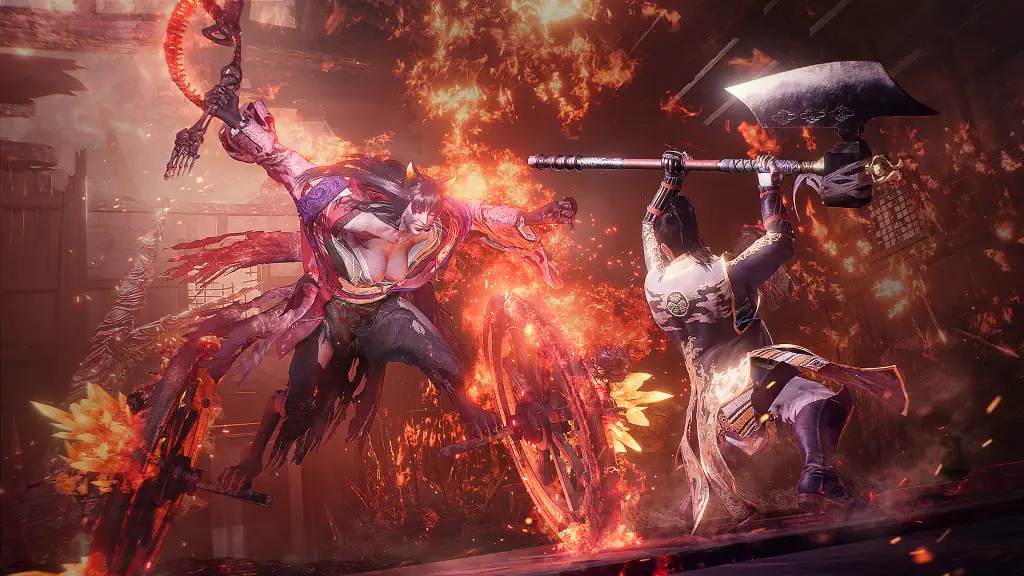
Fumihiko Yasuda: Compared to before, we have added more parry-like elements to the combat, and from those you can flow into follow-up attacks. We built Nioh 3’s battles around parry-centered exchanges to a greater degree.
Because of that, we have put a lot of effort into the timing between enemy animations and the timing windows for the player to react correctly. When those line up, the action looks and feels very rhythmic. So I think it is fair to say it was intentional, but it also grows out of experience. The team has tuned these timings over many projects, like Wo Long and Rise of the Ronin, and that know-how now shows up in Nioh 3’s battles.
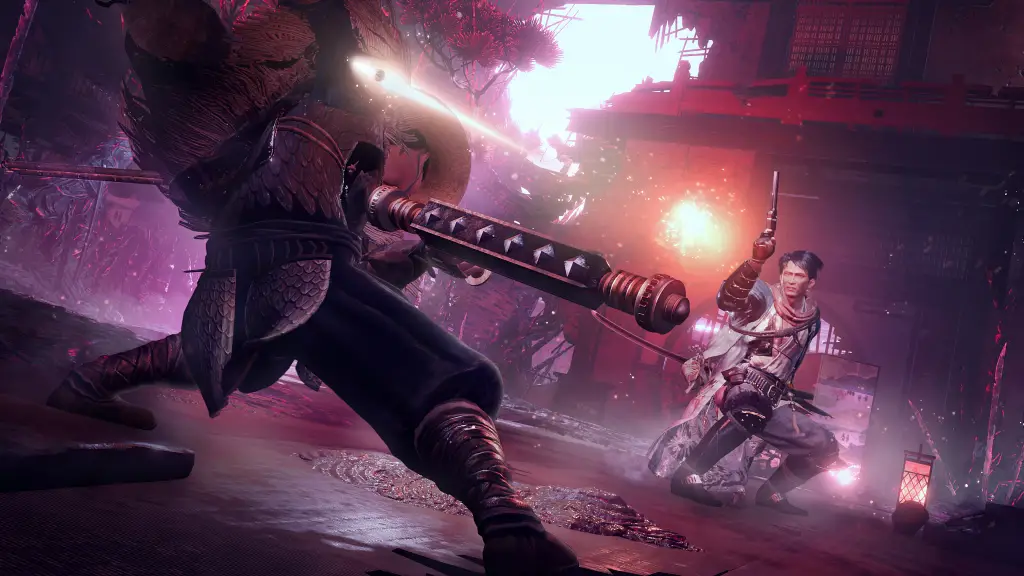
Kohei Shibata: To add one more point that might relate to the sense of tempo and having extra options: when we introduced the new ninja style, we were aware that we had gradually added many different action systems across recent games. Our concern was that if we just stacked them all on top of each other, things would become too complex.
So we took a step back and organized the systems. We clearly divided what you do as a samurai and what you do as a ninja. Once we did that, the structure actually became simpler, even though there are more options overall. You have many choices, but they are organized.
On top of that, there is a system where fighting in samurai style fills your ninja gauge, and fighting as a ninja fills your samurai gauge. So in battle, even if you have exhausted some options on one side, you still feel that you have something left on the other side that you can switch to. I think that contributes to the feeling you described, where there is always another option and the tempo keeps going.
Azario Lopez: Is there anything you’d like to share with readers who are looking forward to Nioh 3?
Kohei Shibata: With Nioh 3 we took on new challenges like adding an open field structure and the ninja style. At the same time, we have made a game that people who enjoyed the previous Nioh titles will still recognize and enjoy.
For those who have been curious about Nioh but have not played it yet, I think this is a very approachable entry. As we mentioned, there are many options in how you play, and that makes it easier to find a style that suits you. I hope you will give Nioh 3 a try and enjoy it. We are finishing it as a title that can live up to your expectations, so please look forward to it.
Fumihiko Yasuda: It has been about six years since Nioh 2, so I know many fans have been waiting a long time. I believe Nioh 3 is a title that can answer those expectations. It is a culmination of what Team Ninja has built up so far, and we are confident that it stands proudly as the latest entry in a very important franchise for us.
We are now putting the final touches on the game so that when it arrives in February you will not be disappointed. Please wait just a little longer and enjoy it when it comes out.