
Capcom
One of the biggest and most controversial ’90s video games was the fighting game “Mortal Kombat,” which launched in 1992. Debuting in arcades, the game garnered attention for its digitized sprites of live-action actors serving as the title’s combatants and the gruesome violence it depicted. This included the franchise’s infamous finishing moves, giving players the option to execute defeated opponents with over-the-top brutality. With its success outweighing the controversy, the 1992 game went on to spawn a line of sequels and spin-offs, while also exploding into a full-on multimedia franchise.
As “Mortal Kombat” made its own stunning transformation, other developers tried to follow in its footsteps, leaning into gory violence and the use of digitized sprites. For some titles, this translated into success, but not every imitator was met with praise. In fact, many of the games that tried to jump on the “Mortal Kombat” bandwagon were derided by gamers, seen as nothing more than cash-grabbing rip-offs. With that in mind, here are five video games from the ’90s that tried to copy “Mortal Kombat” with varying levels of success.
Eternal Champions
With the fighting game scene growing in the wake of “Mortal Kombat,” Sega started its own franchise with 1993’s “Eternal Champions,” released for the Sega Genesis. The game has an omnipotent being known as the Eternal Champion that identifies figures who died before they could achieve greatness. Whisking them away moments before their untimely deaths, the Eternal Champion has the individuals battle each other to return to their timeline and be spared their respective fates. Many of the stages had their own finishing moves, dubbed Overkills, which were triggered by being in the right place on the screen when delivering a killing blow.
Compared to some of the other entries in this article, “Eternal Champions” was successful enough to warrant additional ports and spin-offs. The game received an enhanced remaster for the Sega CD — “Eternal Champions: Challenge from the Dark Side” — in 1995, which not only added to the roster and story, but doubled down on the finishing moves. Taking advantage of the Sega CD hardware, the remaster included full-motion video sequences of characters being killed by the Dark Champion through their greatest fears or being executed by the victor. An early successor to the original “Mortal Kombat,” “Eternal Champions” is one of its better imitators — and it’s one of the games included on the Sega Genesis mini-console.
Primal Rage
Fighting games took a wild turn with the 1994 arcade game “Primal Rage,” which received ports for most consoles of the era. The game allows players to pick from seven monstrous demigods resembling dinosaurs and other hulking beasts, which tower over the humans that worship them. Despite its prehistoric aesthetics, the game’s story is actually a post-apocalyptic one, with humanity regressing into a primitive state after Earth is struck by a cataclysmic meteor. Following the collapse of modern civilization, creatures hibernating in the planet’s crust since the prehistoric era are revived to battle for the right to become the planet’s new deities.
From its bloodletting to the beating heart for each fighter that graphically bursts when they’re defeated, “Primal Rage” definitely takes a gory cue from “Mortal Kombat.” The characters are also given their own finishing moves when they emerge triumphant, another clear nod to the game that inspired it. But “Primal Rage” also leaned more into ’90s scatological humor than other fighting games of the time, including gross-out special moves. Very much a product of its time, “Primal Rage” is an odd attempt to keep the fighting game genre fresh with its choice in premise and playable characters.
Kasumi Ninja
Atari/MobyGames
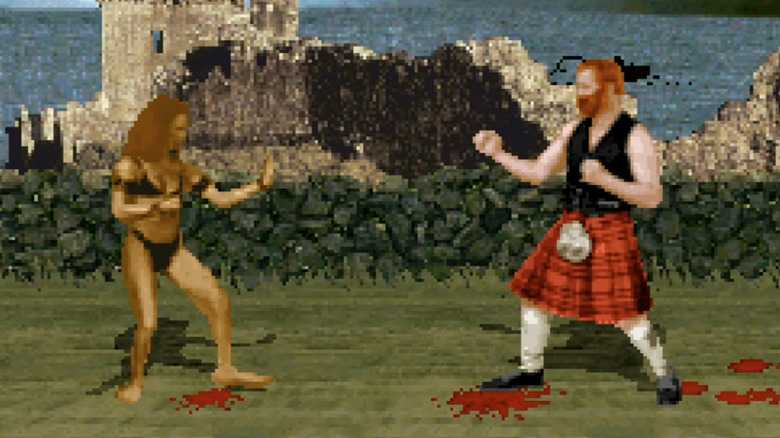
The most egregious rip-off of “Mortal Kombat” is “Kasumi Ninja,” which was released for the Atari Jaguar in 1994. The game takes place on the remote Kasumi Island, where humanity’s greatest warriors are allowed to train while maintaining the cosmic balance between good and evil. After this tenuous balance is disrupted by the elder ninja overseer Gyaku, fueled by his demonic possession, several warriors are selected to battle each other to restore order. This culminates in a showdown with the possessed Gyaku himself for the fate of the Earth.
With “Mortal Kombat” as a visible inspiration, “Kasumi Ninja” similarly features digitized actor sprites and over-the-top violence. However, the game itself just isn’t a lot of fun, with clumsy controls, a derivative premise, and an uninspired cast of playable characters. The game failed to thrill players like other fighting titles of its era, ultimately becoming a thoroughly forgettable experience. After the Atari Jaguar CD doomed the console, Atari’s hardware prospects — along with the future of “Kasumi Ninja” — came to an end.
Street Fighter: The Movie
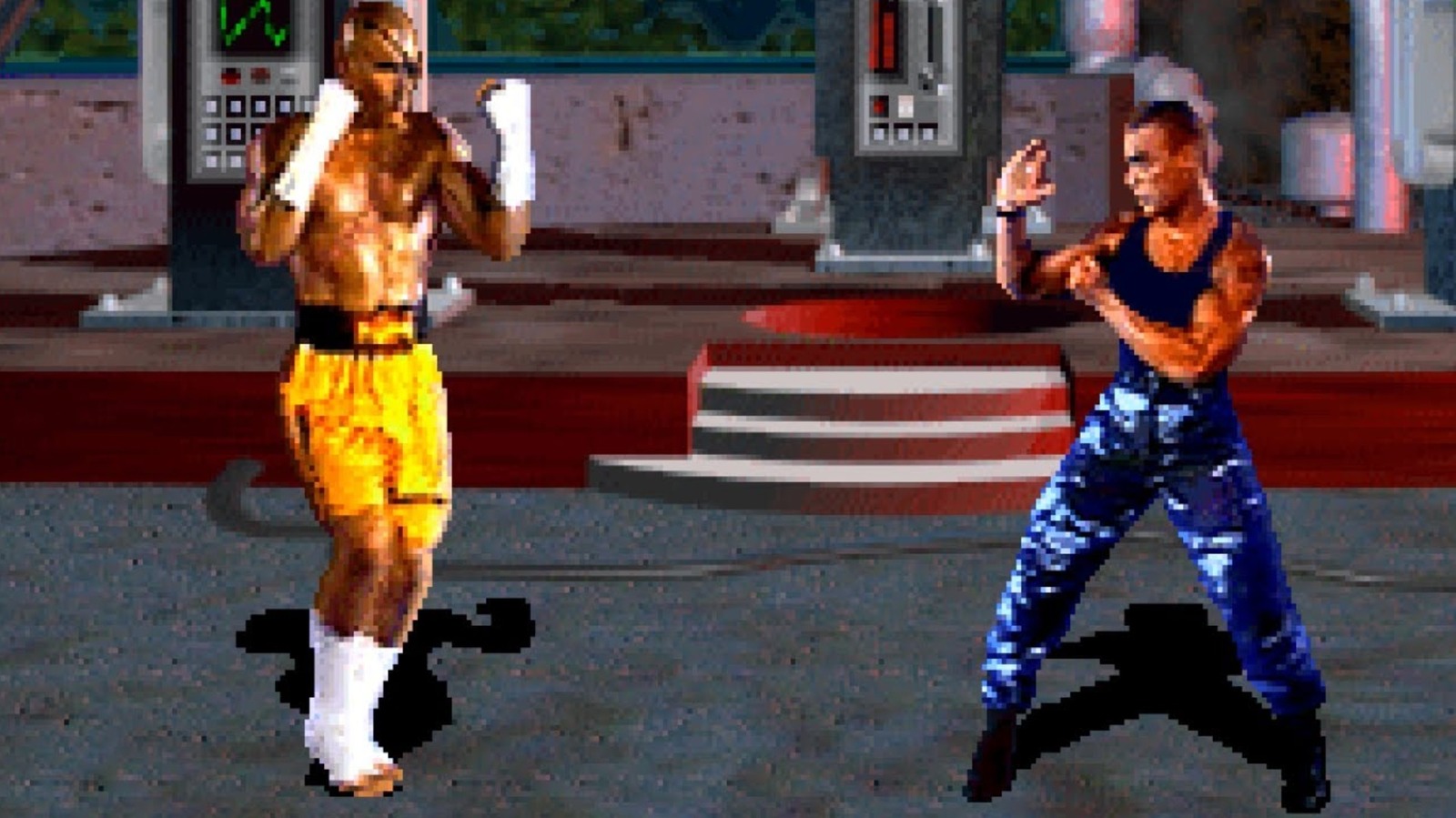
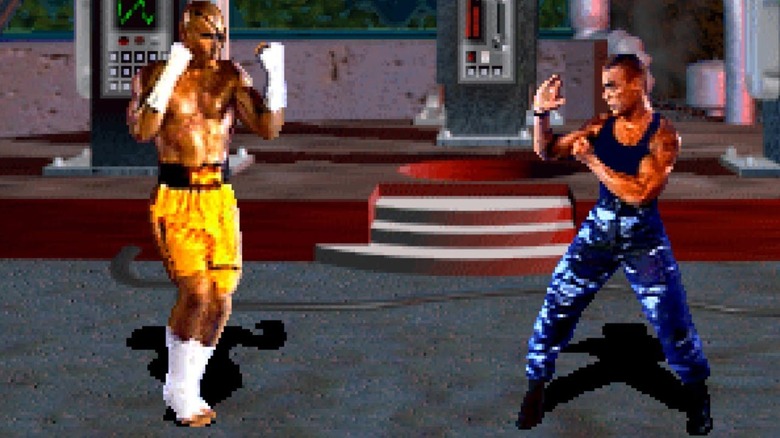
Even though “Street Fighter” predates “Mortal Kombat,” the Capcom franchise certainly wasn’t above taking noticeable cues from its rival. This was apparent in 1995’s “Street Fighter: The Movie,” a tie-in for the divisive 1994 live-action film (which has a tragic story behind it). The game featured most of the actors from the film digitized into sprites to fight each other, complete with their special moves from “Street Fighter II.” The game also features Akuma, who is not in the 1994 movie, and Blade, a masked soldier in service to Bison, as playable characters.
This movie tie-in game is one of the more unusual moments in the transformation of the “Street Fighter” franchise. The game was rebuilt for its Sega Saturn and PlayStation versions, though these were not well-received like the arcade original. After this grand experiment with the cast and stunt team from the live-action movie, Capcom ditched the digitized sprite approach for subsequent “Street Fighter” games. The fighting game franchise did better charting its own path rather than echoing “Mortal Kombat,” learning a valuable lesson.
War Gods
Midway Games
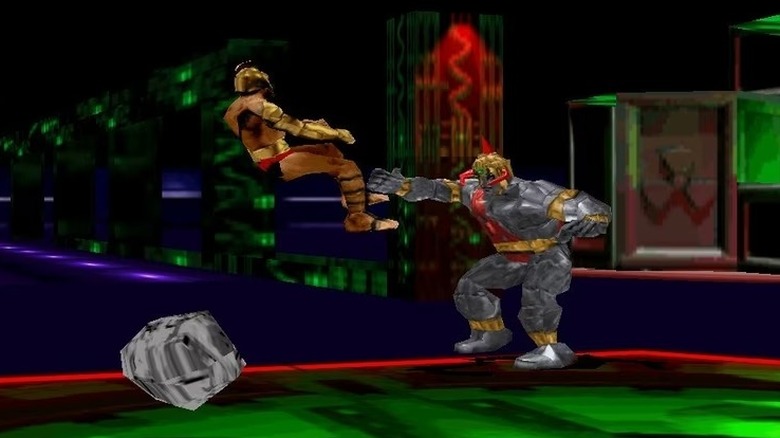
Midway Games, the original publisher of “Mortal Kombat,” tried its own hand at replicating its success with a different standalone franchise. 1996’s “War Gods” was a 3D fighter precursor to “Mortal Kombat 4,” which took a similar approach the following year and has a near-identical button layout. The game’s story has a piece of extraterrestrial ore crashing down to Earth, transforming those who come into contact with it and giving them otherworldly powers. After these modern demigods fight among themselves, they come into conflict with two powerful extraterrestrials named Grox and Exor, the final bosses.
“War Gods” is an early 3D fighting game but still feels outclassed by contemporaries like “Virtua Fighter” and “Tekken.” Like “Mortal Kombat,” players can execute defeated opponents with finishing moves, but even this feels clunky and poorly rendered in the game. After debuting in arcades, the game was ported to the original PlayStation, Nintendo 64, and PC. Midway didn’t get the second fighting game franchise they hoped for with “War Gods,” making it an overlooked companion piece to “Mortal Kombat.”