
Pennsylvania’s gaming board is warning licensed operators not to dabble in the “Wild West” of online prediction markets, as courts and regulators continue to wrangle with betting apps that are operating outside of states’ purviews.
Unlike others, however, Pennsylvania has legal language in place to tax sports wagers taken by such apps, state lawmakers were told Tuesday — one possible way to rein in what officials described as gambling masquerading as financial services, with increasingly dire consequences.
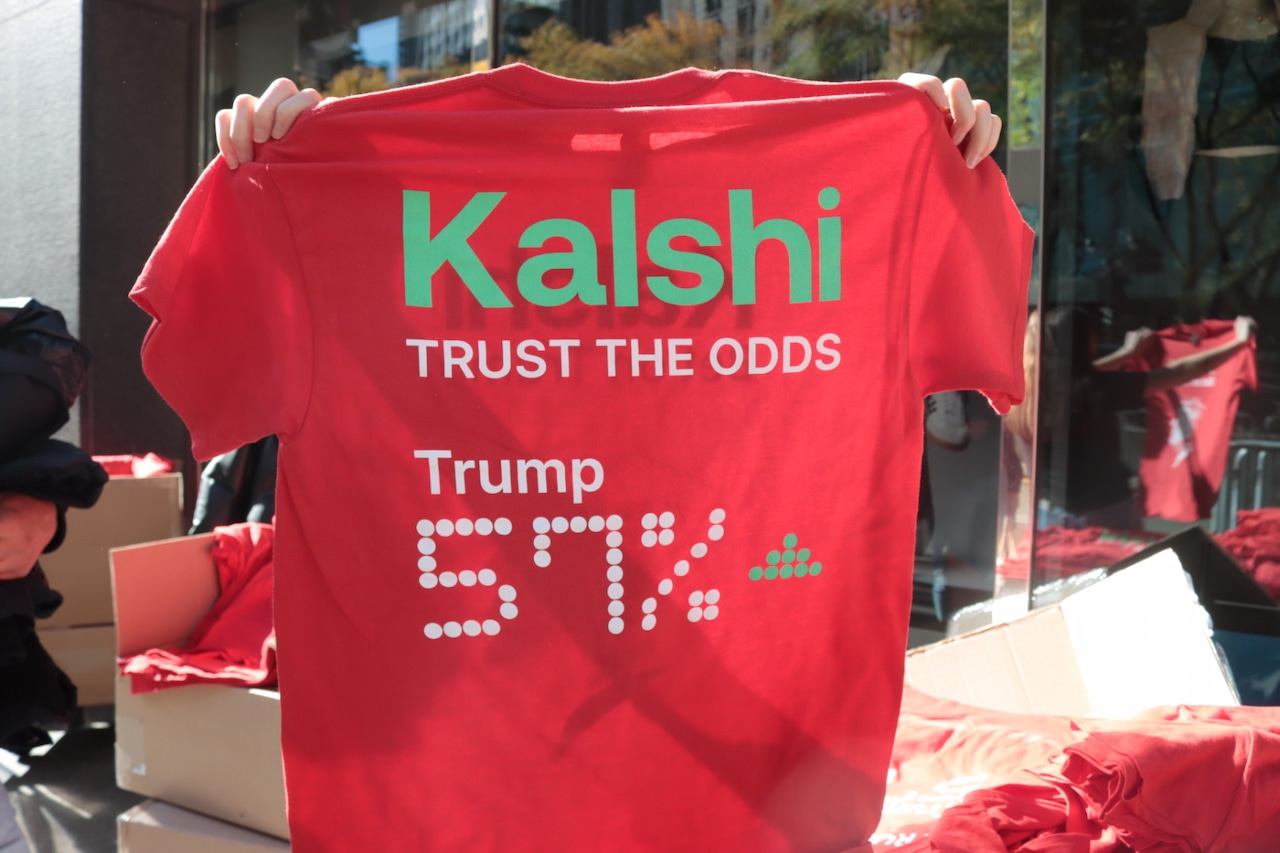
“Prediction market” systems include increasingly common apps like Kalshi, Polymarket, PredictIt, and others, where users can place a monetary value on the likelihood of future events, be they a sports game, an election, the clothes a celebrity will wear on the red carpet, or virtually any other circumstance.
The bets facilitated by such apps are not traditional sports wagers, but rather futures contracts that can be bought and sold between users at discounts, depending on the perceived likelihood of the outcome rendering the contract payable. Thus, the companies that operate the apps argue, they are not offering gambling per se – meaning they are preempted from state regulation and are controlled only by the federal Commodity Futures Trading Commission (CFTC), which regulates investments in future asset prices and similar Wall Street financial derivatives.
Those prediction apps “are essentially offering high-volume wagering mechanisms that operate entirely outside of Pennsylvania’s comprehensive consumer protection, responsible gaming, and tax frameworks,” Kevin O’Toole, executive director of the Pennsylvania Gaming Control Board (PGCB), told members of the House Gaming Oversight Committee at a Tuesday morning hearing.
The PGCB licenses and regulates traditional casinos and sportsbooks, both physical and online. But prediction market companies have made the legal case, thus far successfully, that their operations are the exclusive domain of CFTC, which regulates them lightly through a self-certification system that presumes their trades to be compliant unless challenged.
“This essentially creates a dual-track system where one track is highly regulated and the other is a legal Wild West,” O’Toole said.
“We’re observing a form of regulatory arbitrage, where federal preemption is stretched beyond its intended purpose to shield operators from the states’ police power,” added Steve Cook, the PGCB’s chief counsel.
Lawmakers on both sides of the aisle expressed a number of concerns with the current environment. Purveyors of prediction markets are trying to attract a younger demographic, several remarked, and although their offerings might technically be financial futures instead of gambling, the psychological functions are identical.
The 18-24 age group is now the largest single segment of callers to the state’s problem gambling hotline, said Josh Ercole, executive director of the Council on Compulsive Gambling of Pennsylvania. While young problem gamblers were a minuscule portion before the COVID-19 pandemic, they comprised 50 of the 300 cases the council took on last month, Ercole said, a rise he attributed in large part to the growth of prediction market apps.
Kalshi and Polymarket handled $5.8 and $3.7 billion in trades last month, both in cash and an increasing amount of cryptocurrency, Forbes reported. Kalshi recently announced a partnership with CNN to allow viewers to bet on the news, and – as Rep. Manny Guzman, D-Berks County, noted during the hearing – its CEO was recently quoted as saying the company’s goal is to “financialize everything and create a tradable asset out of any difference in opinion.”
“We are quickly entering the end-stage of degenerate gambling,” Guzman said.
A multitude of news reports have also pointed to obvious insider trading within prediction market systems. The ranking Republican on the gaming committee, Rep. Russ Diamond, R-Lebanon County, recalled a story about podcast hosts rattling off words at the end of their show just to fulfill bets on what would be said.
Similarly, a recent NPR story detailed individuals putting money on where the front lines in the Russia-Ukraine war would be — after which the map used to verify the outcome was manipulated by an unknown actor to create huge cash-outs.
“That’s the kind of insider gaming of the system we’re concerned about,” Diamond said.
There’s also the tax angle, given that prediction markets aren’t putting a slice of their revenue into the state’s coffers in the way that regulated casinos and sportsbooks are.
In 2017, the state’s gaming law was updated to allow online sports betting to be offered to internet customers in Pennsylvania through the licenses of existing operators, with most casinos now partnering with sportsbook sites. Revenue from this is taxed at 36%, with the money supporting programs to fight gambling addiction as well as a whole host of other social services, such as the state’s property tax and rent rebate program for low-income seniors.
The fact that prediction market apps don’t pay this rate “constitutes a direct wealth transfer from Pennsylvania public services to private entities,” Cook said, and shifts the burden to the state-regulated casinos and sportsbooks from whom the prediction apps are siphoning users.
In October, the PGCB sent a letter to Pennsylvania’s Congressional delegation stressing the need for federal lawmakers to either create a tighter CFTC regulatory framework for prediction markets or allow the states to do it themselves.
The CFTC has not closed the door on the notion that states might have some regulatory control over prediction apps, but has indicated this will likely be determined through the courts. In September, the commission issued an advisory to prediction market operators reminding them that they must disclose potential regulatory impacts when accepting and closing futures trades — including the possible impacts of state sports-betting regulation.
Several cases on the issue are currently outstanding, including New Jersey’s appeal of a previous ruling, which cemented the precedent for prediction markets only being answerable to the CFTC.
Pennsylvania has unique grounds to wade into the issue, Cook said, given that the 2017 gaming law update states that “unauthorized sports wagering” is still subject to tax.
“While this provision was likely meant to address illegal bookmakers, it is my belief that it is equally applicable to companies offering sports-related prediction markets in Pennsylvania,” Cook said, adding that the PGCB is consulting with other state agencies “to explore the necessary legal and administrative mechanisms to pursue these revenues while we wait for federal action.”
Such a move, were the state to attempt it, would almost certainly face challenges from prediction apps that maintain they are merely facilitating peer-to-peer trades or swaps of futures contracts and are not, as corporate entities, the custodians of revenue from wagers on sports or anything else. A spokesperson for the Pennsylvania Department of Revenue told PennLive that the agency is still studying the PGCB’s proposal.
In the meantime, the commission is advising casinos and their associated sportsbooks — such as FanDuel, DraftKings, and other providers — to not entangle themselves with prediction market apps. The PGCB has wide latitude to determine if a licensed operator has engaged in “unsuitable” behavior that threatens the public interest.
“What I’ve told them is that they need to move forward cautiously,” said Cyrus Pitre, the PGCB’s chief enforcement counsel.
If a commission-licensed establishment partners with a prediction market that allows them to offer bets that wouldn’t otherwise meet PGCB standards, “any license you have is on the table,” Pitre said, and “I have cautioned [casinos] that offering non-traditional prediction markets, whether sports or current events, within Pennsylvania, could certainly jeopardize their gaming license.”