
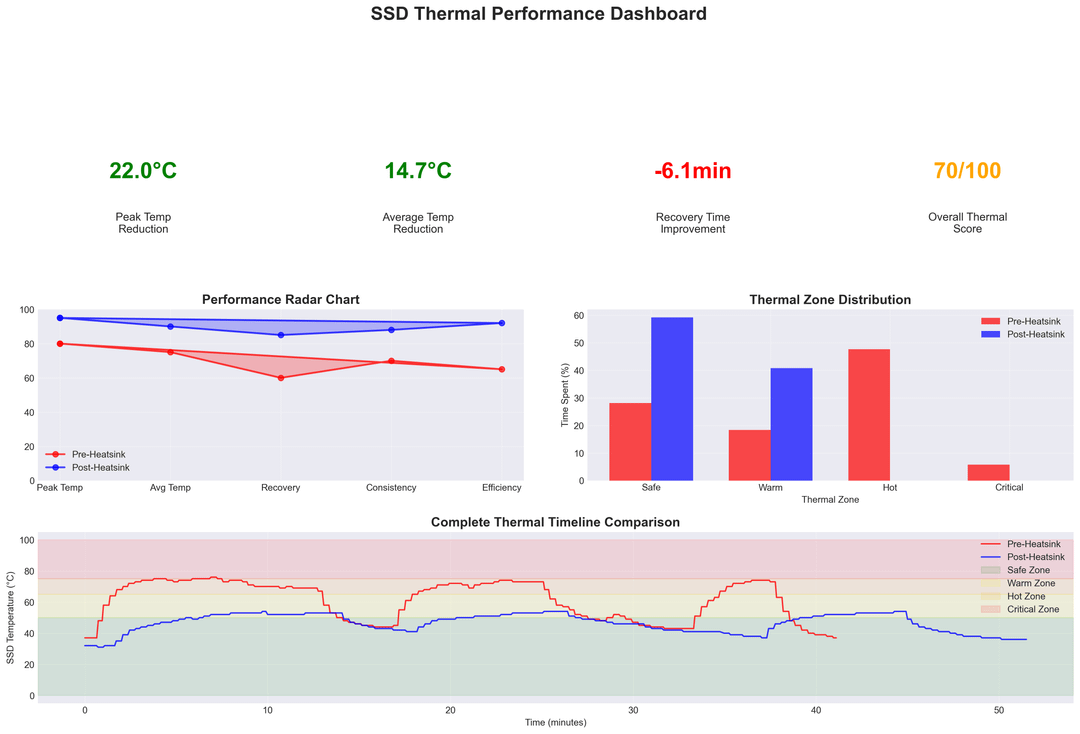
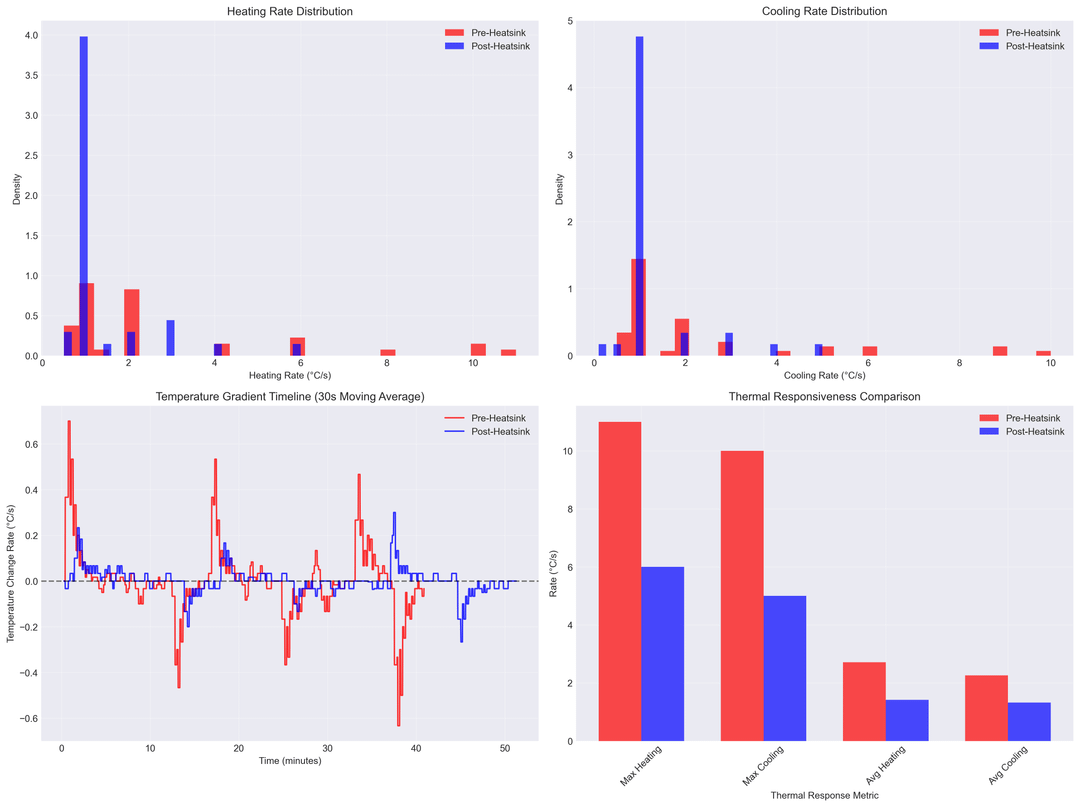
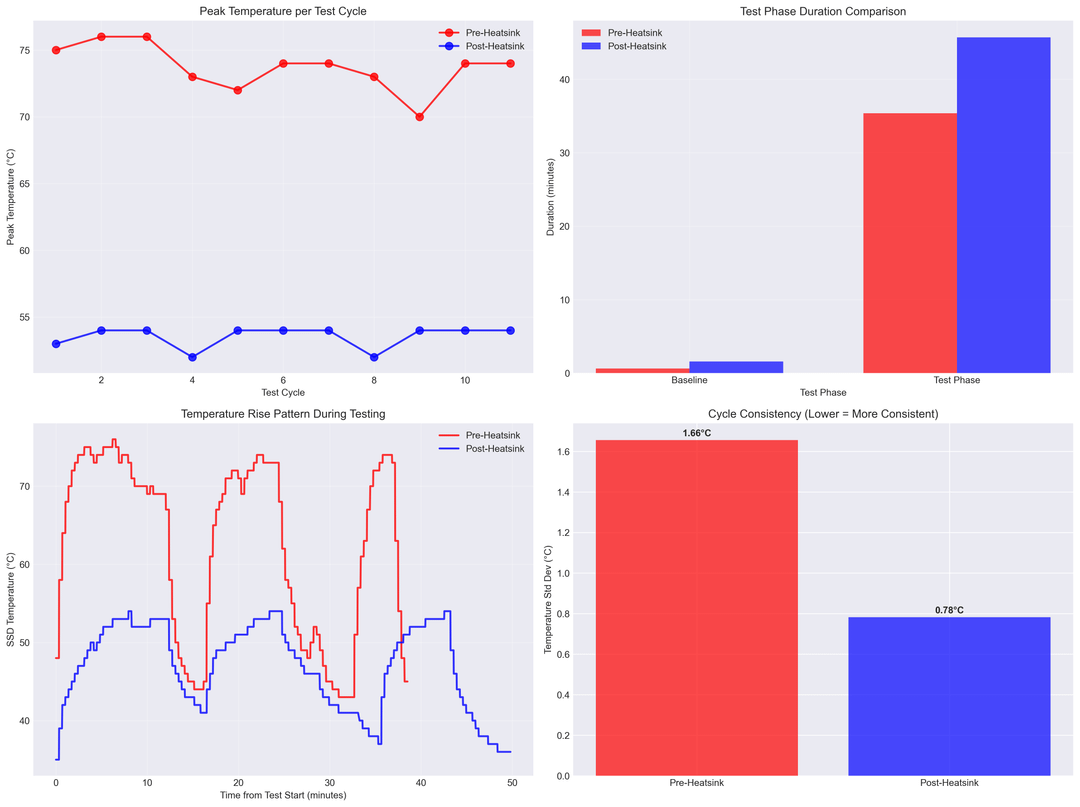
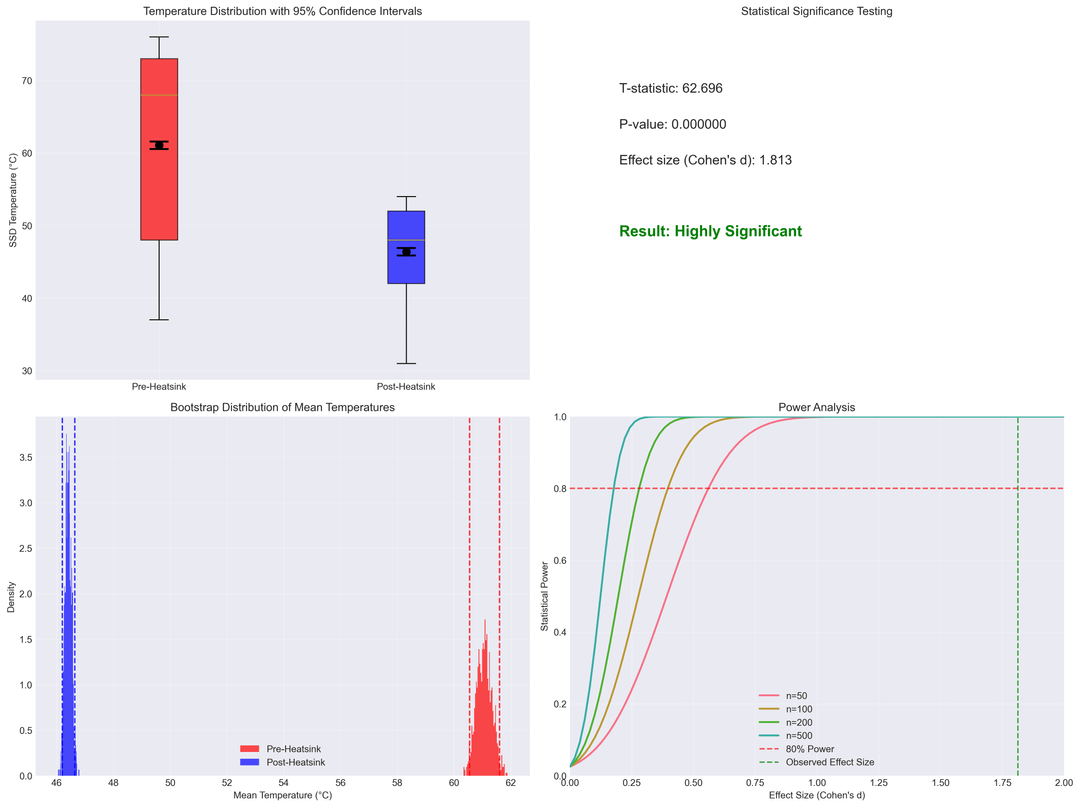
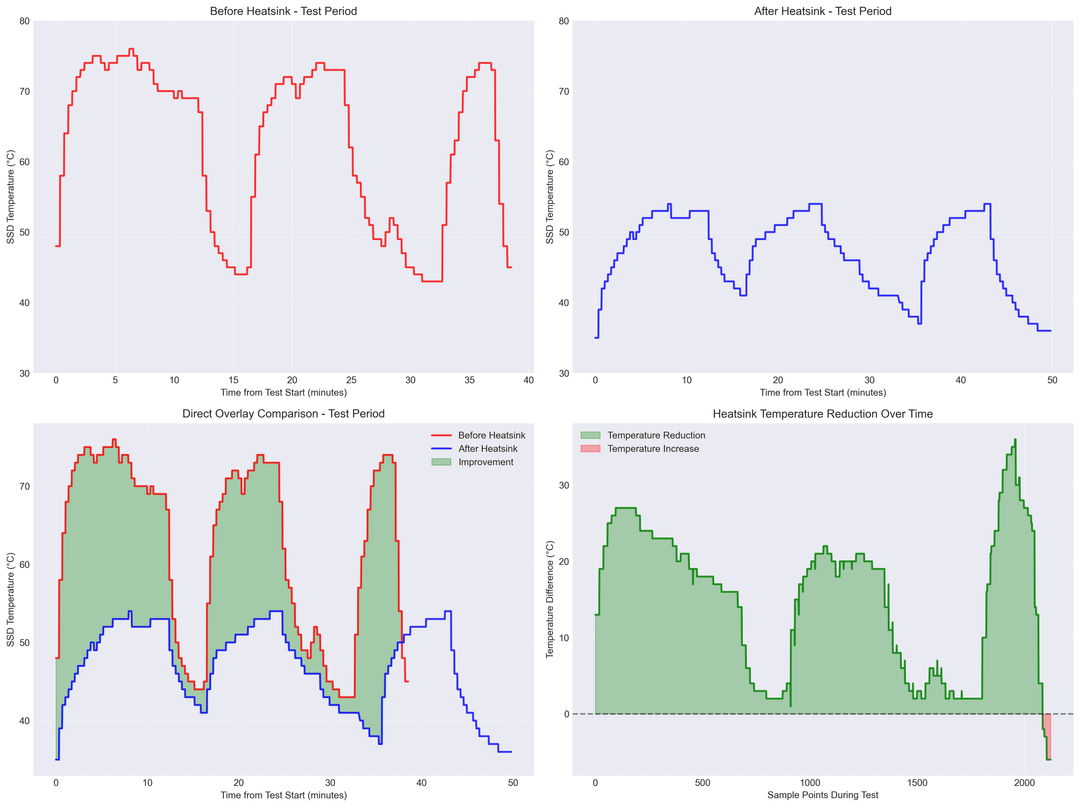
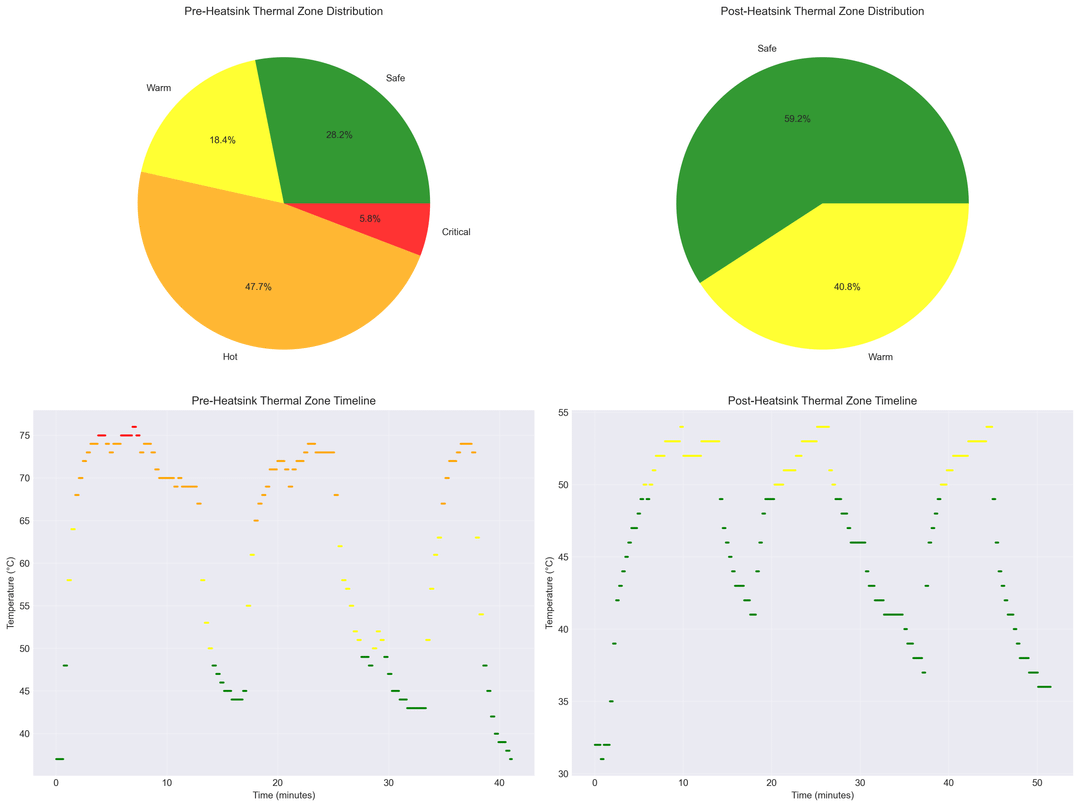
TL;DR: Added a $15 heatsink to my Samsung 980 Pro, reduced peak temps from 76°C to 54°C (22°C improvement), eliminated all time spent in dangerous temperature zones. Data analysis shows statistically significant thermal improvement.
I recently had to reformat my PC and realized my Sabrent Rocket was taking precedence over my Samsung 980 Pro in the PCIe lane department, so I swapped them around. While doing so, I had to remove the heatsink from the Sabrent so it could fit under my GPU. Unfortunately it wouldn't go onto my Samsung, so I ordered a Thermalright HR-09 2280 SSD Heatsink and Thermal Grizzly Minus Pad Pro thermal pads.
Benchmarking Process:
- Ran AIDA64 logging to CSV (1-second intervals) while running CrystalDiskMark
- Installed heatsink with thermal pads
- Repeated the exact same test procedure
- Built a Python script to parse the CSV logs and perform statistical analysis
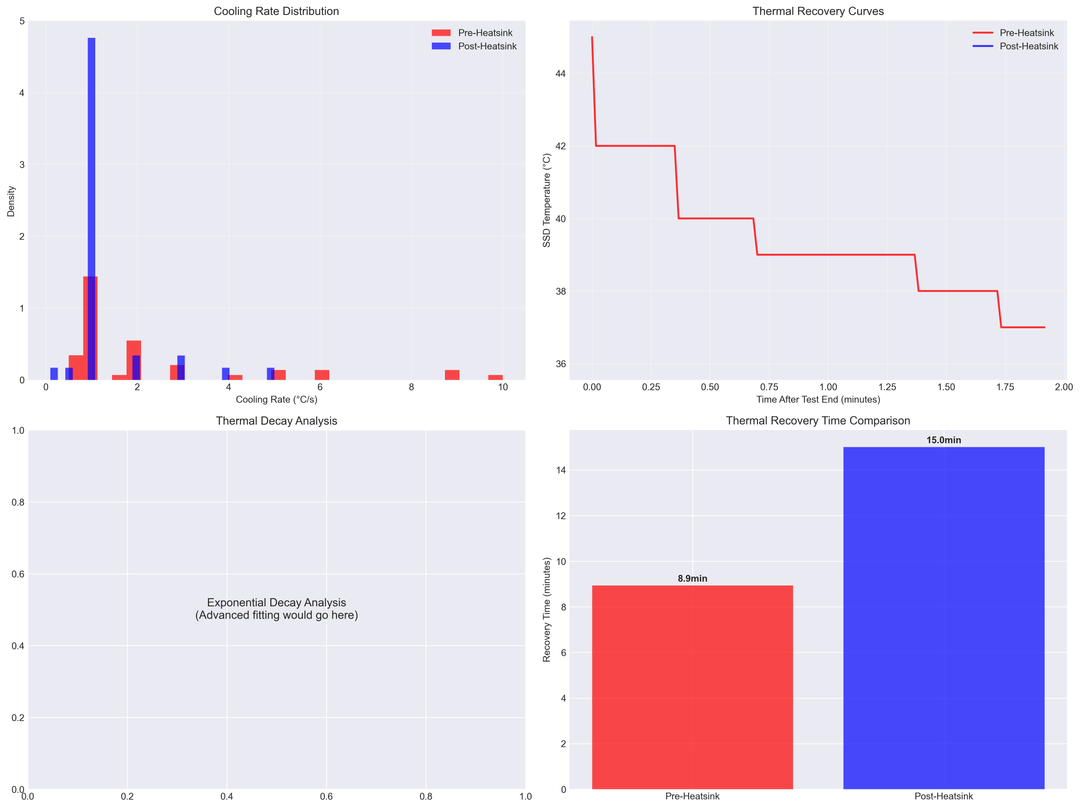
The script detects test phases automatically, calculates thermal zones (safe/warm/hot/critical), performs confidence interval analysis, and generates comprehensive thermal performance charts.
It might not technically be considered overclocking, but cooling is half the battle with overclocking and I think it's relevant enough to be posted here.
FYI: The overall score part is kind of BS because my algorithm incorrectly penalizes the longer cool-down time…. but the heatsink doesn't have a fan, which means it basically acts like a thermal battery once tests stop. Other than that though, talk about a massive improvement!
Just thought I'd share in hopes that we have some other data analysis nerds in here, or if anybody needs convincing to get a cheap M.2 heatsink.
Edit: Happy to share the Python script if anyone wants to analyze their own thermal data!