
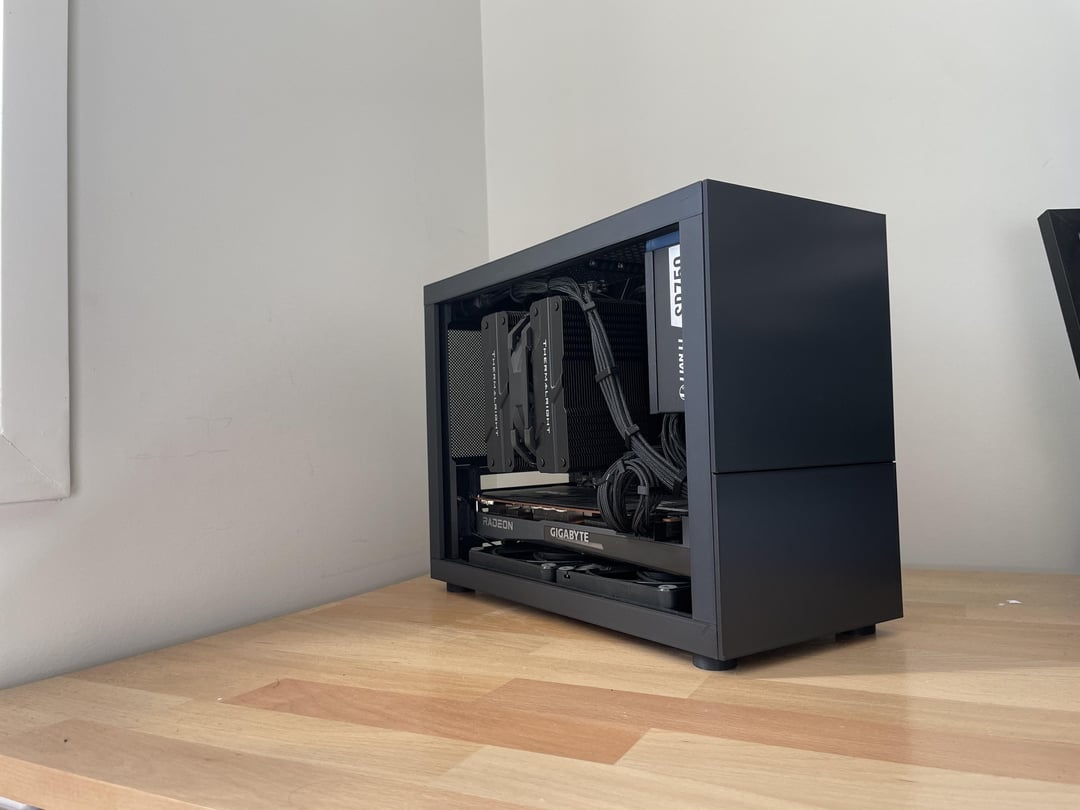
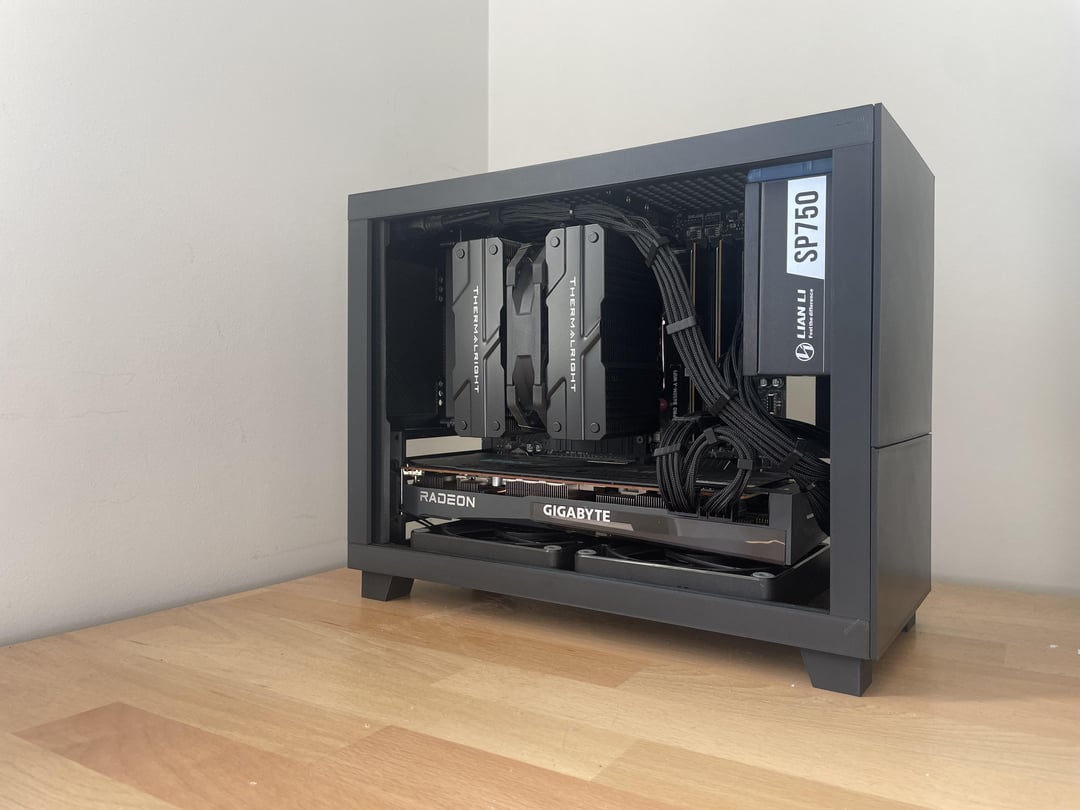
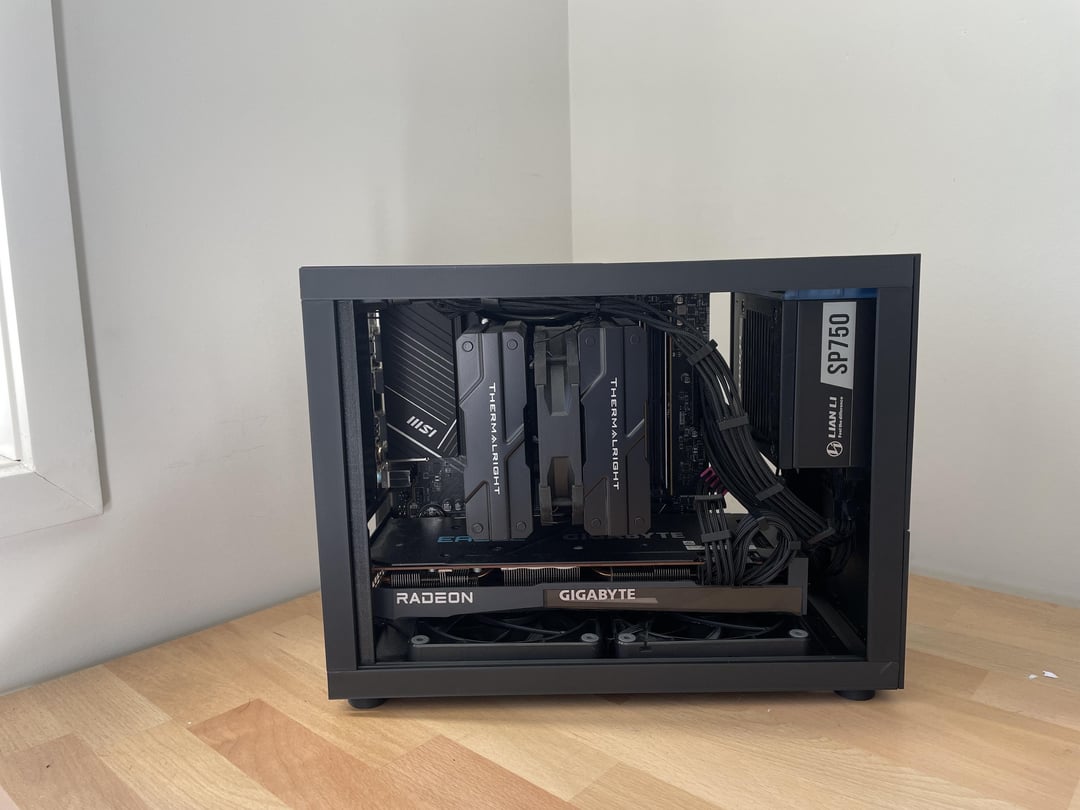
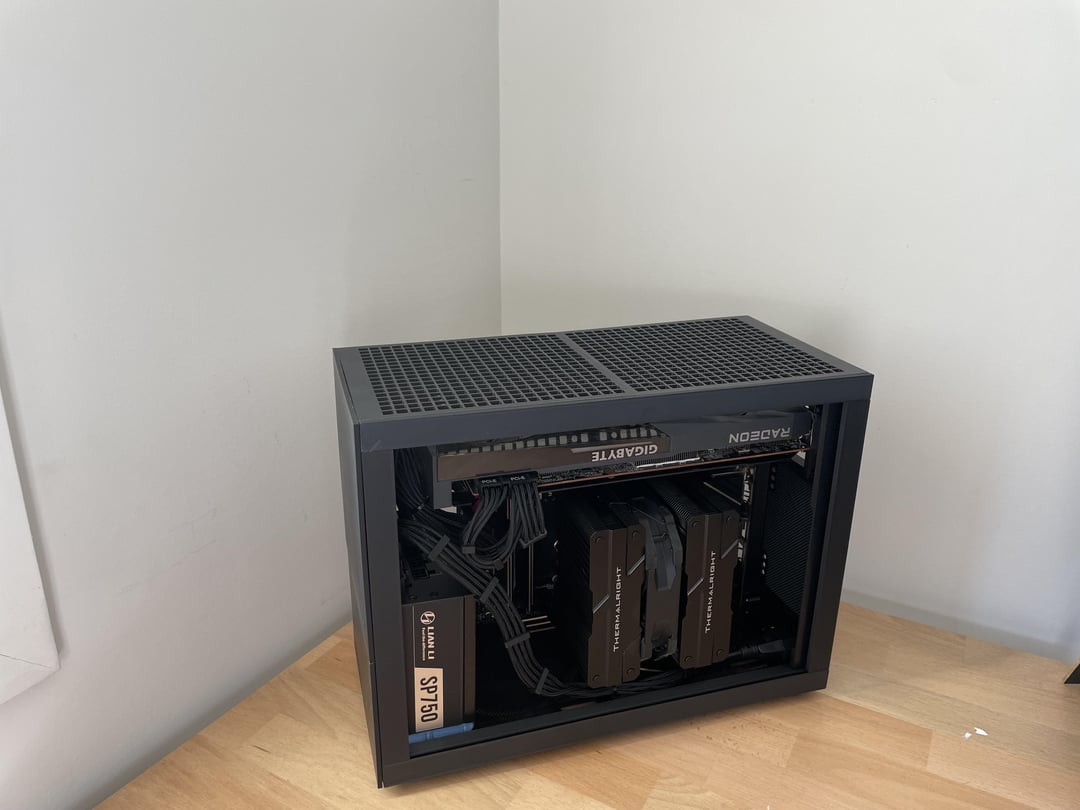
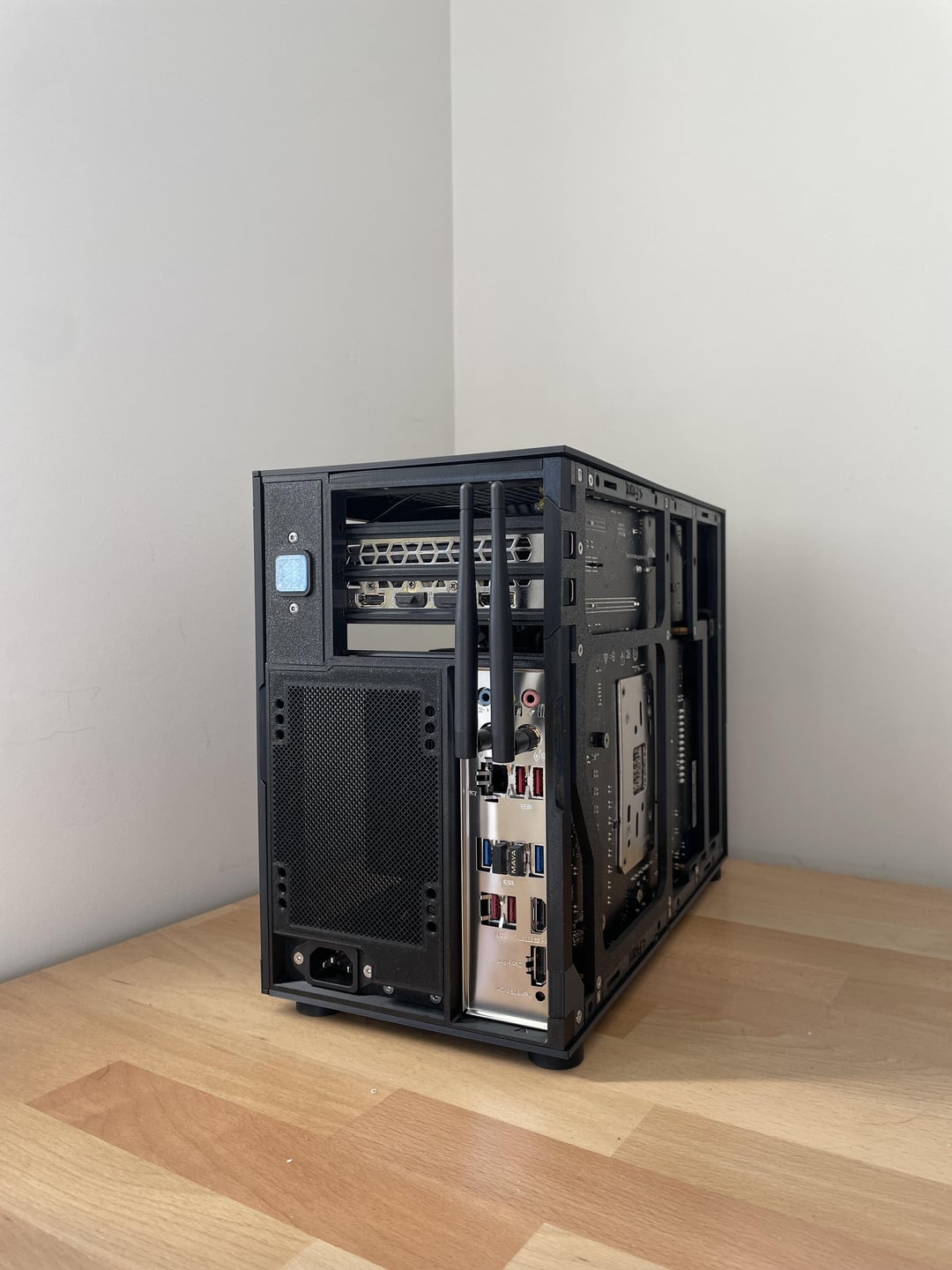
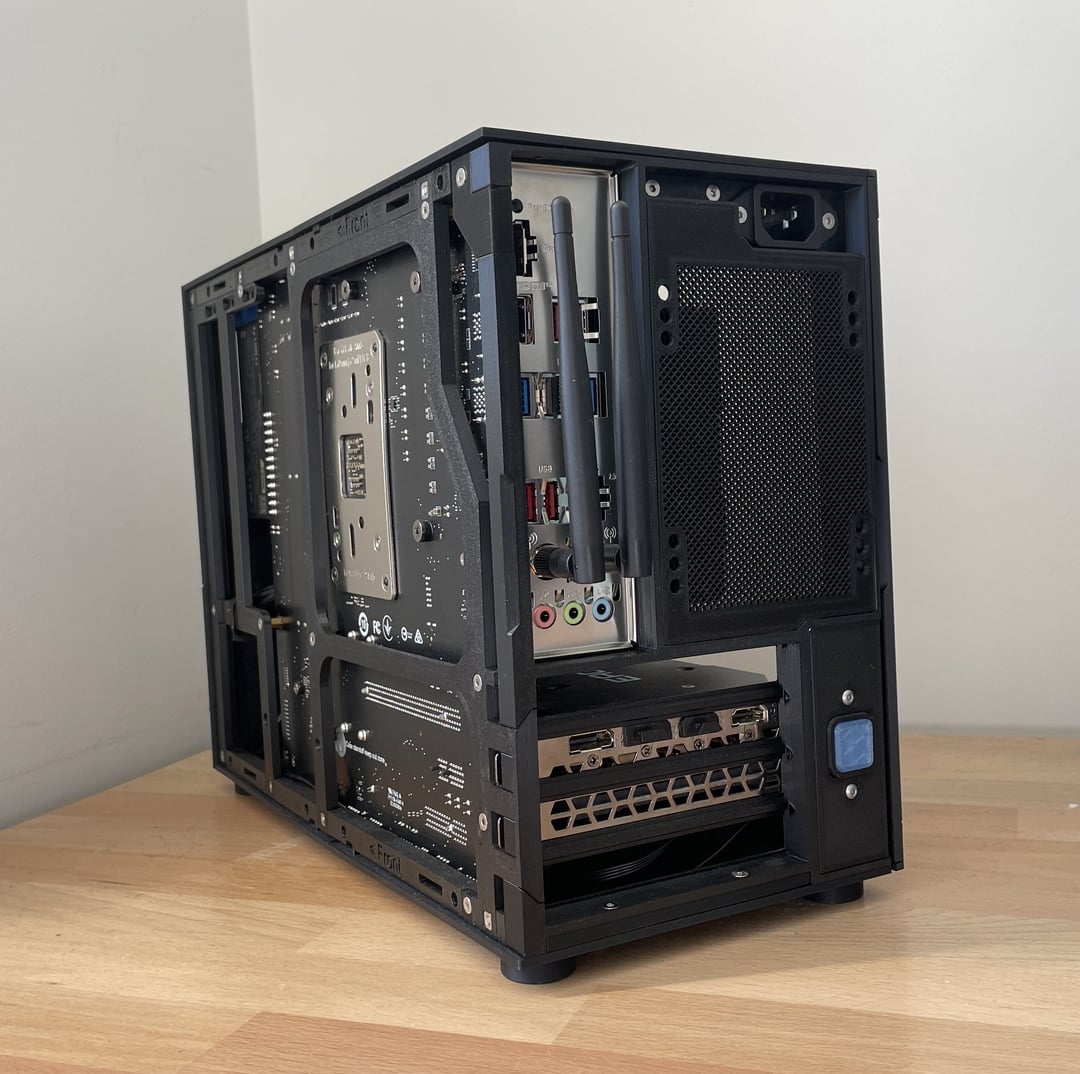
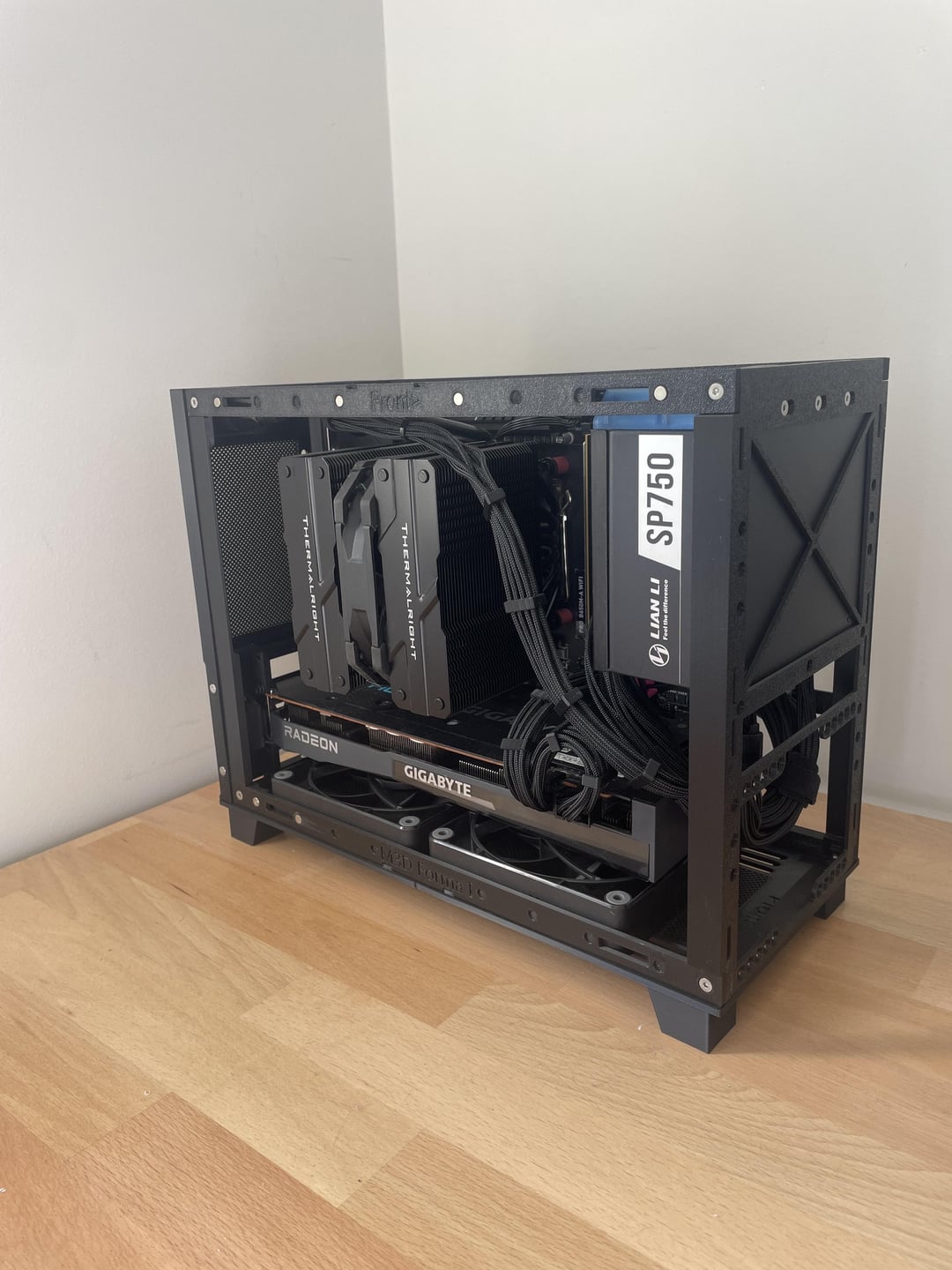
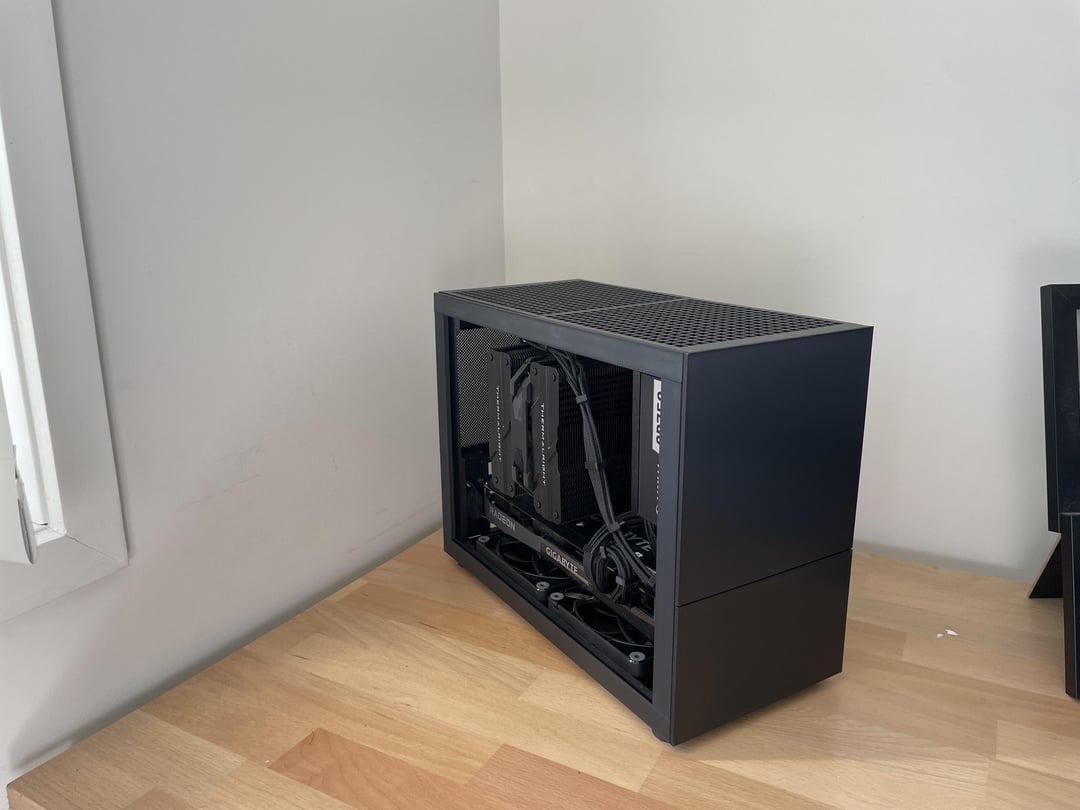
Wanted to show off my design and also ask what your opinions on 3D printed cases are, would you consider downloading one?
This is an SFF case around 14.6L without feet in its current configuration with around 325mm of GPU compatibility and 135mm CPU cooler compatibility, however I have made a parametric design that makes the case compatible with larger components given a large enough printer. There is also a rear panel however I like how it looks with it off.
21 Comments
looks clean but good luck with thermals lol
Uh… what about grounding (common)? Does your setup even allow for that?
I find 3D printed cases to be super cool and innovative tbh, you can literally create a case that absolutely no one else will have unless you share the files, makes for an even more unique build.
Pretty cool, I’d just worry about front airflow.
I mean, kinda cool, but it will have grounding issues, and it is probably much more prone to break from stress over time.
So… cool for a display for an expo or something. But not realistic for actual use.
In Metal We Trust.
I mean a case is a case though I’d prefer this one have more vents.
Here is a thought: if you design all that, and pay for the equipment, materials and time, all the parts, including panels, could have been milled in a job shop from a good aluminium alloy plate, or even magnesium. What’s that fascination with cheap plastic after putting in all the design effort and cost?
They sure do hold stuff!
I don’t see the point. My case is made out of sheetmetal for multiple reasons.
Plastic vs normal metal cases. Guess the answer
I hope that the heat from the parts would not melt the case in the long run.
I think it’s a fantastic idea and you should be proud of what you have done. Would love to see it completed with side panels however.
I would also appreciate it if you can print larger formats like ATX using small modular parts instead of needing to use a larger printer which most people don’t have.
Not sure about structural longevity though, can you pick it up and carry it around without it flexing too much?
Otherwise a really neat, professional looking stealth design.
As someone who owns a 3d printer, I wouldn’t, but I don’t have a specific use *case* in mind. For custom cases it’s probably hard to beat
I’ve been looking for designs of these on Youtube. I think grounding and thermals are solvable problems (though, for grounding it’s a bit confounded because plastics can store static electricity). The big issue is the build volume, rigidity, and heat tolerance.
* Lack of build volume means the longest (weakest) parts of a case end up split, making them even weaker.
* Rigidity is just plain hard to achieve with most plastics, so you need to construct a case in a very particular way. It’s a real design challenge and that often turns into a *build* challenge because you have to construct the case in a particular way.
* Even though some plastics will readily tolerate the heat load in a PC under normal conditions, there are various failure conditions where a part may get hot enough to melt plastic, or maybe just compromise rigidity. Obvs for some plastics this just makes it impossible, but for others, It’s not a dealbreaker but it’s not really “nice”.
The other end of the spectrum is to think about a “flatpack” “stamped” (really laser cut) steel case. ie: What if you had quite thin stainless steel, you laser cut it, and then bent it, similar to the Teenage Engineering case. I feel like that idea also has some legs.

Aside from grounding, pretty impressive.
A computer power supply typically grounds the components connected to it through metal connections, but in a plastic case, grounding may not be as effective since plastic does not conduct electricity. Therefore, while the power supply can provide grounding through its connections, the insulation of the case itself does not contribute to grounding. Now your power outlet should since it is grounded but that wont protect it from a significant electrical surge/spike anyway.
Edit: Would i worry? No not significantly but maybe keep an eye on it and any signs of fatigue from heat over time. Case looks wonderful btw!
Cheers!
Nice! I’m really interested in all the interlocking you’ve got going on… Is that just to get around limited build volume, or is it for strength?
Ignore the grounding whinging. Everything in there’s got the same 0v from the PSU so you’re fine. My concern over it would be RF emissions, but everyone’s happy to use glass side panels nowadays so it’s really not the issue it once was.
I expect my next case will be 3D printed. Super compact but high end ATX build with GPU, hot-running PCIe NIC and external water cooling. Going to be a tough challenge to design for an X1C build volume and get it to look good. I suspect the mobo and PSU will become structural parts!
My PC case (Lian li a4) had a replaceable front panel and a dude on YouTube designed a custom model of it and made it available for free in case you wanted a custom color accent panel for a build you could print with whatever you wanted. The community is awesome even though I’m not too knowledgeable on the technical stuff
Cool. It is that you can make it look like anything
If they got good flow, they are a go!
The number of people here talking incorrectly about grounding with confidence is infuriating.
In short: The case is fine, grounding is fine, static is not an issue (except when working on it, see below). It does not need to be conductive.
You DO NOT in any electronics applications, need to ground a NON-conductive case.
The reason you need to ground a metal case, is BECAUSE it is metal. It could conduct charge, electrostatic or direct in a fault condition, so grounding is required for your safety and that of components.
While it does have some advantages (EMI/EMC isolation mainly, but modern mesh cases with glass panels already throw that out), it’s in no way required for a functional design and a perfectly operational PC.
All components are grounded and protected via the motherboard. A metal case doesn’t change that, and any shock powerful enough to kill your pc through the MB to PSU grounding, would likely kill the PC regardless of a metal case.
All it requires from the user is a bit more care when working on it.
Here’s the way to think about a non-conductive case electrically – it’s the same as having an open case / bench / frame case.
The main consideration is that when unplugging the PSU/motherboard, you need to ensure YOU are grounded when working on it. If just swapping components though just leave the PSU plugged in, but switched off (ground remains connected), and the MB power cable plugged in and you are fine to tinker/swap components.