>I recently learned a fact from Statista that kind of blew my mind. The music industry did $29 billion in revenue last year. The film industry will hit a more impressive $79 billion this year.
>Meanwhile, in 2024, the video game industry will turn a staggering $282 billion in revenue. Video games worldwide make more than twice the money of all film and all music combined.
I did not know that. But with all the layoffs and crappy post-release games, it doesn’t fell like it earn those numbers.
jurassicbond
> Consumers have always owned their media.
False. Between TV, rentals, libraries, movie theaters, etc. people have always heavily consumed media they didn’t own.
> This quality, this one connecting virtue that runs from stone tablets to newspapers to ebooks, is rapidly becoming a thing of the past. It has been replaced with the idea of the subscription service — Netflix and Kindle Unlimited and Spotify. You no longer pay once and download a song, you no longer borrow ownership of a movie one time; you pay for access to a huge database from which to stream. Even if you download the content, access is temporary. You own nothing.
For media, there’s very little on subscriptions services that you can’t also purchase for your own in some fashion. You may not have immediate access, but most shows and movies do still become available for purchase, and usually in physical form. Subscription services are becoming the norm because it’s convenient and cheaper, not because other options have disappeared. For TV shows in particular, it’s actually much easier to own them now than it was when I was a kid. (Go look up your favorite 80s/90s show and see how many VHS tapes you would need to purchase at $10-$20 a tape if they were available for purchase at all. I looked up The Next Generation and it was 87 tapes, probably well over $1000 in the 90s, whereas I have the whole set on Blu-Ray and paid about $100 for it).
Peanuts_lover6969
I’m content with pirating them
Wingsnake
It is the same with ebooks. Paying 15-20$ for a few pages of text. And you often don’t even own it.
That is why I always pirate my ebooks (and rarely by a physical book).
bebitarubia
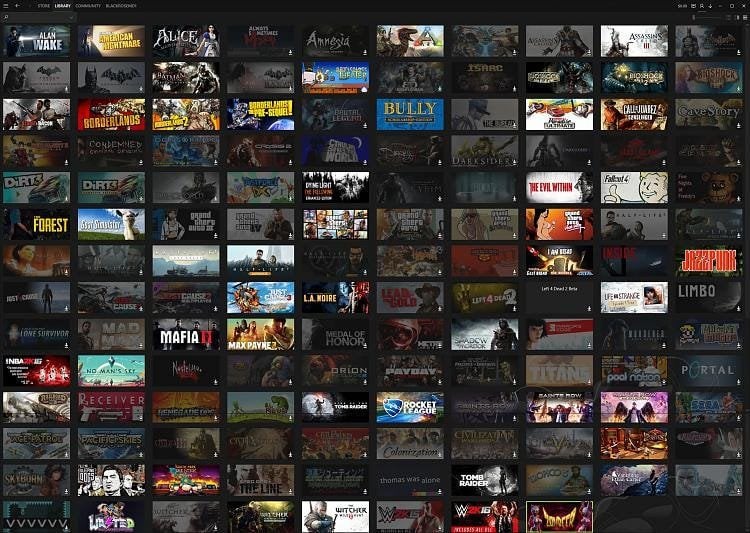
I don’t know about you but I have more than one friend who has bought a game on steam and then lent it to a friend or sold it to a friend for a fraction of the cost they paid.
I’m sure it happens a lot in physical stores too.
Yautja93
Well, yes, but there are a lot of companies like valve that don’t care about it, and just want your money, you will own nothing and be happy.
avocado-v2
Idk why people don’t just buy their games DRM-free. At any moment these services could go offline and leave you high and dry.
DeficientDefiance
As a pirate I do in fact own my games. What is the games industry gonna do, kick down my door and make me delete the ISOs from my hard drive?
SkullTitsGaming
Idk about y’all but i don’t think I’ve ever owned a video game.
I’ve owned a **license to play** tons of video games, sure, but even in the cartridge/disc era of gaming, my purchase gave me a license, which came with various terms and conditions i happily agreed to follow on the EULA screen (or which were printed in the game’s owner’s manual).
Don’t get me wrong, i too would like for my game library to be treated as my property, to be able to pass on my library to my kids when i die, or be able to play games well past their “still being sold” date, and to modify and customize my experience as i please (so long as it doesn’t negatively impact someone else playing their own copy of a game), but even where that has been implied via marketing, it’s always been a case of “you can play this until we, the developers and publishers, say you can’t,” and acting like games streaming is a new and dangerous trend seems… disingenuous, at best.
TheMassiveLiability
Yar har mateies.
Kamakaziturtle
>**Consumers have always owned their media.**
Does the author not realize this hasn’t been true since the rise of digital? Steam has become a dominate force for a good while, and we don’t own squat of our Steam libraries and are pretty much reliant on good will.
>OTP distribution means that the developer, in theory, can never fiddle with your access to your games.
Again, for most games these days in theory they *can* fiddle with access to your games. Thankfully in practice them doing this is very rare, but it does happen
That said, I feel like this article is mostly just making up imaginary scenarios and then talking against them, rather than actually presenting realistic scenarios. Nobody is arguing to replace otp completely, and pretty much every example brought up is centered around indie games going subscription. Saying how it would destroy communities without giving any reason why (aside from a devloper doing what they can do regardless if it’s subscription or not). Talking about how MMO’s would be thrust into chaos if removed (does the author not realize that people already pay subscriptions for these games?).
Personally, my view is that there’s room for both. We’ve already moved away from owning media in general. All those risks are there already and have been for a while. For now the argument ultimately comes from if it’s a game you expect to play once versus one you would want to play a lot. You can save a lot of money through a subscription
I mean, paying a smaller lump sum to play a game once or try out a game and such has been an industry long before Game Pass. We just used to call them game rentals. All thats changed is they have adapted to the digital age.
goodidea-fairy
You should own a license for the the games that you want. Then pay a subscription service to try ones you would never have bought otherwise. If you like it, go buy it.
loredo22
I try to buy physical media as much as I can! Now I’m buying mobile games!
gerch4n
That’s why I always sail the high seas.
GoldenAgeGamer72
Here’s why I kind of disagree with that: Growing up in the generation of NES and Blockbuster Video, I only purchased the best of the best games or ones that I knew were really up my alley. Zelda, Metroid, Kid Icarus, and then later versions of these. But we rented a lot of games from Blockbuster because trying to purchase all of those without a job and without knowing whether or not we would like them was just not a reality. So for younger generations who are used to owning games and still have the means to do so, have at it. But I can’t say that I ever had a big game collection, although I’ve played literally thousands upon thousands of games.
Brutzelmeister
I almost never buy skins except a game is free and i play it for a longer time. People are willing to pay big money for every shit and devs would be stupid not to take the easy money. But some really bad devs just sink the ship with their cash shops before it even set sail.
[deleted]
[deleted]
M0ty
Just buy games on GoG
-FemboiCarti-
New video games are 50-70 bucks a pop these days, if a subscription service lets me play more games for less money then ofc I’m going to use it.
innovativesolsoh
FWIW I agree we need to expand some semblance of ownership rights to digital, but companies cannot be expected to support the server side ad infinitum, if applicable.
Steam is the one who needs to implement this, because they’re too big for even larger companies to write off completely.
The primary problem is it isn’t likely to be as simple as giving a user an immutable key that provides access to it like they used to do when disks were on their way out.
End user agreements would likely need changed, someone would have to draw a clearly defined legal line between a company’s ownership of the assets/IP and to what degree you’re entitled to utilize them.
Put simply, it’s likely not a small change to the industry unless Steam starts losing a non-negligible amount of purchases to GOG, it will literally come down to someone at Steam pushing for it altruistically or EU forcing their hand to make a solution for EU customers that we can benefit from elsewhere.
With physical media there is less of a question of ownership, because you possess a hard copy and if you lose that you lose access…so there’s nothing needed to prove ownership, really.
All that said: articles like this are doom porn for aging gamers. I’ve had some questions myself about how to handle my steam library for my two gamer kiddos and gamer wife once I’m gone, since there’s no legal protections and it’s just a ‘don’t ask don’t tell’ scenario with logging in, but the articles (like this) mostly over sensationalize or miss the mark entirely on why it matters. Companies like steam or other publishers aren’t going to strip us of our access wholesale on a whim, there’s no incentive for them to and would only drive away users.
This isn’t a ‘risk’ just because it’s possible, the risk I’m most concerned about is censorship in the way we’re trying to censor books and stuff.
I don’t wanna lose access to something I paid for and possessed legally, especially without remuneration, just because someone else decides in the future that society now has some moral duty to take it from me.
It’s one thing to lose access to an online game because servers aren’t being maintained, but, because there is no legally defined length of time my purchase entitles me to (even for single player games) often we’re at the mercy of company policy to define our rights like with return policies being handled based on time spent playing or whatever.
If I bought an online only game and after a month the company who made the game shuttered their doors, steam company policy says I got what I paid for if I played >2hr and no refund. While steam usually deals with fringe scenarios like this on a case by case basis and often does the right thing, they have no real legal obligation to do so.
The devil is in the details for consumer rights, but it’s not this scary looming threat that most writers make it out to be when they write about it, other than the risk of censorship bans like we’ve seen with books.
Honest-Yesterday-675
I want gog for movies and tv.
ekac
I’m just learning today – If you let your PS+ subscription expire, you lose all your games you’ve downloaded. It doesn’t sound like much, but with kids, I’m losing all the Paw Patrol games, Bugsnax, Gigantosaurus, etc.
I didn’t think it was worth $160 in the first place. Now I’m kind of mad I had it in the first place not knowing this would happen.
Objective-Aioli-1185
The T&A you press A to agree to on every single game you’ve probably played says otherwise. You rent out a license but never actually own anything. Why do think discs require you to download the game anyway? Not just cos of the “update”.
TrainingSchwanz
I dont use any Subscription Services.
eyes0fred
its the option that matters. sure cable/libraries/etc. but also, DVDs, physical book sales, etc.
if a developer either chose, or was forced, into a situation where the only available version of the thing, is to basically rent it digitally, it would *NOT* parallel the tv/movies/music/book industries where you can absolutely still buy a physical copy and keep it indefinitely.
MewinMoose
Nah only a few. I would rather play 30+ games with a subscription and buy less than 5 games a year.
ringken
I understand that we don’t “own” the digital game but rather pay to have access to the license.
But why would a company take away that license? That doesn’t make sense to me. There is no benefit. If it’s an online game digital or not, the servers aren’t going to run forever.
GunMuratIlban
Enough with this bullshit already…
It’s my money, I’ll buy/play games however I choose so.
If anyone’s willing to sponsor my video game related spendings, then sure, feel free to dictate me. Otherwise, shut up.
You want to buy physical copies? Digital? Just through subscription? Great, you can spend your own money however you’d like.

28 Comments
>I recently learned a fact from Statista that kind of blew my mind. The music industry did $29 billion in revenue last year. The film industry will hit a more impressive $79 billion this year.
>Meanwhile, in 2024, the video game industry will turn a staggering $282 billion in revenue. Video games worldwide make more than twice the money of all film and all music combined.
I did not know that. But with all the layoffs and crappy post-release games, it doesn’t fell like it earn those numbers.
> Consumers have always owned their media.
False. Between TV, rentals, libraries, movie theaters, etc. people have always heavily consumed media they didn’t own.
> This quality, this one connecting virtue that runs from stone tablets to newspapers to ebooks, is rapidly becoming a thing of the past. It has been replaced with the idea of the subscription service — Netflix and Kindle Unlimited and Spotify. You no longer pay once and download a song, you no longer borrow ownership of a movie one time; you pay for access to a huge database from which to stream. Even if you download the content, access is temporary. You own nothing.
For media, there’s very little on subscriptions services that you can’t also purchase for your own in some fashion. You may not have immediate access, but most shows and movies do still become available for purchase, and usually in physical form. Subscription services are becoming the norm because it’s convenient and cheaper, not because other options have disappeared. For TV shows in particular, it’s actually much easier to own them now than it was when I was a kid. (Go look up your favorite 80s/90s show and see how many VHS tapes you would need to purchase at $10-$20 a tape if they were available for purchase at all. I looked up The Next Generation and it was 87 tapes, probably well over $1000 in the 90s, whereas I have the whole set on Blu-Ray and paid about $100 for it).
I’m content with pirating them
It is the same with ebooks. Paying 15-20$ for a few pages of text. And you often don’t even own it.
That is why I always pirate my ebooks (and rarely by a physical book).
I don’t know about you but I have more than one friend who has bought a game on steam and then lent it to a friend or sold it to a friend for a fraction of the cost they paid.
I’m sure it happens a lot in physical stores too.
Well, yes, but there are a lot of companies like valve that don’t care about it, and just want your money, you will own nothing and be happy.
Idk why people don’t just buy their games DRM-free. At any moment these services could go offline and leave you high and dry.
As a pirate I do in fact own my games. What is the games industry gonna do, kick down my door and make me delete the ISOs from my hard drive?
Idk about y’all but i don’t think I’ve ever owned a video game.
I’ve owned a **license to play** tons of video games, sure, but even in the cartridge/disc era of gaming, my purchase gave me a license, which came with various terms and conditions i happily agreed to follow on the EULA screen (or which were printed in the game’s owner’s manual).
Don’t get me wrong, i too would like for my game library to be treated as my property, to be able to pass on my library to my kids when i die, or be able to play games well past their “still being sold” date, and to modify and customize my experience as i please (so long as it doesn’t negatively impact someone else playing their own copy of a game), but even where that has been implied via marketing, it’s always been a case of “you can play this until we, the developers and publishers, say you can’t,” and acting like games streaming is a new and dangerous trend seems… disingenuous, at best.
Yar har mateies.
>**Consumers have always owned their media.**
Does the author not realize this hasn’t been true since the rise of digital? Steam has become a dominate force for a good while, and we don’t own squat of our Steam libraries and are pretty much reliant on good will.
>OTP distribution means that the developer, in theory, can never fiddle with your access to your games.
Again, for most games these days in theory they *can* fiddle with access to your games. Thankfully in practice them doing this is very rare, but it does happen
That said, I feel like this article is mostly just making up imaginary scenarios and then talking against them, rather than actually presenting realistic scenarios. Nobody is arguing to replace otp completely, and pretty much every example brought up is centered around indie games going subscription. Saying how it would destroy communities without giving any reason why (aside from a devloper doing what they can do regardless if it’s subscription or not). Talking about how MMO’s would be thrust into chaos if removed (does the author not realize that people already pay subscriptions for these games?).
Personally, my view is that there’s room for both. We’ve already moved away from owning media in general. All those risks are there already and have been for a while. For now the argument ultimately comes from if it’s a game you expect to play once versus one you would want to play a lot. You can save a lot of money through a subscription
I mean, paying a smaller lump sum to play a game once or try out a game and such has been an industry long before Game Pass. We just used to call them game rentals. All thats changed is they have adapted to the digital age.
You should own a license for the the games that you want. Then pay a subscription service to try ones you would never have bought otherwise. If you like it, go buy it.
I try to buy physical media as much as I can! Now I’m buying mobile games!
That’s why I always sail the high seas.
Here’s why I kind of disagree with that: Growing up in the generation of NES and Blockbuster Video, I only purchased the best of the best games or ones that I knew were really up my alley. Zelda, Metroid, Kid Icarus, and then later versions of these. But we rented a lot of games from Blockbuster because trying to purchase all of those without a job and without knowing whether or not we would like them was just not a reality. So for younger generations who are used to owning games and still have the means to do so, have at it. But I can’t say that I ever had a big game collection, although I’ve played literally thousands upon thousands of games.
I almost never buy skins except a game is free and i play it for a longer time. People are willing to pay big money for every shit and devs would be stupid not to take the easy money. But some really bad devs just sink the ship with their cash shops before it even set sail.
[deleted]
Just buy games on GoG
New video games are 50-70 bucks a pop these days, if a subscription service lets me play more games for less money then ofc I’m going to use it.
FWIW I agree we need to expand some semblance of ownership rights to digital, but companies cannot be expected to support the server side ad infinitum, if applicable.
Steam is the one who needs to implement this, because they’re too big for even larger companies to write off completely.
The primary problem is it isn’t likely to be as simple as giving a user an immutable key that provides access to it like they used to do when disks were on their way out.
End user agreements would likely need changed, someone would have to draw a clearly defined legal line between a company’s ownership of the assets/IP and to what degree you’re entitled to utilize them.
Put simply, it’s likely not a small change to the industry unless Steam starts losing a non-negligible amount of purchases to GOG, it will literally come down to someone at Steam pushing for it altruistically or EU forcing their hand to make a solution for EU customers that we can benefit from elsewhere.
With physical media there is less of a question of ownership, because you possess a hard copy and if you lose that you lose access…so there’s nothing needed to prove ownership, really.
All that said: articles like this are doom porn for aging gamers. I’ve had some questions myself about how to handle my steam library for my two gamer kiddos and gamer wife once I’m gone, since there’s no legal protections and it’s just a ‘don’t ask don’t tell’ scenario with logging in, but the articles (like this) mostly over sensationalize or miss the mark entirely on why it matters. Companies like steam or other publishers aren’t going to strip us of our access wholesale on a whim, there’s no incentive for them to and would only drive away users.
This isn’t a ‘risk’ just because it’s possible, the risk I’m most concerned about is censorship in the way we’re trying to censor books and stuff.
I don’t wanna lose access to something I paid for and possessed legally, especially without remuneration, just because someone else decides in the future that society now has some moral duty to take it from me.
It’s one thing to lose access to an online game because servers aren’t being maintained, but, because there is no legally defined length of time my purchase entitles me to (even for single player games) often we’re at the mercy of company policy to define our rights like with return policies being handled based on time spent playing or whatever.
If I bought an online only game and after a month the company who made the game shuttered their doors, steam company policy says I got what I paid for if I played >2hr and no refund. While steam usually deals with fringe scenarios like this on a case by case basis and often does the right thing, they have no real legal obligation to do so.
The devil is in the details for consumer rights, but it’s not this scary looming threat that most writers make it out to be when they write about it, other than the risk of censorship bans like we’ve seen with books.
I want gog for movies and tv.
I’m just learning today – If you let your PS+ subscription expire, you lose all your games you’ve downloaded. It doesn’t sound like much, but with kids, I’m losing all the Paw Patrol games, Bugsnax, Gigantosaurus, etc.
I didn’t think it was worth $160 in the first place. Now I’m kind of mad I had it in the first place not knowing this would happen.
The T&A you press A to agree to on every single game you’ve probably played says otherwise. You rent out a license but never actually own anything. Why do think discs require you to download the game anyway? Not just cos of the “update”.
I dont use any Subscription Services.
its the option that matters. sure cable/libraries/etc. but also, DVDs, physical book sales, etc.
if a developer either chose, or was forced, into a situation where the only available version of the thing, is to basically rent it digitally, it would *NOT* parallel the tv/movies/music/book industries where you can absolutely still buy a physical copy and keep it indefinitely.
Nah only a few. I would rather play 30+ games with a subscription and buy less than 5 games a year.
I understand that we don’t “own” the digital game but rather pay to have access to the license.
But why would a company take away that license? That doesn’t make sense to me. There is no benefit. If it’s an online game digital or not, the servers aren’t going to run forever.
Enough with this bullshit already…
It’s my money, I’ll buy/play games however I choose so.
If anyone’s willing to sponsor my video game related spendings, then sure, feel free to dictate me. Otherwise, shut up.
You want to buy physical copies? Digital? Just through subscription? Great, you can spend your own money however you’d like.