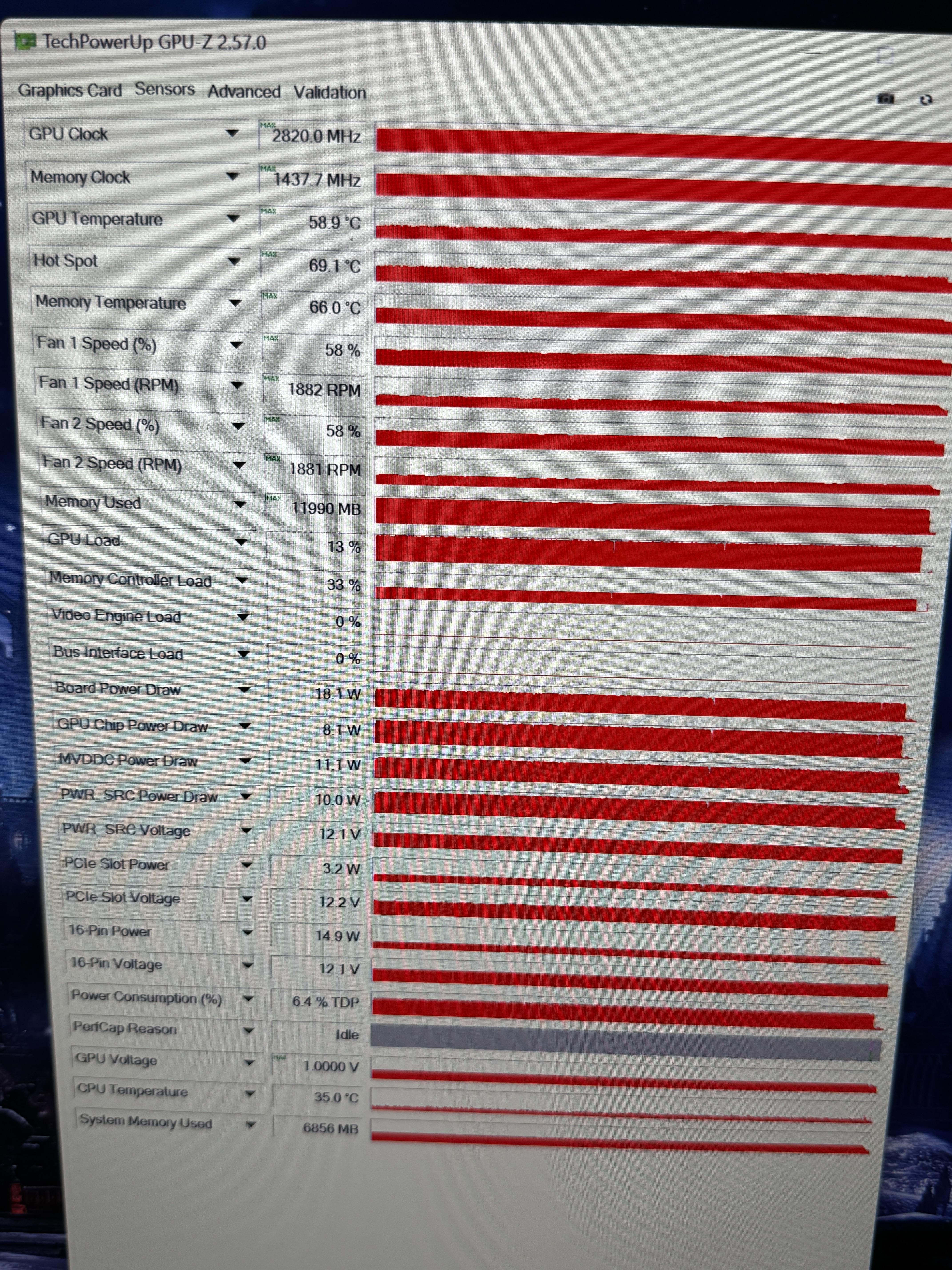
Asus Tuf 4070 ti undervolt Im able to get 2820 mhz at 1000mv is this decent? getting 22800 graphic score on 3d mark at 4k res

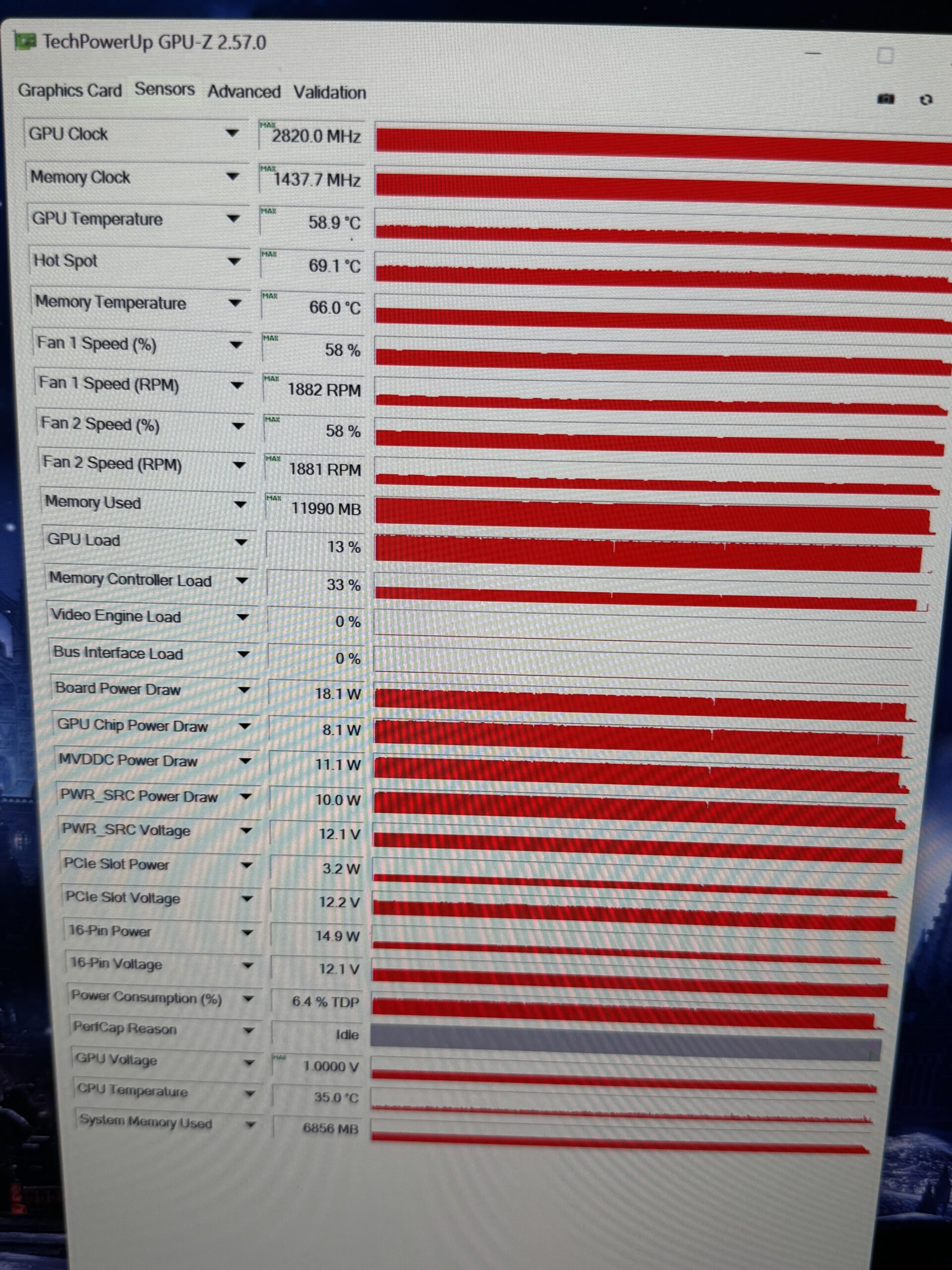
Asus Tuf 4070 ti undervolt Im able to get 2820 mhz at 1000mv is this decent? getting 22800 graphic score on 3d mark at 4k res
3 Comments
Hard to tell, every card is different. I have a tuf 4070 ti oc and I have multiple profiles with my lowest everyday use one with 925mv at 2550mhz (I could probably squeeze it lower but haven’t bothered) and my performance is 1000mv at 2910mhz. 1025mv is stock and I haven’t tried pushing it higher than stock.
My 4090 isn’t a strong overclocker. 900 MHz 2565 but I’ve stress tested it very heavily since I use it for research and errors are not allowed. I can bench up to 3030 with 1.1 but it’s highly unstable
Whats decent is the highest achievable overclock possible for your specific card, at the best temps under load and stable across stress tests and gaming.
Run 3DMark time spy stress test and let it run the full 20 loop, if you achieve 95+% you should be good. Ideally you’d want a 99% score, if you get 95-98%, as long as you dont crash in games, you’ll be fine.