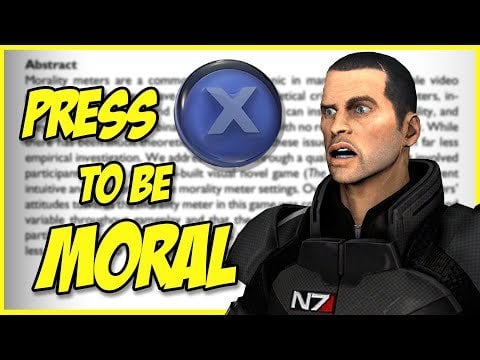
Interview with an academic who proved morality bars can influence your choices, even when players are unaware of it

Interview with an academic who proved morality bars can influence your choices, even when players are unaware of it
3 Comments
They 100% define my choice because they’ve gamified morality with measurable stats.
It becomes about what gets me the most points for the build I am running vs what I would actually do.
The games that do morality systems the best are the ones that make it completely invisible to the user and your choice from the beginning of the game randomly comes to bite you in the ass 10hrs later.
Honestly in any game with a morality bar I just pick the answers I want the morality bar go to within that playthrough. Still enjoy them though.
In my experience morality bars *do* change how I approach playing video games, but only because I’m aware of the meta in game design that dictates that the morality bar will be a variable in some mechanic, or gameplay content.
And that meta goes even further in that I know developers more than likely put more work into the “good” outcome. So if I want to experience the game to its fullest most complete extent, I feel compelled to get the “good” ending because it’s likely the most content complete. Of course everyone plays games differently, but I’m sure there are people who don’t want to sink tens or hundreds of hours into a game to get sub optimal story lines, locked content, less developed content. I personally feel compelled to play games how the developer intended.
I don’t think it’s about making you more good. There are plenty of games where the content compels you to do bad things, and I have absolutely no problem accomplishing those ends. So yeah, if you introduce a morality bar, the choice between being good or evil is not entirely pure in a video game context. Video games are not great controls for examining human behaviour imo.