I think you can configure a USB virtual key for it, search if you can and if you don’t just don’t use that thing cuz is just gonna be more of a problem than a security feature
RoadkillVenison
You can store the recovery key on your Microsoft account. USB drive, text file, or even print it if you want.
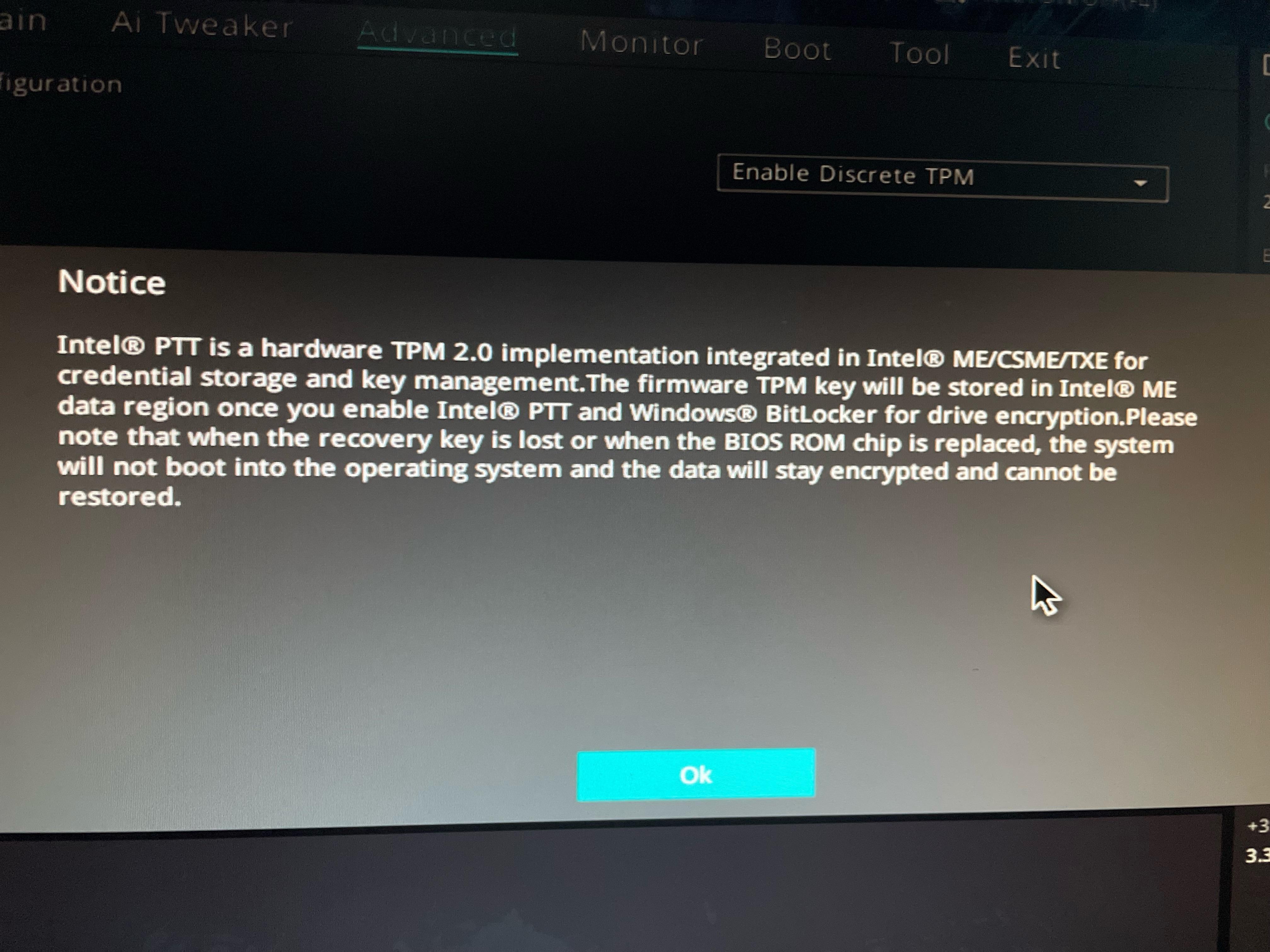
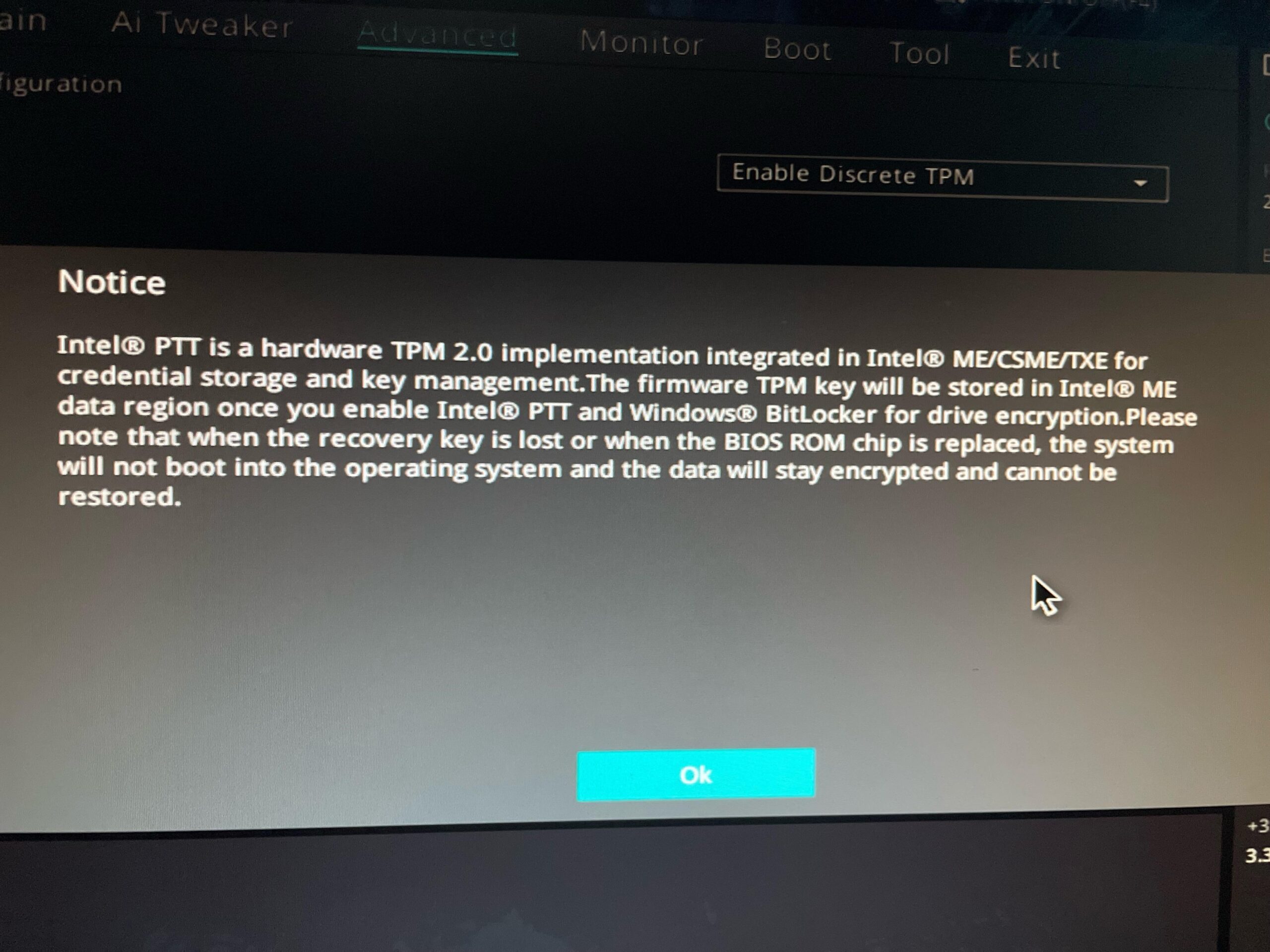
If you fail to do so, then yes, you’re SOL if you change your motherboard or it dies.
Hattix
When you use bitlocker, you have a recovery key. Windows tells you to keep that safe. It’s a good idea to listen.
If you’re not using bitlocker, none of this matters.
faverodefavero
Never activate bitlocker without a very good reason.
blackest-Knight
Don’t enable bitlocker. No one really needs full drive encryption, you’re not storing pentagon data.
neeekyp
If it’s stationary, there’s no need for it, however any laptop or handheld PC now that they’re gaining traction you should definitely opt to enable it
fannoredditt2020
TPM hardware ties the encryption to the storage media. You specifically cannot transfer the drive to another PC, by design. You have to unencrypt the drive first! Also, it’s a good idea to backup the data in case something goes wrong.
mattjones73
I would not enable bitlocker on a home PC.. maybe a laptop if you’re worried about it being stolen.. It’s a performance hit.

8 Comments
I think you can configure a USB virtual key for it, search if you can and if you don’t just don’t use that thing cuz is just gonna be more of a problem than a security feature
You can store the recovery key on your Microsoft account. USB drive, text file, or even print it if you want.
If you fail to do so, then yes, you’re SOL if you change your motherboard or it dies.
When you use bitlocker, you have a recovery key. Windows tells you to keep that safe. It’s a good idea to listen.
If you’re not using bitlocker, none of this matters.
Never activate bitlocker without a very good reason.
Don’t enable bitlocker. No one really needs full drive encryption, you’re not storing pentagon data.
If it’s stationary, there’s no need for it, however any laptop or handheld PC now that they’re gaining traction you should definitely opt to enable it
TPM hardware ties the encryption to the storage media. You specifically cannot transfer the drive to another PC, by design. You have to unencrypt the drive first! Also, it’s a good idea to backup the data in case something goes wrong.
I would not enable bitlocker on a home PC.. maybe a laptop if you’re worried about it being stolen.. It’s a performance hit.