
Sometimes we jump into a new video game fully under the impression that it is just that—a brand-new, self-contained experience. However, as we progress through the narrative, we start to notice something strange. Subtle references and clever clues hidden throughout the world suggest that the game is far more connected than we realized, and is not nearly as standalone as we once thought.
For today’s list, we will be looking at seven games that were either full-on sequels to something that came before, or are at least deeply tied to an existing universe. Some of these connections are buried late in the experience, while others become quite obvious near the beginning of the story. Of course, that doesn’t mean these titles can’t still be enjoyed entirely on their own, but players already familiar with these established worlds will undoubtedly get much more out of them.
Judgment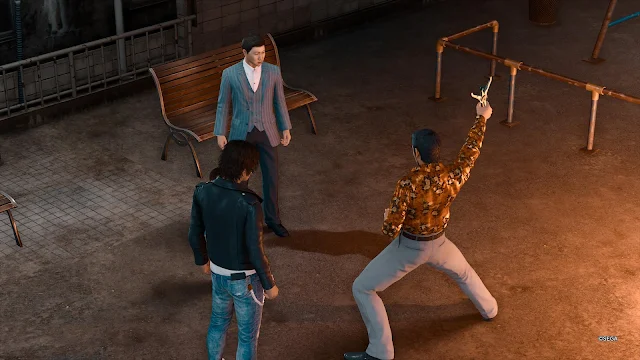
To kick off our list, we’ll look at a game that isn’t quite so surprising, but was initially passed off as a completely standalone title.
Judgment is a series created by Yakuza (Like a Dragon) developer Ryu Ga Gotoku Studio, which follows an ex-lawyer-turned-detective as he investigates a series of bizarre murders. With an overall story deeply rooted in Alzheimer’s disease, the game tells a compelling story and is designed in a way that newcomers can jump right in. However, it is in fact set within the Yakuza universe, and there are telltale signs everywhere.
Set within the city of Kamurocho, the game takes place in 2018 following the major events of Yakuza 6: The Song of Life. While understanding what transpired is not key, players who have been following the series since the beginning will realize why a part of the city is under construction. They’ll also have a deeper understanding of the main Yakuza group, the Tojo Clan, which plays a major role in the story.
However, when it comes to Judgment’s sequel, Lost Judgment, things are not so clear-cut. Due to the events of Yakuza: Like a Dragon, there are major changes that could not be avoided in Lost Judgment. Because of that, Lost Judgment acts more as a direct sequel to both series, and not just to Judgment. It also shifts the story to Yokohama, the main setting for Yakuza: Like a Dragon, and further builds upon what that title established within its narrative.
Mega Man Legends 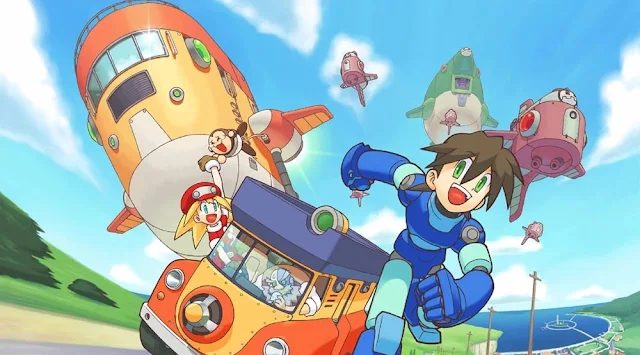
Despite using the Mega Man name, Mega Man Legends positioned itself as a reinvention of the series, bringing the Blue Bomber into the world of 3D. Up until then, the classic Mega Man series and its follow-up Mega Man X were all the world knew, and Legends seemed to follow a completely new character who was simply inspired by what came before. Though the US translation kept the protagonist’s name as Mega Man, he was known as Rock Volnutt in Japan, with his story taking place in a world covered by water. After being discovered in some ruins by a man named Barrell Caskett, he was raised alongside Barrell’s granddaughter, Roll, following the disappearance of her parents. As the two grew older, they eventually began exploring ruins themselves, which leads up to the start of the first game, where their ship crash-lands on Kattelox Island. Little do they know, this island holds a dark secret, and uncovering it will reveal the truth of the world.
As it turns out, the world Legends takes place in is in fact the same as the original Mega Man timeline. At some point, the world became flooded, and humanity itself was replaced by artificial beings known as Carbons. Mega Man himself is revealed to be a Purifier Unit, which is part of a system put in place by the last true human with the goal of repopulating the world with Carbons. His original job was to eliminate any rogue elements that might go against the system; however, after an intense battle, he was reverted to an infant state for recovery. This is when he was discovered by Barrell and his new life began, leaving him completely unaware of the past events that had transpired.
In the Mega Man Zero Complete Works art book, developer Inti Creates confirmed they saw Legends as the absolute end of the series timeline, with their ultimate goal being to bridge the gap between it and the X series. This is one of the reasons a more realistic, sleek style was chosen for both Mega Man Zero and Mega Man ZX, with ZX itself being the title that blurred the line between mechanical Reploids and humans. With Mega Man ZX Advent ending on a cliffhanger stating the world needed to be reset, it is highly probable this event would have eventually led to humanity’s extinction and subsequent replacement. However, until an official sequel is released, we will never know for sure.
NiER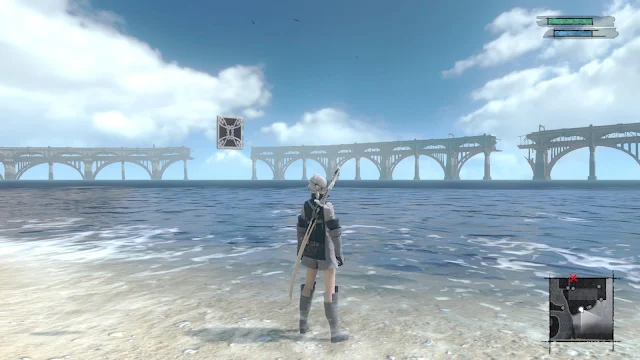
NieR is easily one of the most complex JRPG series out there, but for the sake of this list, we’ll keep things simple!
Released in 2010, NieR tells the story of a world ravaged by a threat known as Shades—monstrous creatures that stalk and kill humans who venture too far outside the safety of their towns. The title itself was released in two versions: one featuring an older protagonist watching over his sick daughter, and another focusing on a younger protagonist taking care of his sister. The latter version was originally exclusive to Japan before being remastered in 2021 for modern hardware, and it is typically viewed as the “canon” version of the game—though even that isn’t quite so simple. The narrative focuses on the protagonist’s desperate quest to save his family, a journey that takes him across a fractured world to meet unique companions along the way. While it initially seems like a standard action JRPG, the gameplay constantly shifts, mixing in side-scrolling segments and shoot-’em-up mechanics.
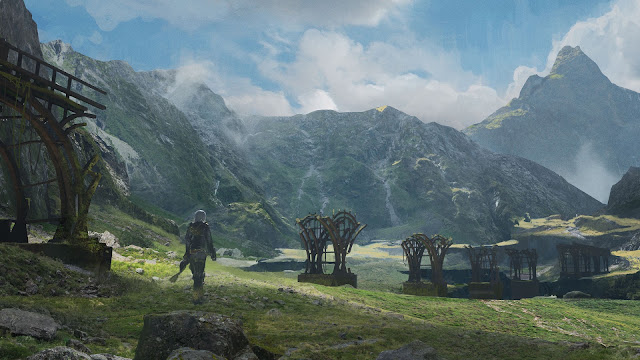
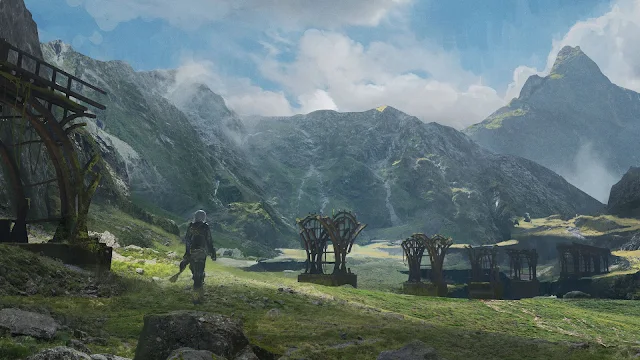
To avoid ruining the true twists of the narrative, we’ll only look at one of the baseline reveals: NieR is a full-on sequel to Ending E of the PlayStation 2 cult classic Drakengard. In that game’s final moments, the protagonist and his dragon companion follow the final boss through a reality-tearing portal, dropping them directly into modern-day Tokyo. After being shot down by military jets, the dragon is impaled on Tokyo Tower. While humanity initially tries to carry on as normal, the world remains blissfully unaware that the dragon wasn’t the only thing to slip through the rift.
NieR itself is ultimately a post-apocalyptic title showing the devastating aftermath of that specific incident. Ever since this initial connection was discovered, every single entry in the series has tied back to the broader Drakengard lore in one way or another. Even NieR: Automata contains countless nods that newcomers will completely miss, with light novels, manga, and stage plays expanding the history even further. But that is all we can say on the matter, as this is a narrative journey best left unspoiled.
Portal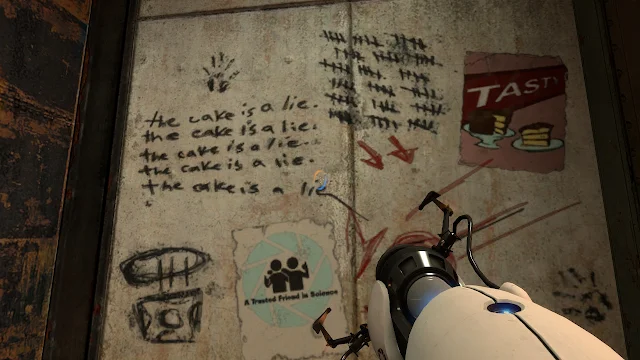
Valve’s Portal was an experimental title included with The Orange Box, and upon its release, it quickly exploded in popularity. With its short runtime and unique, physics-based gameplay mechanics revolving around the Portal Gun, it was an easy game to pick up and play straight through to completion, keeping players thoroughly engaged the entire time. Even when you weren’t actively solving puzzles, the passive-aggressive robotic voice of GLaDOS was always there to encourage you, pushing you toward the light at the end of the tunnel—the cake. We mentioned Portal 2 in our previous list discussing five games that will keep you laughing, but the original Portal is just as funny, and most of the franchise’s iconic lines come from GLaDOS herself. Of course, nowadays the ending isn’t a surprise to anyone, but those experiencing it for the first time back then were in for a real treat.
While Portal’s story is relatively straightforward, it actually takes place within a much greater universe. The premise follows Chell, our silent protagonist, who has been trapped inside Aperture Science to test the company’s new handheld portal device, which may or may not be safe for general human use. With countless warning signs and comedic disclaimers regarding the hazards inside the test chambers, it is clear that the company cannot be trusted—a fact that becomes even clearer as players discover hidden dens left behind by the mysterious Ratman. By the end, Chell decides to mount an escape, but the outside world awaiting her might not be any better off. Eagle-eyed fans who take the time to peer through office windows and read projector slides will spot references to Black Mesa, Aperture’s main competitor. This is the exact same research facility where Gordon Freeman works in Half-Life, and the very one that accidentally triggers an alien invasion of Earth.
While this establishes that Portal takes place concurrently within the Half-Life universe, Portal 2 goes a step further by mentioning the Borealis, a lost Aperture research vessel that plays a role in Half-Life 2: Episode Two. There is also a massive, centuries-long time skip between Portal and Portal 2, leaving Chell blissfully isolated from the Combine’s planetary take over—though she does catch a glimpse of a headcrab.
Final Fantasy VII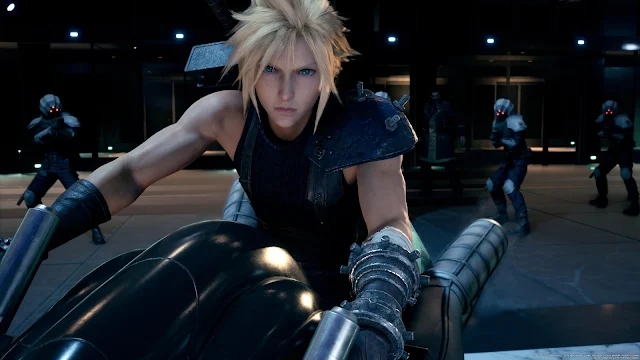
For the next entry on our list, we’re going to be a little unconventional. Putting aside where Final Fantasy VII Remake, Rebirth, and Revelations fall into place, the original Final Fantasy VII is connected to one other mainline entry in the franchise: Final Fantasy X.
Final Fantasy VII released in 1997 in the US, while Final Fantasy X launched in 2001, meaning this connection was not originally planned. In fact, it didn’t come to light until Final Fantasy X-2 in 2003. Even so, Square Enix has since confirmed that the two titles share the same universe, a piece of lore that has been openly discussed in the official Ultimania books.
To put things simply, Final Fantasy X-2 features multiple new characters as Yuna takes over as the lead and joins a sphere-hunting group called the Gullwings. Among them is a young Al Bhed genius named Shinra, who supports her throughout her adventure. As longtime fans will recognize, Shinra is also the name of the mega-corporation at the heart of Final Fantasy VII’s story, which harvests the planet’s Lifestream as Mako energy. While this energy source allows the company to perform technological marvels, it is also slowly killing the planet. This conflict sets the entire plot of Final Fantasy VII into motion, but the corporate lineage technically begins generations earlier in the world of Final Fantasy X.
Shinra himself dreams of harnessing the energy of the Farplane, and his descendants eventually develop the technology to travel across space, leaving Spira behind to colonize the world of Final Fantasy VII and found the Shinra Electric Power Company. As a brilliant nod to this connection, a historic photograph featuring the company’s founders wearing a familiar mask can even be found on display in Final Fantasy VII Remake. While knowing that Final Fantasy VII is technically a distant sequel to Final Fantasy X changes nothing about the individual plots, it serves as a fun piece of fan service.
Code Vein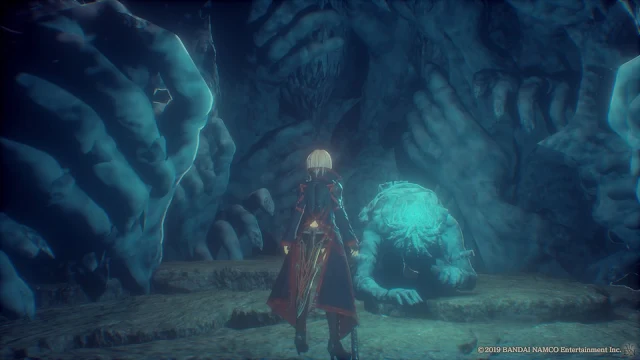
The next game on our list is still a bit of a mystery, and has been featured on our previous list Beyond the Walls: 5 Games Where The Outside is Actually WORSE, and we are including it here for the exact same reason.
While the original Code Vein presents a completely standalone story, focusing on vampire-like beings known as Revenants as they fight for survival within a closed-off world, it is eventually revealed that there is far more to the setting than players initially realize. The game is filled with nods and references to the development team’s prior franchise, God Eater. In fact, one of the in-game loading screens directly references the discovery of Oracle Cells—the single-celled, sentient organisms that would go on to ravage the world. While kept somewhat vague, the narrative explains how the project that created the Revenants was a desperate attempt to counter an “incident” that fans of the companion series will be incredibly familiar with. As those Oracle Cells joined together, they formed massive, catastrophic creatures known as Aragami, and the world rapidly fell to the threat. Eventually, scientists discovered that only Oracle Cells could damage other Oracle Cells, leading to the creation of God Eaters—warriors who inject the cells into their own bodies to wield Oracle Cell-infused weapons.
On the Code Vein side of things, the Revenant project was ultimately ineffective in saving the wider world. However, due to another catastrophe that sealed the local population inside a massive barrier of red mist, the citizens inside are left completely in the dark. The harsh truth of the outside world has been entirely lost to them, and the horrors that await past the “wall” are not discovered until late in the game. It is here that an iconic Aragami—the formidable Dyaus Pita—ravages a group that wandered too close to the barrier, definitively confirming the connection between the two franchises. Players who have only experienced Code Vein will simply see the beast as another dangerous boss, but God Eater veterans will instantly recognize the terrifying significance of the encounter. While the developers have kept the exact timeline placement somewhat ambiguous, the events of Code Vein must take place at some point following the tragic flashbacks shown in the original God Eater.
Digimon Story Cyber Sleuth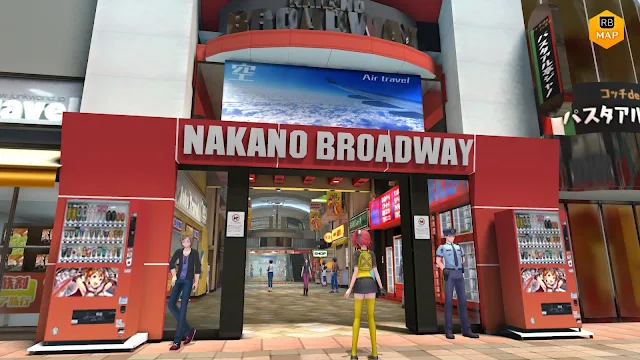 Last on our list is one that didn’t start out as a sequel, and isn’t very readily apparent that it is one. Digimon Story Cyber Sleuth released as a new entry in the Digimon Story series of RPGs in 2015, and was the first one to retain the Digimon Story moniker outside Japan. The games in this series are united primarily by similar gameplay, and are generally unrelated in terms of story or universe. This remained the case with Cyber Sleuth, being set in a new Digimon universe alongside its side story Hacker’s Memory. In 2025, a new Digimon Story game released called Time Stranger. It again appeared to be a brand new universe unconnected to the previous games in the series, and if you don’t pursue side quests and skip the DLC, you’ll most likely never think otherwise. Cyber Sleuth’s Tokyo was connected to a more traditional Digital World ruled by the master computer Yggdrasil, while Time Stranger connects to the Digital World Iliad, ruled over by Homeros, so this seems to confirm there’s no relation. There is a character named Kodai Kuremi, whose surname at its surface level seems like an Easter Egg referencing Kyoko Kuremi, one of the main characters from Cyber Sleuth, but the main story doesn’t suggest any relation between them. We also have an appearance from the enigmatic Mirei Mikagura, who also appears in Cyber Sleuth, but she appears in several unrelated games because she has the ability to travel between universes, so this also doesn’t suggest a connection.
Later in the game, there is a side quest where you can enlist the aid of Yggdrasil’s Royal Knights, and while it’s possible they’re different from the ones seen in Cyber Sleuth, some do appear to have similar personalities to their Cyber Sleuth counterparts. The real tell though comes from some of the game’s DLC side quests. In one, we meet a younger version of Kyoko, and assist her with an investigation into a project called EDEN, which would go on to be a major plot point and one of the primary settings of Cyber Sleuth. On top of that, there’s another DLC that Kyoko appears in that confirms that she’s Kodai’s daughter. Considering the existence of a project to create EDEN, the presence of Kyoko, and the story revealing that it’s possible for multiple Digital Worlds to interact with the same Earth, it’s safe to say that Time Stranger is a prequel to Cyber Sleuth, making Digimon Story Cyber Sleuth a sequel that some may not realize is one.