
Why you can trust Windows Central
Our expert reviewers spend hours testing and comparing products and services so you can choose the best for you. Find out more about how we test.
An entry-level Alienware PC almost sounds like a contradiction; it’s long been the all-out brand you could choose when money isn’t a concern, and you’d rather have a guarantee your games will run. So, does the Alienware 15 need to exist, or is it just competing with the tantalizingly new category of high-end gaming handhelds?
Including NVIDIA’s RTX 5050 graphics certainly piqued my interest, because until now, I’ve never seen what this low-end laptop GPU can actually do. Is it worth picking the 50 Series chip for the benefit of cutting-edge DLSS upscaling, or is it too weak to be worth your time? I had so many questions, and these are the conclusions I reached from my testing for this review.
Why you should trust me Why you should trust me
Ben Wilson
Senior Editor, Nostalgic Gamer
I’ve been building my own gaming desktop PCs for years and have been tempted away by handhelds like ASUS’ ROG Ally and Valve’s Steam Deck. Can modern gaming laptops win me over?
How much does the Alienware 15 cost?
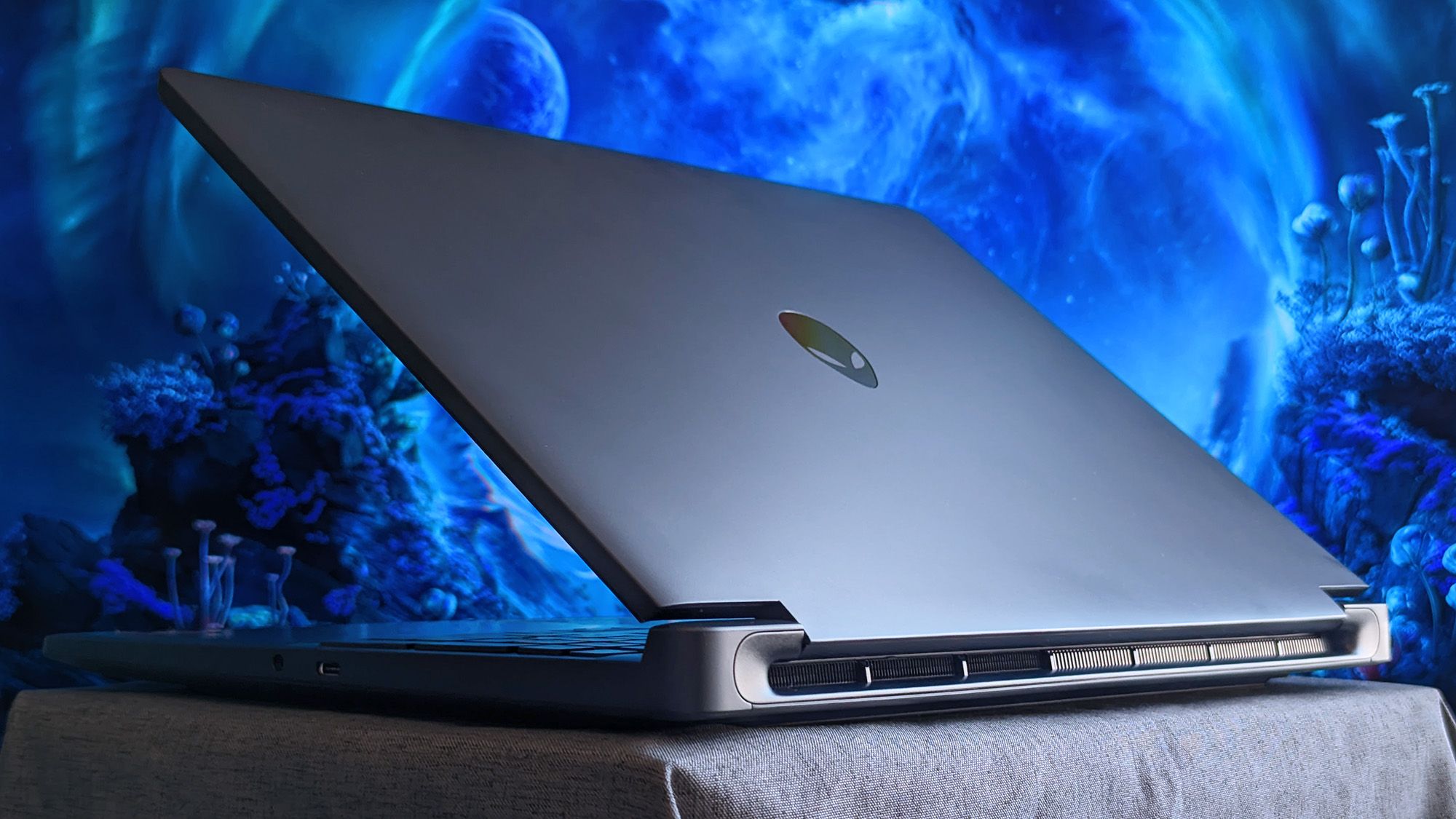
Alienware’s modern design language still peeks through in parts of this entry-level laptop. (Image credit: Ben Wilson | Windows Central)
The Alienware 15 starts at $1,399.99 on Dell.com, featuring the same AMD Ryzen 7 260 processor as my sample but with a previous-generation NVIDIA GeForce RTX 4050 discrete graphics card. Memory and storage remain at 16GB of RAM and a 512GB SSD, but upgrading to an RTX 5050 GPU increases the price to $1,459.99.
Alienware 15 Gaming Laptop (useda15265wcto03) at Dell for $1,459.99
A third and final variant of the AMD model increases storage to 1TB with an RTX 5060 GPU for $1,849.99, but the CPU remains the Ryzen 7 260. Alternatively, an Intel-based Alienware 15 starts at $1,499.99 on Dell.com with a Core 7-240H CPU, RTX 5050 GPU, and 16GB/512GB of memory and storage, though you can upgrade to RTX 5060 graphics and a 32GB/1TB RAM and SSD combo.
In the United Kingdom, the AMD-based Alienware 15 starts at £829.00 with a less powerful Ryzen 5 220 processor, RTX 3050 graphics, and 8GB of RAM and 512GB of storage. At the time of writing, an Intel-based Alienware 15 starts at £849.01 with a Core 5-210H CPU, RTX 3050 GPU, and the same 8GB/512GB RAM/SSD.
Swipe to scroll horizontallyAlienware 15 sample specifications
Component
Spec
CPU
AMD Ryzen 7 260
RAM
1x 16GB SO-DIMM DDR5-5600 MT/s
GPU
AMD Radeon 780M (Integrated)
NVIDIA GeForce RTX 5050 (8 GB)
Display
15.3″ 16:10 WUXGA (1920 x 1200) non-touch
165Hz
Storage
512 GB M.2 NVMe PCIe 4.0 SSD
Battery / Charger
68WHrs / 180W barrel jack
Weight
4.89 lbs (2.22 kg)
Is the Alienware 15 well made?
Image 1 of 4
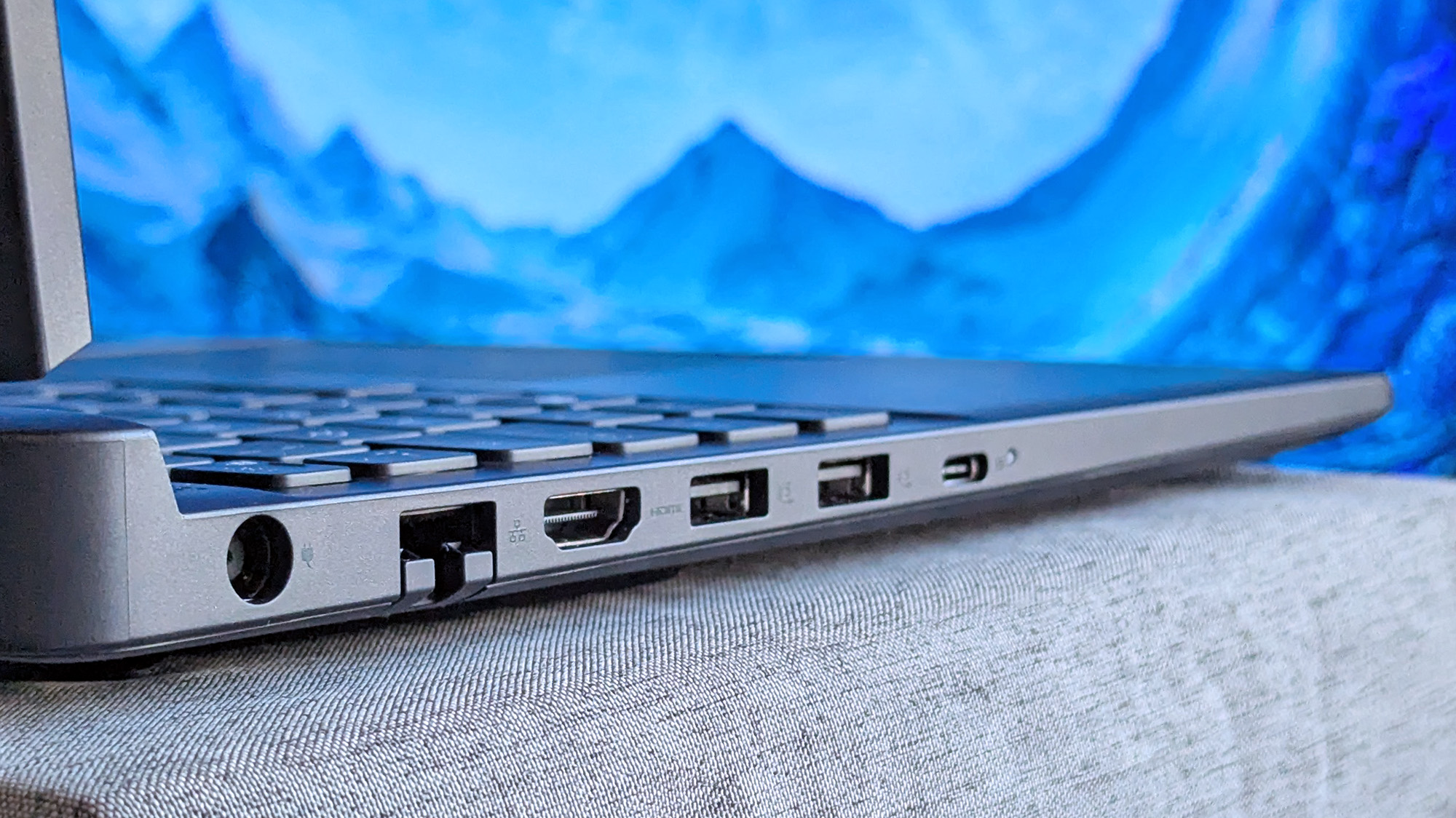 180W AC power requires an outdated barrel jack, but Ethernet, HDMI, and USB-A/C are all welcome.(Image credit: Ben Wilson | Windows Central)
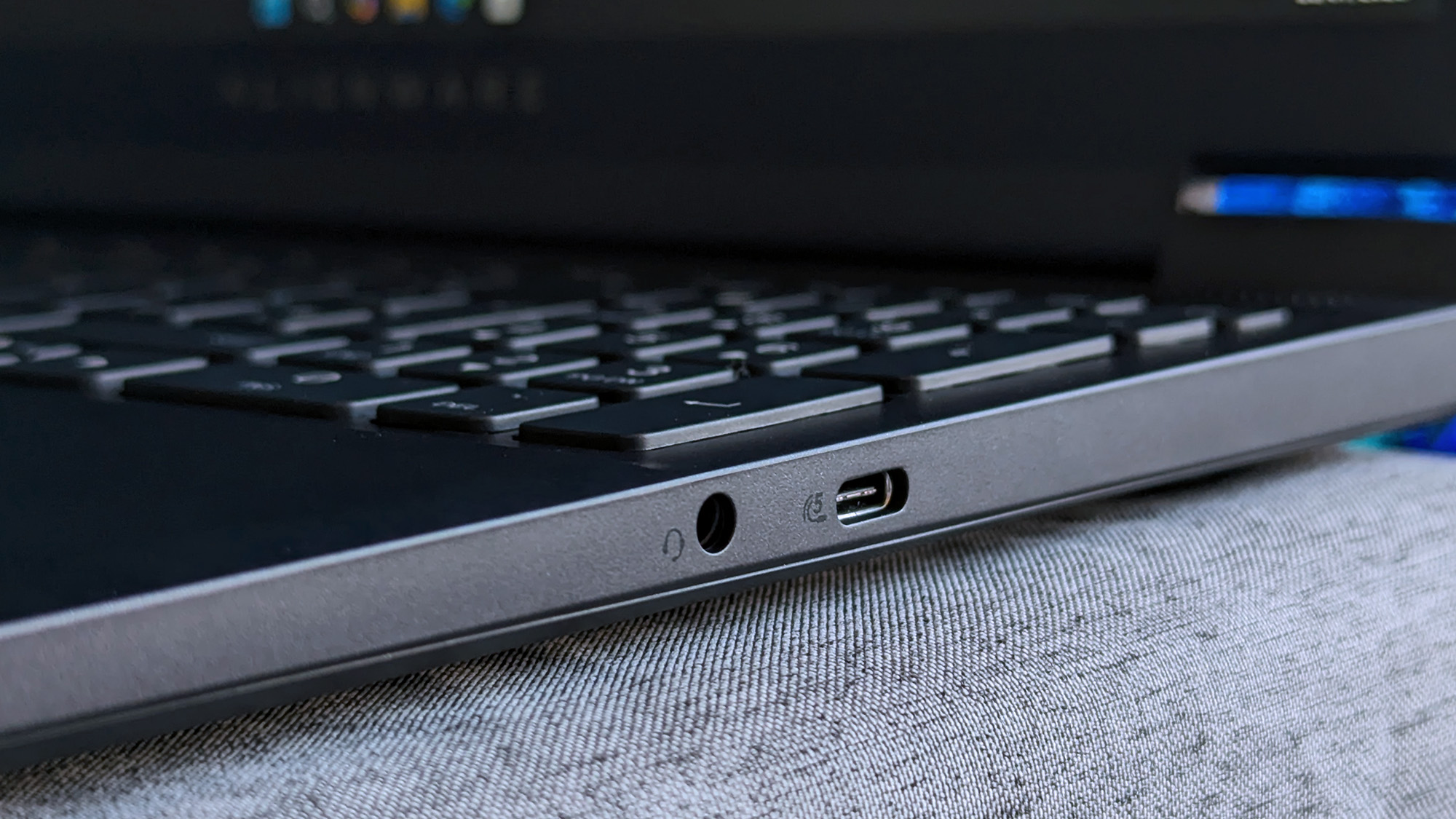 Wired headphones and another USB-C port on the right side will likely be well used.(Image credit: Ben Wilson | Windows Central)
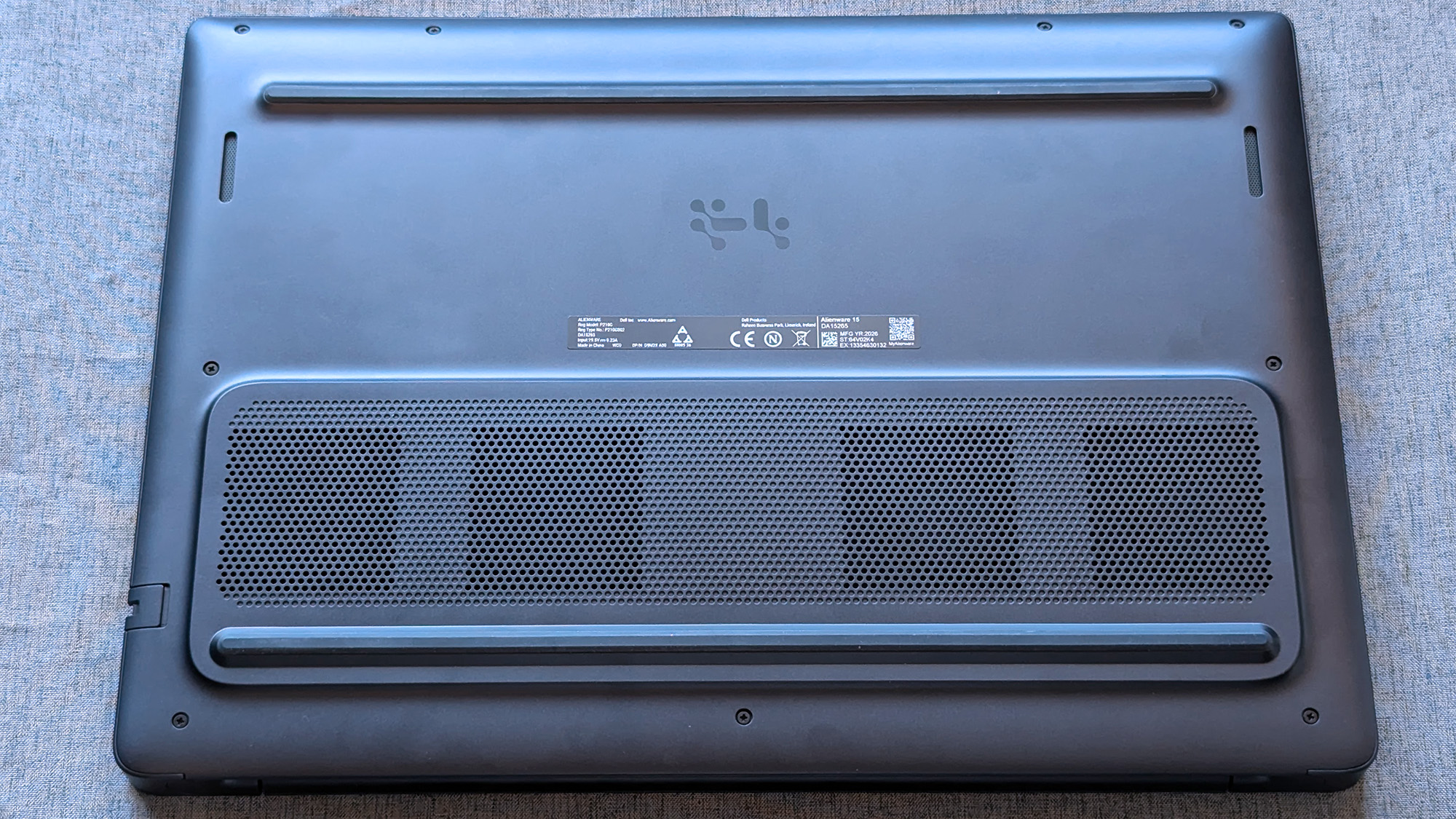 An elevated portion of the underside holds the cooling fans, and they work hard.(Image credit: Ben Wilson | Windows Central)
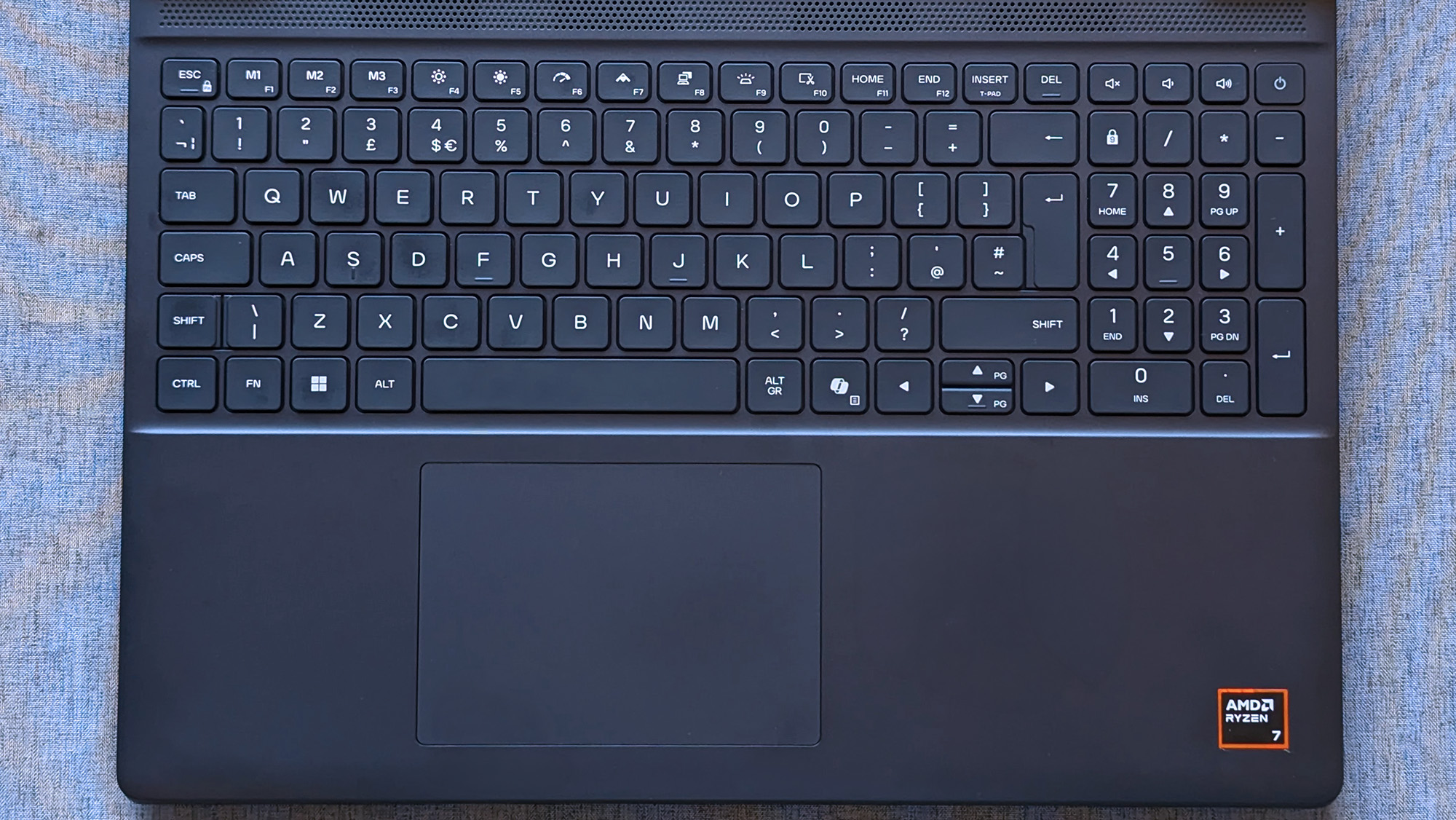 The touchpad feels small, but it’s good enough to navigate Windows 11.(Image credit: Ben Wilson | Windows Central)
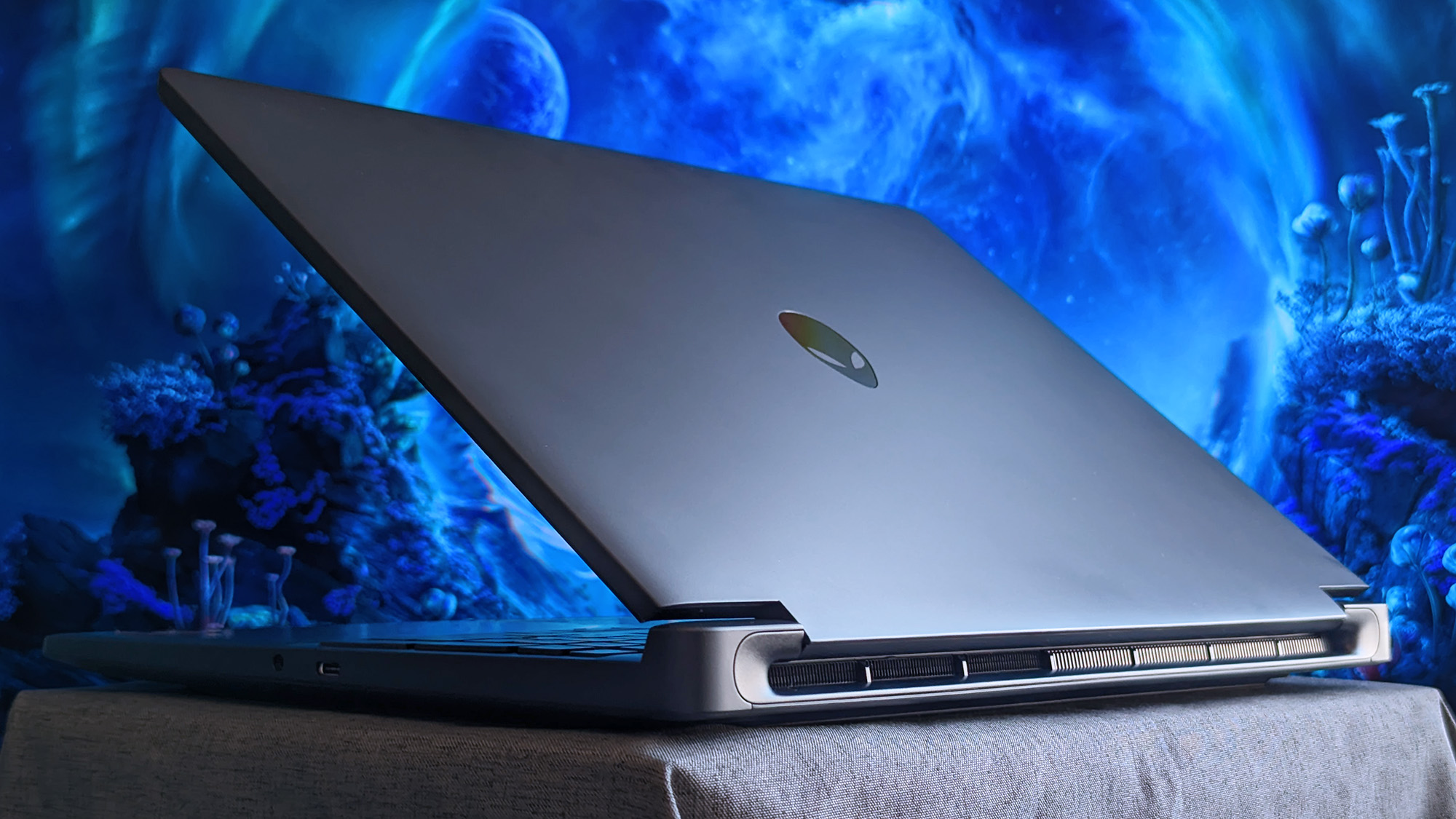
The Alienware 15 is a bit of a mixed bag, starting with a relatively plain exterior design featuring an iridescent alien head logo and thick air vent panels underneath, synonymous with the capable cooling you’ll see in this category. And while its most striking first impression is how heavy it is — at 4.89 lbs (2.22 kg) — it still isn’t much different from its rivals. Gaming laptops are just heavy.
Its 15.3-inch screen sits on a gapped hinge, which looks strange at first glance, but I can feel airflow around the gap while it’s in use, so it makes sense. The backlit keyboard is unremarkable, sticking to a single color and including a number pad that I’m sure most gamers will never use, and, as usual, I wish the space had been saved for larger speakers.
The 180W AC adapter uses an outdated barrel jack, but you can charge up to 100W with USB-C.
Admittedly, despite my gripes with the lack of any significant bass response, the sheer volume of the fans during games likely nullifies the appeal of its speakers anyway. As with all gaming laptops, I’m recommending you use headphones here. A small 5.5-inch mechanical touchpad only clicks properly in the bottom half, but you’ll probably use a dedicated mouse for most games.
A 3.5mm audio jack pairs with a USB-C 3.2 Gen 1 port on the right side, while a single USB-C 3.2 Gen 2 is available on the left side, along with two traditional USB-A 3.2 Gen 1 ports for dongles, HDMI-out 2.1 for external monitors, and gigabit Ethernet for wired networking. The 180W AC adapter uses an outdated barrel jack, but you can charge up to 100W with USB-C.
How fast is the Alienware 15?
Image 1 of 2
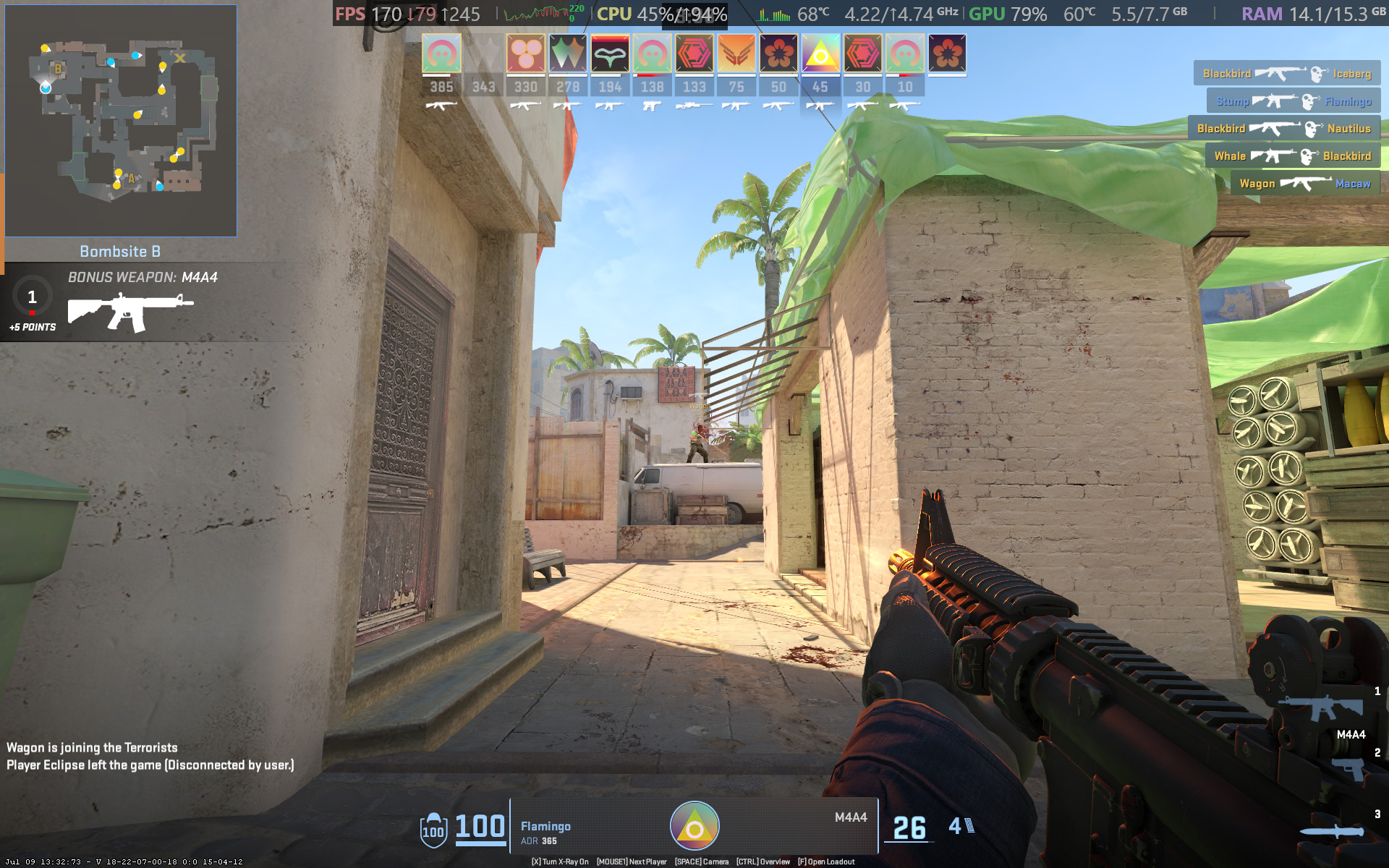 Counter-Strike 2 demands a smooth frame rate, and 165 FPS is attainable with the RTX 5050.(Image credit: Ben Wilson | Windows Central)
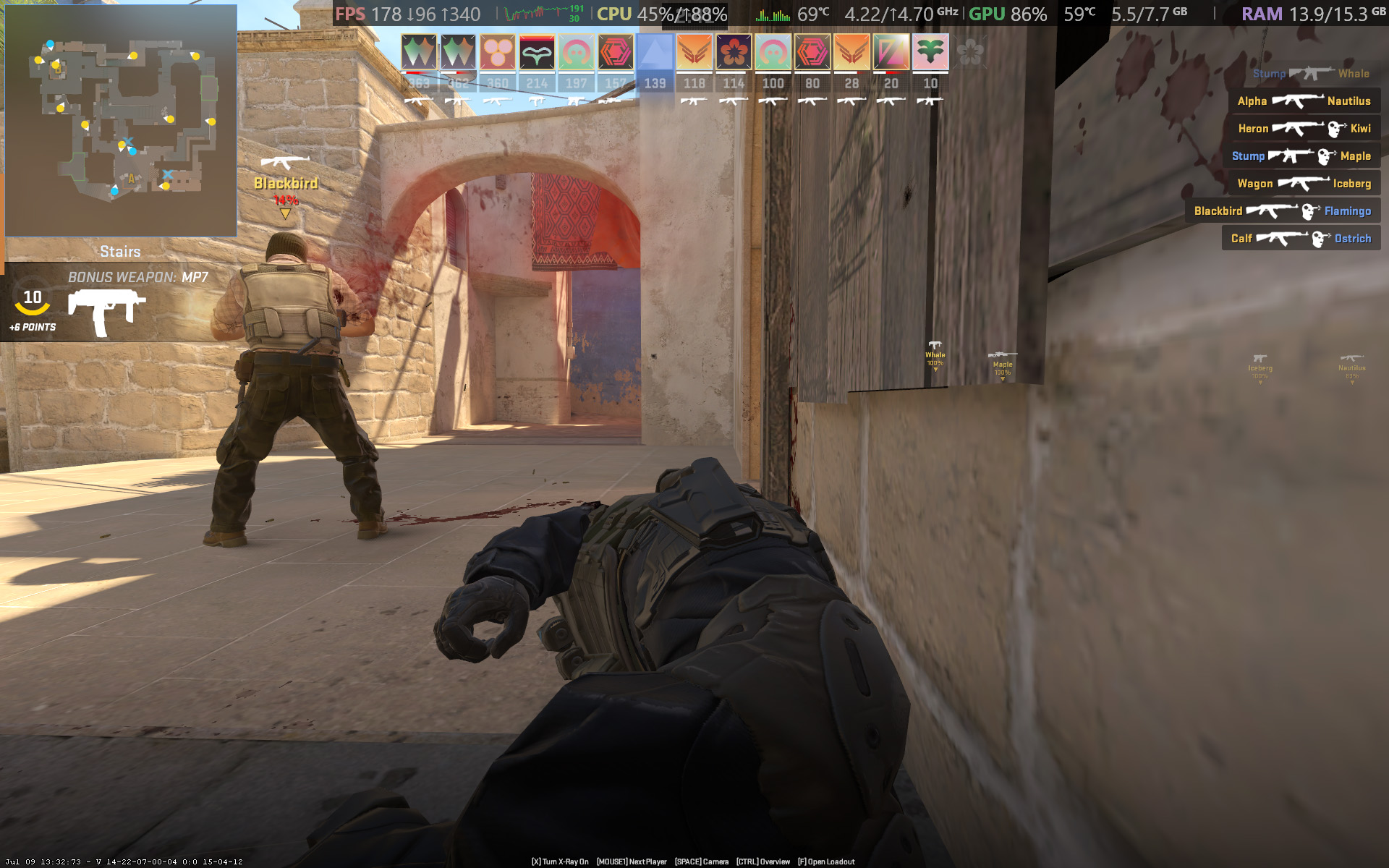 You barely have to tweak the settings in CS2 to keep the FPS high enough.(Image credit: Ben Wilson | Windows Central)
Starting with Counter-Strike 2, the game recommends ‘High’ settings with AMD FidelityFX Super Resolution and vsync disabled for native, uncapped rendering at 1920 x 1200. While spectating a few rounds on Dust II, I saw the frame rate remain around the 165 FPS target when I was connected to AC power and Alienware’s ‘Performance’ mode was active.
However, the laptop’s fans were extremely loud throughout, keeping the CPU and GPU temperatures at around 68 °C and 60 °C, respectively. Switching to ‘Stealth’ mode reduced the fan speed, but no amount of graphical tweaks brought them down to a comfortable, more inconspicuous level. This is a loud laptop, and you’ll have to get used to wearing headphones when you’re gaming.
Image 1 of 2
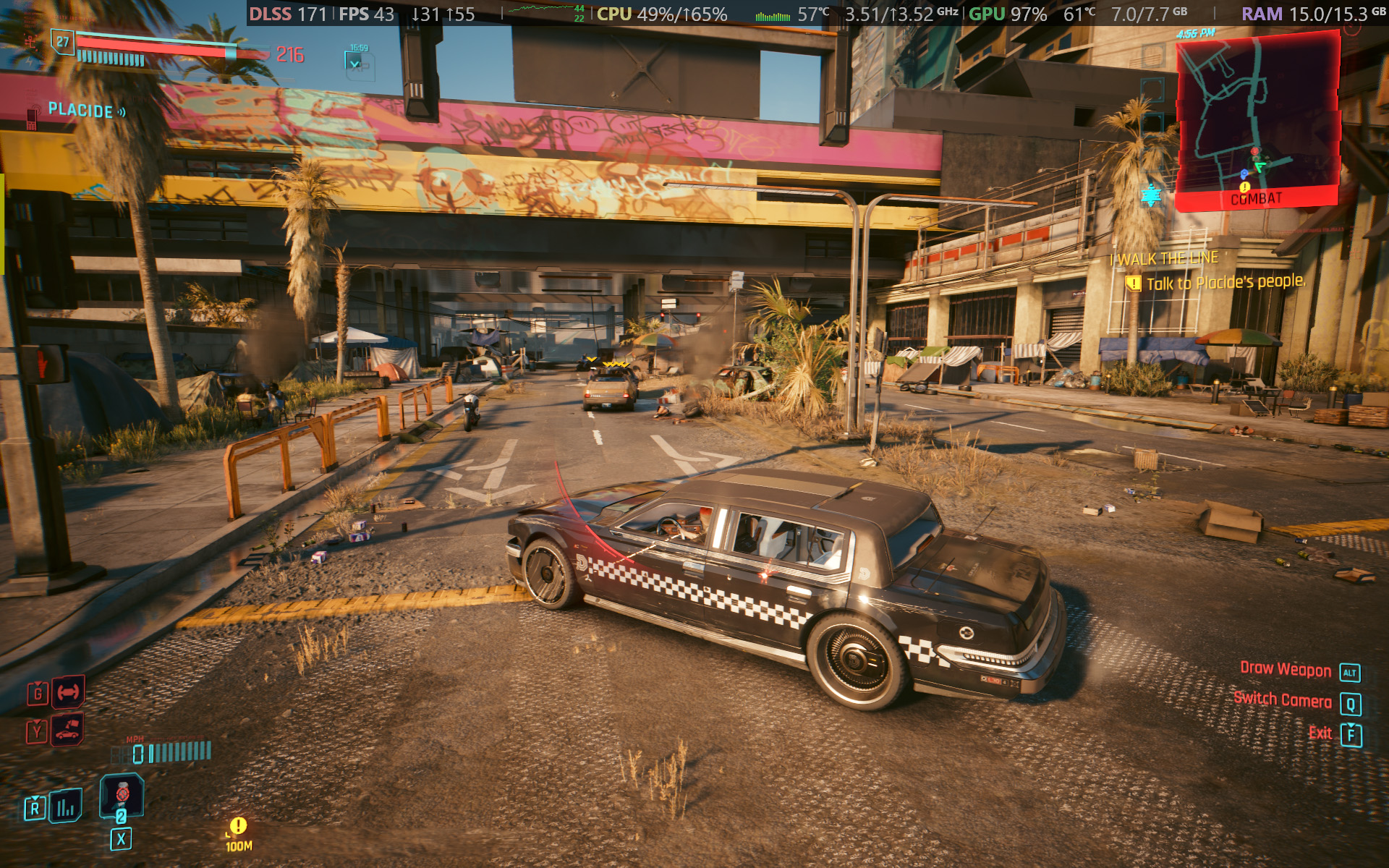 Cyberpunk 2077 is quickly becoming the poster child for DLSS because it works so well.(Image credit: Ben Wilson | Windows Central)
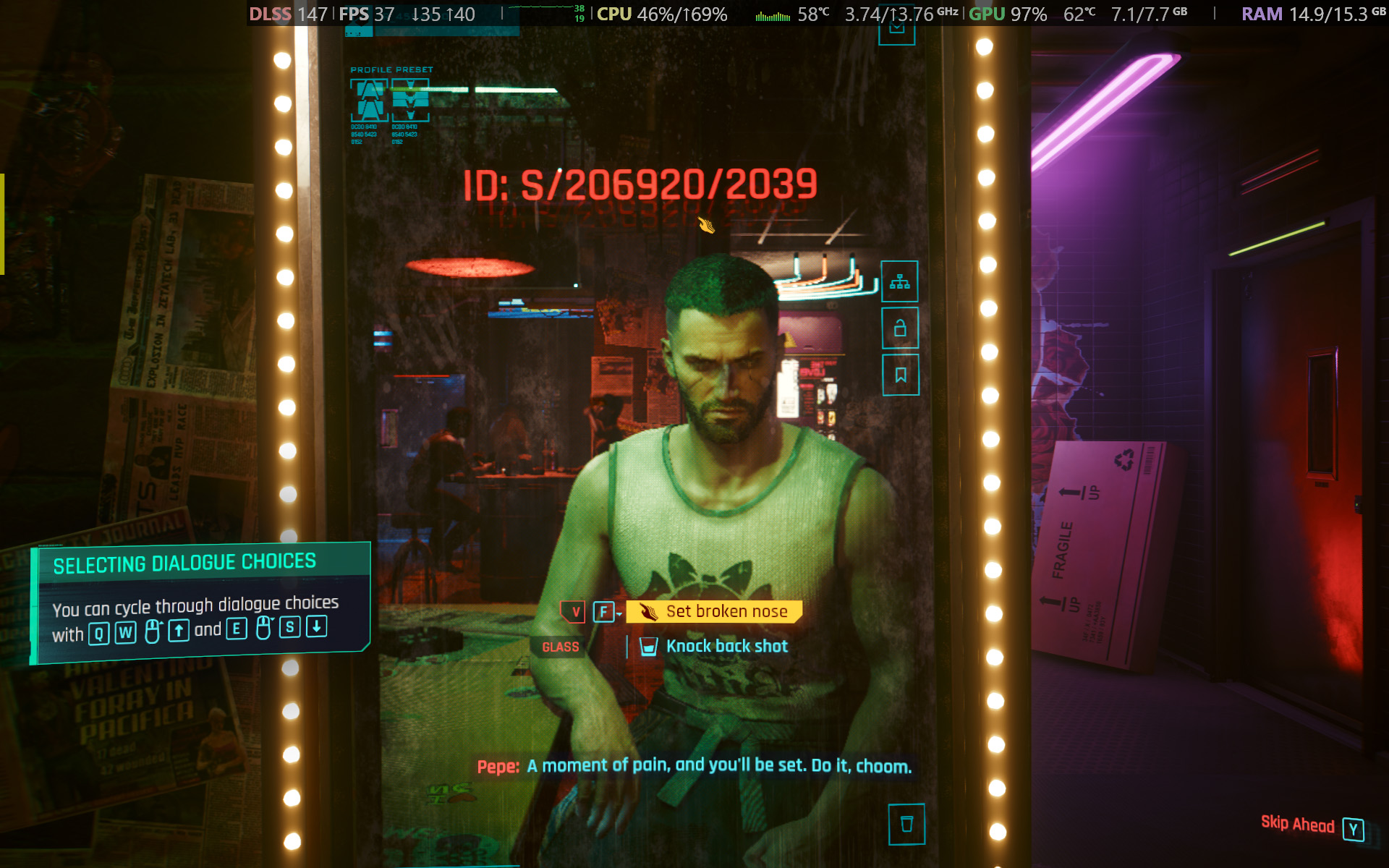 Certain visuals will look better than others, but upscaling certainly helps the game run smoothly.(Image credit: Ben Wilson | Windows Central)
In Cyberpunk 2077, I found that the ‘High’ preset with ray tracing and upscaling disabled most consistently achieved a native 60 FPS baseline in the game’s built-in benchmark. Of course, the game supports DLSS 4.5, so setting Super Resolution to ‘Balanced’ and Multi Frame Generation (MFG) to 4X in the ‘Ray Tracing: Low’ preset has the Alienware 15 scaling to 171 FPS, up from ~42 FPS.
I have to assume you’re considering a gaming laptop with NVIDIA’s RTX 50 Series graphics to take advantage of realistic, ray-traced lighting. Luckily, that is quite possible with the RTX 5050 in the Alienware 15, depending on your feelings around MFG and “fake frames”. If, on the other hand, you don’t care so much about those visual luxuries, then it runs quite smoothly without ray tracing.
Image 1 of 2
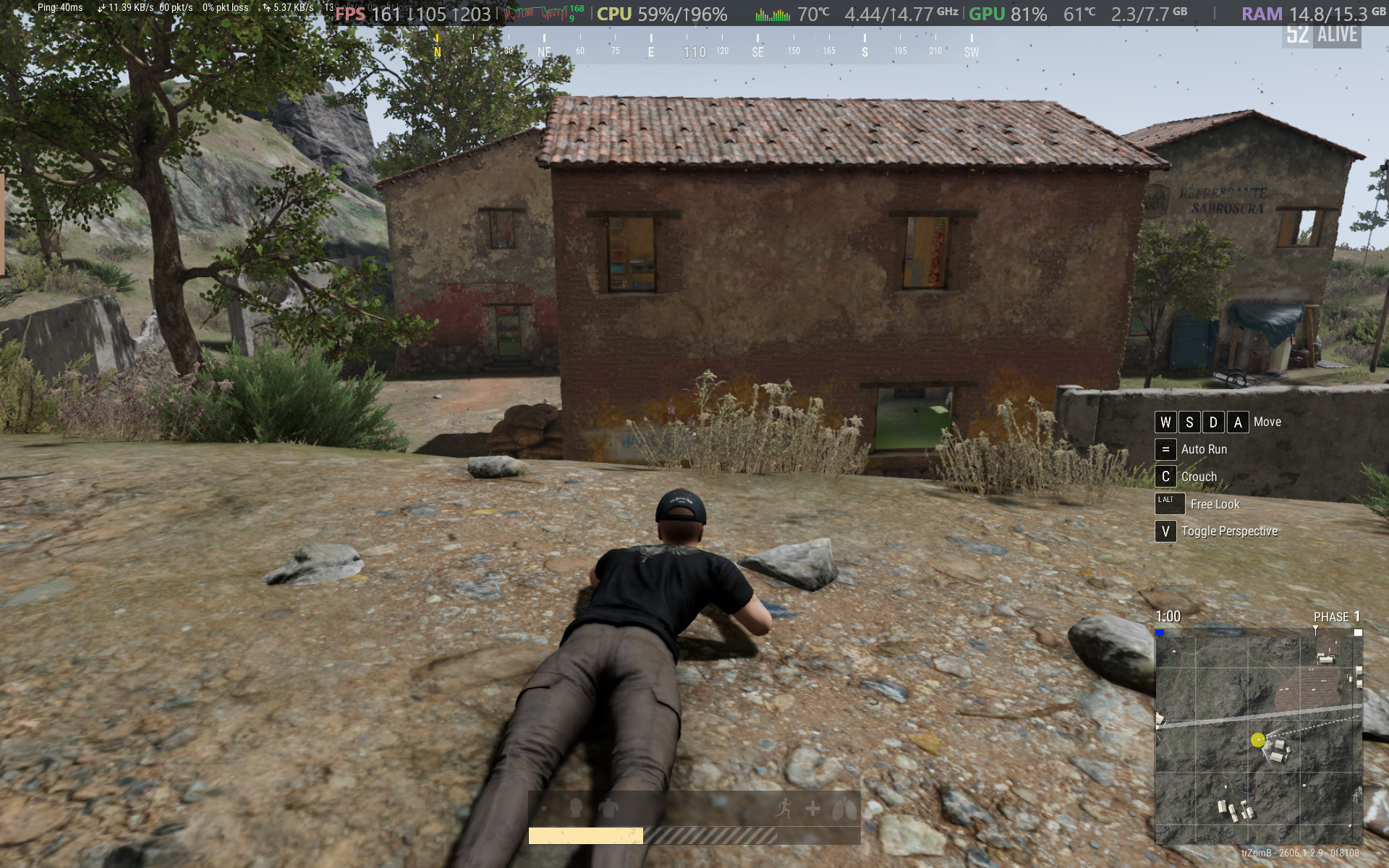 PUBG: BATTLEGROUNDS dips in busy areas, but I was able to stay above 100 FPS.(Image credit: Ben Wilson | Windows Central)
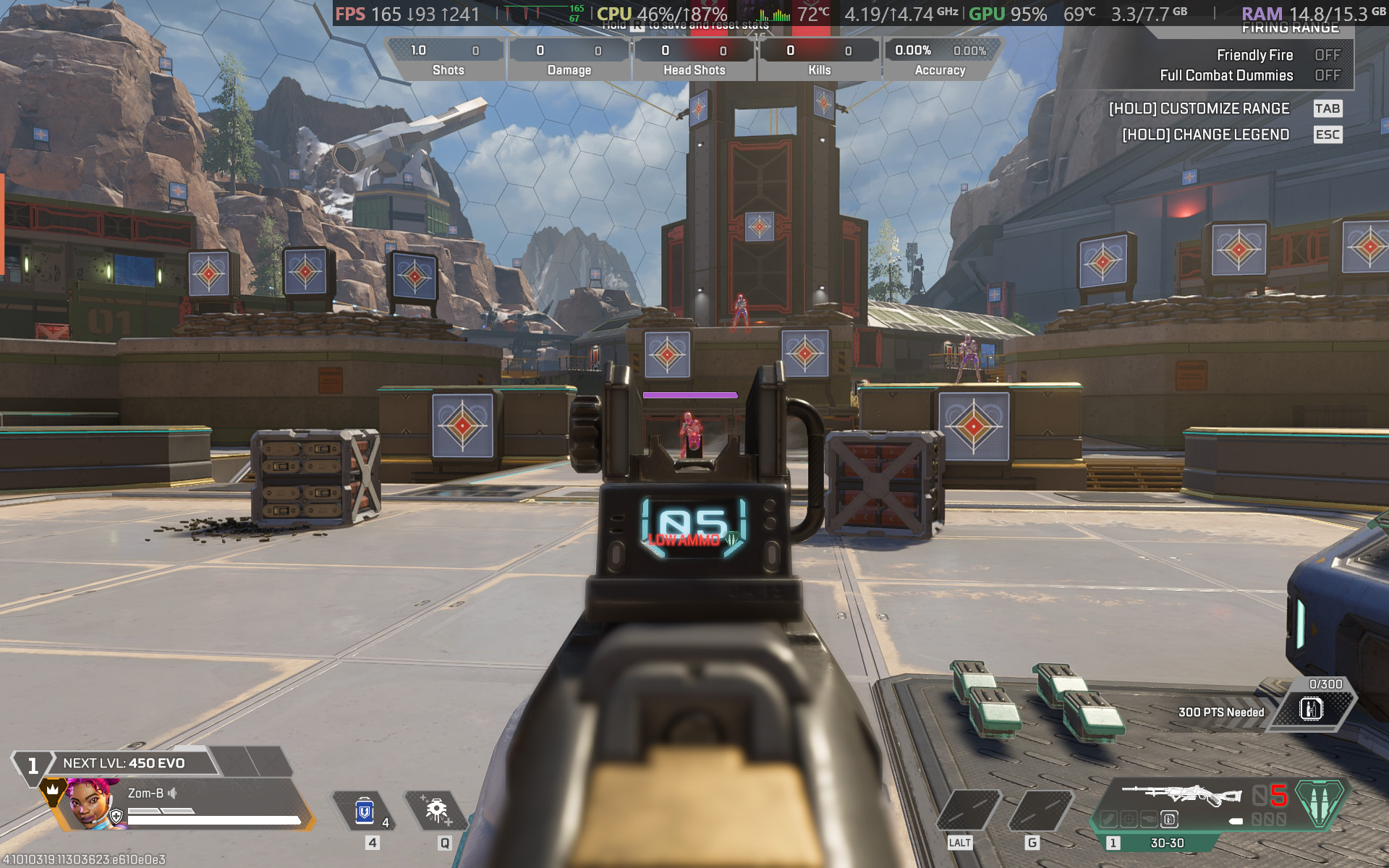 Apex Legends fared better with frame pacing, though it needed more fine-tuning in the settings.(Image credit: Ben Wilson | Windows Central)
For other popular multiplayer titles, PUBG: BATTLEGROUNDS generally runs above 60 FPS with the ‘High’ preset at render scale 100, but you can push it to 165 FPS or higher by switching to the ‘Medium’ preset and further lowering some settings. Similarly, Apex Legends can reach 165 FPS and beyond with a little time spent in the settings, but the laptop’s fans will be loud.
Performance benchmarks
Image 1 of 3
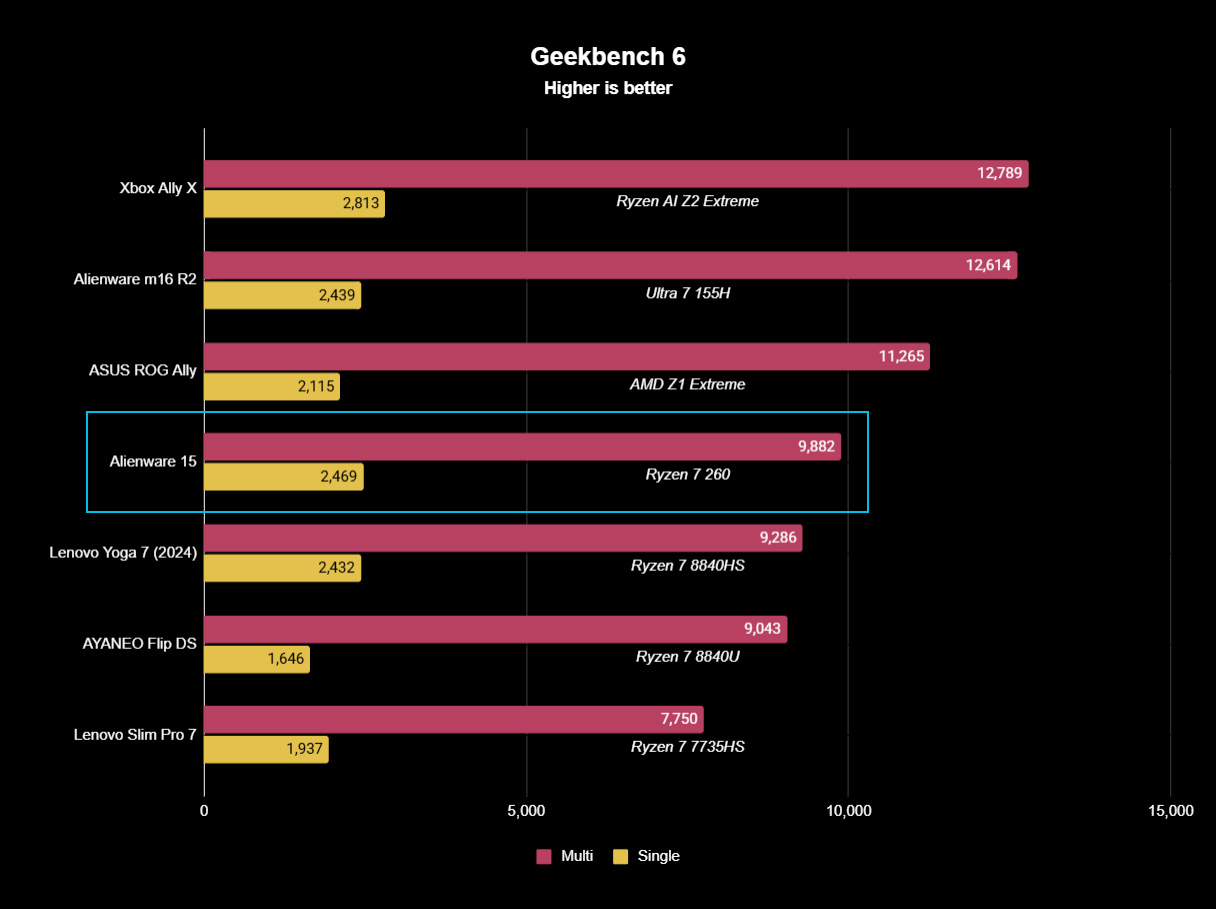 Geekbench 6 CPU benchmarking shows the Ryzen 7 260 being beaten by years-old handheld chips.(Image credit: Ben Wilson | Windows Central)
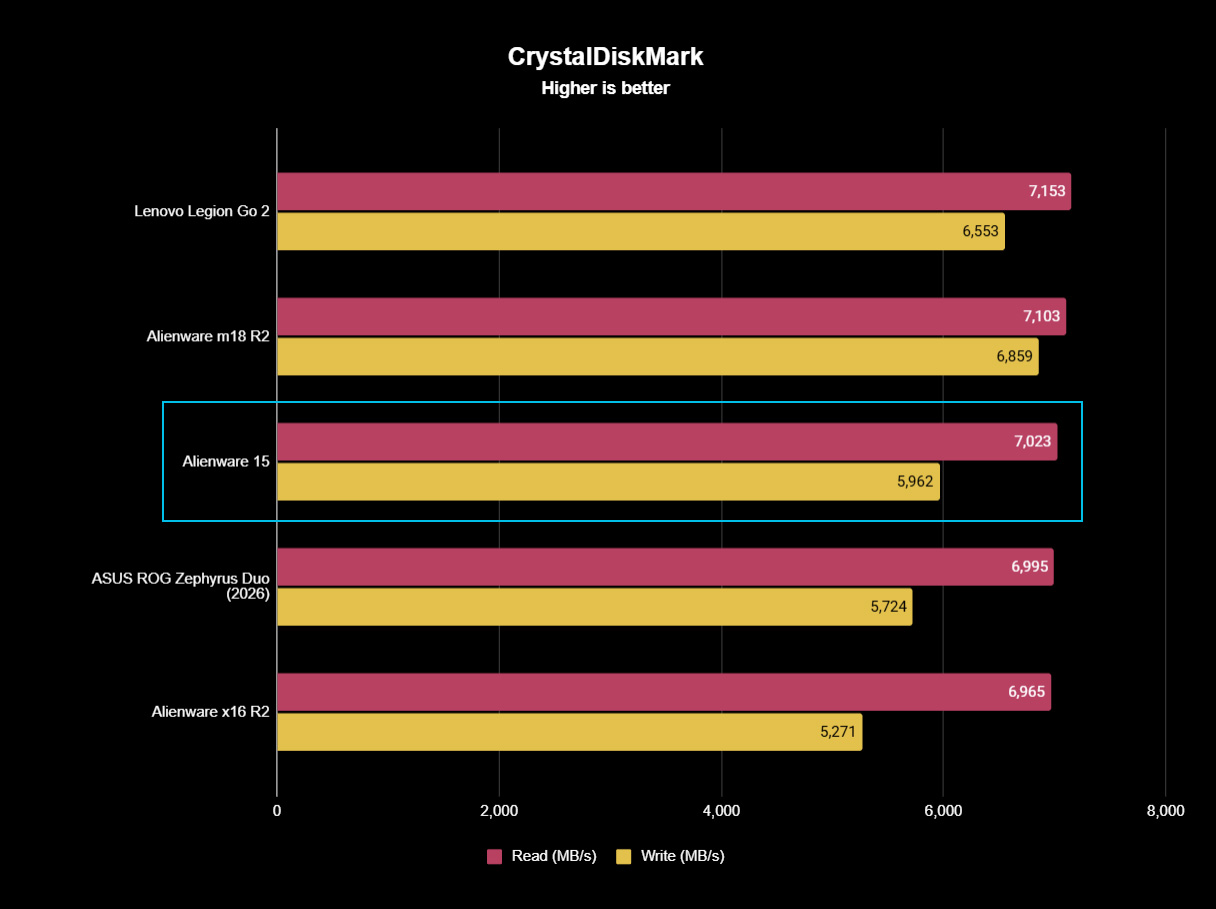 While the 512GB SSD is limited in capacity, it reads just as fast as the SSDs in Alienware’s high-end laptops.(Image credit: Ben Wilson | Windows Central)
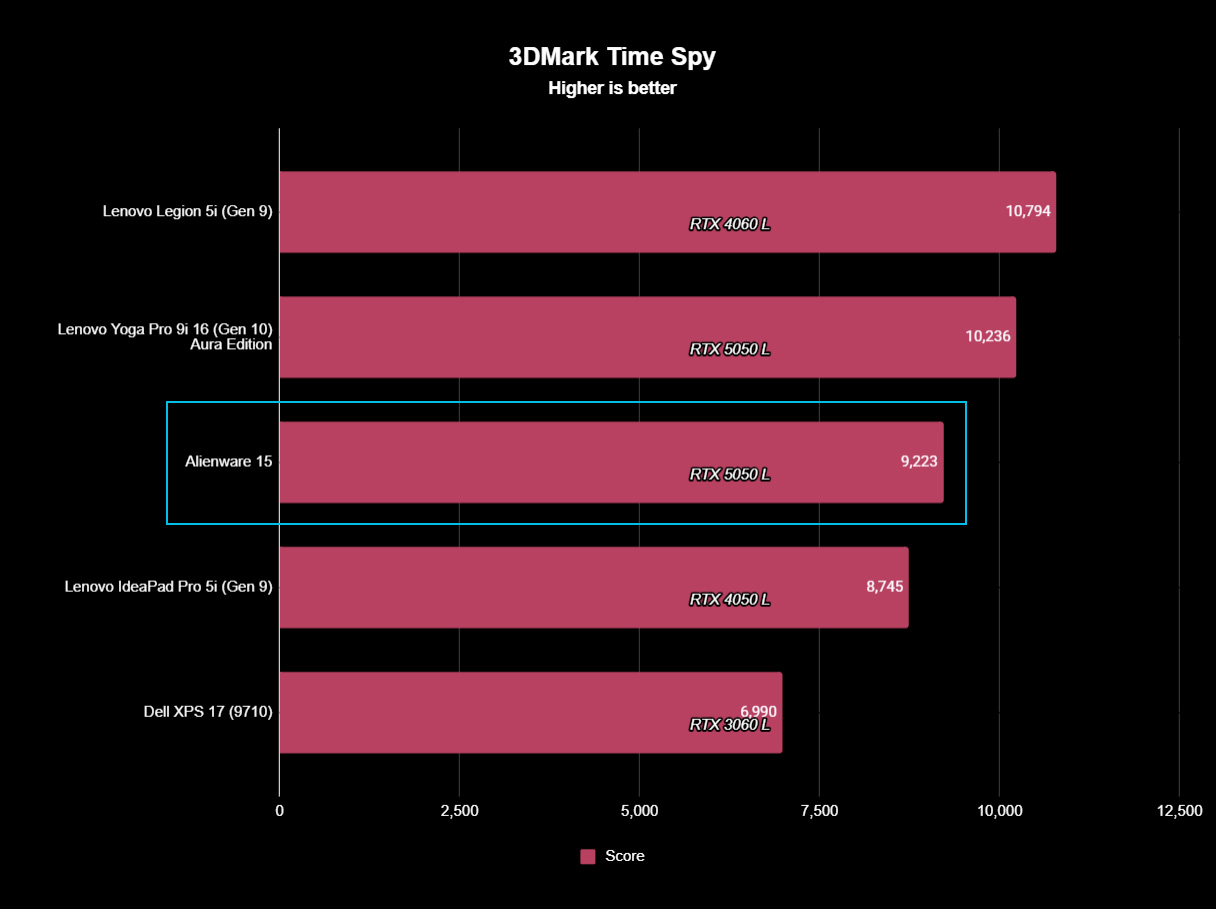 You’ll see the RTX 5050 suitably appearing in plenty of entry-level gaming laptops like this.(Image credit: Ben Wilson | Windows Central)
To put the specs of Alienware’s cheapest laptop into perspective, the Ryzen 7 260 is a “Hawk Point” processor built on AMD’s previous-generation Zen 4 architecture and ranks as the second-fastest CPU in the Ryzen 200 Series mobile range. That 8-core, 16-thread chip pairs with NVIDIA’s entry-level RTX 50 Series mobile GPU, the GeForce RTX 5050.
However, benchmarking the Alienware 15’s CPU in Geekbench 6 burst performance tests placed the Ryzen 7 260 even lower than I perhaps expected, even falling below the original ASUS ROG Ally gaming handheld from 2024. Cinebench 2024 failed to run any extended CPU stress tests after complaints of insufficient memory, so there’s sadly no reprieve for this processor.
(The RTX 5050 is) faster than the last-gen RTX 4050, but of course, it still falls behind the 4060.
Testing the RTX 5050 across 3DMark’s full gamut of GPU-centric tests yields a reasonably consistent and unsurprising conclusion: it’s faster than the last-gen RTX 4050, but of course, it still falls behind the 4060. If you were choosing between a gaming laptop with an older GPU, such as an RTX 3060, and the 5050 in this Alienware 15, you’d choose the Alienware.
Finally, the PCIe Gen 4 SSD hits around 7,023 MB/s read speeds in CrystalDiskMark, while write speeds drop closer to 5,962 MB/s. It’s a fast drive, and one that sees the Alienware 15 running neck-and-neck with the high-end Alienware m18 R2 from 2024. The 512 GB SSD has limited storage capacity, but it performs as expected.
Does the Alienware 15 have any issues?
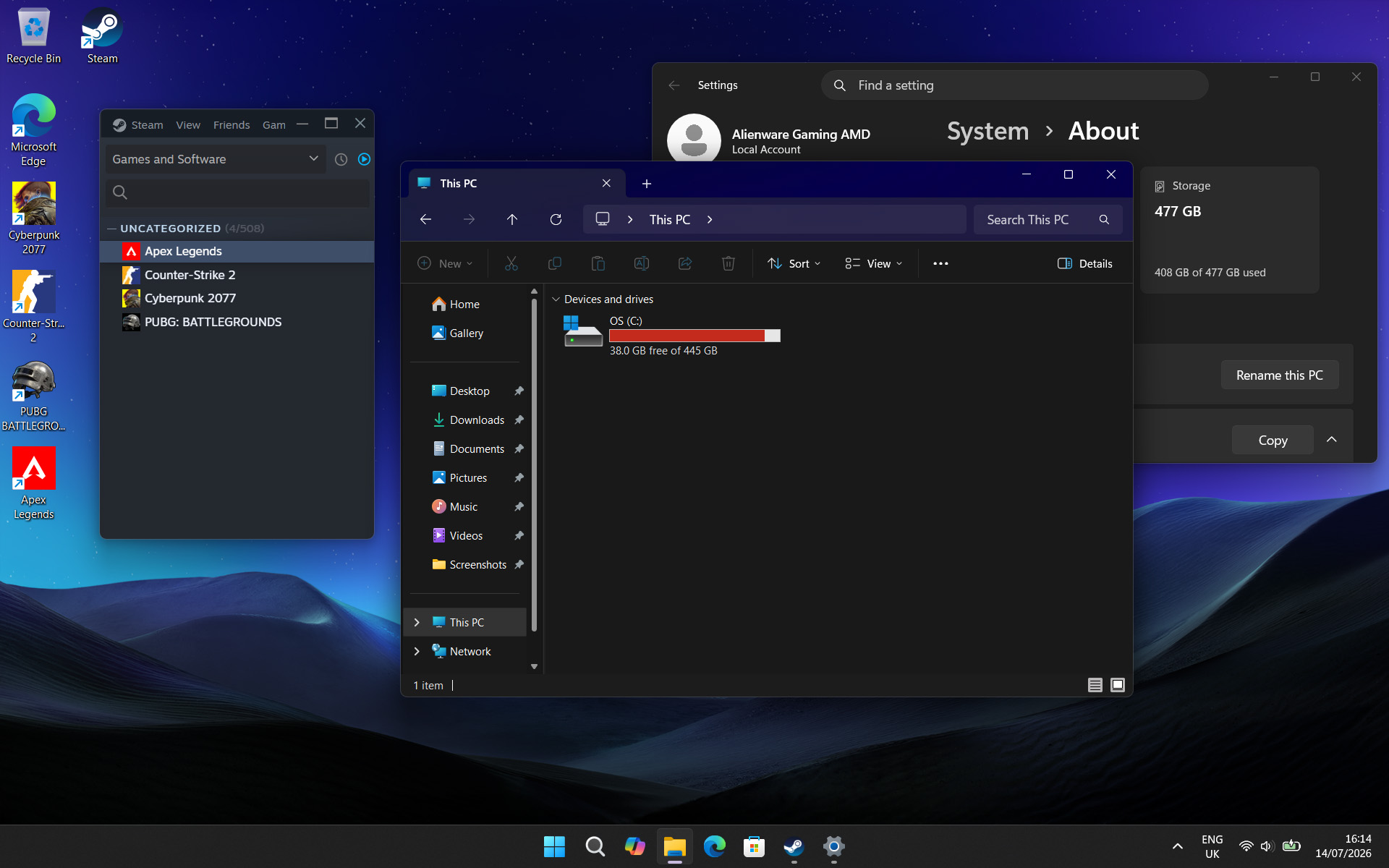
After installing only four PC games, I started seeing warnings about low storage space. (Image credit: Ben Wilson | Windows Central)
Above all, the most significant issue I had during my time with the Alienware 15 was its limited 512 GB SSD, reporting a usable 477 GB with only 332 GB of free space on its first boot into Windows 11. It simply isn’t enough, and no amount of optimizations offered by the pre-installed ‘SupportAssist’ app can help that. After installing only four games, I was out of space.
Alienware advertises “user-upgradeable options” for “up to 1TB PCIe SSD (Gen4) storage”, promoting “the flexibility to adapt for whatever comes next”, but the ongoing memory crisis stunts that notion. It isn’t Alienware’s (or Dell’s) fault, but I quickly learned that 512 GB isn’t good enough in a gaming laptop, and upgrades are extremely expensive in 2026.
Image 1 of 2
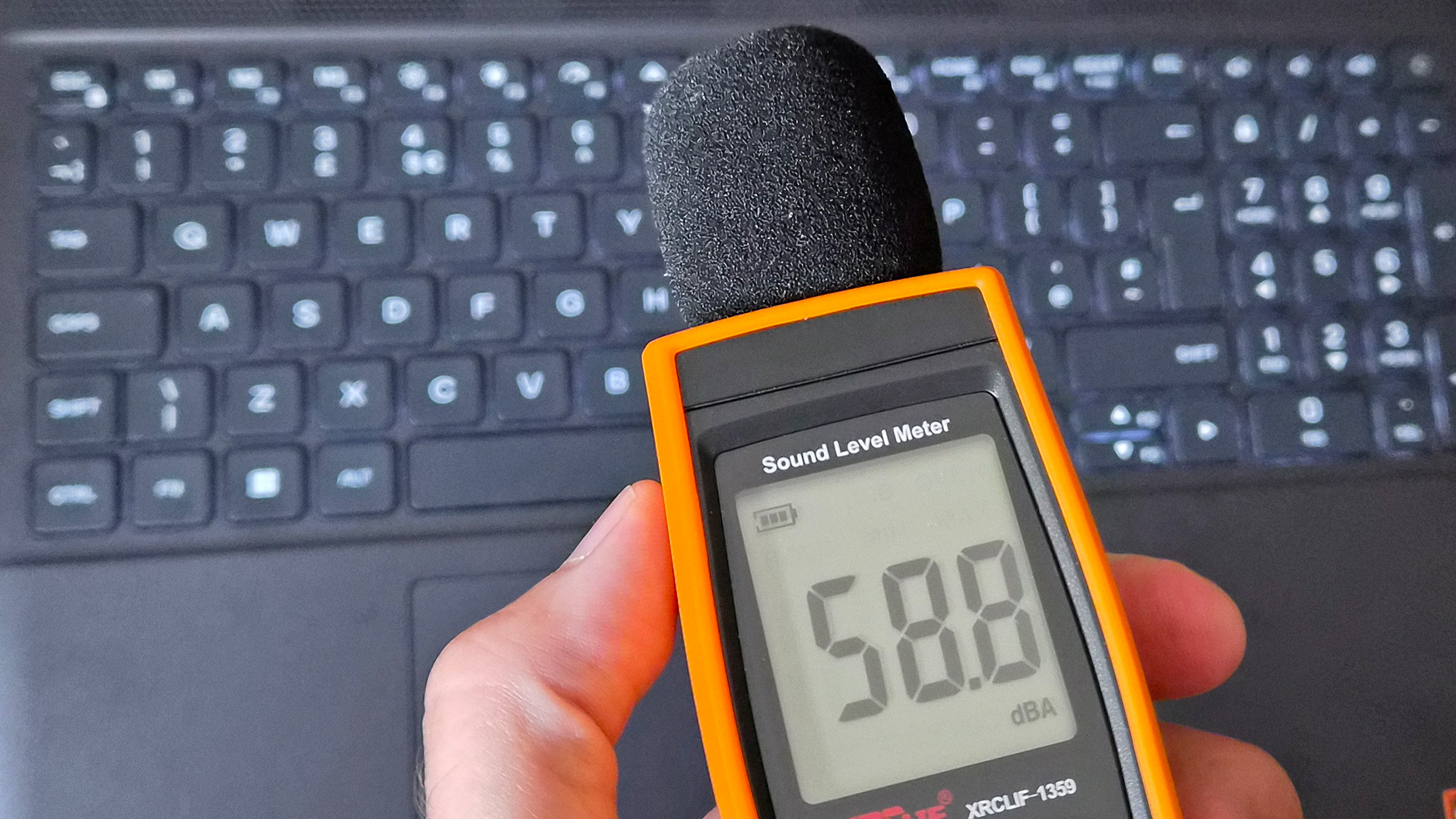 Holding up a decibel meter during gameplay demonstrates how loud the fans really are.(Image credit: Ben Wilson | Windows Central)
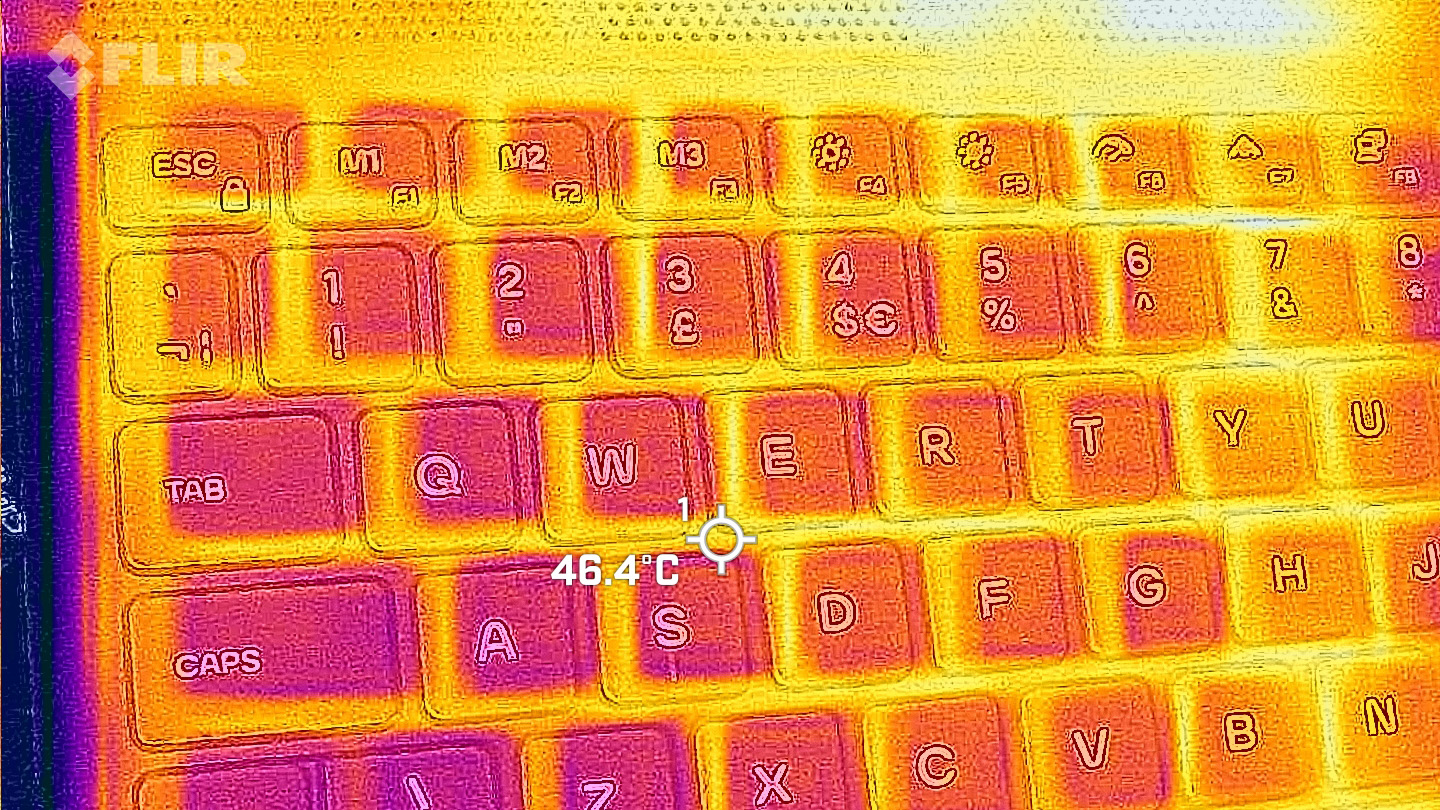 The keyboard gets warm during gameplay, which eventually made my fingers uncomfortable.(Image credit: Ben Wilson | Windows Central)
Otherwise, the loud fans (~58 dBA) are difficult to ignore and will likely annoy anyone around you. Booting into a game switches the Alienware 15 into ‘Performance’ mode via the Alienware Command Center companion app, which quickly ramps up the fan speed. Profiles like ‘Stealth’ mode advertise the laptop as “ideal for any environment”, but it’s only true if you aren’t gaming.
Despite the fans working as hard as they can, the keyboard still gets quite warm during gaming, and it felt a little uncomfortable after a while. I could solve it by plugging in my Steam Controller or by using an external keyboard and mouse, but at that point it feels like I’m hardly using the laptop. Using a thermal camera, I detected a temperature of 46°C around the WASD keys — not abnormal for a gaming laptop, but not exactly ideal either.
Should you buy the Alienware 15?

Switching power modes with F6 and F7 wrangles the fans a little, but it doesn’t stop the overall roar. (Image credit: Ben Wilson | Windows Central)You should buy this if …
✅ You want a modern, entry-level NVIDIA gaming laptop
✅ You don’t have space for a full-sized desktop PC
You should not buy this if …
❌ You’re looking for quiet, portable AAA gaming
The biggest problem with entry-level gaming laptops is that they immediately compete with high-end gaming handhelds, like the Xbox Ally X, which will be more tempting for its versatility alone. However, if you’re looking for a stay-at-home gaming machine that occasionally travels with you — with an 180W AC adapter included — the Alienware 15 keeps up with modern gaming by leaning heavily on NVIDIA’s RTX 5050 GPU.
Its 512 GB of storage will fill up fast, so you’ll either have to be happy with regularly switching between installed games from your library, or rely on an external hard drive to transfer backups. This laptop is loud, restrained, and heavy, but it will play your games, particularly so if they support NVIDIA’s latest DLSS upscaling technology. If you’re pondering the Alienware 15 on a budget because it’s on sale, then I say go for it.
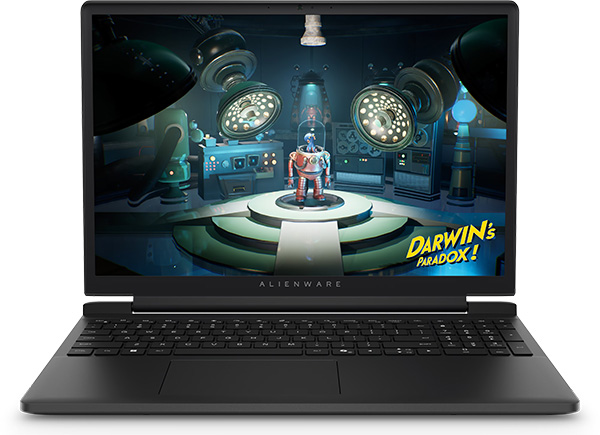
Alienware
15 (Ryzen 7 260, RTX 5050)
NVIDIA’s GPU does all the heavy lifting, with DLSS upscaling helping this entry-level gaming laptop to keep up.

Join us on Reddit at r/WindowsCentral to share your insights and discuss our latest news, reviews, and more.
Alienware 15 Gaming Laptop (useda15265wcto03): Price Comparison