
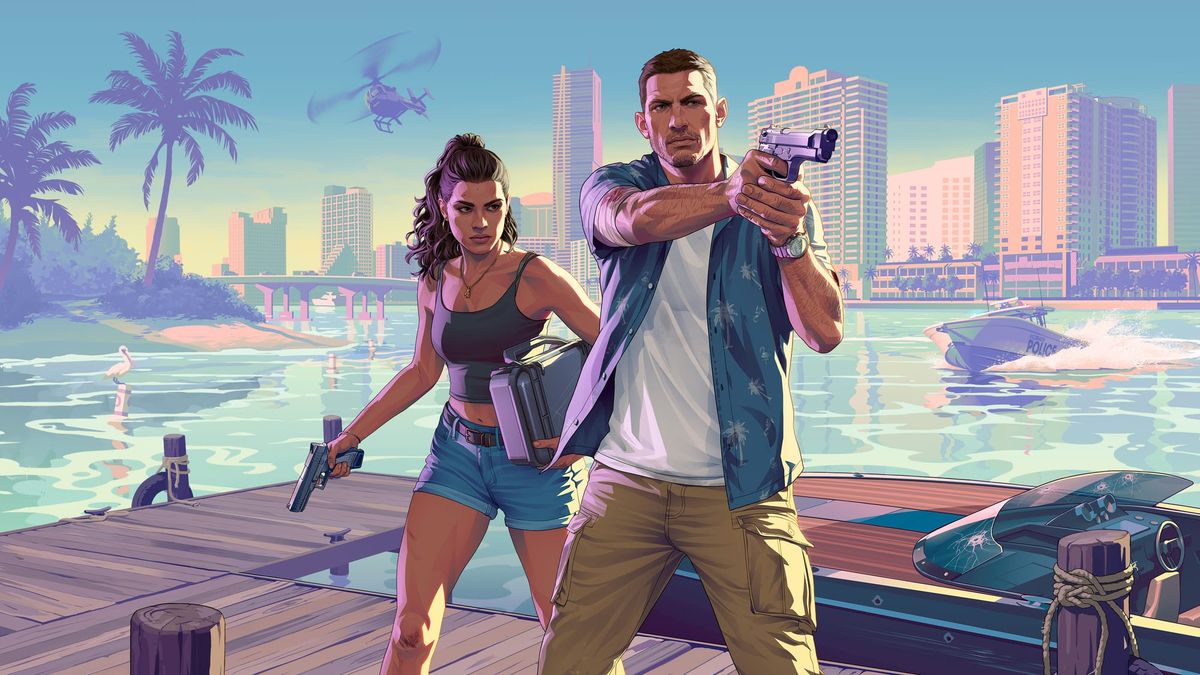
For the last year or two I’ve been obsessed with the idea of ‘hypernormalization’, the way we’re all going through the motions like we always have because this is the only world we’ve ever known or can conceptualise, even though the ground is actually shifting rapidly beneath our feet. This is affecting everything around us, from politics to technology, but I’ve been especially interested in the ways it’s shaping how we experience and talk about video games.
We’re Really Just Going Through With All This, Aren’t We – Aftermath
We’re trapped in the belly of the machine
From hardware pricing to the collapse of the AAA games market, alongside the rise of backyard indie blockbusters and all-consuming juggernauts like Roblox (with mass layoffs taking place throughout), video games are changing faster than we can adapt, but whether it’s the Summer Games Fest advertising hype, the preview -> review cycle or new hardware launches, we just keep on pretending that huge swathes of the industry just keeps going the same as it’s always been.
Grand Theft Auto VI is the culmination of this. We are witnessing the AAA machine roar into life as we have always known it to: long announcement windows, trailer drops, multiple delays, leaks, preorder bonuses. It’s a game whose presence is everywhere, that other big games will get out of the way of, that you can talk to someone at a party and know that they’ll know what you’re talking about, even if they’re not as into video games as you might be.
It is a Big Video Game in the way we’ve always known singular, Big Video Games to be. And it feels like the last of its kind.
Let’s consider the AAA video game industry as it both exists in 2026 and the direction it’s heading in. The market has abandoned any form of risk-taking whatsoever in favour of an ever-slimming roster of formulaic sequels, live-service games and remakes. A God Of War game starring a mum instead of a dad is still a God of War game. A promising Star Wars racing game is a licensed title that’s a spiritual successor to a 1999 release. Sony is pledging to release more live service games even as live service games bleed them dry from repeated gut shots. This year’s big Assassin’s Creed release was also 2013’s big Assassin’s Creed release. Almost everything AAA is doing is an attempt to wring the final drops of blood from a brittle and exhausted stone.
I Don’t Know If We Need All These Remakes, Guys
Every game you’ve ever loved is a product of its time, and a reflection of the limitations placed on its creators.
The specialist retail space is disappearing. The end of games being printed on discs will damage player numbers as it erases sharing, borrowing and pre-owned sales. The touchstones we associate with AAA (and GTA) releases, things like lavish physical editions and midnight launches, are now consigned to the history books. Console prices keep escalating while the people making their games live in constant peril. Everything is different now, and Grand Theft Auto VI landing right in the middle of it all, same as it always has, feels almost perverse. It’s a game, and a release ordeal, from another age, like Dutch begging Arthur for one more big score. To look past GTA’s release, among the crumbling walls and poisoned air of the AAA space, it’s almost impossible to conceive of any future video game being this, or doing this, in the same way ever again.
Other traditional AAA competitors, whether they’re shooters (Call of Duty), sports games (EA Sports FC) or action titles (Assassin’s Creed) are tired, old series that simply don’t capture the public’s imagination the way they once did. Many of the smash hits that dominate spending and headspace now come from two-man releases on Steam with zero marketing, or ‘Simulator’ games on Roblox that you’ve never even heard of, but have nine million kids playing them while you read this.
Even looking at the trajectory of Grand Theft Auto itself, things are bleak. GTA III, Vice City and San Andreas all came out between 2001-2004. GTA VI will be coming out 13 years after V. If you extrapolate that increase in development time and budget I might be dead in the ground by the time Grand Theft Auto VII comes out, and that’s assuming there’s even a market, or a machine, for it to come out on by then. The industry as we know it is collapsing and reshaping itself so fast that it’ll be unrecognisable in five year’s time, let alone 15, and so for all we know there might never be another Grand Theft Auto. We could all just be playing GTA VI Online, forever, until the seas reclaim us and the sun dims for the last time over the horizon.
There Is No Such Thing As The Video Game Industry
Video games aren’t an industry, they’re a medium

Note that I am not mourning this; if cowardice has been the defining trait of AAA gaming’s executive class for the past decade, then obscenity has come a close second. The fact Grand Theft Auto VI’s total spend will be over one billion dollars while everything else collapses around it is an embarrassment to Rockstar, publishers Take-Two and the entire medium of video games. It’s Sodom and Gomorrah type shit, and some would be forgiven for thinking maybe God is right to smite this sector of gaming in its wake.
And maybe, in the broadest most history book sense, it’s for the best! If we’re going through the most tumultuous period for video games since the early 1980s, we are not going to tumult forever. At some point we’re going to emerge into something else, something beyond what we know as now, and when that happens can you really see a world where prohibitively expensive consoles and dim-witted executives still preside over a AAA industry in the way we know they still desperately cling to today? Where games are pitched, made and sold the same way they were during the Bush years, and the only thing that matters is the next quarterly result? Of course not. The madness we are currently living through, where layoffs are a weekly occurrence and prices and budgets careen out of control, simply cannot be sustained.
If Grand Theft Auto VI ends up being the last great blockbuster of its age, then its arrival might at least bring us closer to the end of it, and closer to the start of something new.