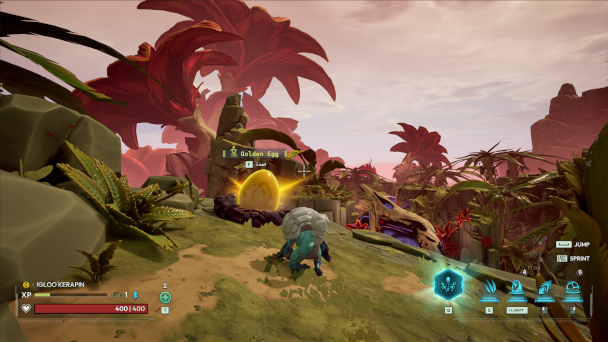
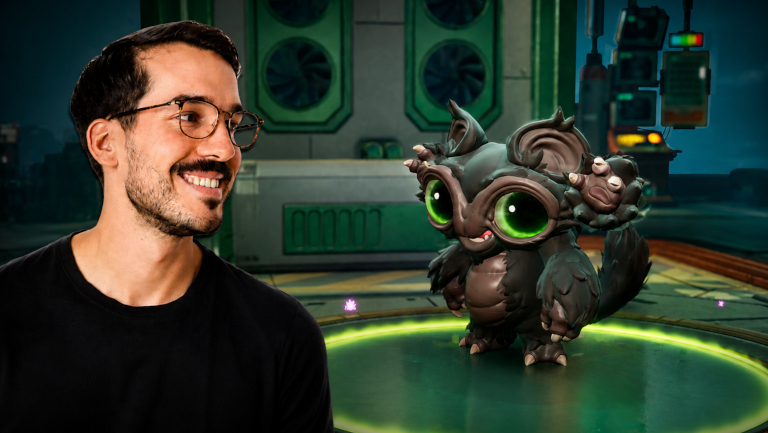
Voidling Bound is gaining attention and some critical acclaim for blending third-person platforming action with creature collection Developed by Hatchery Games, the project reunites several veterans of the Skylanders franchise. While comparisons to toys-to-life adventures are inevitable, Voidling Bound’s evolutionary systems and gene splicing give the title distinction.
We recently spoke with Hatchery Games co-founder Jonathan Rancourt about the studio’s origins, the legacy (and demise) of Skylanders, some of the influences behind Voidling Bound, and how the team hopes to cultivate a sense of adventure and discovery that many modern games often overlook.
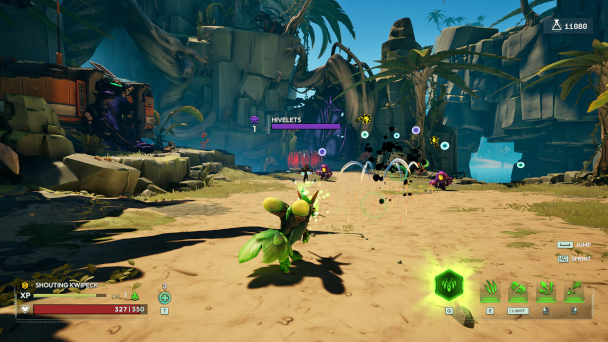
Tech-Gaming: How did the team at Hatchery Games form? I’ll occasionally see smaller developer teams rise emerge from larger studios. Did you, along with Simon Grelier, Frederick Gagnon, Carl-Simon Picard reconnect with a concept for Voidling Bound?
Jonathan Rancourt: I had a concept in mind for quite a while which I was working on alone. It did help that I had something to show for but I think we all reconnected with the idea of working inside a smaller team and creative independence. The project was a means to an end!
T-G: Toys-to-life life became a phenomenon, with other developers and publishers following Skylanders lead. Then rather suddenly, retail clearances happened, and the games and figurines just disappeared. Can you provide any insight into what happened? I need some closure.
JR: Competition happened! I can only speak from my point of view but you can compare this to any game concept which rises in popularity. Any game that meets success will bring developers to jump on the bandwagon, then the concept starts to create fatigue and the product becomes less lucrative. No matter how loved the concept was, at the end of the day business is business!
T-G: Given that all the key team members at Hatchery all worked on Skylanders, how did the IP influence Voidling Bound?
JR: Believe it or not but the influence became more relevant and we started to lean into it way later in production! Our first prototypes didn’t lean as much into our past experience on the IP than now !
T-G: I feel there are a multitude of other games such as SPORE or Ratchet & Clank that served as inspirations for Voidling. What are some of the titles that players might not immediately recognize?
JR: That one’s easy! one that isn’t really popping up but was very much an influence is Warframe! If you look at it, the game’s essence is much closer to Warframe than most of our other comparatives! But as any game there were lots of other smaller influences that helped us shape the game into what it became.
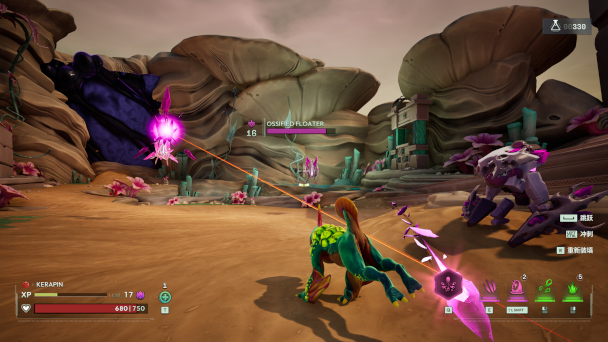
T-G: I appreciate how Voidling Bound doesn’t hold the players hand, allowing them to discover things on their own. Seeing the evolutionary tree for the first time and realizing what my Voidling could have been was a cool moment. How much of this approach is intentional?
JR: It probably ended up this way from even ourselves building the mechanics and discovering what worked and what didn’t. There were lots of different iterations of each systems, we always leaned towards giving players as much freedom as possible and balancing the different parts was an interesting challenge! What are my rewards for this and that? Should this be a reward or a progression element? And then you also want leave players with surprises! Yet some mechanics also need to be taught otherwise your players completely miss them.
T-G: Building on my last question, there’s a feeling of adventure and discovery that permeates Voidling, from the exotic landscapes to learning how to truly harness your creature’s new abilities, like the fire hoop jumping Gilick. What kind of player experiences are you hoping to cultivate?
JR: Give the players enough agency that they feel each decision they take actually matter. Not only that, create an experience where your decisions influence the way the game is played.
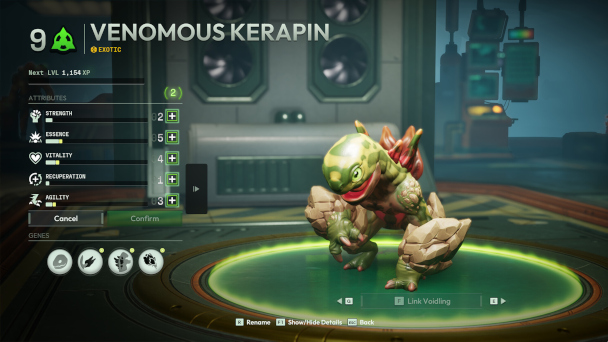
T-G: One notable detail is the lack of enemy lock-on. Was there ever a debate to let players target foes?
JR: There were, we ended up not taking this approach because we felt that at it’s core we’re challenging the players aim, as much as in any other TPS. We felt that giving a lock on inside a shooting game was removing a lot of what made the game fun, dodging, aiming, shooting. We’re not completely opposite to supporting both though, but that requires additional work and balance! We’ll see!
T-G: Voidling Bound lets you make your own difficulty rather organically, by replaying stages and earning more resources for evolution and augmentation? How did you arrive at this decision over traditional difficulty settings?
JR: Through playing and playing! We’re also very fortunate to have a small yet passionate community that was vocal enough to guide us into the right directions. Throughout our Demo, our different Playtests, we were able to get enough feedback to highlight which areas players thought were either too easy or hard, and from there you use these different levers to balance your difficulties properly.
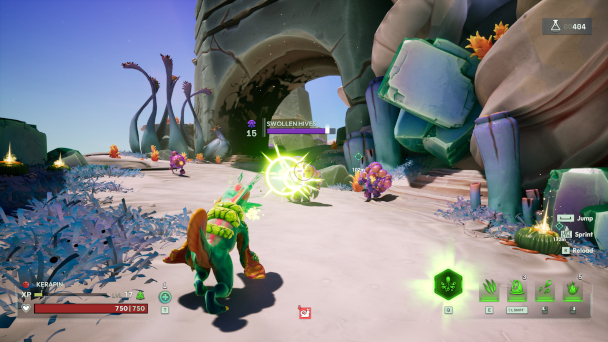
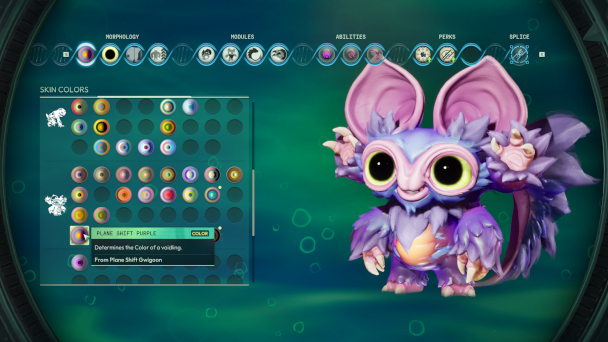
T-G: One component I haven’t explored yet is the Voidling customization suite. Can you tell us more about that element of the game?
JR: The splicing is probably THE thing that lasted throughout the entire project. Let’s be clear, it was also the feature that probably got the most iterations, but the core idea of customizing your creatures, elements, abilities, being able to completely design your creature, that was the first thing that hooked everyone even when we were only 4 and starting!
T-G: What are the post-launch plans for Voidling Bound? Beyond 3D printing of your evolved Voidlings, of course? 😉
JR: We actually already have a printed figure in the workplace! Porting to consoles while supporting the main game through Quality of life patches! We’d like to tackle DLCs to bring more Voidlings to the game too. All of this is still to be discussed though, but those should be our main targets for the foreseeable future.