
Among Us launched quietly in 2018, and it wasn’t until years later, in 2020, that the game started to take off—then explode. The game went from hundreds of players to 500 million monthly players globally by November 2020. Among Us is free-to-play on mobile, but cost $5 on Steam when it was released there. When it launched on Nintendo Switch, it quickly became one of the top-selling games there, too. All of this is to say that Among Us was—and still is—wildly successful. From the meager $5 price of entry and the silly hats players can buy for their crewmates, Among Us developer Innersloth has generated tons of money in revenue. Enough, in fact, to pass along millions of dollars to other indie studios.
Innersloth announced Outersloth in 2024, an indie game fund. Outersloth is not a publisher. The initiative is designed to support indie developers financially, not provide publishing services. A bunch of games have been released already: Flock Around, Dosa Divas, Mars First Logistics, One Btn Bosses, Battle Suit Aces, and plenty more. It’s funded at least 10 more games currently in development, and its support generally ranges from $50,000 to $2 million.
Innersloth CEO Forest Willard told Game Developer he first started thinking about funding other indies when developer Moonana’s Virgo Versus the Zodiac was crowdfunding on Fig. The investment cap was too low, so he wasn’t able to invest. “Fast forward like 10 years to when I mentioned it to [IndieBI co-founder] Callum Underwood and he mentioned that Mars First Logistics was looking for some funds,” he said.
“Innersloth[‘s] origins are some of the indie-est of indie stories from the start,” Willard added. “Just three friends self-publishing, funding, being pretty unknown and figuring it out. Also [Innersloth co-founder] Marcus [Bromander] having strong roots in Newgrounds, and that being an important part of his own origin story. Now Innersloth is still mostly based on indie hires, so helping keep that stuff going is fundamentally important to us. Our building blocks and mindset are still indie, and we only made it this far because of the help and honesty we received along the way. It makes sense to pay it forward.”
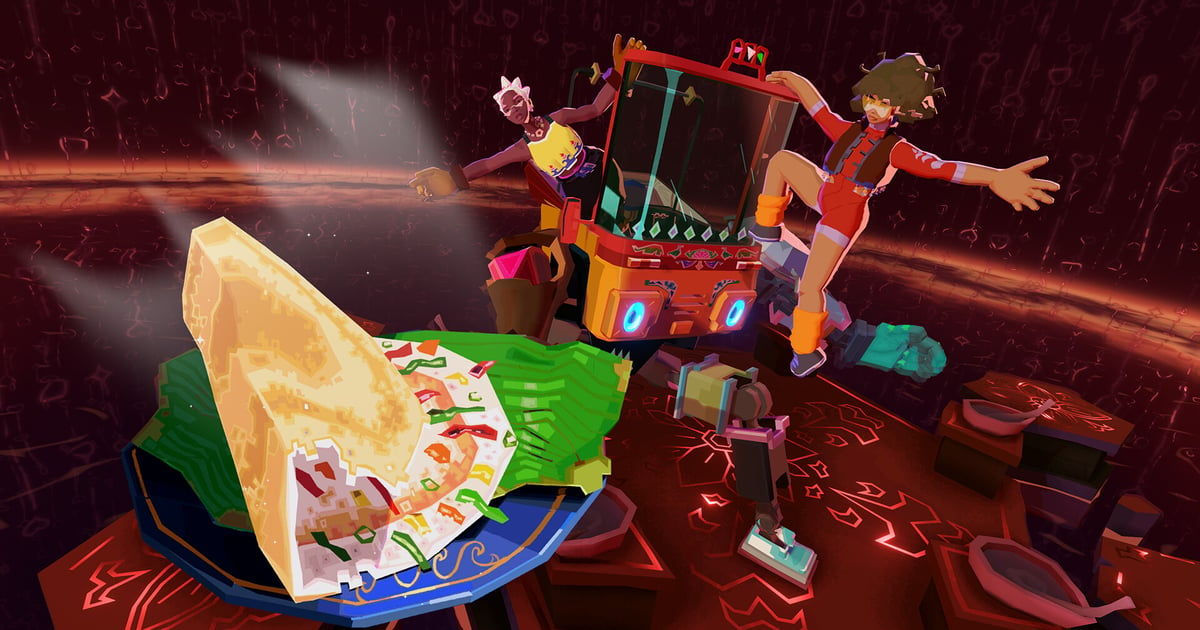
Ian MacLarty, founder of Mars First Logistics developer Shape Shop, said he had the “Right game at the right time”—before Innersloth had even announced the Outersloth fund.
“A lot of the details were still being worked out and I think I was in some ways a ‘test’ developer to figure out how it would all work and what the contract terms would be,” MacLarty told Game Developer. “I was impressed with how down to earth and open Forest and [Innersloth communications director] Victoria [Tran] were and got the strong sense they genuinely wanted to create something sustainable to help other developers. They were also very hands off with the development of the game, leaving me to make the game I wanted to make, which I really appreciated.”
As of April, another indie developer is also looking to use its success for good. Peak co-developer and publisher Landfall announced its funding and publishing initiative Evil Landfall in early April. Led by CEO Kirsten-Lee Naidoo, Evil Landfall has been operated behind the scenes for three or so years.
“We want to do more stuff, and we want to work with more cool developers, so we’re just opening the curtain a little,” Naidoo told GamesIndustry.biz. “We’re not limited by just the Landfall company, we can work with anybody that we want to.”
Like Outersloth, Evil Landfall is largely providing investment on a project-by-project basis. So far, it’s invested in REPO, How To Fish, and Voidigo. Evil Landfall plans to invest up to $1 million into “a few games a year,” it said.
In January, Phasmophobia developer Kinect Games launched its own publishing business to help out other indies. It’ll support two to three games per year, taking on games that are roughly a year away from publishing.
“What we can say is we love all the great work that is happening in the indie space and our goal with the label is to bring fantastic indie projects and teams to the fore while also setting them up for future success too,” Kinetic Games director of marketing and partnerships Asim Tanvir told Game Developer in January.
Successful indies are stepping up at a low point for investment
Investment into the video game industry is at a low point; after a massive boom in 2021 during the COVID-19 pandemic, money coming into the industry has dropped dramatically. From more than $12 billion in 2021, the video game industry had just $2.4 billion in investment funding in 2024, according to Crunchbase. Crunchbase reported in June that 2025 was not “shaping up as a strong year for gaming startup funding.”
Funding hasn’t yet reached pre-pandemic levels. It’s especially nice to see initiatives like Outersloth, Kinect Publishing, and Evil Landfall come into view.
Outersloth is also attempting to make its venture as transparent as possible. In March, the team published its contract terms publicly, explaining the recoup percentages and details. Outersloth takes 50 percent of revenue before the invested money is recouped, then 15 percent after—a percentage that’s been heralded in the industry. During the GDC Festival of Gaming talk where those terms were made public, Outersloth said it invested nearly $20 million so far across 24 games.
Innersloth communications director Victoria Tran told Game Developer that the response to releasing the contract details publicly has been “overwhelmingly positive.”
“I’ve never had so many random people message me or come up to me in person to gush about a contract before,” Tran said. “And that’s from developers, fans, investors, and even other publishers. At the end of the day, the more information available to folks, the better we can all learn from each other and negotiate better deals. I’ve heard through the grapevine some publishers were grumbling about it, but it seems to stem from a misunderstanding that we expect everyone to be able to support a contract like this. Which we don’t.”
Outerloop Games co-founder and studio director Chandana Ekanayake told Game Developer that his studio got involved with Outersloth when the team was pitching Dosa Divas in 2023. Self-publishing was fine with the studio, so simple funding was a good option. “The game wouldn’t exist without funding, ” Ekanayake said. “The funding pays for our development team and external partners that we worked with for QA, publishing support, PR, and marketing.”
MacLarty, the Mars First Logistics developer, echoed that sentiment: The funding allowed Shape Shop to work with contractors like 3D artist and animator Kalonica Qugley of Big Walk and Untitled Goose Game, composer Dan Golding of Untitled Goose Game, and sound designers Mark Mitchel and Byron J. Scullin of Heavenly Bodies. The studio was able to get the Future Friends marketing agency on board, too.
“They helped me make the game into something I could never have created on my own and ultimately contributed greatly to its commercial success,” MacLarty said. “The game has more than recouped its funding since release. The success of the game means I have a nice long runway for the next few projects and I don’t think that would’ve been possible without Outersloth’s help.”