
This week two casinos opened, one in New York City and one in State College, Pennsylvania. The timing is interesting. Why now? Why the last week in April? It is not the beginning of a new quarter, or a month, or a holiday. There were other reasons. For one, it was rushing to get started. For another, finally, it is about time.
In New York City – Queens, if you are from New York – Resorts World entered a new era by adding table games, 240 of them, to go with 2,500 slot machines. Resorts World was awarded one of the three full casino licenses for New York City. As the only one of the three with an existing gaming facility in the city, Resorts World wanted to get started as soon as possible to beat the competition and get some cash flowing. The full resort will take years and cost $5 billion. To win the bid, Resorts promised amenities, including a community-benefit package, a 7,000-seat entertainment venue, and workforce housing, up to 50,000 units. None have much bearing on the casino, so with a spruce up, Resorts is set to go. The other two licensees are committed to spending more, up to $6 billion-$9 billion. They will probably be more resort than Resorts World, but it will be years before they have any cash flow, while Resorts will be booking revenue durong the build out.
Way back in 2013, voters in New York authorized seven casinos in the state. The law allowed four licenses initially, with a 10-year moratorium before the last three licenses could be built. Casinos began operating in 2016. In the last fiscal year, the four casinos generated $697.3 million in gross gaming revenue. In 2022, a measure included in the budget ended the moratorium. And with that, the circus began. At least 10 proposals surfaced, including from Wynn Resorts, Las Vegas Sands, Rush Street Gaming, Hard Rock International, Bally’s, Caesars, Saks Fifth Avenue, the owner of the New York Mets Steve Cohen, and Coney Island.

In the end, only four were left standing. Most, like Wynn and Sands, pulled out, while Caesars and two others for Manhattan were rejected by the community. Steve Cohen with Hard Rock, Bally’s, and Resorts World received licenses. The upfront fee was $500 million. Hard Rock and Bally’s are building from the ground up and are expected to open in 2030.
Resorts World has been operating a racino at Aqueduct Racetrack since 2011. The racino has had as many as 5,000 slot machines, but in March 2026 had only 2,671. The VLTs at racetracks in New York have faced increasing competition. Statewide, the number of VLTs has dropped from 18,000 in 2016 to 16,000 in 2025.
Resorts World believes table games will be the answer and the company is projecting $4 billion in annual revenue as compared to $686 million in the last fiscal year from slots only. It is a big leap. And it is necessary, given the investment required to complete the conditions of the license, $5.5 billion with the license fee. There is one more little catch: The tax rate is over 50 percent. Paying the tax and generating a return on investment will be a tough nut to crack.
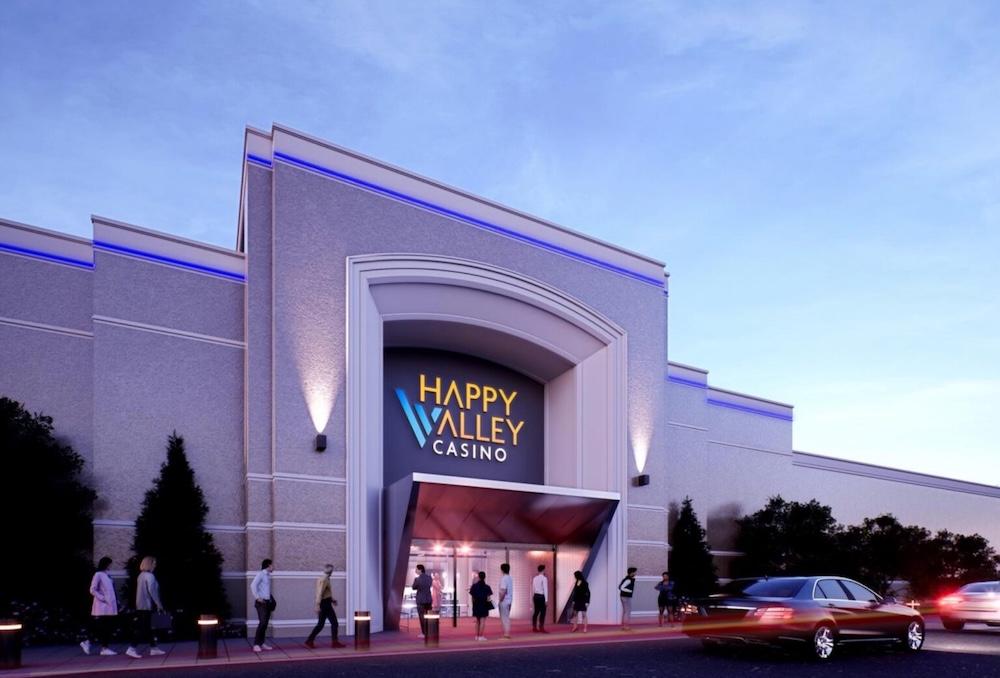
In Pennsylvania, the plan is not so grand or expensive. The casino, called Happy Valley, has 600 slot machines and 30 table games with an option to go to 750 slots and 45 tables later should business warrant it. Like Resorts World, Happy Valley is the result of a bidding process. The bidding ended in 2020 with a winning bid of $10 million. In 2017, Pennsylvania passed a law creating a Category 4 casino and authorized 10 licenses. The licenses were awarded through a bidding process. The Happy Valley Casino won a license, but it took six years of lawsuits, ownership changes, and funding challenges to get to the finish line.
Before opening, Happy Valley had to pass a regulator test, two days of gambling carefully observed by regulators with the revenue going to charities. The test is perfunctory; every aspect of the operation had already been cleared by the regulators. But it does illustrate how extensive gaming regulation can be. In the Happy Valley case, the director of the Pennsylvania Gaming Control Board’s Bureau of Casino Compliance, Gregg Hazzouri, said, “There’s about a thousand pages of regulations that we have to make sure they’re in compliance with. On top of that, there’s over a thousand pages of internal controls that they submitted that we need to make sure are, one, in compliance with our regulation and two, that they’re actually doing [it] on site.”
Happy Valley Casino is located in a space in a mall formerly occupied by a Macy’s department store. The remodeling cost is put at $120 million. Not much for a casino in the 21st century, but a lot for a remodeled mall space. In that, Happy Valley is like Resorts World. Both are putting a great deal of money into a questionable location in a very competitive environment and paying a premium tax rate for the privilege. Whether or not it is possible to make a profit under those circumstances remains to be seen.