
Billy Payne was asleep with his wife, Martha, on a high floor at a hotel near the Atlanta organizing committee offices when the state patrol officer assigned to them pounded on the door of their adjoining room. A pipe bomb had exploded at a concert at Centennial Park, injuring at least 100 and killing two.
“Wake up,” the officer said. “We gotta go.”
After visiting the scene, Payne spent most of the night on the phone with venue staff and law enforcement. Once they determined it wasn’t likely that the park bombing was part of a broader threat, they discussed whether to resume the Games.
Andrew Young, co-chair of the Games and former Atlanta mayor, was struck by how, returning from visiting victims at nearby Grady Memorial Hospital, he passed volunteers up at 6 a.m. to head to their posts. Initially worried about whether they’d have the staff to reopen, they found they had more than they needed. Atlantans who weren’t scheduled to work were showing up anyway, just in case others hadn’t, or couldn’t.
“It was difficult because in one sense you felt an obligation to just say, ‘This was so bad we’re stopping everything,’” Payne said. “But then you had the many, many years that all of these thousands of people had worked.”
“We didn’t have to make a decision about whether the Games would continue,” Young said. “The Games themselves and the people who were volunteers had decided these Games weren’t going to stop.”
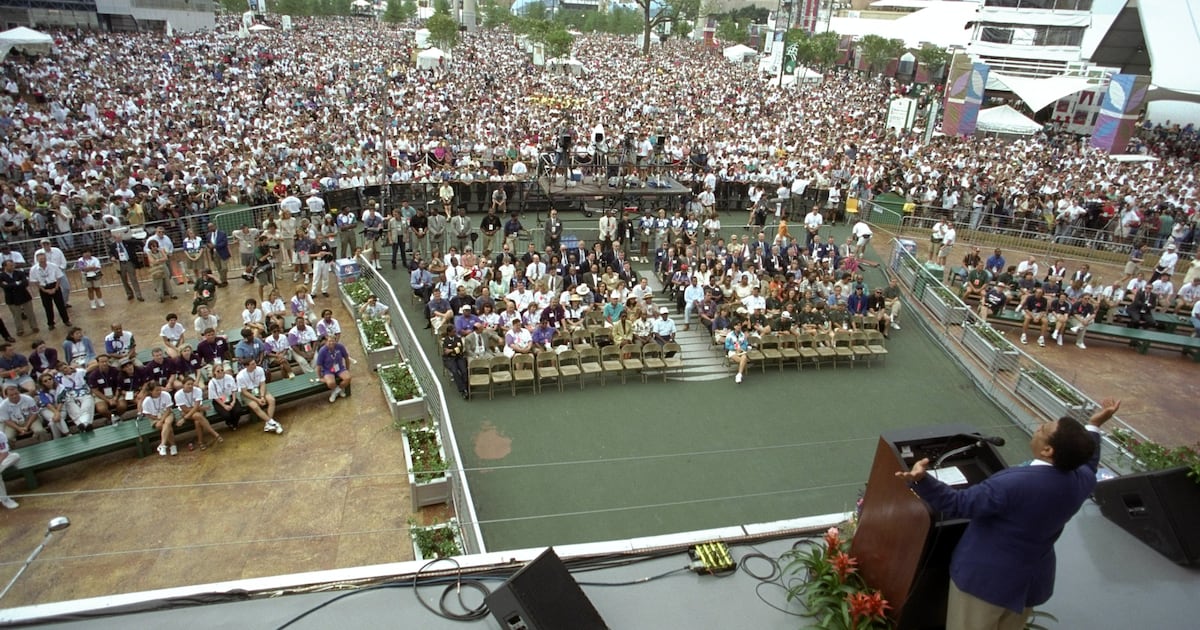
After a phone call to consult with President Bill Clinton, they made the decision to continue the Games without pause and reopen the park as soon as possible. It did so two days later, with an emotional ceremony that featured a rousing address by Young, who at Payne’s insistence was the only speaker.