
John and Brenda Romero say the current state of the games industry feels “crashier” than the notorious North American video game crash of 1983.
In an interview with GamesIndustry.biz, the Romero Games founders – Doom co-creator John and his wife Brenda, best known for the Wizardry games and Jagged Alliance 2 – said the industry faces some real challenges ahead.
“I feel like the industry’s in a really horrible place,” Brenda said. “I mean, we were there in the ’80s for the crash, and this is definitely crashier. There are so few people that have not been affected, or their partner’s affected, or they’re worried about being affected. It’s a really difficult time right now.”
John noted that even successful games can’t guarantee safety, pointing out that Battlefield 6 did “really, really well” and yet saw some of the studios that worked on it suffering layoffs after its release. “I don’t understand what that’s all about,” he said.
Last year an Irish publication claimed that the Galway-based Romero Games had closed its doors, after which the studio denied this, stating that while the funding for its latest project had been pulled and the game had been cancelled, it could still be salvaged by other publishers offering to help carry it across the finish line.
“We never closed,” Brenda explained to GI.biz. “And it was obviously a super, super turbulent time. But we talked to a ton of different places and the company survived and the game survived.”
The studio had to make huge cuts, however, dropping the team size down from 110 to just nine, and Brenda says that while the studio is still alive, it may not survive another setback.
“I know that we’re going to be OK for the next little bit,” she explained. “And if something falls over sideways, and 2027 is another ‘exciting’ year, we’ve both had a good run.”
Romero Games confirmed last year that it had lost funding for its shooter project after its publisher, later named as Microsoft, pulled its publishing agreement.
Brenda added that while she’s sure people are “going to keep playing games”, she doesn’t know how the industry will turn things around any time soon.
“This is really one of those times where I don’t know,” she conceded. “And you hear behind the scenes, there’s tremendous push toward teams using generative AI, there’s tremendous pushback from teams and from gamers about using generative AI… and before you ask, we’re not using generative AI. So I don’t know.”
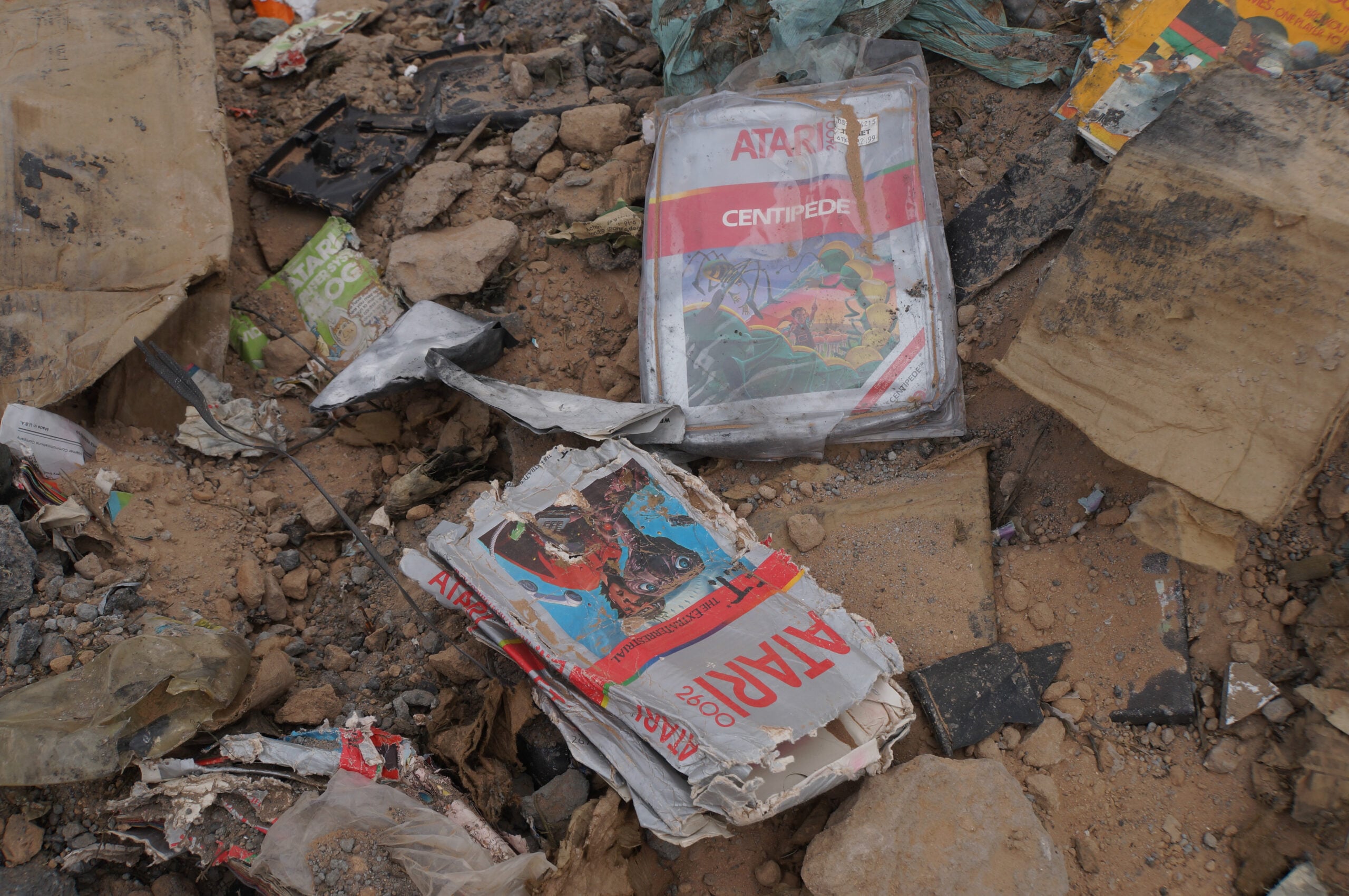
The video game crash of 1983 took place in North America and was caused by a number of factors, including an oversaturation of low-quality console games (particularly for the Atari 2600). With so many new games flooding the market, and numerous publishers folding, retailers were forced to heavily discount the games to clear shelf space, resulting in an unwillingness to take on new products.
Although the gaming scene remained healthy in other regions such as Japan in Europe, the North American games industry struggled to turn things around until Nintendo introduced the NES, which was pitched as an ‘Entertainment System’ rather than a games console and won retailers over with such accessories as R.O.B. the robot.
Header imager by taylorhatmaker – Atari E.T. Dig: Alamogordo, New Mexico, CC BY 2.0