
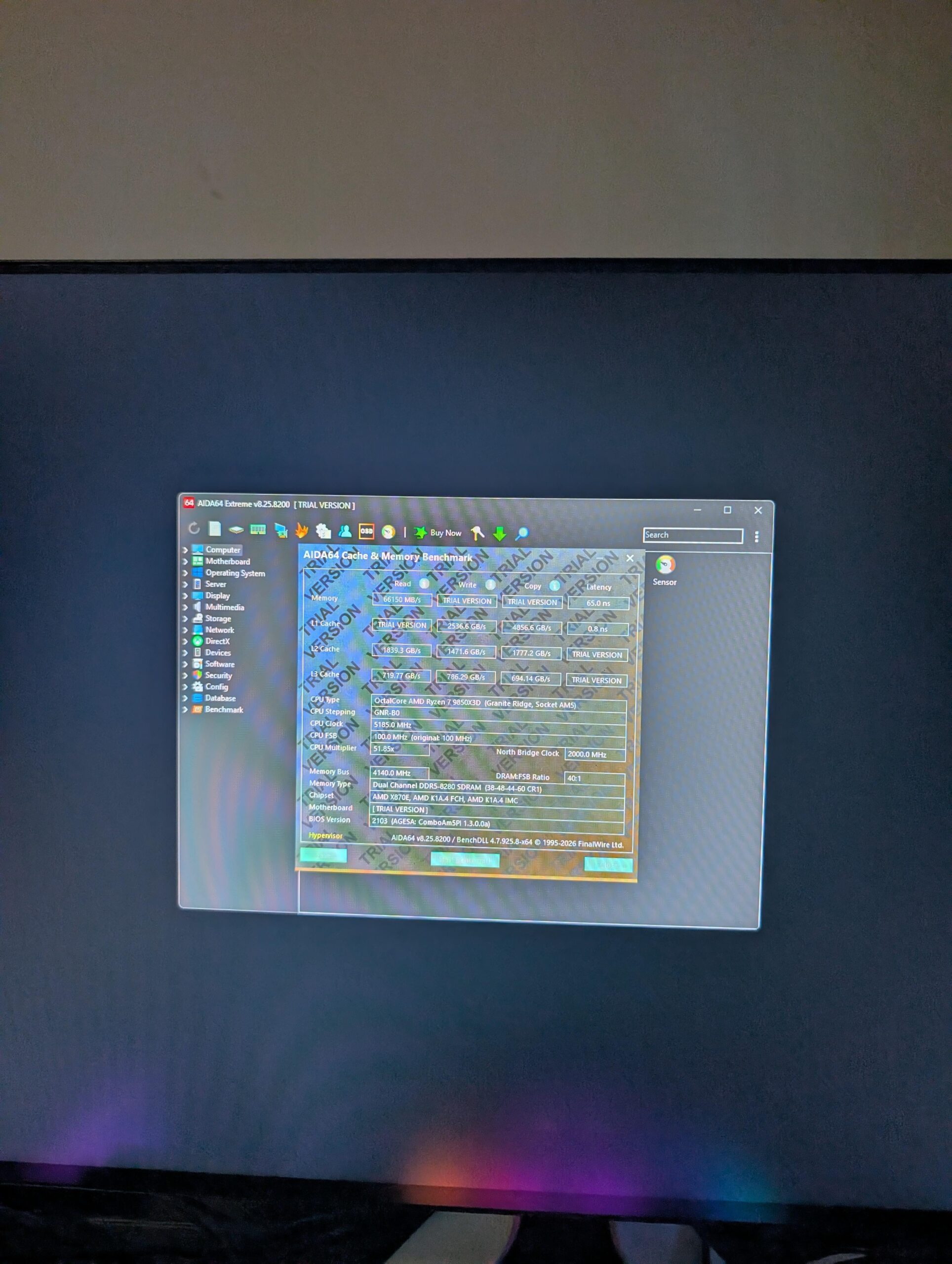
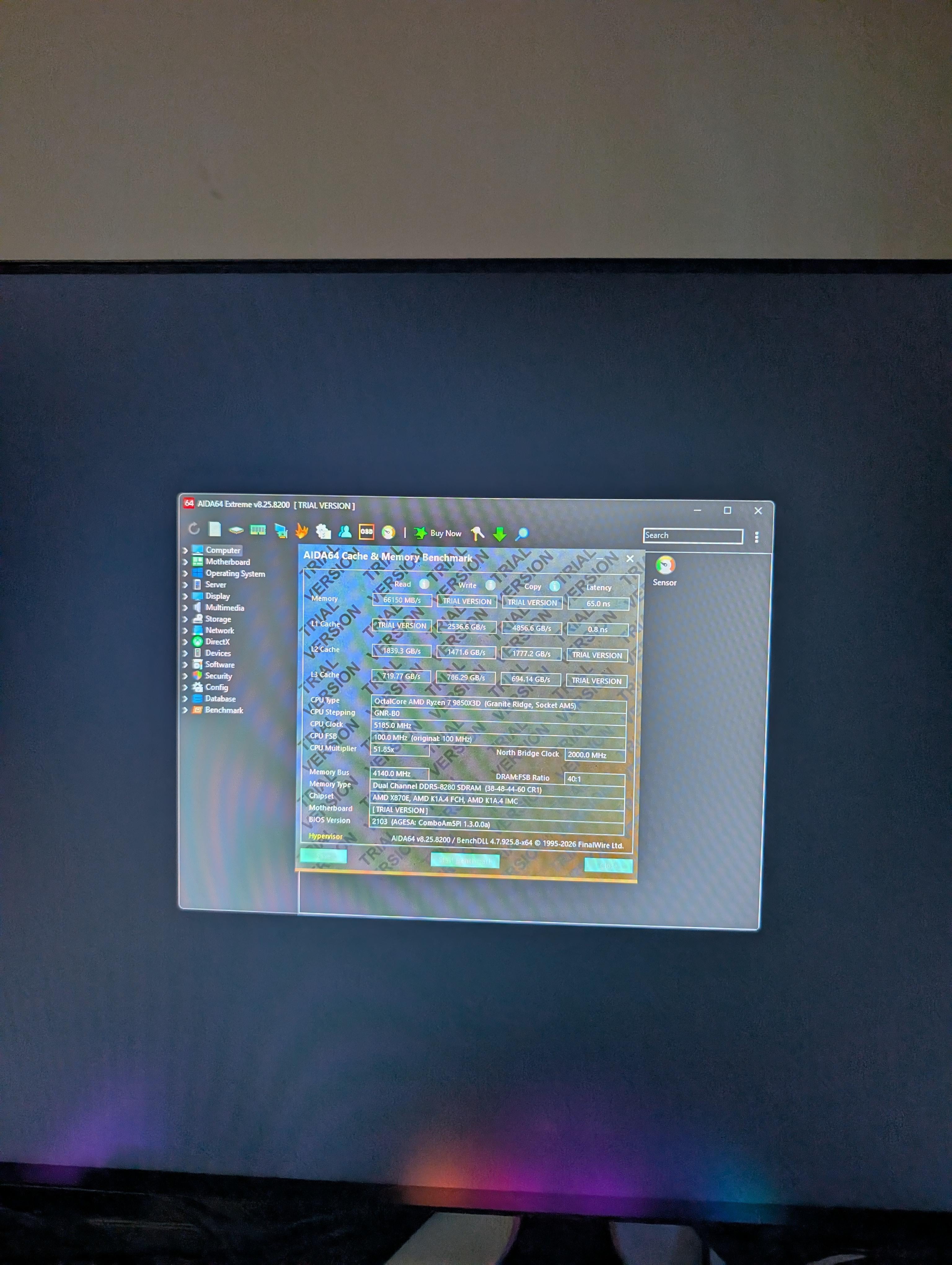
Hey everyone, I've been working to refine my set-up and discovered some interesting stuff I wanted an opinion on. I was able to fully stabilize 8300 mhz memory with 2200 fclk and the performance does seem to be better then the other set-ups I have tested however out of curiosity I tried running higher bclk to allow myself to sync fclk to uclk and then increase both of those frequency together, allowing me to retain 1:1 syncing at higher frequencies. I was able to run every stress test and stability test fine at 8280 mhz on the memory with really impressive aida results due to the syncing of fclk and uclk however for some reason all of my gaming benchmarks have regressed in performance and I am not sure why. Also the results I am sharing are nowhere near finished or fully tightened but I'm wondering if there's a reason why I am unable to get better performance with the increased BCLK and whether there are any tips or tricks to get the system to cooperate. One other strange thing I noticed is that maybe the memory is training differently or something due to not being able to compensate for the extra frequency since I am easily able to boot and run benchmarks at 8400 mhz but when I try booting anywhere higher than 8300 mhz using bclk to increase it from 8000 I have trouble posting for some reason. I know the risks and issues that come with bclk overclocking and I did run an ssd benchmark that failed with bclk at 104 or higher so clearly bclk past that is unstable but even limiting bclk to say 101 or 102 still causes a regression in gaming performance specifically but nothing else.