
Kurt Johnson
Las Cruces Bulletin
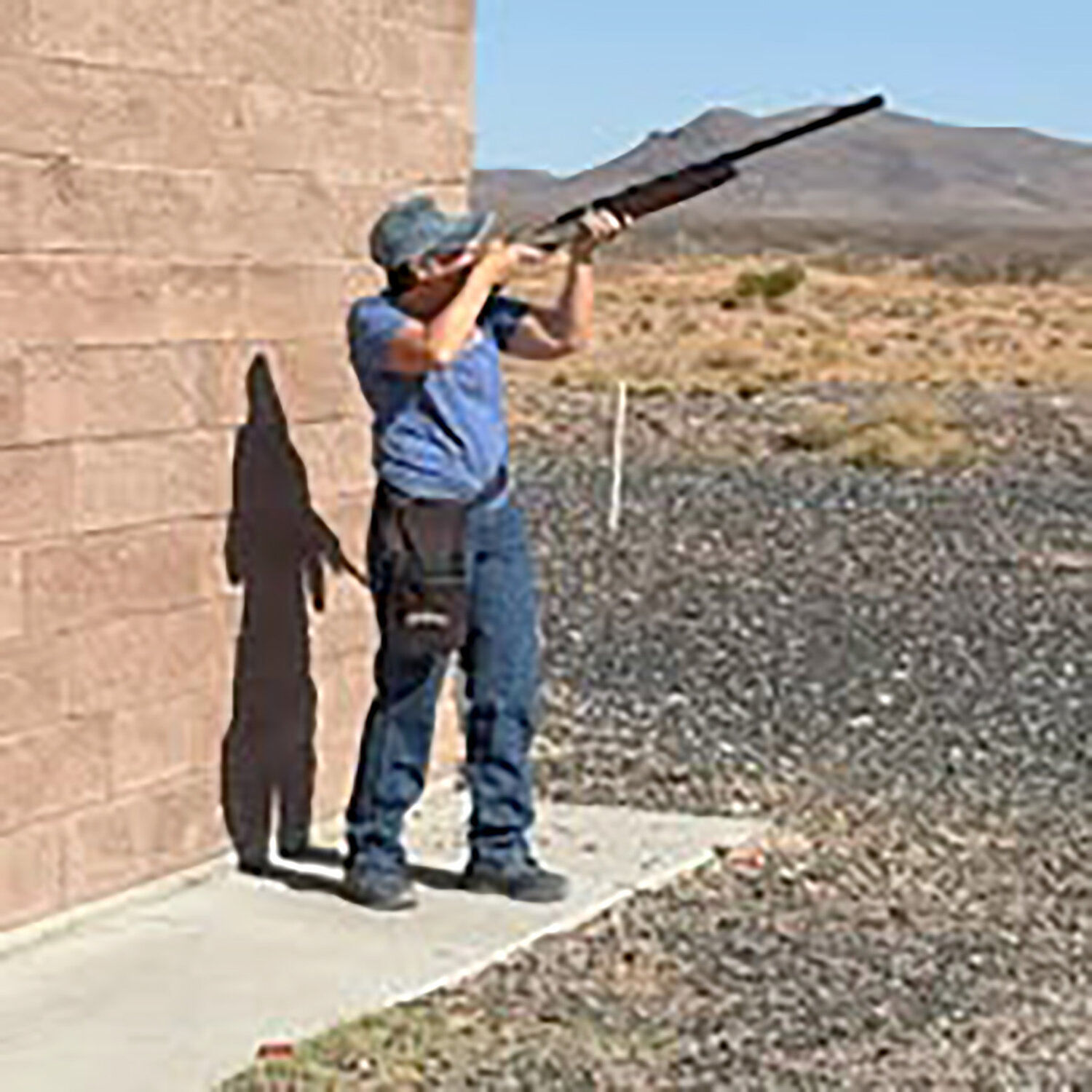
The crack of a shotgun echoes across the range, followed by a puff of orange dust in the sky. For competitors in Senior Olympics trap and skeet shooting, that brief moment—the split-second between target release and trigger pull—is where preparation, instinct and discipline come together.
While casual observers may see it as simply shooting clay targets, the sport is far more nuanced. Trap and skeet each demand a different skill set, and competitors often spend years refining both.
Rick Richardson is one of those shooters competing in the Doña Ana Senior Olympics. He has been around firearms most of his life, but it wasn’t until about a decade ago that he began taking trap and skeet more seriously.
“I’ve been around firearms all my life,” Richardson said. “I hunted when I was a kid, growing up around Capitan. I’ve been around it and been involved with it through the 4H program and my kids, both of them have been pretty competitive at it, so I just kept on doing it as a recreational hobby.”
Richardson came to Las Cruces in 1977 for college and returned in 1985. He was later recruited to the Senior Games and decided to give it a try.
“I wouldn’t say I’m a serious shooter,” Richardson said. “I’m a mid-level shooter. I’ve shot some competitively at ATA matches, but most of what I’ve done has been around here and local.”
In trap shooting, athletes line up behind a single trap house that sends targets flying away at varying angles. Shooters rotate through five stations, adjusting their stance and timing as each clay pigeon arcs outward. The challenge is reading the target quickly and reacting with precision, often in less than a second.
Skeet shooting, by contrast, feels more like a choreographed dance. Competitors move through eight stations arranged in a semicircle, tracking targets launched from both a high house and a low house. The clays cross in front of the shooter at consistent angles, but the rhythm shifts with each position. Some stations require doubles—two targets thrown at once—forcing shooters to fire, reset and fire again in rapid succession.
For Senior Olympic athletes, the competition is as much mental as it is physical. Focus and consistency are critical. A slight lapse in concentration or a fraction-of-a-second hesitation can mean the difference between a clean hit and a miss.
Equipment also plays a role. Shotguns are carefully fitted to each shooter, and competitors pay close attention to stance, swing and follow-through. Even environmental conditions—wind, light and background—can influence how a target appears and how a shooter reacts.
Beyond the mechanics, there is a rhythm to the sport that keeps participants coming back. The cadence of calling “pull,” the repetition of movement and the immediate feedback of each shot create a unique blend of intensity and calm.
Equally important is the sense of community. Senior Olympics events bring together shooters from a wide range of backgrounds, many of whom have been involved in the sport for decades.
That camaraderie is part of what keeps Richardson coming back. He prefers hunting for the connection to the outdoors, but when the season ends or conditions don’t allow, trap and skeet provide a competitive outlet.
Unless he lets missed shots get the best of him, Richardson finds shooting relaxing. It tests a different kind of skill set.
“You’ve got to be physically able to do it,” he said. “The regular ATA match is 100 rounds, so you’ve got to have some endurance, some physical stamina. And you’ve got to have some reflexes.”
There is also a strong emphasis on safety—just as there is in hunting.
“You’ve got to have ear and eye protection, safe muzzle control, you’ve got to have the knowledge and skills of firearm safety,” Richardson said. “You can’t just go out there and pull a gun out of the bag and walk up there and start doing it.”
At its core, trap and skeet shooting reward patience, discipline and adaptability. No two targets are exactly the same, and no round unfolds perfectly. For those on the line, the goal is simple but elusive: stay steady, trust the process and break the next target.
In a sport measured in fractions of a second, success comes from years of experience—and the ability to deliver when it matters most.