
“There’s two really important things you need to know about Steam Pages,” said Future Friends Games’ Thomas Reisenegger, opening his GDC Festival of Gaming talk Your Steam Page Needs a Soul: How to Get Your Game’s Magic Across on Steam. “The first is that your Steam page is not really a store page, it’s more of an algorithm test.”
“You maybe have heard this, but Steam is really set on—what they really care about is making money, that’s fine, they are a storefront, that’s what they do—but they really care about the revenue per impression, they care about the revenue per visit. They really look at ‘what makes me, Steam, the most money per second?’ and this is how you get judged.”
He noted that this crucial point would come up time and again throughout the talk, so keep it in mind. Then, he leapt into a winter sports metaphor.
“Then, the second more obvious thing to know about Steam pages is [that] it’s pretty much like ski jumping,” he said, hitting a slide that shows an athlete taking to the skies.
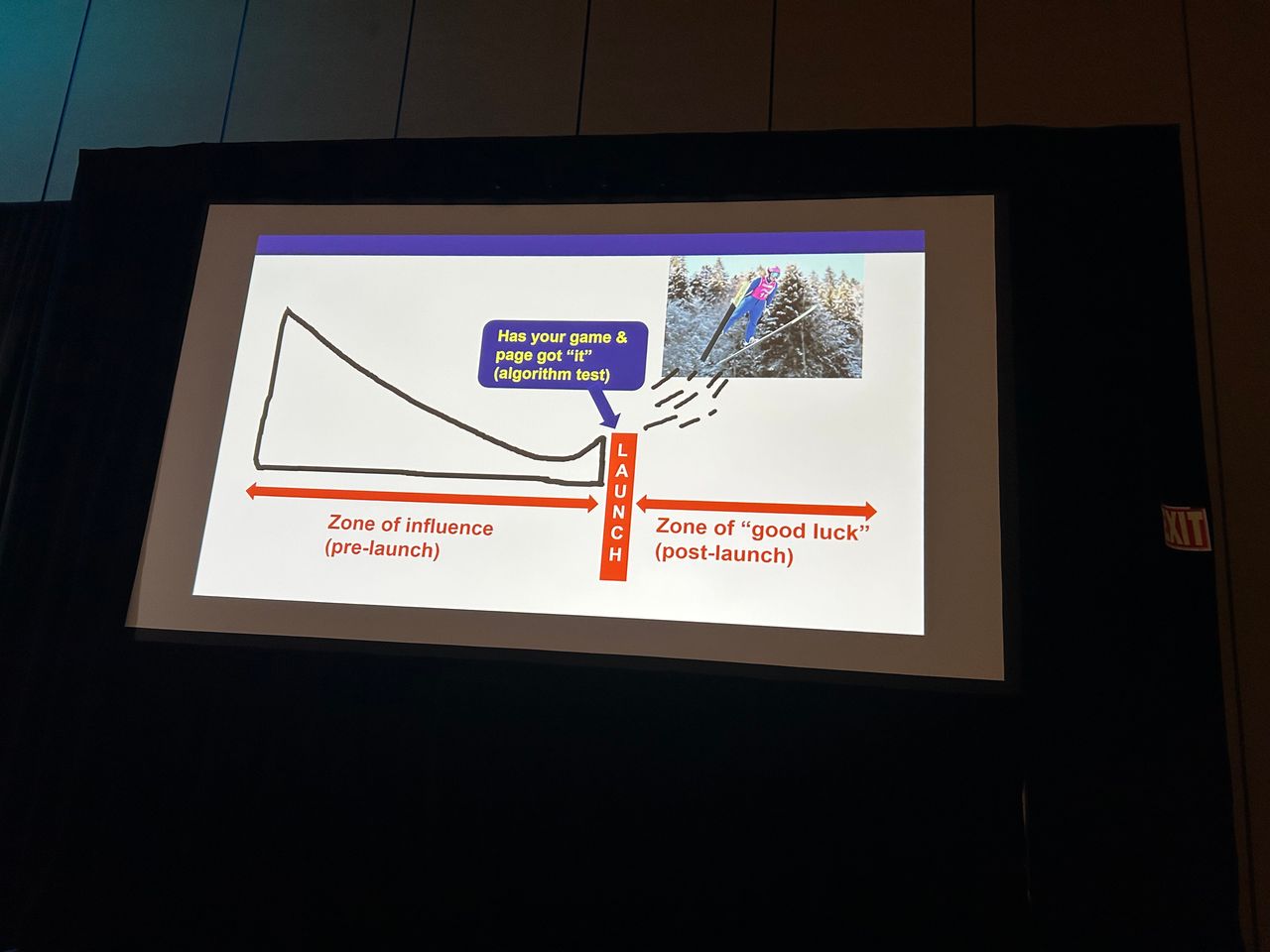
“You go down this… beautifully drawn ramp, you get momentum, you jump, and then you fly. And when you fly, the further you fly the better!”
Reisenegger then goes into the metrics, looking at just how much Steam traffic comes from within Steam (a great deal, and even more after launch than before) and highlighted the crucial importance of using every tool in Steam’s store page toolbox to squeeze visibility and marketing juice out of the proverbial ramp and jump of the talk’s core metaphor.
Getting the capsule image right is a huge priority
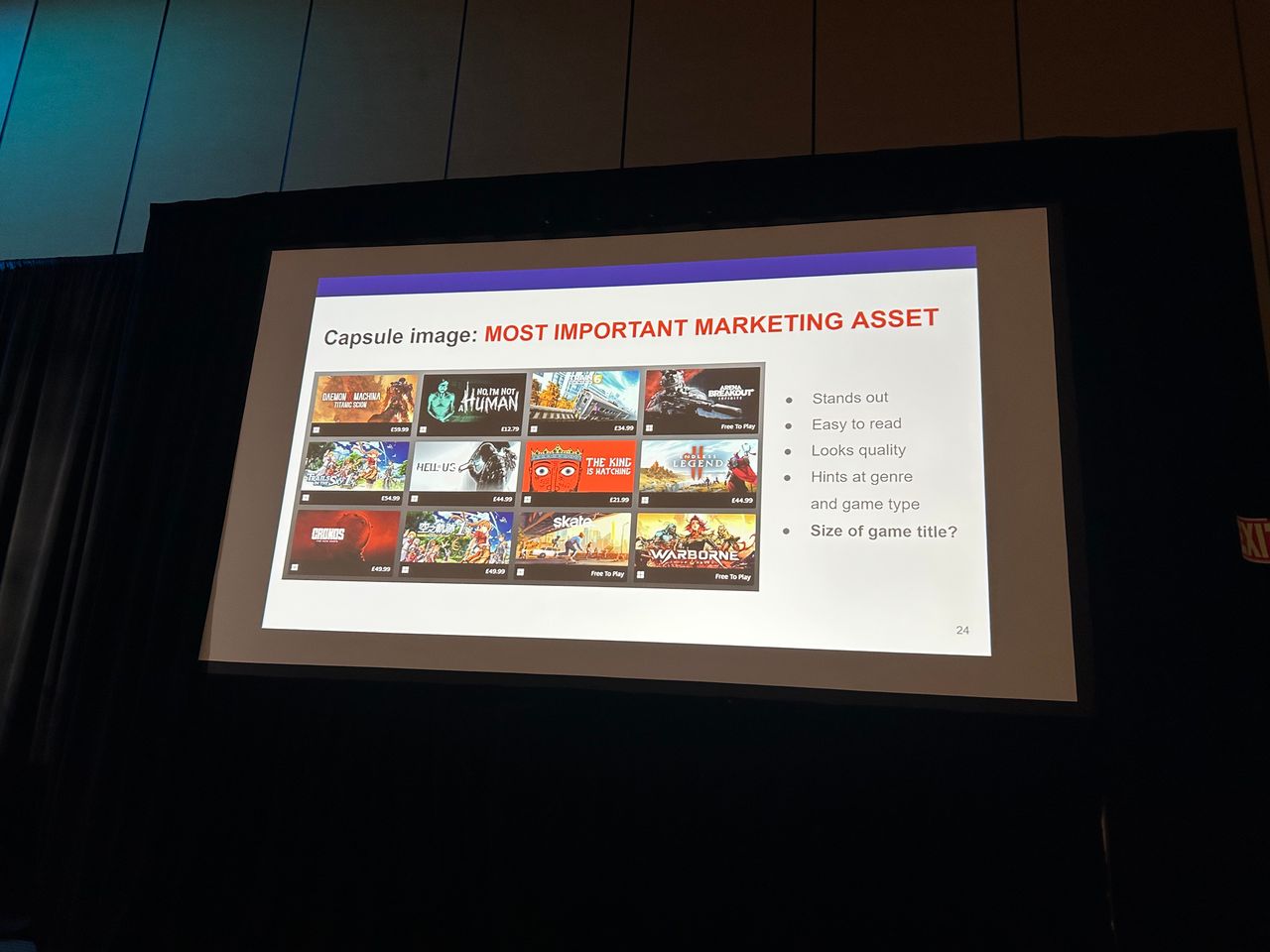
Capsule images received plenty of attention, with Reisenegger emphasizing that this little picture (which can show up on lists) is the single most important marketing asset. A great capsule image stands out, is easy to read, has a high quality look, and strongly hints at the genre or game type.
Whether you’ll emphasize your game’s entire title or not depends very much on the length of the name and style of game—in some featured examples, such as horror title No I’m Not A Human, the name is prominent in the image and tells you something intriguing about the game. But in the adjacent example, for Train Sim World 6, Reisenegger notes the only piece of text really showing up is “train” and a dramatic (and relevant) shot of a train is the main event.
Then Reisenegger walked through the layers of information on a steam page, and how to truly make the best impression. All along the talk, he emphasized just how crucial it is to make the page right for your game. There’s no correct formula to hit here that’ll work for every project and appeal to every type of player. In fact, Reisenegger pointed towards an old tweet looking into the three main reasons players write negative steam reviews, one of which is a serious mismatch in expectations. If you can accurately show off what your game is about, you can mitigate that risk.
Finally, he suggested “beta testing your magic,” and gave an example from co-working game/app On-Together: Virtual Co-Working, wherein the marketing team make 70 plus TikToks until they found an angle that really hit—then they used elements from the successful video in their revamped steam page. It took a lot of doing, but they essentially found what really worked by testing ideas on social media, and leveraged that on the later steam page.
For this, Reisenegger recommends finding what works, then go hard with it. “Beta test your magic… once you strike gold, you want to bite into it like a little dog that just got its favorite toy and don’t let it go! You keep trying that angle and if it works, you know its good.”
Game Developer and GDC Festival of Gaming are sibling companies under Informa Festivals.