

On a typical fall Saturday at LSU, Tiger Stadium doubles as a fashion show. Sundresses, boots and button-downs fill tailgates and surrounding areas hours before kickoff, but when baseball season arrives in the spring, the crowd looks much different.
The question isn’t why students dress up for football — It’s why they don’t for anything else.
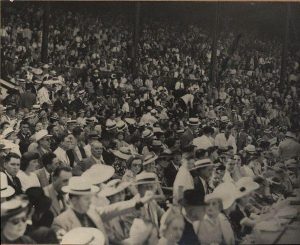 A 1938 photo of 21,025 baseball fans in Heinemann park to see the Pelicans beat the Little Rock Travelers 10 to 4 in New Orleans, La. (via the Louisiana Digital Library).
At Friday’s men’s baseball game against Sacramento State, students wore leggings, jerseys and LSU T-shirts. The look was noticeably relaxed, with some students coming straight from class or stopping by in between plans. The same campus that treats an October in the fall like a runway, now turned casual.
According to Danielle Thomas, professor of sociology at LSU, once a behavior becomes a campus norm, students often follow it simply because everyone else does.
“Once a norm of behavior like dressing a particular way is established, then everyone faces a certain amount of pressure to conform,” Thomas said.
Thomas added that football events themselves create a larger social environment than other sports because tailgating culture creates an increased pressure of being seen and observed.
Greek life on campus can also play a role in maintaining the fashion standard. With fraternity tailgates being a prevalent event in fall game day traditions, students can be unconsciously influenced by them. Thomas said that because Greek organizations are often seen as the highest status group on campus, they become a reference group for others to look up to, including how they dress.
In Louisiana’s history, dressing up for sporting events was common regardless of the sport. A 1938 photograph from a New Orleans Pelicans minor league baseball game shows audience members in suits, ties and hats. The same year, a photograph of fans outside Tiger Stadium shows them in trench coats and suits. By today’s standards, people dress more casually in everyday life. Still, the tradition of dressing up has remained attached to football.
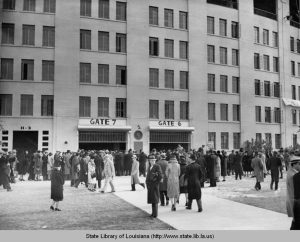 1939 photo of crowds outside football stadium entrance at Louisiana State University in Baton Rouge, La. (via Louisiana Digital Library).
Also in LSU’s history, a tradition was created that highlighted how unusual casual dress was at football games. Known as the “pajama game,” freshman men were expected to attend a fall game in pajamas, proving that when the expectations for dress change, people will comply. The last year the pajama game tradition took place was 1968, briefly returning in 2003.
Timing may also play a role. Football games are normally held on Saturdays, giving attendees more time to plan outfits and prepare for a day-long event. In contrast, baseball and basketball games often happen on weekday evenings after a long work or school day.
Another factor is the frequency of games, since football is relatively infrequent compared to other sports. According to the LSU sports calendar, the LSU Tigers football team played 13 games last season, whereas the baseball team is set to play 56 games and men’s basketball plays at least 31 regular season games. Planning outfits for 13 games is far easier than planning them for 56.
Crowd size may also contribute to the differences we see. Tiger Stadium has an official capacity of 102,32, Alex Box Stadium seats 10,326 and the Pete Maravich Assembly Center holds 13,215. Larger crowds increase the sense of being seen, reinforcing the social pressures to look presentable.
All these conditions combined are the reason spring sports don’t get the same treatment as football from a fashion standpoint. Weekday games, smaller crowds, limited tailgating and a lack of it being a campus-wide spectacle causes the outfit planning to be an afterthought.