
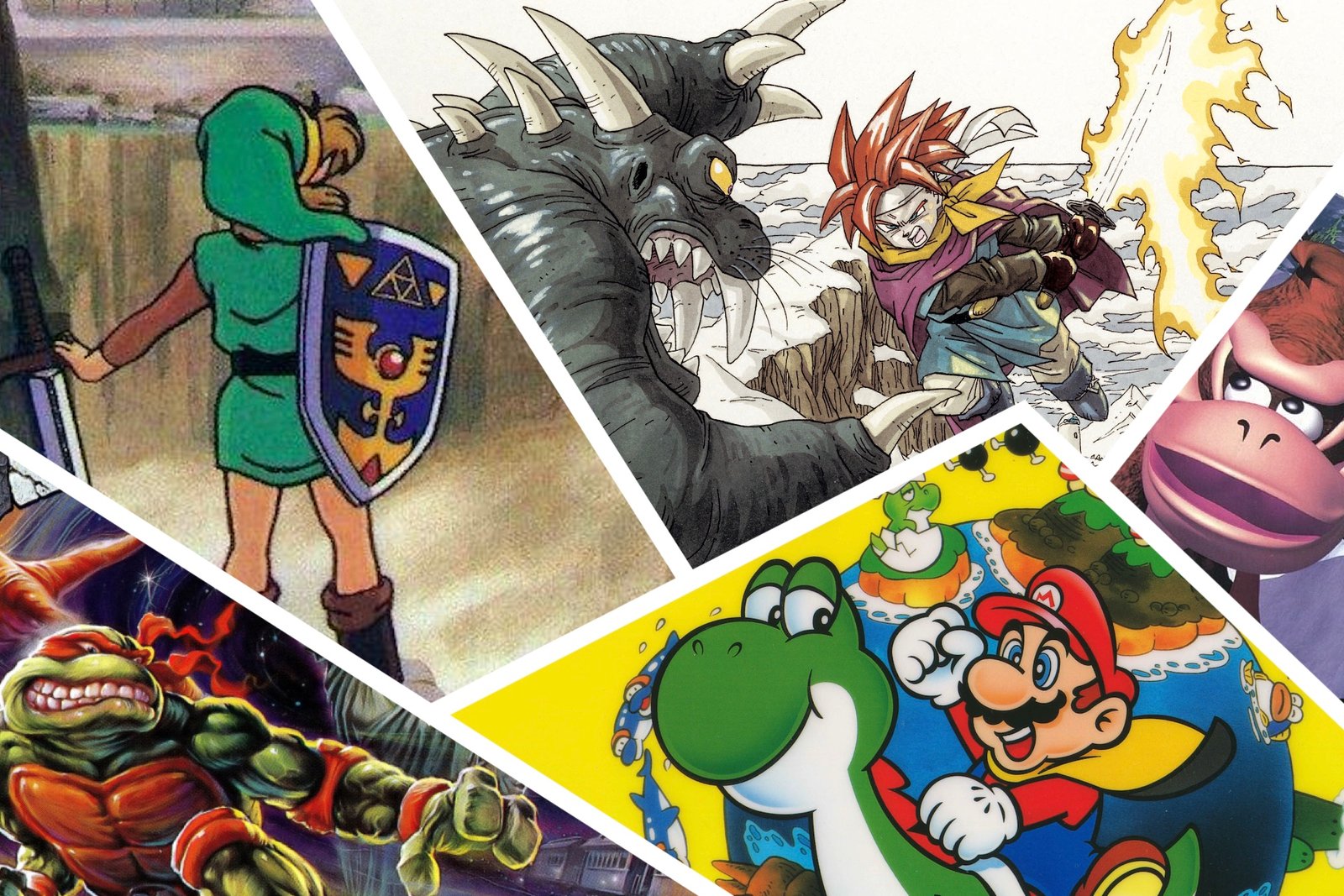
The gaming industry is a cyclical beast with many peaks and valleys. For some, the 1980s are where it’s at, while others will attest that the 2010s marked a renaissance period for the medium.
Amongst millennials, however, there is one generation that still reigns supreme over all others: the 16-bit era.
The wars waged between Nintendo and Sega remain legendary, and with a viable competitor to their industry stranglehold, Ninty really had to throw everything at the wall to see what stuck.
Rightly so, the Super Nintendo Entertainment System is lauded as a breeding ground for creativity and potential, and today, we’re gonna narrow down the 10 most seminal games in its catalogue.
Because now we’re playing with power… Super Power!!
10. Teenage Mutant Ninja Turtles IV: Turtles in Time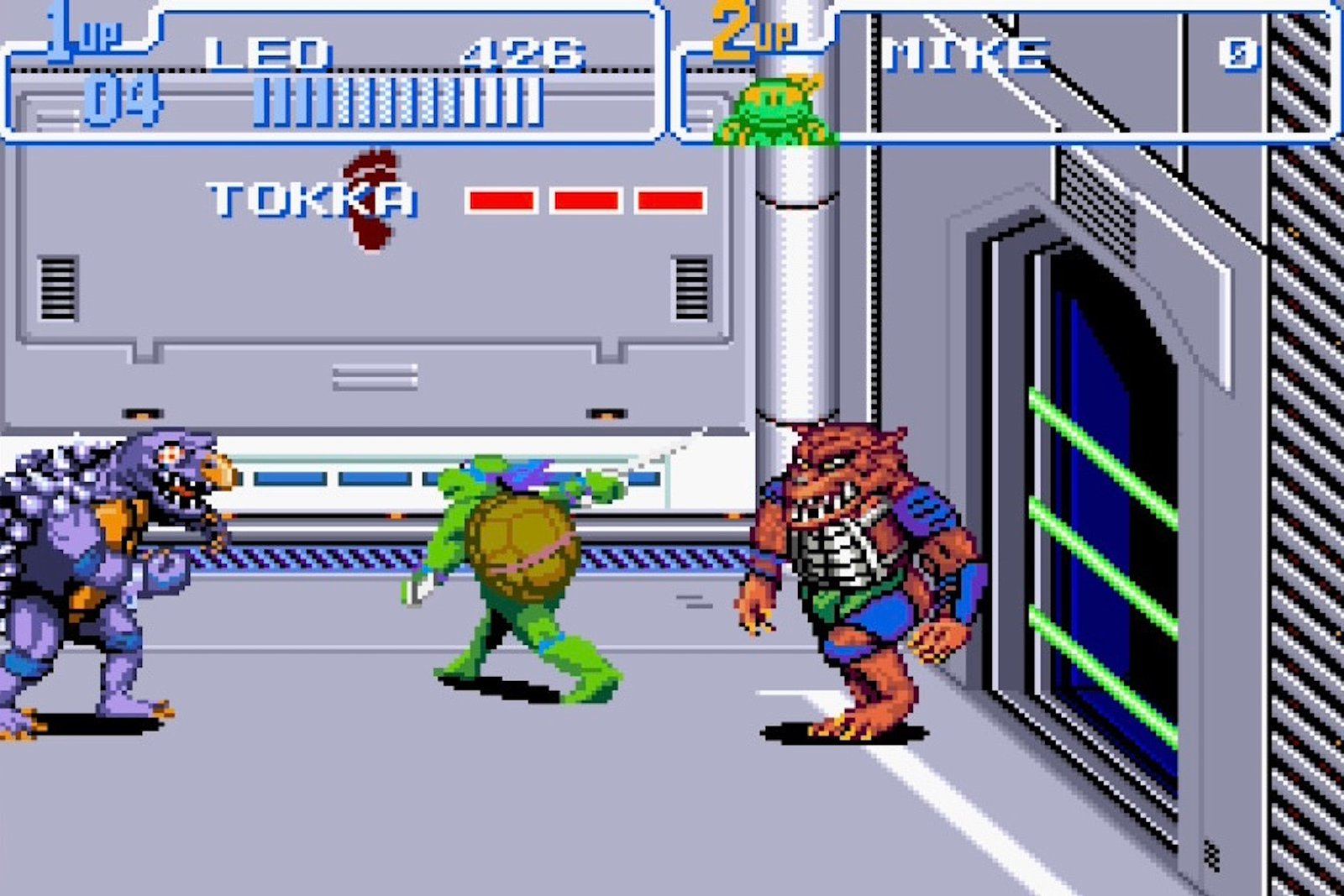
Beat-em-ups were all the rage back in the 90s, and Konami had the genre down to an art. While porting the arcade hit Turtles in Time to home hardware had to come with some sacrifices, there were a number of smart improvements to balance things out.
The SNES edition may only have two Turtles at a time, but in return, it boasts a new stage in the Technodrome, additional or upgraded bosses, and a technique that allows you to fling enemies toward the screen. It looks especially cool, even if it was a pain to figure out as a kid.
Obviously, the Turtles don’t move as fluidly on the SNES as they did in the arcade, and yet this has its own benefits, as landed hits feel crisper. All of these features make this the definitive version of the TMNT’s finest foray in gaming.
9. Super Castlevania IV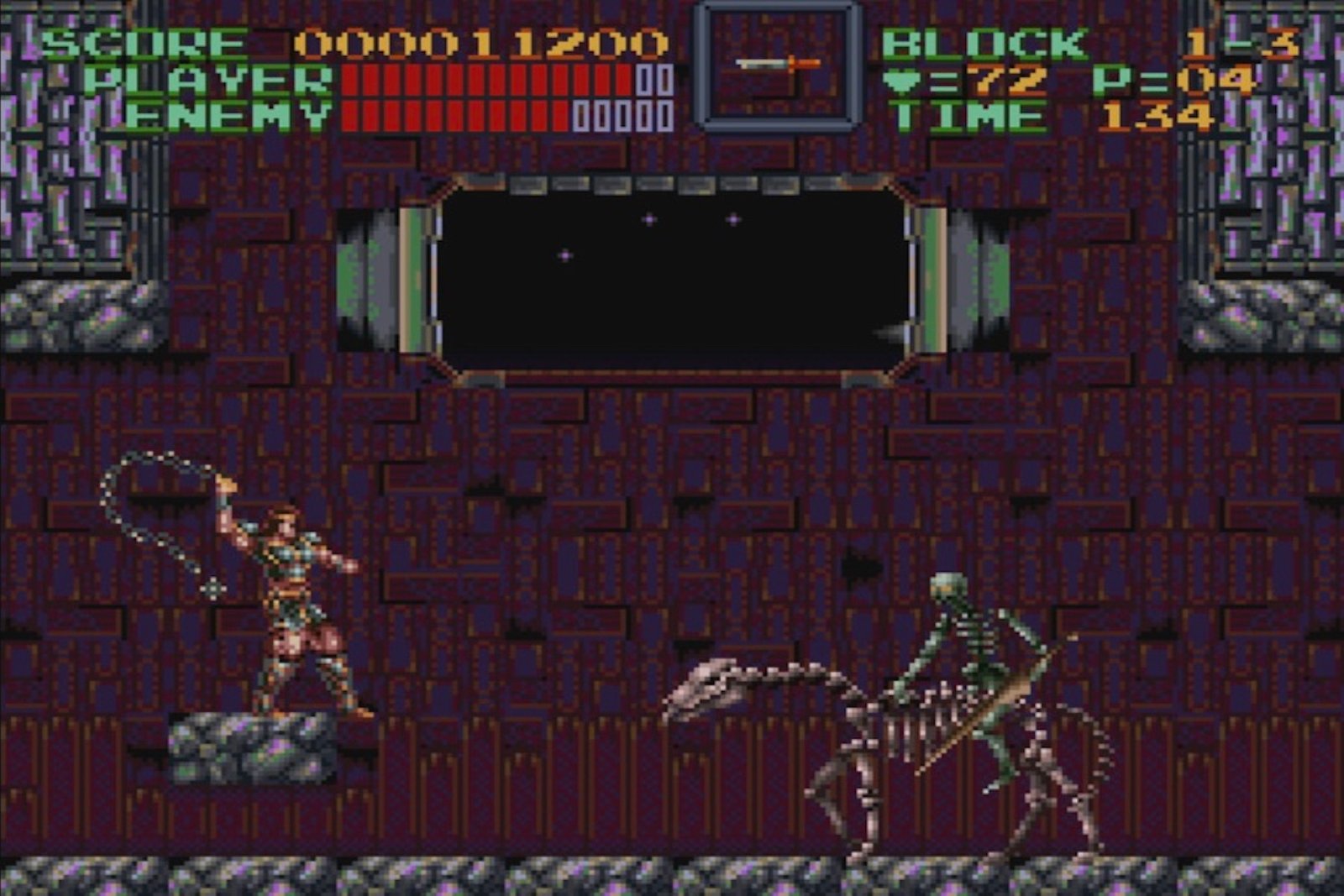
Looking back at the technical marvel that was Super Castlevania IV, it’s almost surprising that it released as early in the SNES’ life cycle as it did (dropping smack bang on Halloween ’91 in Japan).
Simon Belmont’s mission to take down Dracula once again seems steeper than ever, but he’s more than up to the task with a bevy of new tricks. Not only can he attack with his whip in eight directions, he can even swing it around in a sultry manner like a burlesque dancer with a penchant for BDSM.
Visually, this game utilized the SNES’ Mode 7 graphics to their utmost, with a particular highlight being the rotating room that may or may not have made me feel sick as a young’un. Regardless, it went a long way to showcase exactly why the console was a must-have piece of kit.
8. Super Mario RPG: Legend of the Seven Stars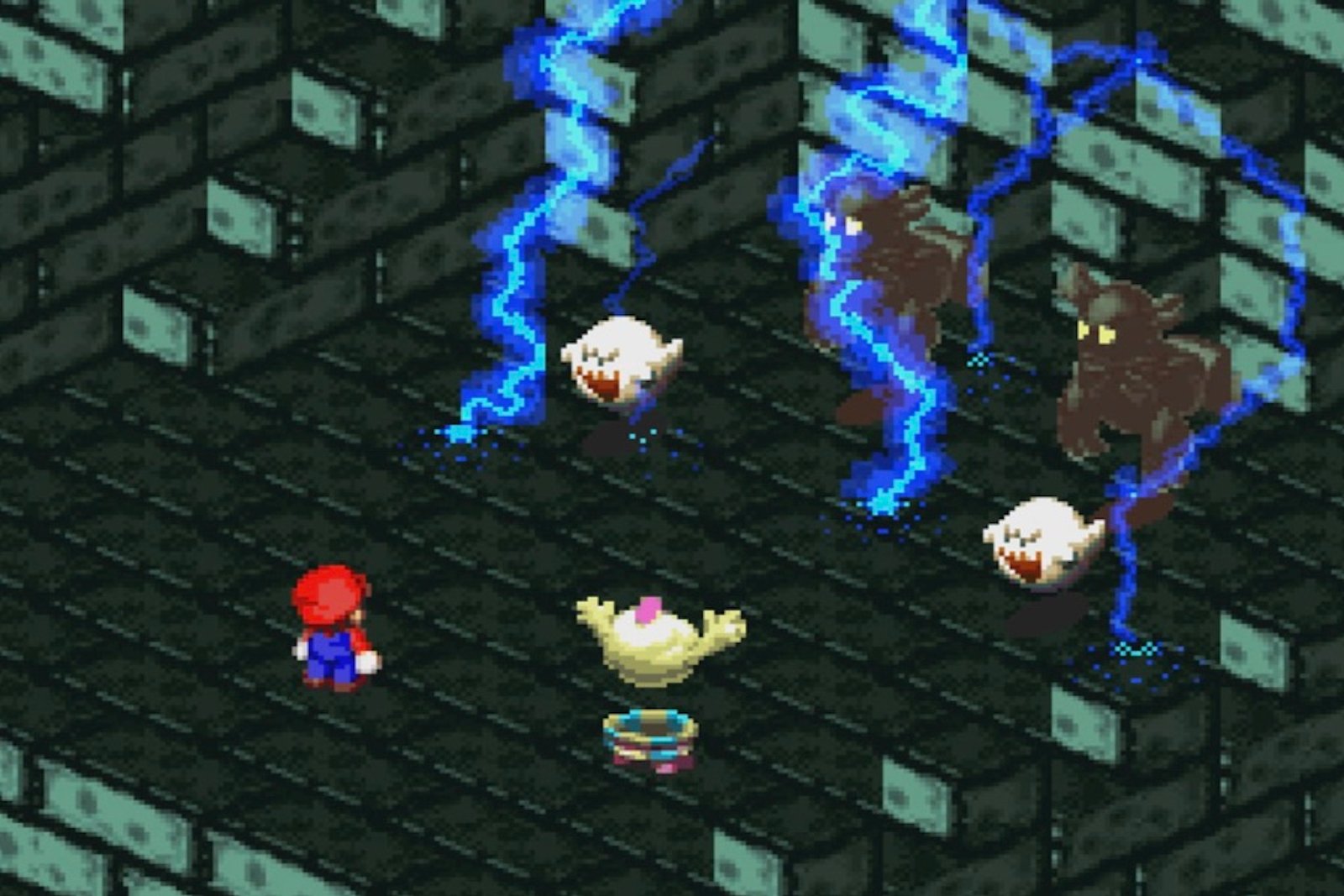
By the time 1996 rolled around, traditional 2D sprites were rapidly becoming antiquated. Landmark titles such as Star Fox and Donkey Kong Country had opened the door to polygons and rendered graphics, and the Sony PlayStation was ushering in a new era of cinematic gaming experiences.
Although the N64 was just on the horizon, Nintendo saw fit to release some juggernaut titles on the popular SNES — and for Mario, that meant going turn-based.
Super Mario RPG is a lively and unique RPG that combines traditional battle mechanics with isometric platforming. To freshen up combat, timed button presses allow players to increase their damage output and block incoming attacks.
In subsequent generations, the torch was passed on to both the Paper Mario and Mario & Luigi spinoffs. While this led to such classics as The Thousand-Year Door and Superstar Saga, you can’t help but miss Square’s quirky take on roleplaying plumbers.
7. Super Mario World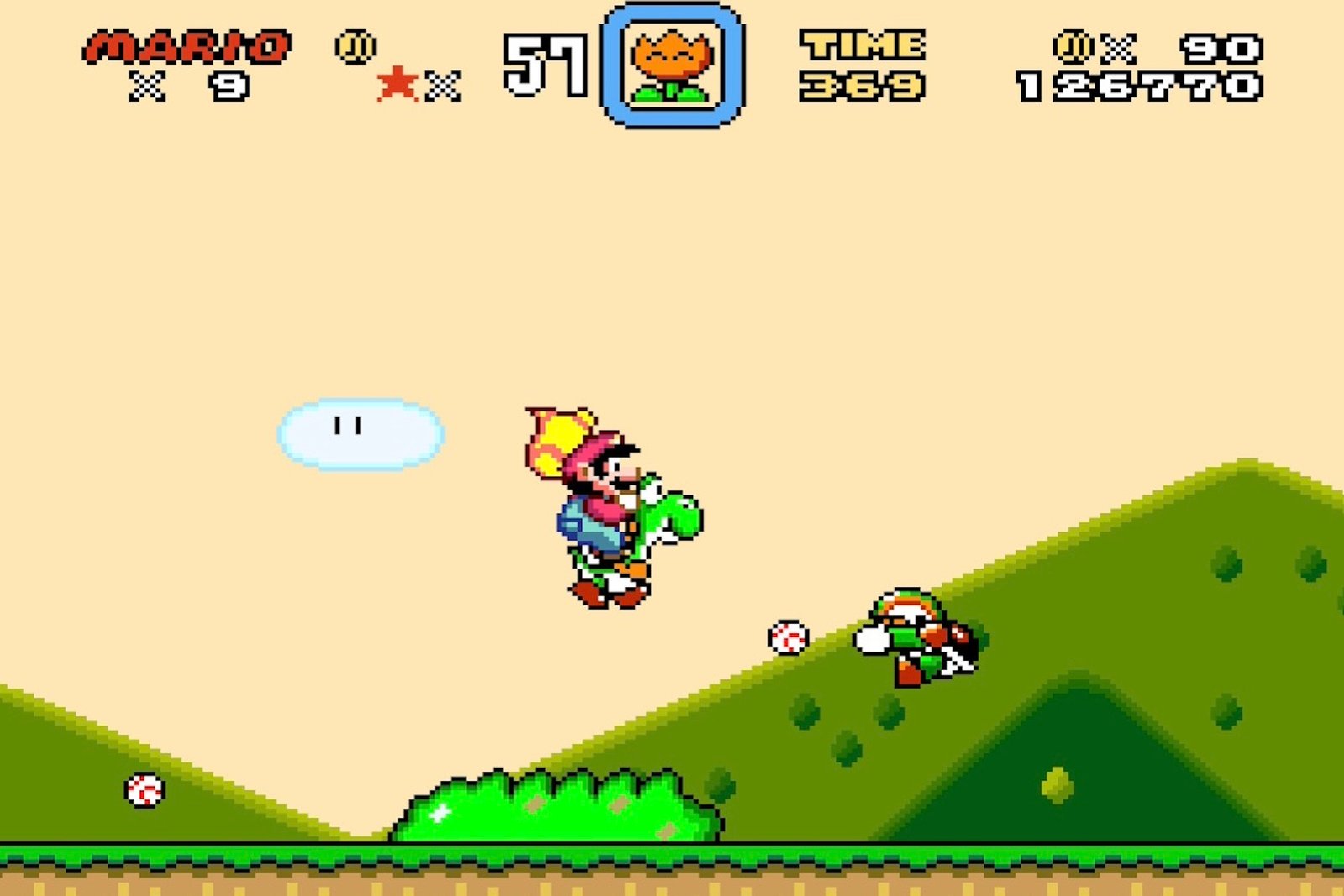
As they so often do, Nintendo proved exactly how special their new console was right out of the gates with a quintessential launch title.
Super Mario Bros. 3 revolutionized the 2D platformer when it hit the Famicom in 1988, and yet somehow Nintendo were able to expand on its legacy exponentially just two years later.
Super Mario World is a playground filled with treasures. The all-powerful cape feather lets Mario fly further than before, and although this could be used to cheese through difficult levels, it’s critical for exploring every nook and cranny.
This was also the game that introduced us to the lovable lizard Yoshi and the Special Zone: eight hardcore stages with heckin’ 90s names like Mondo and Gnarly.
6. Donkey Kong Country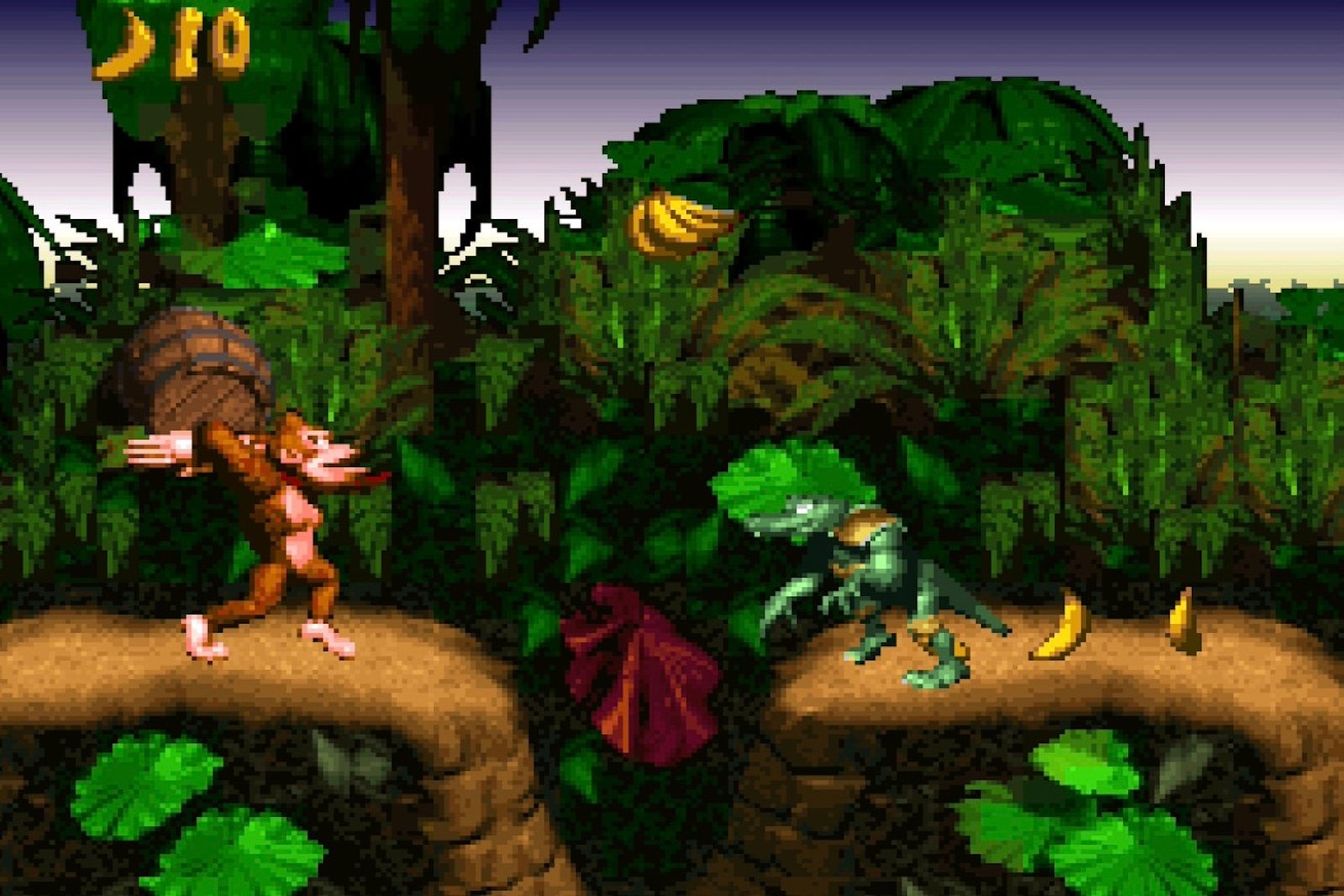
Dating back to the NES, Rare had long been an essential weapon in Nintendo’s arsenal, producing world-class titles that rivalled their own first-party efforts.
Even with their well-established pedigree, 1994 was Rare’s coming out party. Donkey Kong Country was unlike anything we had seen before on home hardware, with 3D rendered sprites that were so impressive, people were sceptical at first that this was even a SNES game.
It’s not all flash and no substance, however, as the skill level required to traverse its 40 stages is considerable. DK and his buddy Diddy had to hop, roll, fling projectiles and fire themselves out of barrels with pinpoint timing if they wanted to regain their precious bananas.
It’s almost hard to believe that Donkey Kong was something of a forgotten entity in Nintendo’s echelons prior to the release of DKC; an injustice he would never suffer again (the bongos era wasn’t that bad, guys).
5. Final Fantasy III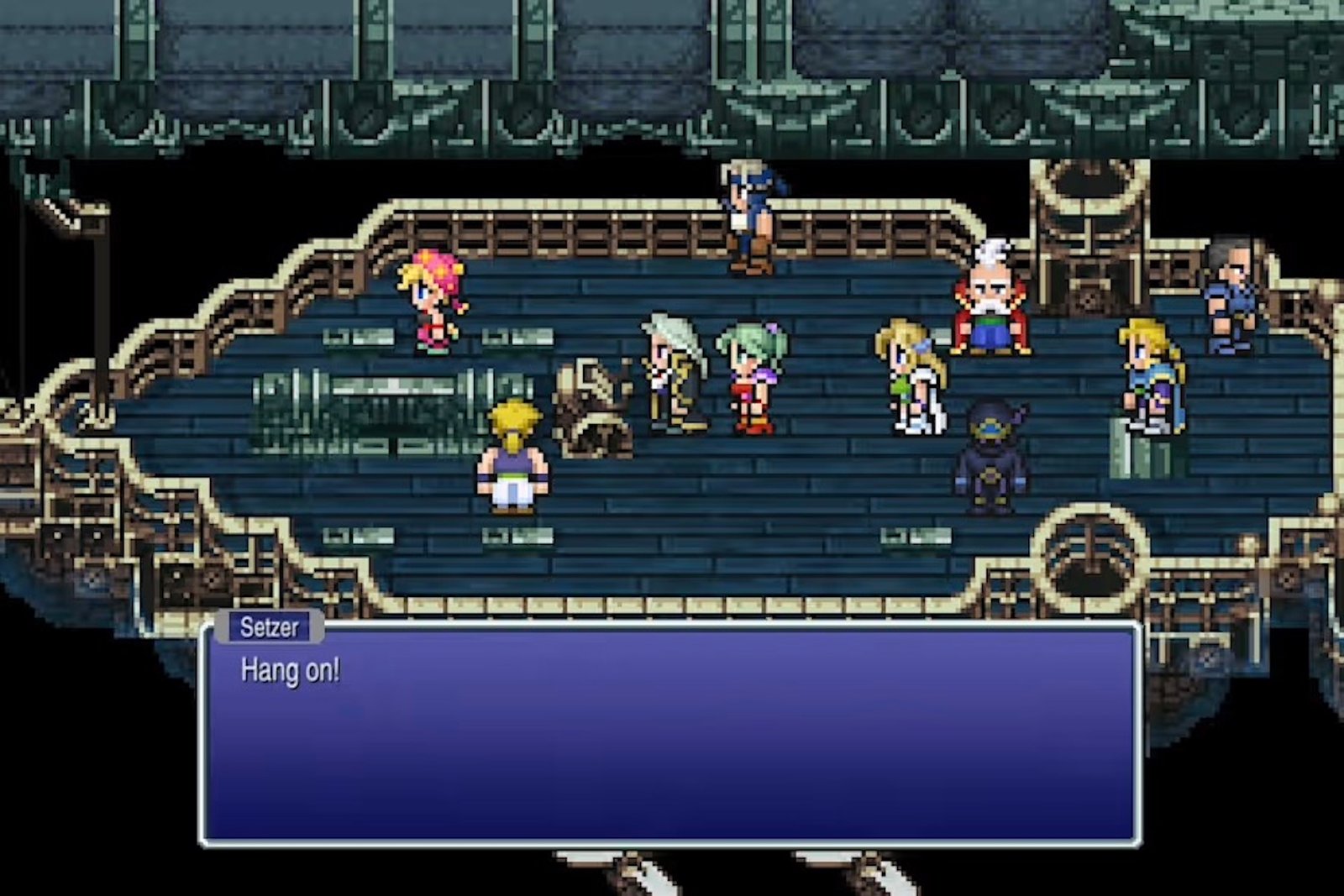
Final Fantasy pundits will likely argue till the end of time as to which entry was really the greatest. Whether it’s FFVII on the PS1, FFX on the PS2, or Crystal Chronicles for a spicier take, this series has gifted us with some truly special games.
Toward the end of Square’s close partnership with Nintendo, they brought forth one last FF triumph in the form of Final Fantasy III (as it was called in the west; it’s retroactively known as Final Fantasy VI nowadays).
This sprawling quest against military dictatorship provided us with such indelible moments as the final showdown against a godlike supervillain Kefka, or — more importantly — a dude suplexing a goddamn train. Let’s see that emo scrub Cloud top that one!
4. Chrono Trigger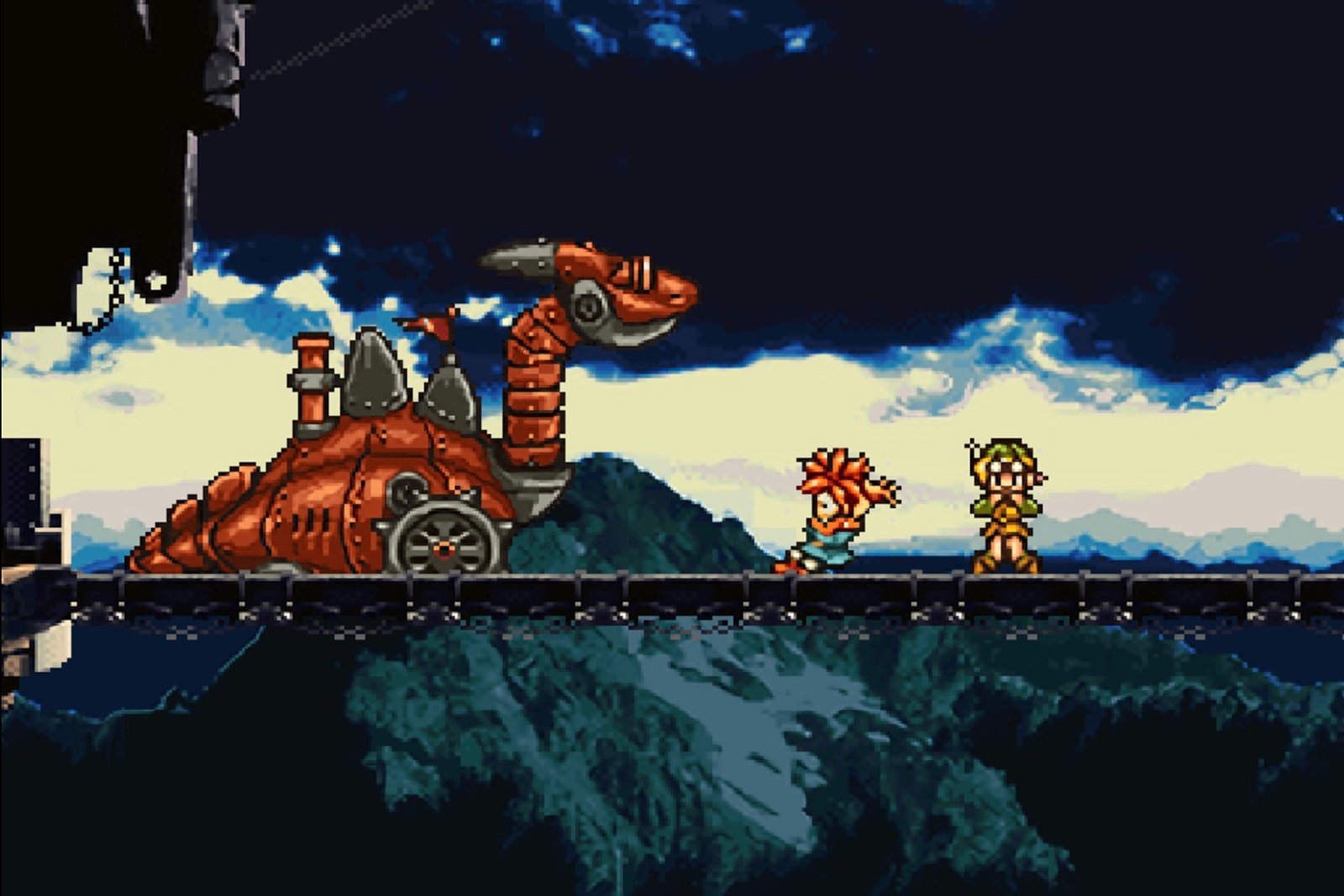
You may have noticed that Square has a sizable presence in this list. It really goes to show how big a loss they were when they jumped ship to Sony in the next console generation, because they were capable of games like this: the magnum opus of JRPGs.
Chrono Trigger is absolutely gargantuan in its scope. Its time travelling narrative allows players to revisit the same area at different points in history, and the choices made have a major effect on how things play out. With a dozen unique endings to discover, the replayability factor is simply unprecedented.
Plus, if you’re particularly skilled, you can just jump straight to the final boss midway through the game and save the world earlier than you’re supposed to. It’s unlikely you’ll be able to survive Lavos’ overwhelming power, but it’s possible!
3. Super Metroid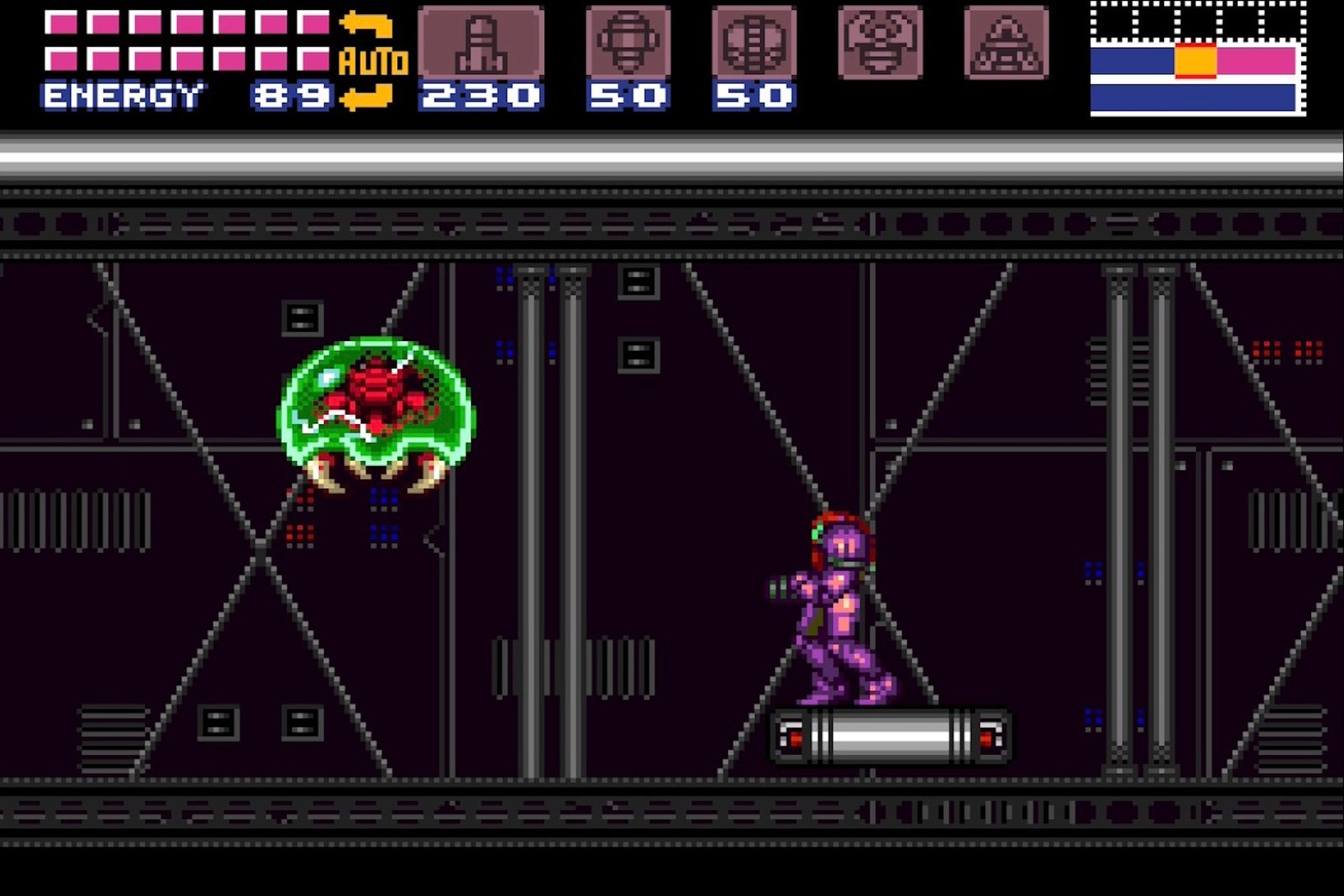
The 16-bit generation marked the first time competitors tried to position Nintendo as the kiddie option, eschewing blood and guts for milquetoast trifles that won’t upset the little children.
And yet, we have first-party efforts like Super Metroid, one of the most gripping and atmospheric titles of its era. Samus Aran’s ongoing battle against the Space Pirates ramped up the wow factor right from the get-go, with a skirmish against Ridley within the first few minutes of gameplay.
This game is huge in the literal sense, and ambitiously linked games in the franchise together with clever plot beats. The baby Metroid discovered in Metroid II plays a major factor, and even something as seemingly insignificant as freeing the trapped animals before the planet combusts is made canonical in Metroid Fusion.
The technical limitations of the 16-bit era meant that we weren’t quite ready for the robust storytelling that has since become the industry standard. But you can’t tell me that the way Super Metroid made us feel wasn’t as immersive as anything we’ve ever seen in gaming. This is what Metroidvania is all about.
2. The Legend of Zelda: A Link to the Past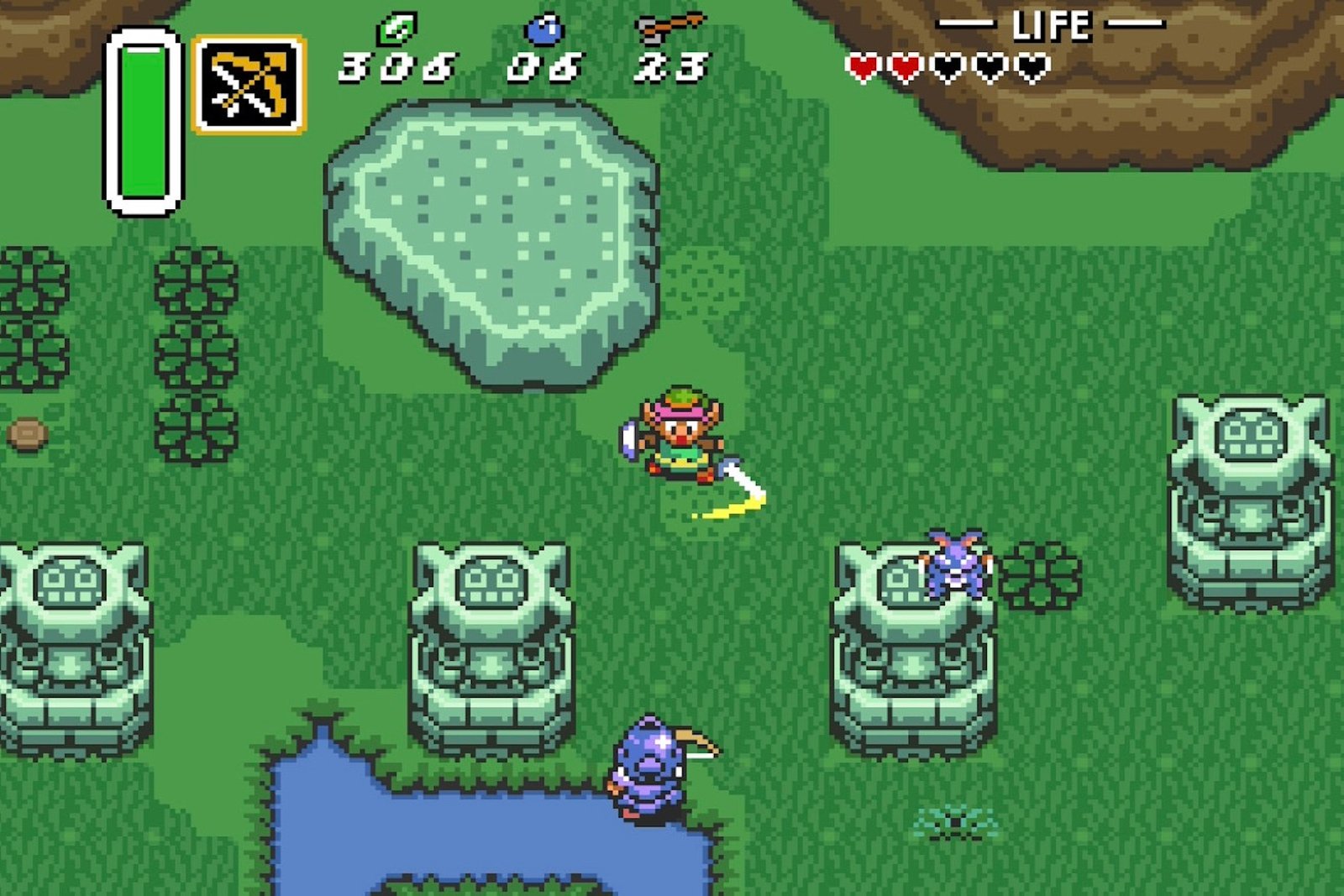
The golden standard for 2D Zelda entries, as well as one of the greatest games of all time. You absolutely cannot overlook A Link to the Past when you are talking about the SNES.
Just as whimsical as its predecessors while thankfully being a lot less cryptic, this was the game where Hyrule truly came to life. Environments were lush and varied, with Kakariko Village feeling like a reprieve from the rigors of the world (aside from those stupid narks that kept ratting you in to the guards).
As for the dungeons, if you’ll excuse the pun, they were downright legendary. There was a certain air of menace as you trudged through the darkened catacombs, and the bosses waiting for you at the end were a real spectacle that tested your newfound abilities.
If Ocarina of Time is the 1A of Zelda games, this would surely qualify as 1B.
1. Donkey Kong Country: Diddy’s Kong Quest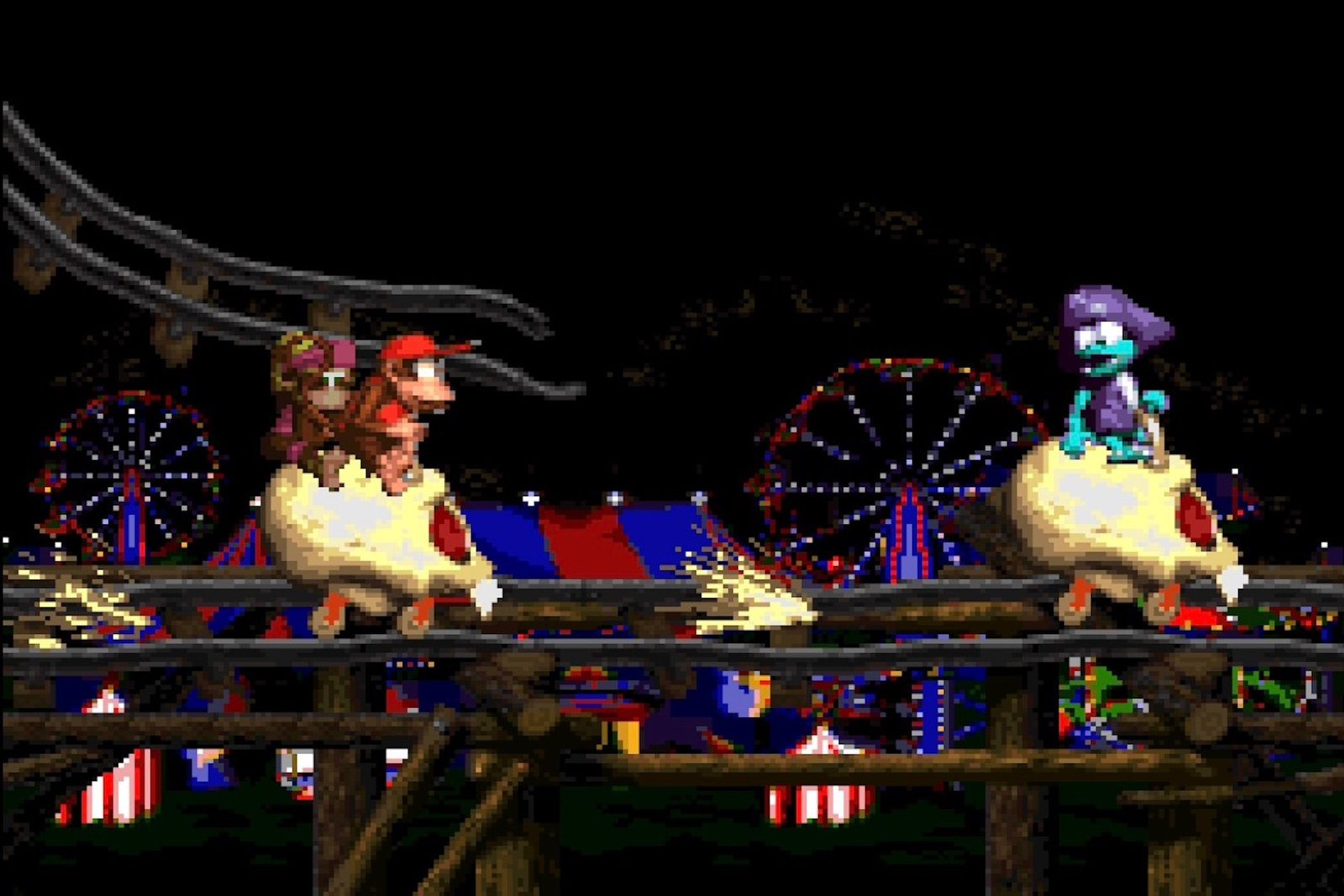
As unusual as it might seem to include two Donkey Kong Country games in the top 10, the jump between the first entry and its sequel is absolutely mammoth.
Now in the starring role, Diddy Kong and his versatile girlfriend Dixie were on enemy territory, scouring Crocodile Isle in search of the kidnapped DK. And my goodness, what a range of biomes the Kremling home has in store for us: bubbling pits of lava, derelict amusement parks, foreboding fortresses, haunted woodlands… no two worlds in DKC2 ever felt the same.
The introduction of DK Coins meant that interacting with the environment in creative ways would yield great rewards. If you wanted to actually complete this game 100%, you had a big challenge ahead of you. To some (and I include myself in that group), this is the best 2D platformer ever made — a tour de force of fun and difficulty that has stood the test of time over three decades later.
Honorable mentions: Super Mario Kart, Super Mario All-Stars, EarthBound, Mega Man X, Super Mario World 2: Yoshi’s Island, Super Street Fighter II Turbo: Hyper Fighting, Star Fox, Kirby Super Star, Bubsy in Claws Encounters of the Furred Kind