
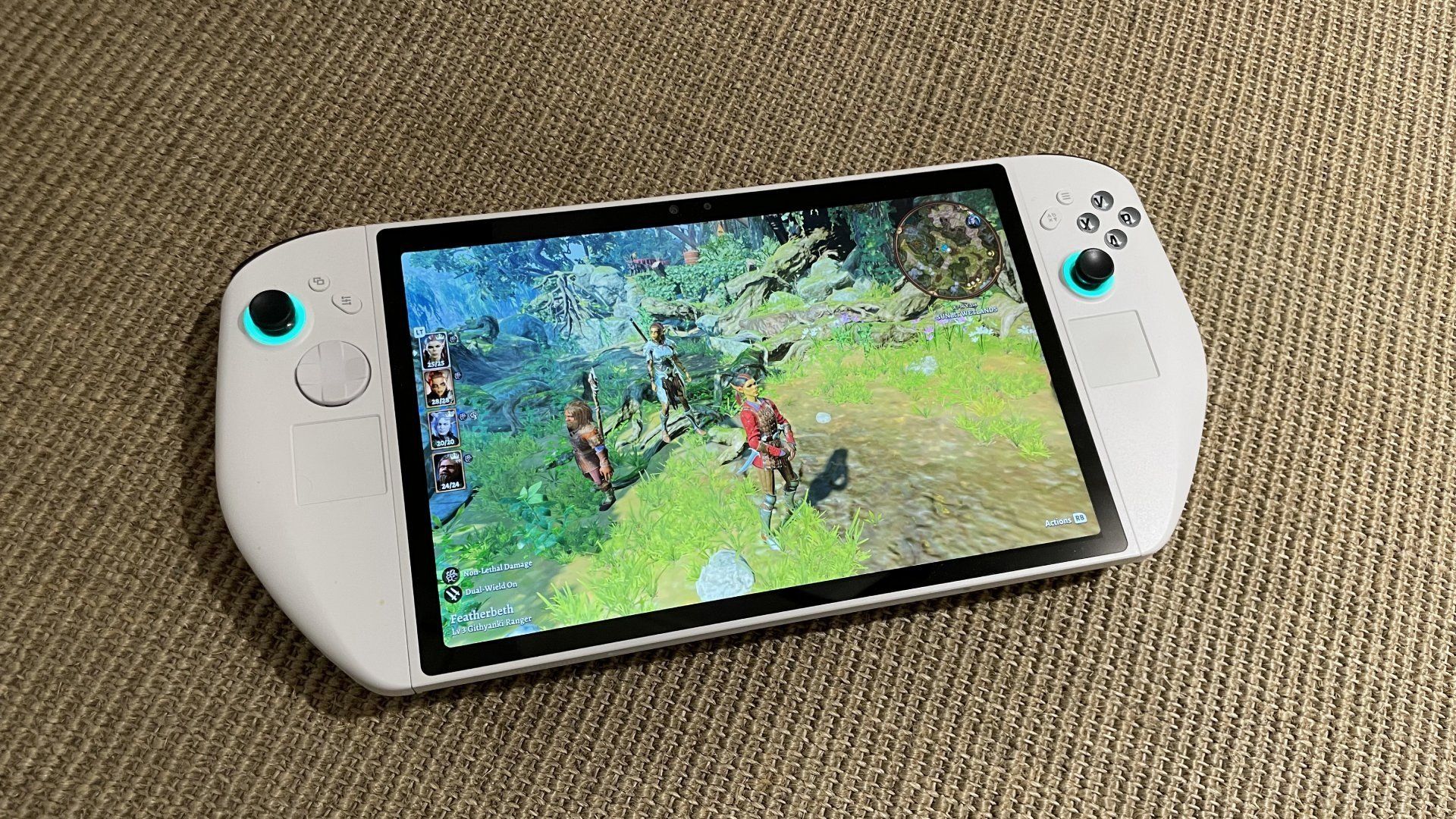
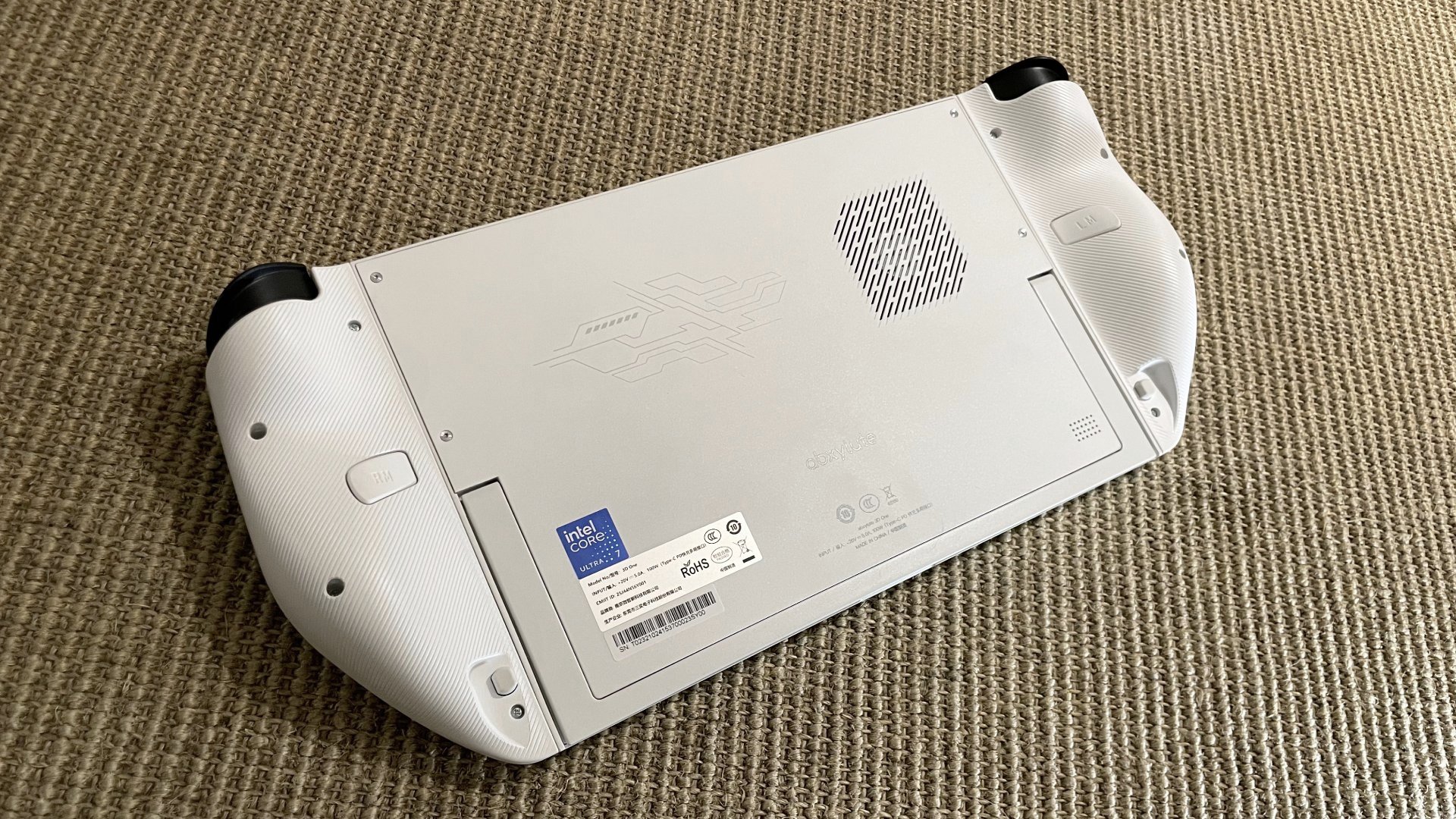
It’s busy and crowded out there in the world of handheld gaming PCs. If you want to stand out, what you need is some kind of unique feature. Hummm. How about the world’s first glasses-free 3D handheld PC? We give you the Abxylute 3D One.
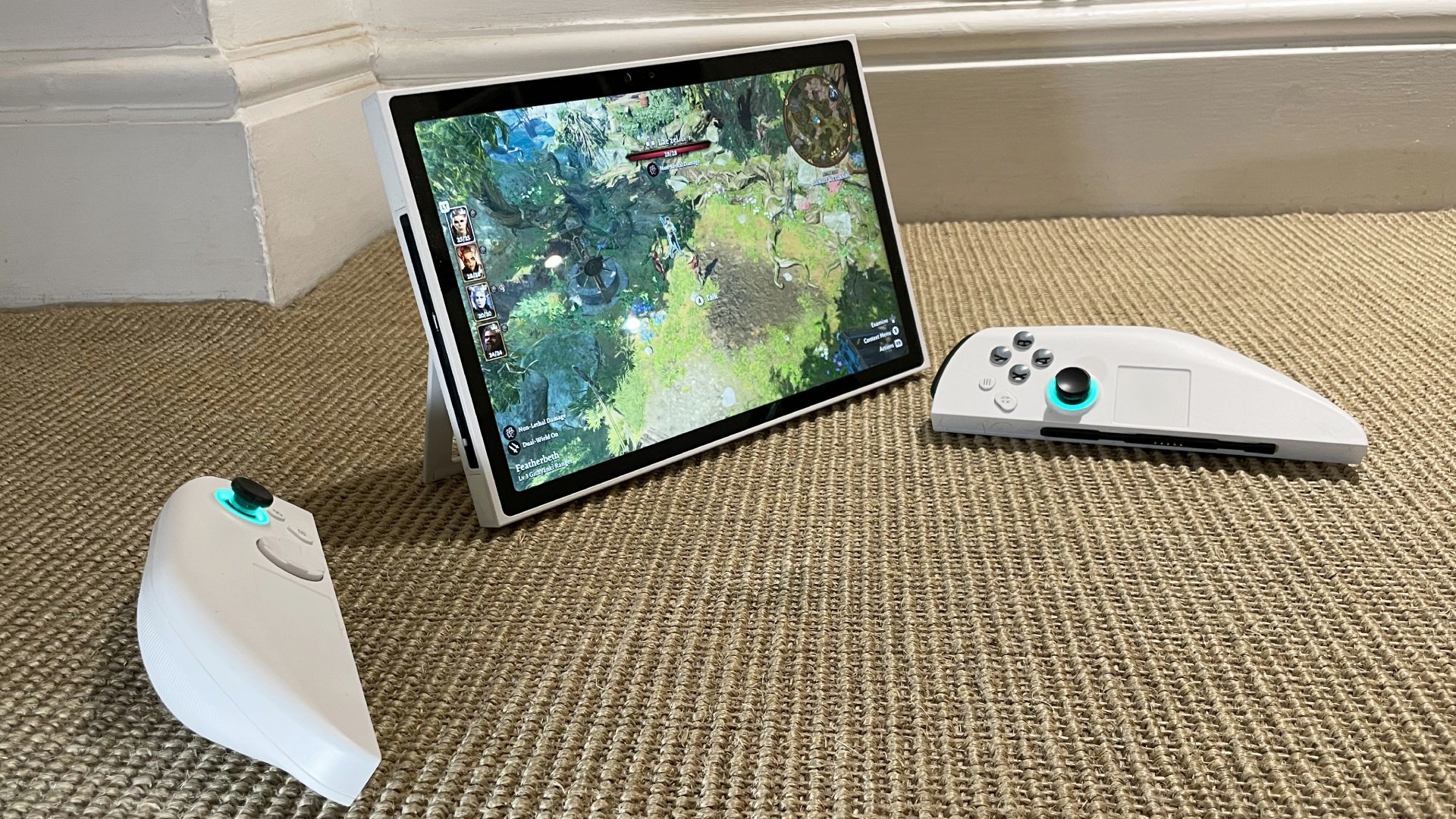
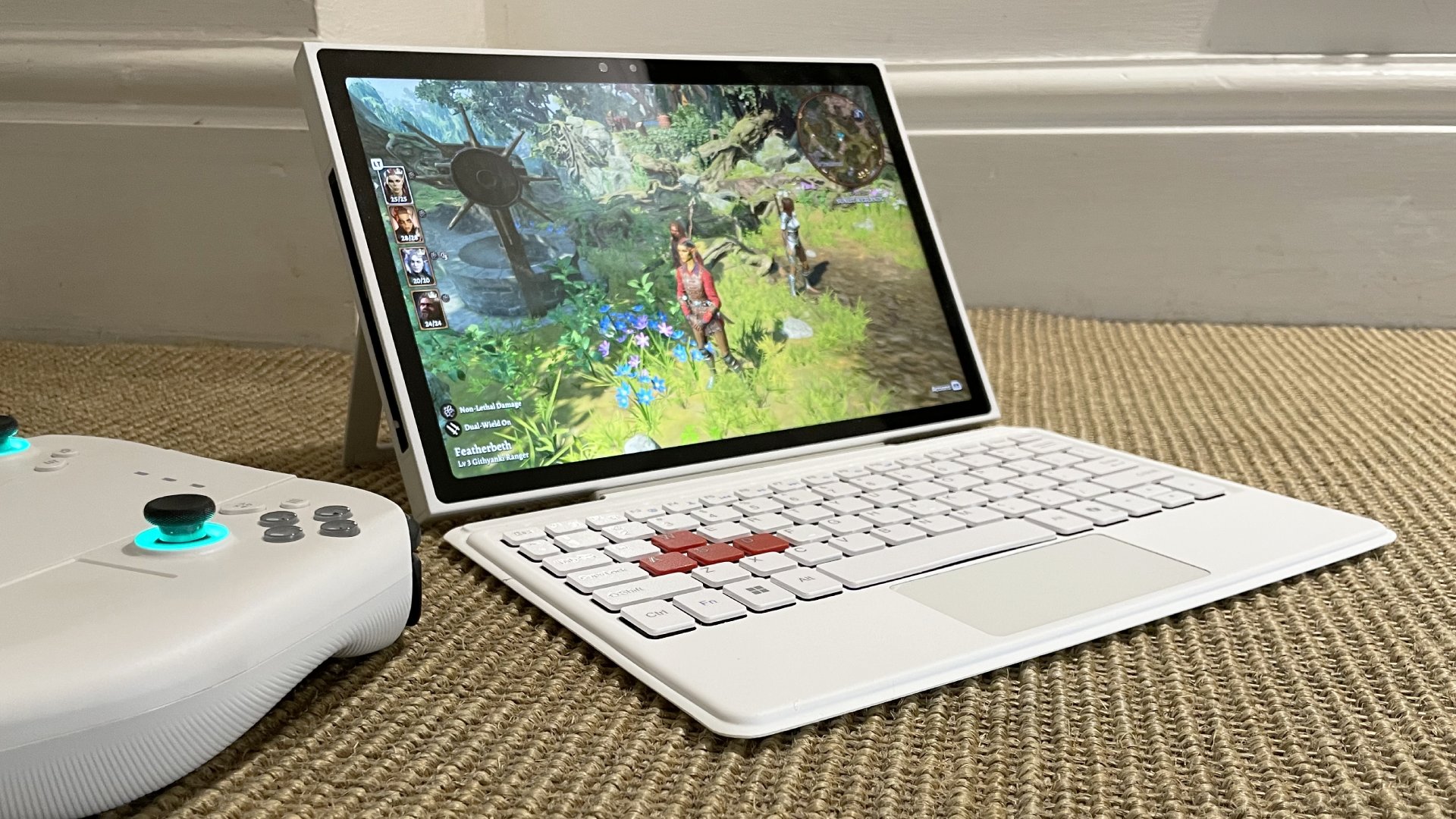
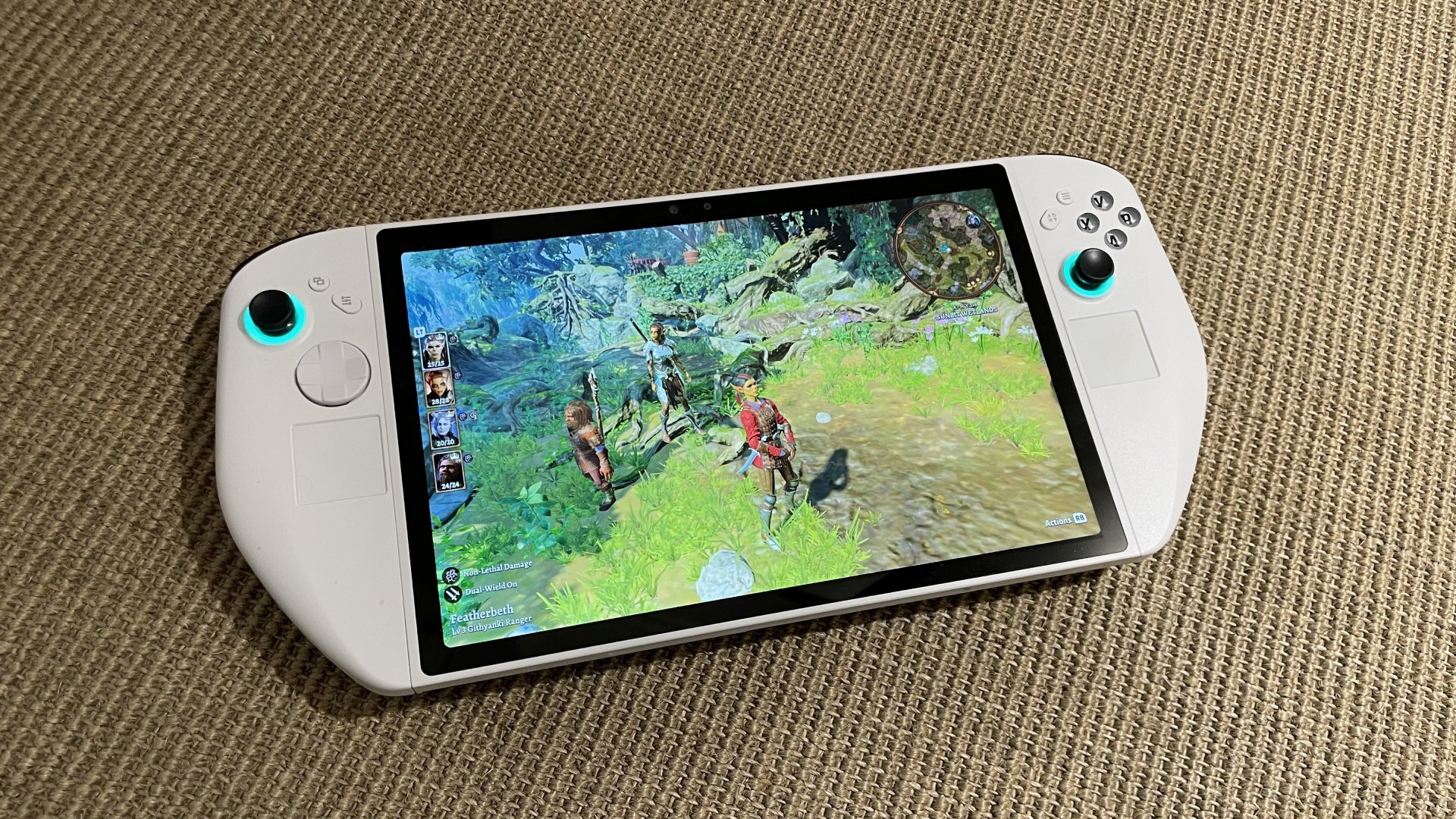
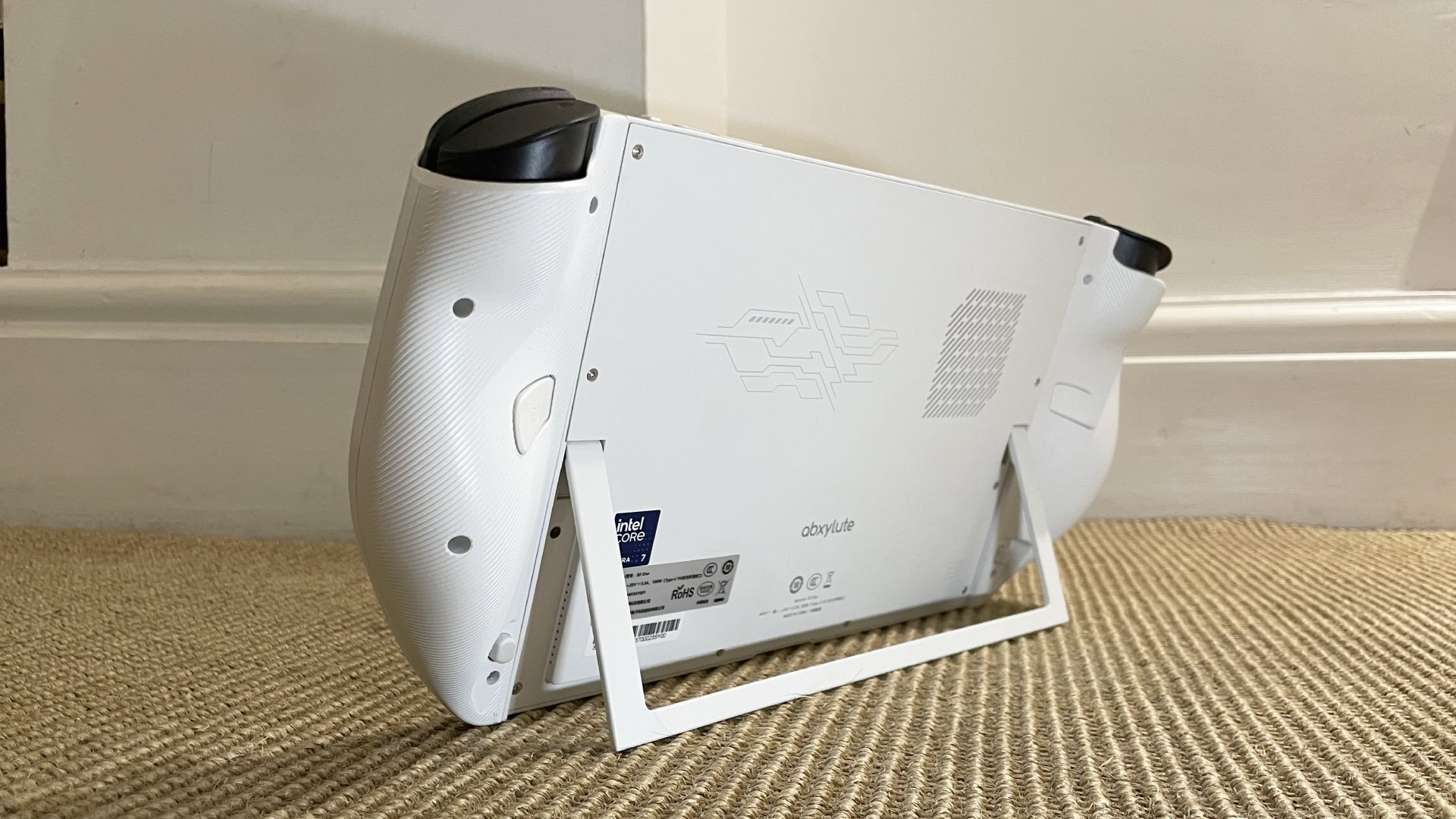
Actually, this huge handheld has quite a bit more going for it than just the glasses-free 3D stuff. For this class of device, the 10.95-inch IPS display is pretty monstrous. Then there’s the modular construction with detachable controllers, kick-stand and a keyboard. Oh and it’s all powered by an Intel Lunar Lake chip, in this case the Intel Core Ultra 7 258V complimented by 32 GB of memory.
(Image credit: Future)Swipe to scroll horizontallyHeader Cell – Column 0
Abxylute 3D One
Processor
Intel Core Ultra 7 288V
CPU architecture
Intel Lunar Lake
Core / threads
8 / 8
CPU boost clock
4.8 GHz
GPU architecture
Intel Xe2
Shader count
1024
Memory
32 GB LPDDR5x-8000 (shared)
Screen
10.95-inch IPS LCD display
Resolution / Refresh rate
2,560 x 1,600 / 120 Hz
Peak brightness
480 nits
Storage
1 TB PCIe 4.0 NVMe M.2 2280 SSD
Connectivity
1x Thunderbolt 4 USB Type-C
1x USB Type-C with PD fast charging
1x USB Type-A 3.2 Gen1
1x UHS-II microSD card reader
1x 3.5 mm combo jack
Dimensions
365 x 171 x 47 mm
Battery
50 Whr
Weight
1.1 kg
Price
$1,599 / £1,194
Row 16 – Cell 0 Row 16 – Cell 1
Buy if…
✅ You’re intrigued by glasses-free 3D: The Abxylute 3D One glasses-free 3D tech definitely works and it’s quite unlike any other handheld PC.
Don’t buy if…
❌ You want maximum bang for your buck: For the same price as the Abxylute 3D One, you can get a much, much more powerful gaming laptop.
Support for this kind of glasses-free technology isn’t a given for any particular game. Moreover, there are also hardware limitations to deal with. In terms of game support, at the time of writing Abxylute lists 46 games with “native” support.
You can peruse the full list on Abxylute’s website. Some of the better known titles include Baldur’s Gate 3, Death Stranding, Starfield, Hogwart’s Legacy and a couple of Assassin’s Creed installments. But 46 games is 46 games. It’s not, ultimately, very many.
There’s also an “AI” 3D mode that doesn’t require explicit and specific game support and can be applied to any game in theory. In practice, while it does work on a basic level, it’s so hit and miss in terms of correctly mapping depth to rendered objects (including sometimes “wrapping” menu elements around 3D objects) that it isn’t really usable. Broadly, it’s probably safer to assume that if a given game isn’t on the supported list, the glasses-free 3D feature may not work well enough to be usable.
(Image credit: Future)
Actually, it’s an open question as to whether you’d really want to use the glasses-free 3D tech at all. Part of the problem is performance. Abxylute has decided to go with a 2,560 by 1,600 resolution screen for the 3D One. With most handhelds, you’d have the option of running at lower, non-native resolutions where performance is marginal. But not on the Abxylute 3D One. Not if you want to use the 3D tech, anyway.
According to Abxylute, using a non-native screen resolution will, “disrupt the 3D interlacing and cause depth distortion.” A simpler version is that it really doesn’t work at all at non-native resolutions.
If that sounds like a problem on a handheld running an iGPU and such a high-resolution screen, actually it’s even worse than you think. “The 3D One uses integrated graphics,” Abxylute explains, “and 3D mode renders two 2.5K frames simultaneously, which is demanding. We recommend lowering graphics quality if needed, but do not reduce resolution. Some games may fail to display correctly in 3D if the resolution is below 2.5K.”
(Image credit: Future)
The performance implications of this are all too obvious. 2,560 by 1,600 is one heck of an ask for a chip with integrated graphics. Another niggle involves GPU drivers. Over to Abxylute again: “Do not update the GPU driver. The current version has been carefully tuned for the best 3D performance. A newer driver might improve 2D FPS very slightly, but could cause visual issues or instability in 3D mode.”
Great. So, to enable the glasses-free 3D experience, you’re running at 2x 1600p with old drivers on an Intel iGPU.
Let’s take Baldur’s Gate 3 as an example. It’s actually kinda playable at 1600p High settings in regular 2D mode. But turn on the 3D effect and it’s awfully choppy. That’s all running purely natively. Turn on XeSS Quality upscaling and the 2D experience is pretty smooth. But the 3D frame rate actually gets worse.
Knock things down to Low settings and native rendering and you’re looking at mid 30s frame rates in 2D mode and a reported mid 20s with 3D enabled, but lots of spikes in the frame rate graph that make it feel even worse than that. Turn on Quality upscaling and that improves to frame rates in the high 40s or low 50s in 2D mode and the mid 30s in 3D mode. But, again, it looks and feels much worse than mid 30s in 3D mode. It’s still not really playable.
A 1080p screen certainly seems like it would have given the glasses-free 3D experience a better shot at being truly playable.
Long story short, the choice to go with a 2,560 by 1,600 screen given the need to run at native resolution to enable the lenticular 3D feature really doesn’t make much sense. Maybe that was the only panel available, in which case you’d have to question the whole endeavour somewhat. But a 1080p screen certainly seems like it would have given the glasses-free 3D experience a better shot at being truly playable.
Whatever, putting the question of pure performance to one side for a moment, there’s also the actual visual experience, how good does the 3D effect look? Exactly what you make of it will be somewhat subjective, but here’s my take.
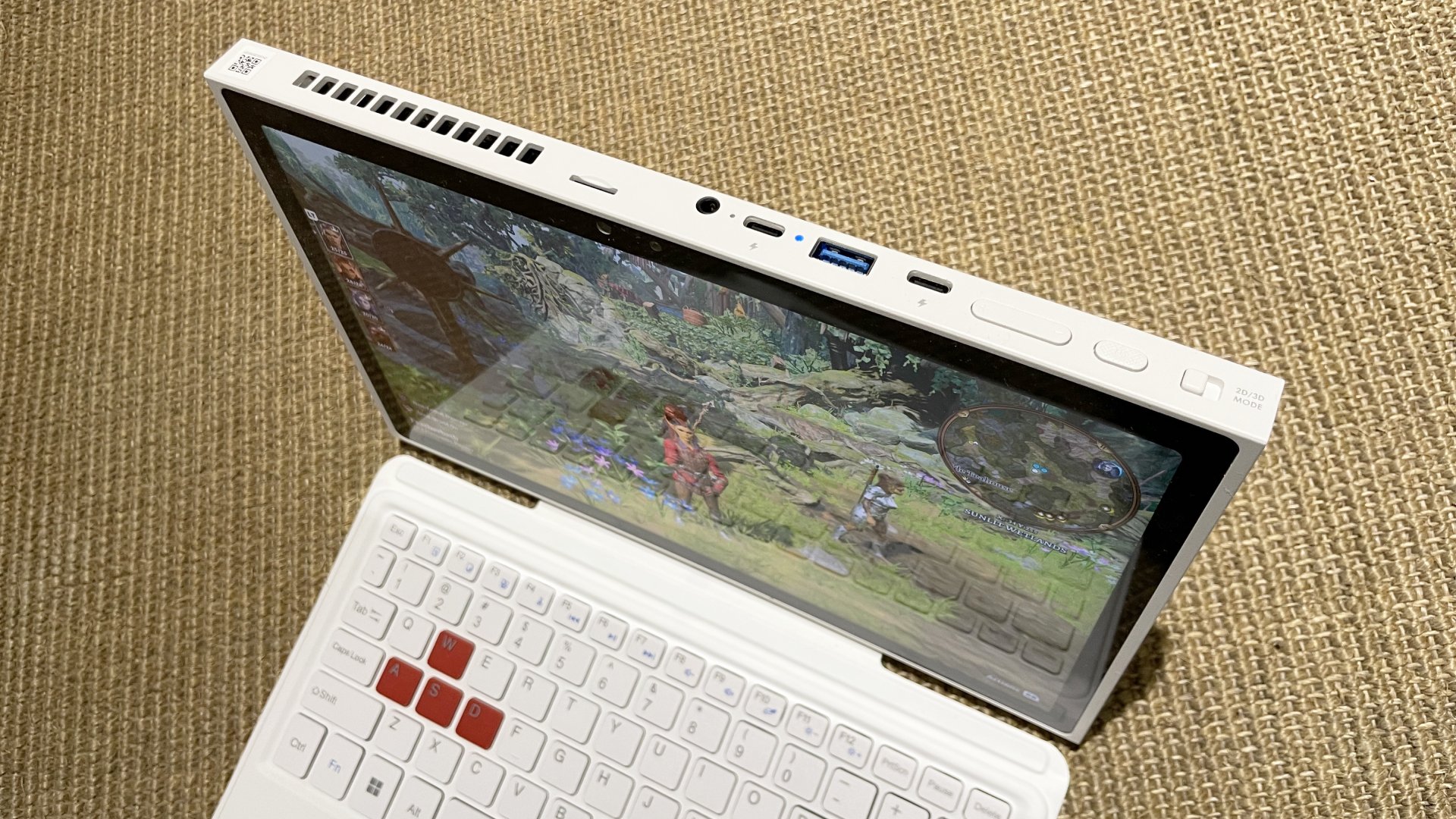
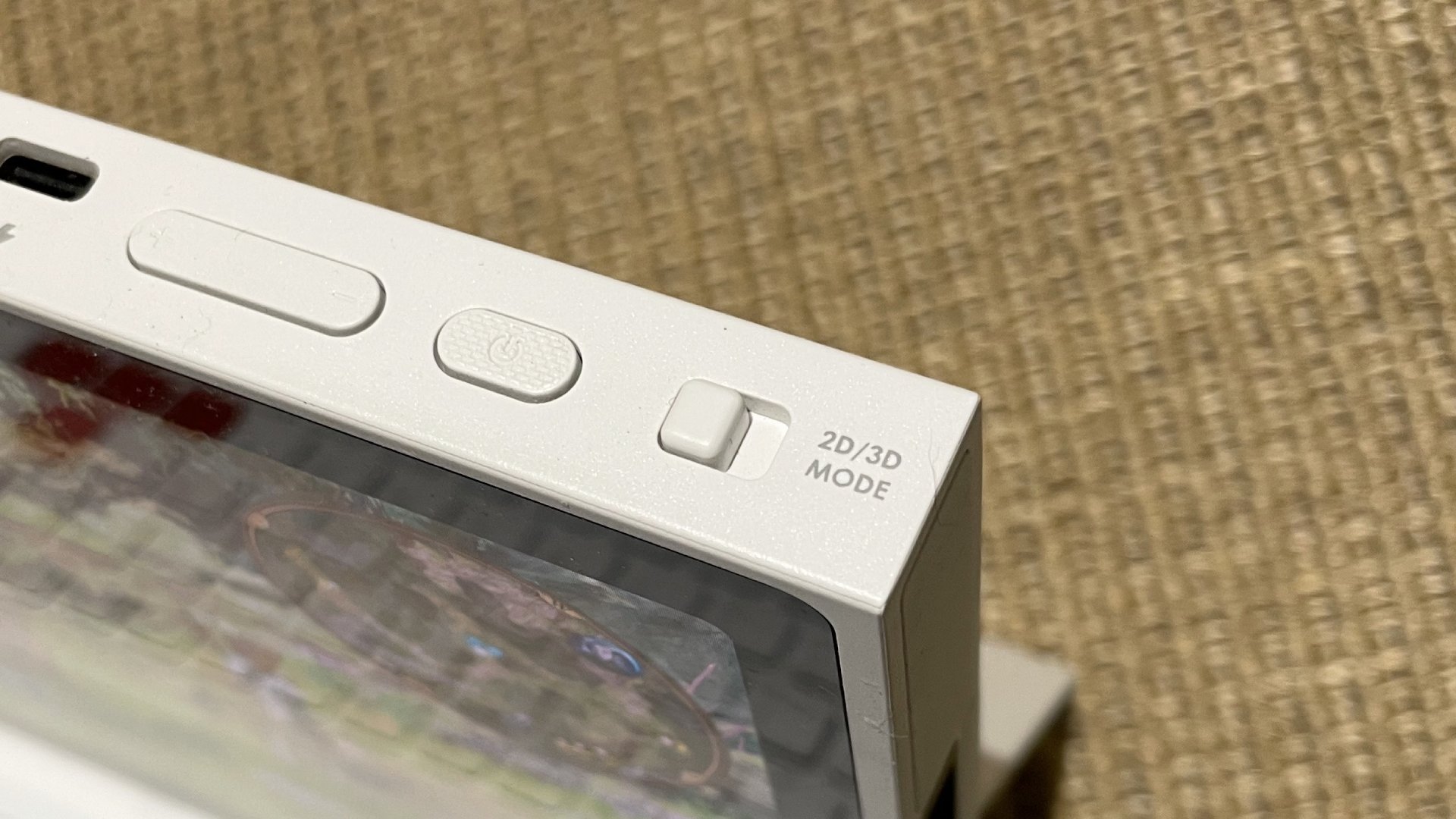
First, it’s fairly easy to setup, though you do have to launch games from the 3D Zone launcher rather than, say, Steam. Thereafter, it’s a simple case of flipping the 2D/3D toggle switch on the top bezel. And it does actually work and in some ways is quite impressive.
Image 1 of 4
 (Image credit: Future)
 (Image credit: Future)
 (Image credit: Future)
 (Image credit: Future)
There’s a real sense of depth, of, well, 3Dness, particularly for individual objects or characters. They can really pop out of the screen. It’s also very noticeable when you switch back to 2D mode how flat everything looks, especially if you’re standing still, in-game. But there are limitations.
While individual objects are convincingly three dimensional, that’s not entirely true of the whole scene. The overall effect is a bit like a pop-up book, with various elements placed at discrete depth positions in the scene, but not a truly seamless 3D vista. Another problem is that you don’t get a sense of looking through a window into a life-sized 3D world. It’s more like looking at a tiny scale model of everything.
There’s also a noticeable step down in image quality and screen brightness in 3D mode. Personally, I sense a degree of eye-strain associated with the 3D mode, too. Your eyes have to tune into the effect, adjust to the lenticular output, and it doesn’t feel hugely natural for a lengthy gaming session.
Image 1 of 3
 LG WOLED left, this new QD-OLED on the right. A very bright LED light exaggerates the problem, but the light absorption issue hasn’t been totally solved.(Image credit: Future)
 (Image credit: Future)
 (Image credit: Future)
All of these issues also apply to the Acer monitor I reviewed last year. Overall, my take that applies to both that screen and this handheld is that glasses-free 3D tech is superficially impressive and fun, but only on immediate acquaintance. It’s likely not a feature I would use in most games given the performance limitations and even where performance isn’t an issue, I’m not sure the visual experience entirely hangs together.
1080p gaming performance
Black Myth Wukong (1080p Medium)Black Myth Wukong | Upscaling (1080p Medium)Cyberpunk 2077 (1080p Medium)Cyberpunk 2077 | Upscaling (1080p Medium)F1 24 (1080p Medium)F1 24 | Upscaling (1080p Medium)Horizon Zero Dawn (1080p Original)Horizon Zero Dawn | Upscaling (1080p Original)Metro Exodus Enhanced (1080p High)
Black Myth Wukong (1080p Medium) Data
ProductValue
ABXYlute 3D One
19 Avg FPS, 15 1% Low FPS
OneXPlayer X1 Air
22 Avg FPS, 17 1% Low FPS
Asus ROG Xbox Ally X
26 Avg FPS, 19 1% Low FPS
Black Myth Wukong | Upscaling (1080p Medium) Data
ProductValue
ABXYlute 3D One
30 Avg FPS, 23 1% Low FPS
OneXPlayer X1 Air
35 Avg FPS, 21 1% Low FPS
Asus ROG Xbox Ally X
39 Avg FPS, 30 1% Low FPS
Cyberpunk 2077 (1080p Medium) Data
ProductValue
ABXYlute 3D One
31 Avg FPS, 27 1% Low FPS
OneXPlayer X1 Air
38 Avg FPS, 24 1% Low FPS
Asus ROG Xbox Ally X
41 Avg FPS, 34 1% Low FPS
Cyberpunk 2077 | Upscaling (1080p Medium) Data
ProductValue
ABXYlute 3D One
45 Avg FPS, 34 1% Low FPS
OneXPlayer X1 Air
55 Avg FPS, 37 1% Low FPS
Asus ROG Xbox Ally X
53 Avg FPS, 44 1% Low FPS
F1 24 (1080p Medium) Data
ProductValue
ABXYlute 3D One
66 Avg FPS, 60 1% Low FPS
OneXPlayer X1 Air
87 Avg FPS, 70 1% Low FPS
Asus ROG Xbox Ally X
84 Avg FPS, 76 1% Low FPS
F1 24 | Upscaling (1080p Medium) Data
ProductValue
ABXYlute 3D One
81 Avg FPS, 73 1% Low FPS
OneXPlayer X1 Air
98 Avg FPS, 85 1% Low FPS
Asus ROG Xbox Ally X
97 Avg FPS, 88 1% Low FPS
Horizon Zero Dawn (1080p Original) Data
ProductValue
ABXYlute 3D One
45 Avg FPS, 23 1% Low FPS
OneXPlayer X1 Air
48 Avg FPS, 28 1% Low FPS
Asus ROG Xbox Ally X
48 Avg FPS, 15 1% Low FPS
Horizon Zero Dawn | Upscaling (1080p Original) Data
ProductValue
ABXYlute 3D One
50 Avg FPS, 9 1% Low FPS
OneXPlayer X1 Air
57 Avg FPS, 36 1% Low FPS
Asus ROG Xbox Ally X
70 Avg FPS, 18 1% Low FPS
Metro Exodus Enhanced (1080p High) Data
ProductValue
ABXYlute 3D One
29 Avg FPS, 20 1% Low FPS
OneXPlayer X1 Air
23 Avg FPS, 12 1% Low FPS
Asus ROG Xbox Ally X
27 Avg FPS, 15 1% Low FPS

System performance
Thermal performanceCinebench R243DMark Time Spy3DMark Storage7-zip
Max CPU package power (W)
Thermal performance Data
ProductValue
ABXYlute 3D One
82 Max CPU temp (°C), 30 Max CPU package power (W)
OneXPlayer X1 Air
96 Max CPU temp (°C), 37 Max CPU package power (W)
Asus ROG Xbox Ally X
96 Max CPU temp (°C), 55 Max CPU package power (W)
Cinebench R24 Data
ProductValue
ABXYlute 3D One
551 Single-core index score, 116 Multi-core index score
OneXPlayer X1 Air
119 Single-core index score, 568 Multi-core index score
Asus ROG Xbox Ally X
111 Single-core index score, 762 Multi-core index score
3DMark Time Spy Data
ProductValue
ABXYlute 3D One
4342 Index score, 4087 GPU index score, 6731 CPU index score
OneXPlayer X1 Air
4457 Index score, 4139 GPU index score, 7911 CPU index score
Asus ROG Xbox Ally X
4033 Index score, 3663 GPU index score, 9462 CPU index score
3DMark Storage Data
ProductValue
ABXYlute 3D One
1625 Index score, 274.83 Avg bandwidth (MB/s), 109 Access time (ųs)
OneXPlayer X1 Air
2737 Index score, 464.7 Avg bandwidth (MB/s), 65 Access time (ųs)
Asus ROG Xbox Ally X
1163 Index score, 199.98 Avg bandwidth (MB/s), 155 Access time (ųs)
7-zip Data
ProductValue
ABXYlute 3D One
56.7 Compression (GIPS), 52.9 Decompression (GIPS)
OneXPlayer X1 Air
62.27 Compression (GIPS), 56.579 Decompression (GIPS)
Asus ROG Xbox Ally X
81.14 Compression (GIPS), 86.54 Decompression (GIPS)
It’s debatable how much more portable this device is than a gaming laptop.
Of course, you could treat the whole glasses-free 3D thing as a mere extra and assess the Abxylute 3D One more broadly as a gaming handheld. How does it hold up by that more conventional metric? The two most obvious things are that it’s both very expensive and very large. The size of the screen certainly has some advantages in terms of gaming immersion. But it does rather knobble the portability aspect compared with much smaller handhelds.
The Abxylute 3D One is bundled with a protective carry case, for instance. But it measures over 15 inches or about 40 cm across. It’s debatable, then, how much more portable this device is than a gaming laptop. And even in today’s distorted market, you can get an RTX 5070 Ti laptop for the same amount as the Abxylute 3D One’s current $1,599 list price. And that is an incomparably more powerful gaming device.
(Image credit: Future)
That portability arguably gets worse when you factor in battery life. To give you an example, I found you could get exactly an hour out of the battery playing Baldur’s Gate 3 at 2,560 by 1,600 at low settings and using XeSS Quality upscaling. That’s with the 3D One’s power mode set to balanced the screen running a little over half brightness.
That’s not great, even in the context of gaming handhelds, which are universally pretty bad. One way of addressing that is to use an external power brick. I have a Ugreen 25,000 mAh brick which is about as big as you can take on a plane. It’s also capable of outputting at 145 W, so plenty powerful enough. Indeed, it will increase the battery charge as you play. And here’s how things work out.
Roughly speaking, draining the battery pack takes about one hour, over which time the 3D One’s battery charge increases by 40%. Do the math and that means the pack will give you an additional one hour and 25 minutes play time. So, even with an external brick that’s the largest you are allowed to take on a commercial flight and hardly improves this device’s portability, that’s about two and a half hours of total play time. Not exactly stellar, is it?
If you unloaded $1,600 on this thing now only to find there are loads of much more powerful and efficient handhelds out there later this year, I doubt you’d be happy.
Then you also have to remember that Intel has recently launched its new Panther Lake chip with a massively improved iGPU. It’s not only much faster, but can also match Lunar Lake’s performance at much lower power consumption, with pretty obvious implications for battery life. At a guess we’re at least four or five months away from the first handheld gaming PCs with Panther Lake. It may be more than that. But if you unloaded $1,600 on this thing now only to find there are loads of much more powerful and efficient handhelds out there later this year, I doubt you’d be happy.
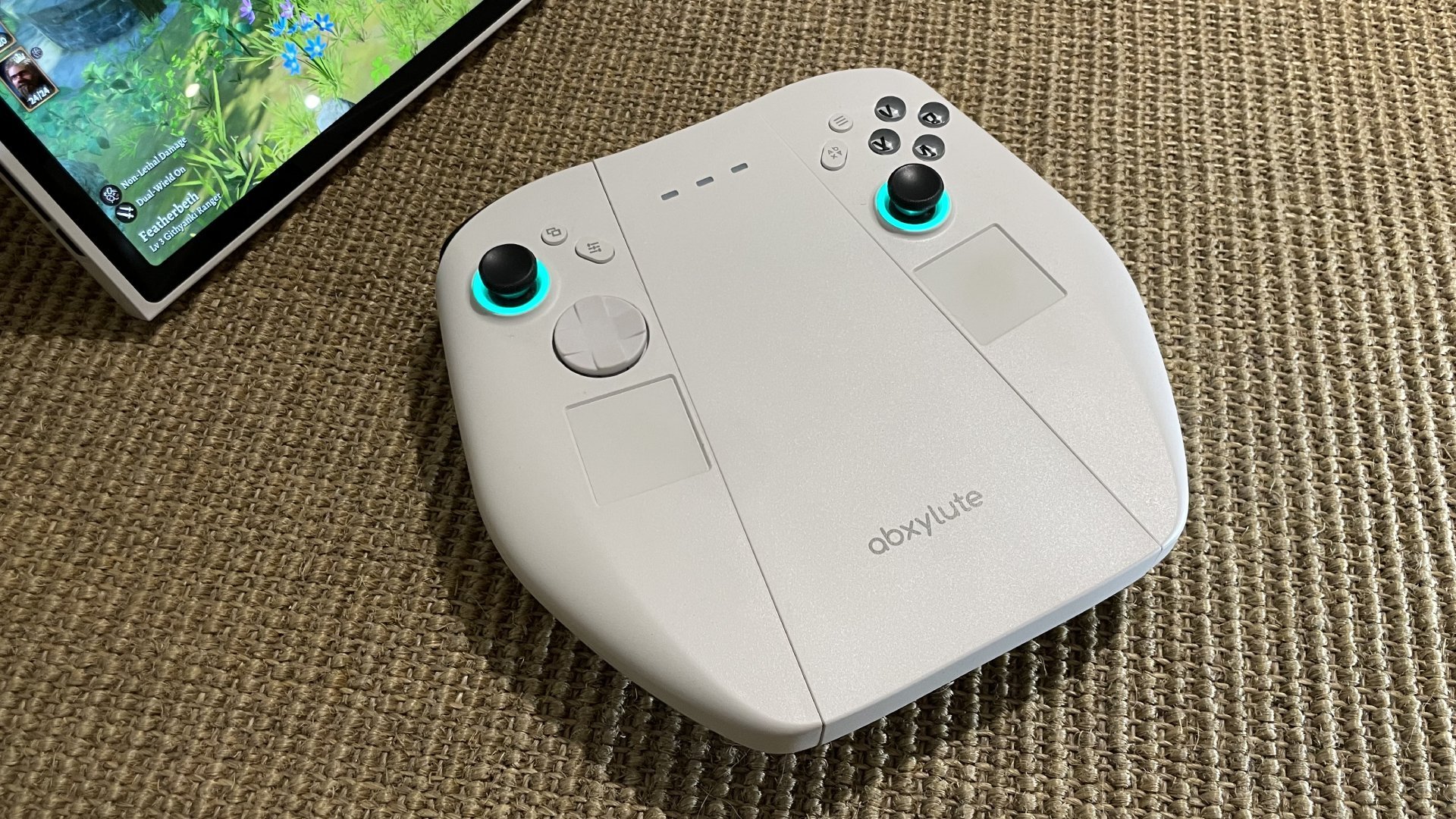
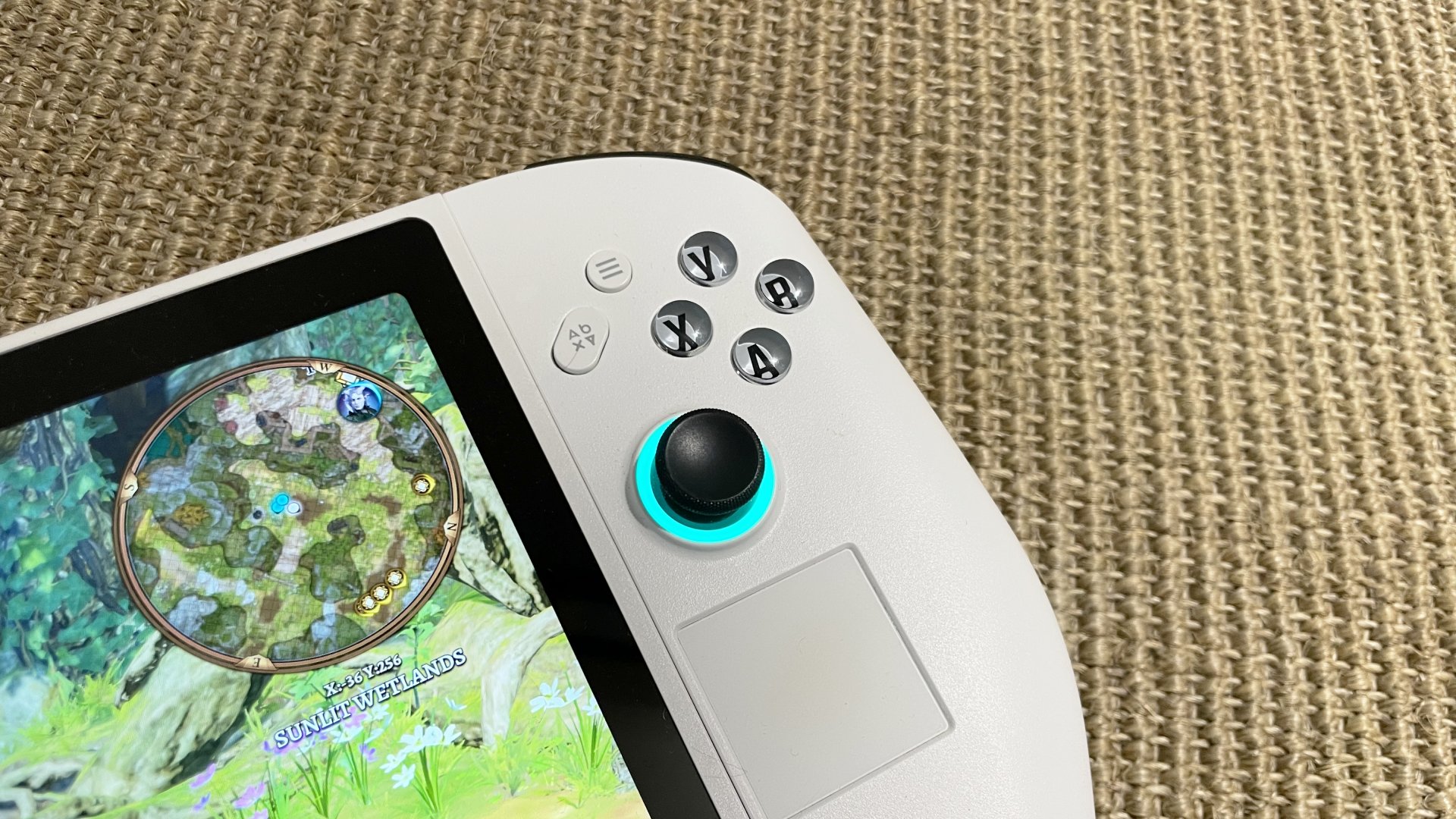
With all that in mind, you could argue the rest of the Abxylute 3D One’s qualities are somewhat academic. For the record the two detachable controllers have both hall-effect joysticks and track pads, and are pretty nice to use. I particularly like the tactility of the shoulder buttons. There’s also a nifty little dock you can use to join them together into a single larger wireless controller, which is a nice idea.
Image 1 of 1
 Say hello to proper RGB-stripe subpixels.(Image credit: Future)
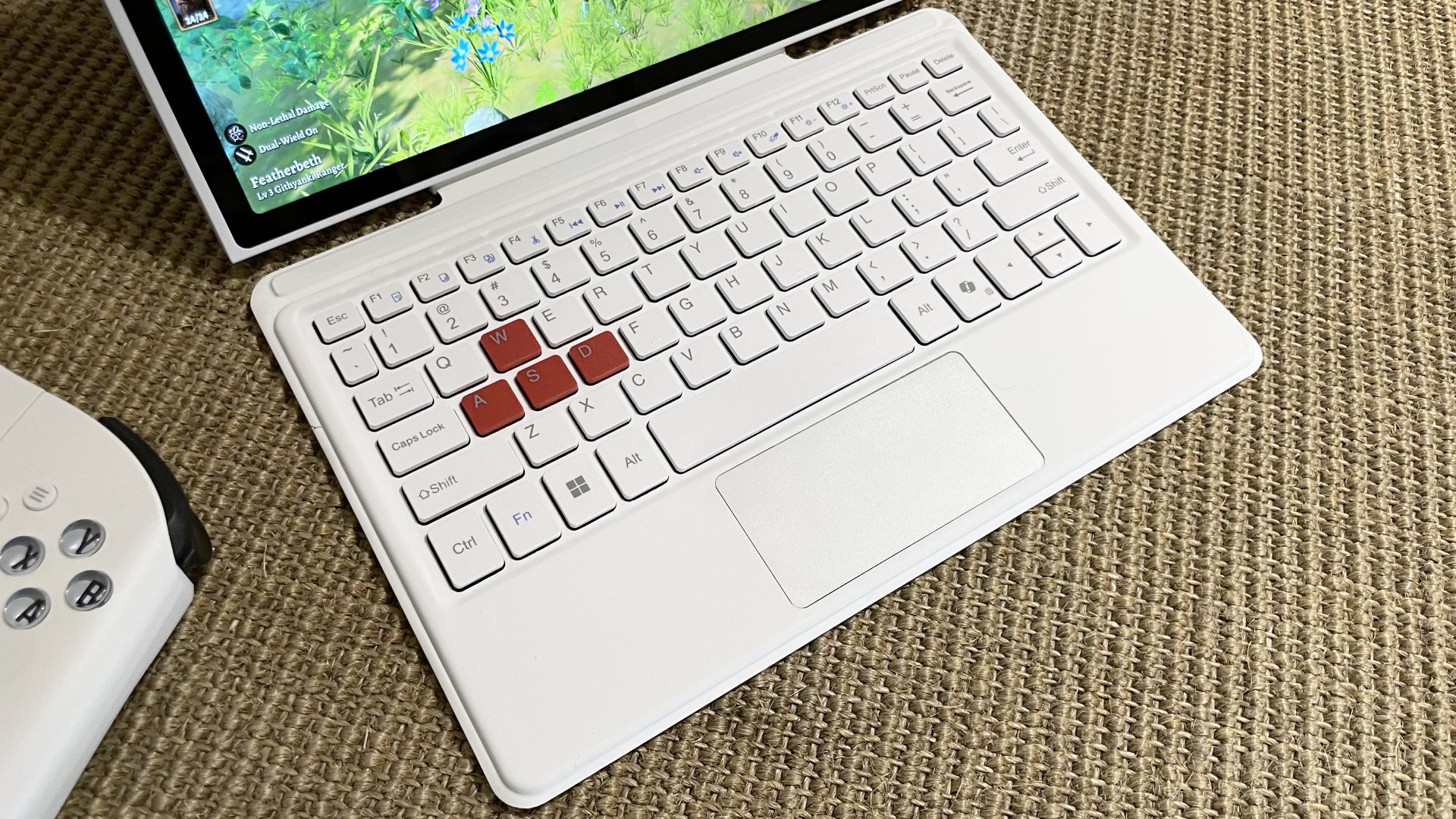
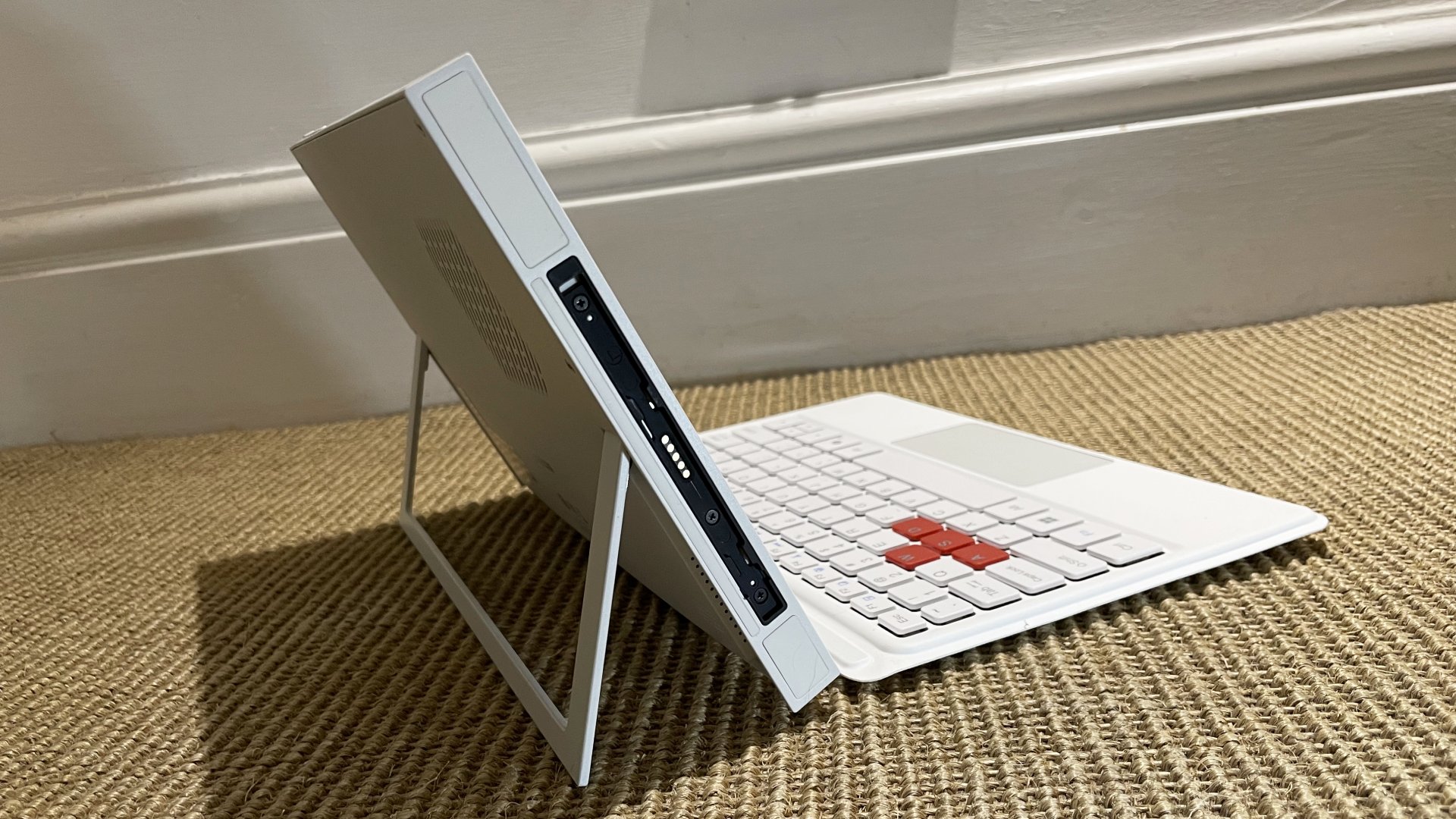
To that you can add a clip-on keyboard and a kickstand behind the tablet section of the device, enabling you to use it a little like a laptop. As for connectivity, there are two USB-C ports and one USB-A. The overall build quality is certainly sturdy, but the feel of the plastics used for the main tablet chassis and controllers is a bit hard and scratchy.
The 10.95-inch display is also pretty nice. It’s punchy and bright, albeit given the lofty price point you might have expected an OLED panel. Oh, and for those who care about such details, the 1 TB SSD is a Zettastone CP300Y, which is a PCIe 4.0 drive, but uses QLC NAND flash memory as opposed to faster and more expensive TLC NAND.
All of which means it’s hard to be hugely positive about the Abxylute 3D One. It’s very expensive and yet fairly obviously compromised. Physically it’s big enough and the battery life is fleeting enough that some would argue you may as well get a much faster gaming laptop for the same money. And its main selling point, the glasses-free 3D feature, doesn’t really add up. Then factor in the imminent arrival of a much faster handheld chip from Intel, and the Abxylute 3D One feels a little dead on arrival.
Speaking of which, as I write these words, it’s yet to ship out to customers, but it’s available to pre-order on the Abxylute website. Shipping is said to “start” in February, so presumably is imminent, with a US price of the aforementioned $1,599 and the UK coming in at £1,194. Shipping is free within that price, but it’s not totally clear what the customs and tariff implications are.
Abxylute’s website says, “customers, especially those in EU countries, are responsible for paying any required taxes. In the United States, packages over USD$800 may be subject to taxes.” So, it seems like you might have to pay even more for the device shipped and landed in most territories. At the listed price, the Abxylute 3D One struggles to make a case for itself. If tariffs and duties mean it’s even more expensive than that, well, that only makes it even harder to recommend.
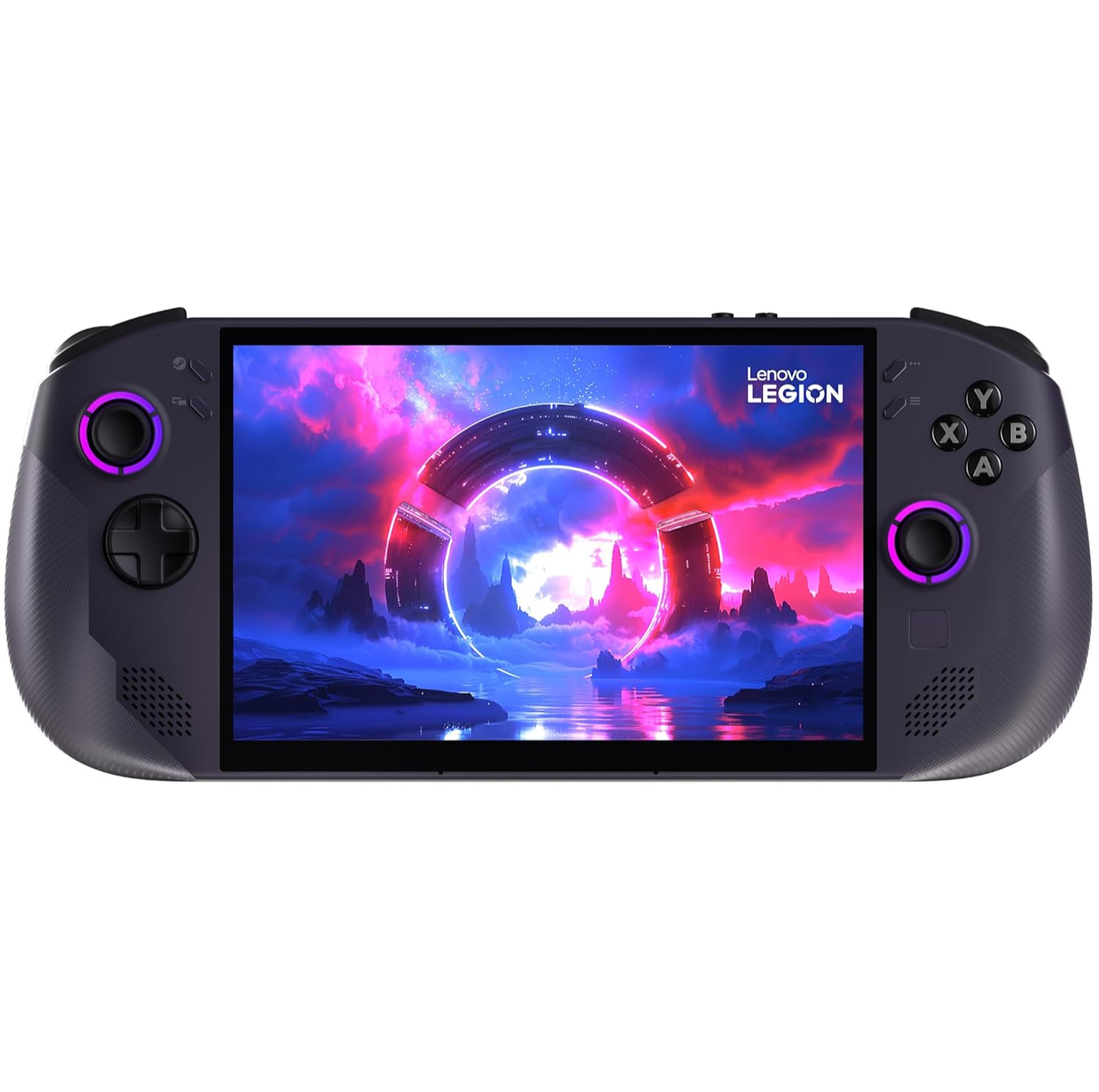
Best handheld PC 2026
All our current recommendations