
Esports World Cup EMEA Qualifiers Format. Credit: Riot Games
Leaked plans reveal a multi-stage EMEA Masters and a new qualifier where LEC teams will fight for EWC spots
A major overhaul of the EMEA Masters ecosystem is on the way. According to information obtained by Sheep Esports, the tournament is set to connect directly to qualification for the Esports World Cup, while also introducing a brand-new competition involving LEC teams.
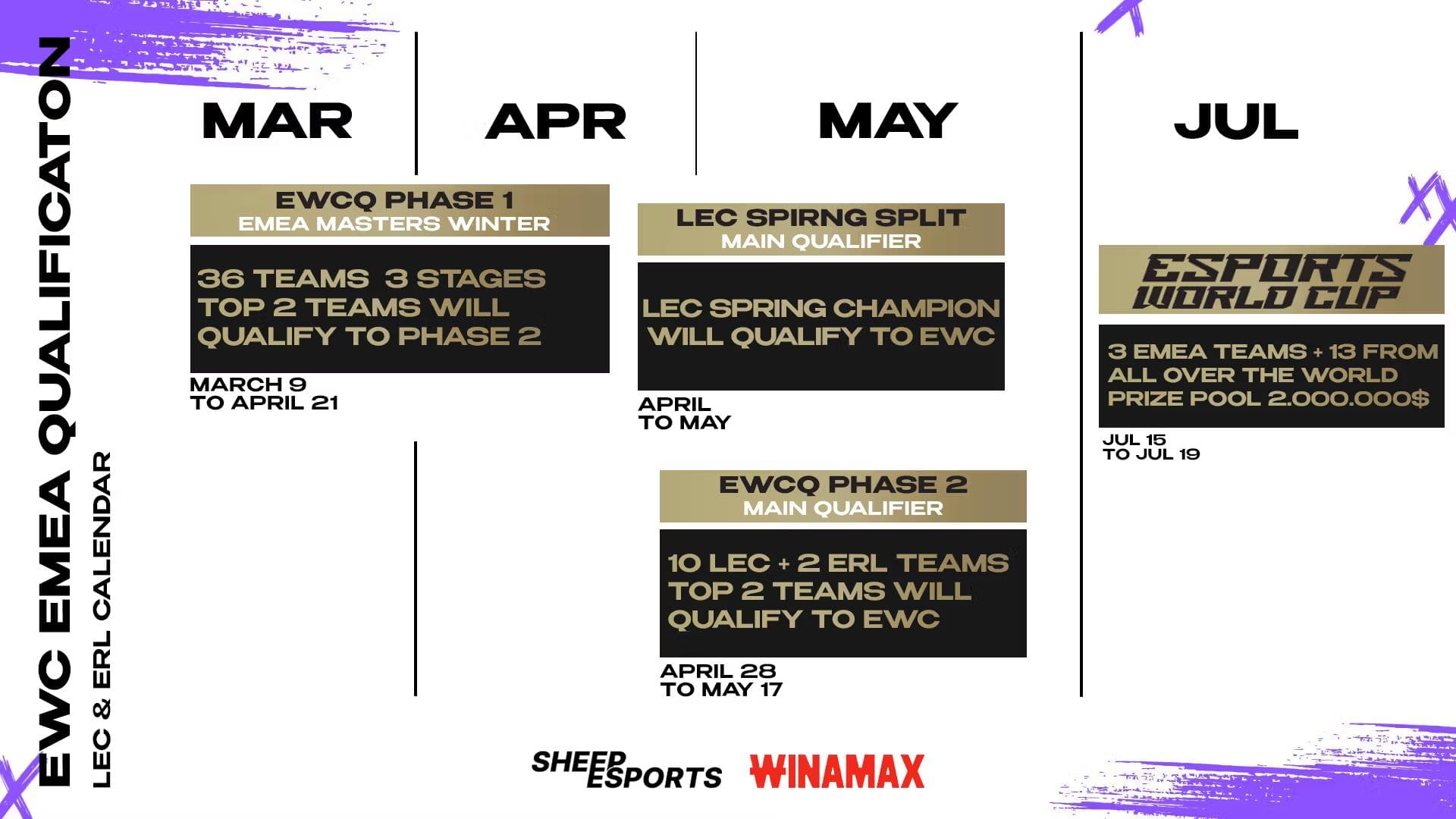
At the center of the changes is a new online qualifier for the Esports World Cup, where teams will earn their spots through competition, unlike previous editions, which relied on invitations. The EMEA Masters Winter Edition will serve as the first qualifier to determine the two best ERL teams and will serve as Phase 1.
Esports World Cup EMEA Qualifiers Format. Credit: Sheep Esports
The second qualifier, a brand new competition, will feature all ten LEC teams alongside the two best ERL teams from the EMEA Masters’ Winter edition. Unlike last year’s Winter EMEA Masters, which lasted only one week, the Phase 1 qualifier will now run across multiple weeks and three stages, with some matches potentially overlapping with the ERL Spring Split.
EWC Qualifier Phase 1 – EMEA Masters Winter
The revamped EMEA Masters Winter will take place from March 9 to April 21. As the first stage of qualification for the Esports World Cup, the tournament will be played across three different stages, ultimately determining the two ERL teams that advance to the next step of the EWC qualification process.
A total of 36 teams will participate in the event. All will qualify through the usual EMEA Masters seeding system, which distributes two to four slots per ERL depending on league strength.
Stage 1 – Champions Round
The competition will begin with the Champions Round on March 9, featuring four best-of-three series.
This stage will see the winter 2026 champions of the top eight ERLs, determined by the 2024–2025 EMEA Masters ranking, face off against one another. The champions from the four highest-ranked leagues — LFL, NLC, LES, and Prime League — will each select their opponent from the champions ranked between fifth and eighth.
The stakes are significant from the start. The winners of these matches will advance directly to the Upper Bracket Round 2 of the Playoffs, while the losing teams will drop to the Group Stage. Those teams will specifically be placed into Groups 5 to 8, which begin play one day later.
Stage 2 – Group Stage
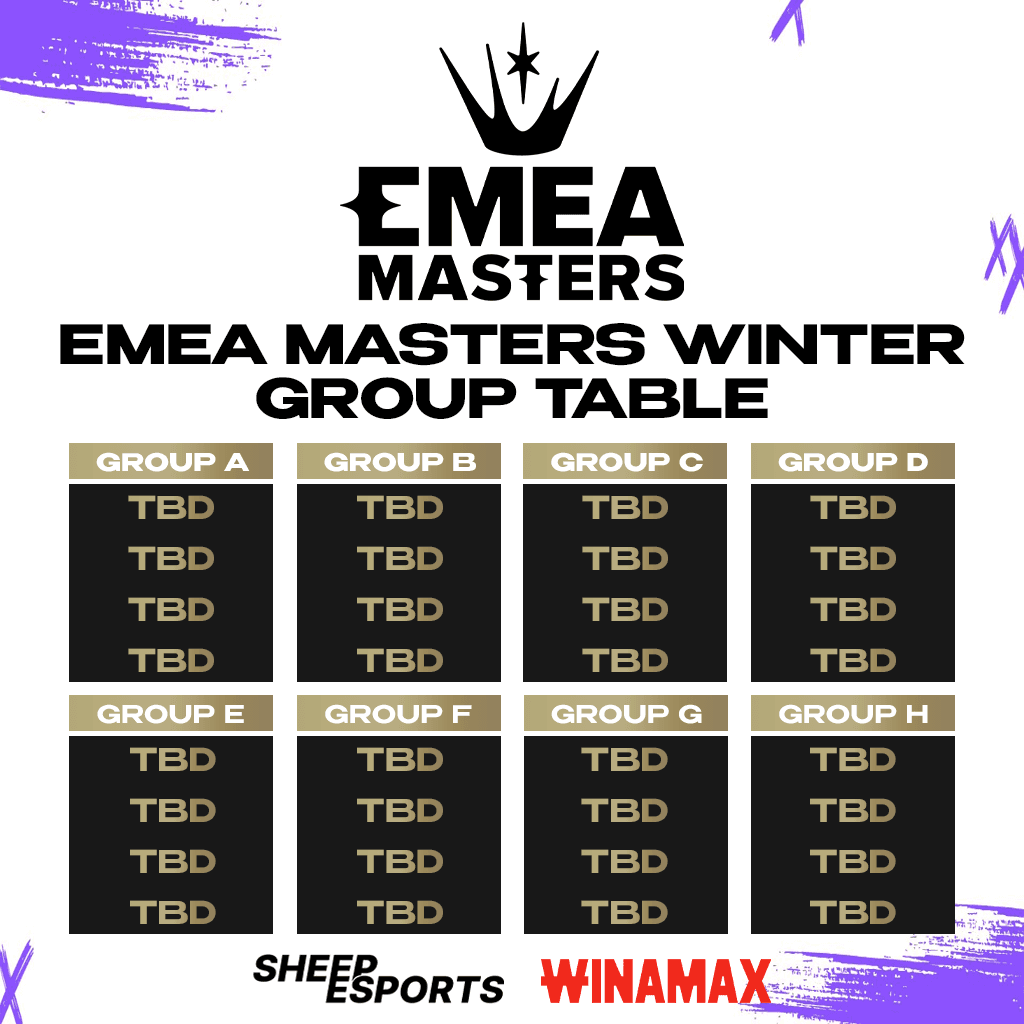
The Group Stage will run from March 10 to March 15 and feature 32 teams divided into eight groups of four.
Each group will be played in a double-elimination bracket, with all matches contested as best-of-three series. Regional protection will be applied during the draw to prevent teams from the same league meeting too early in the competition.
Only one team from each group will advance to the Playoffs.
The groups will be split across two schedules:
Groups 1–4: March 10–14Groups 5–8: March 11–15
EMEA Masters Group Stage – Winner of each Group joins Top 4 from Champions Stage in Playoffs
Each group will play four rounds across four days, with two to four matches taking place simultaneously. One seeding detail of note is that Karmine Corp Blue will enter the tournament directly in the Group Stage as the LFL’s fourth seed.
Stage 3 – Playoffs
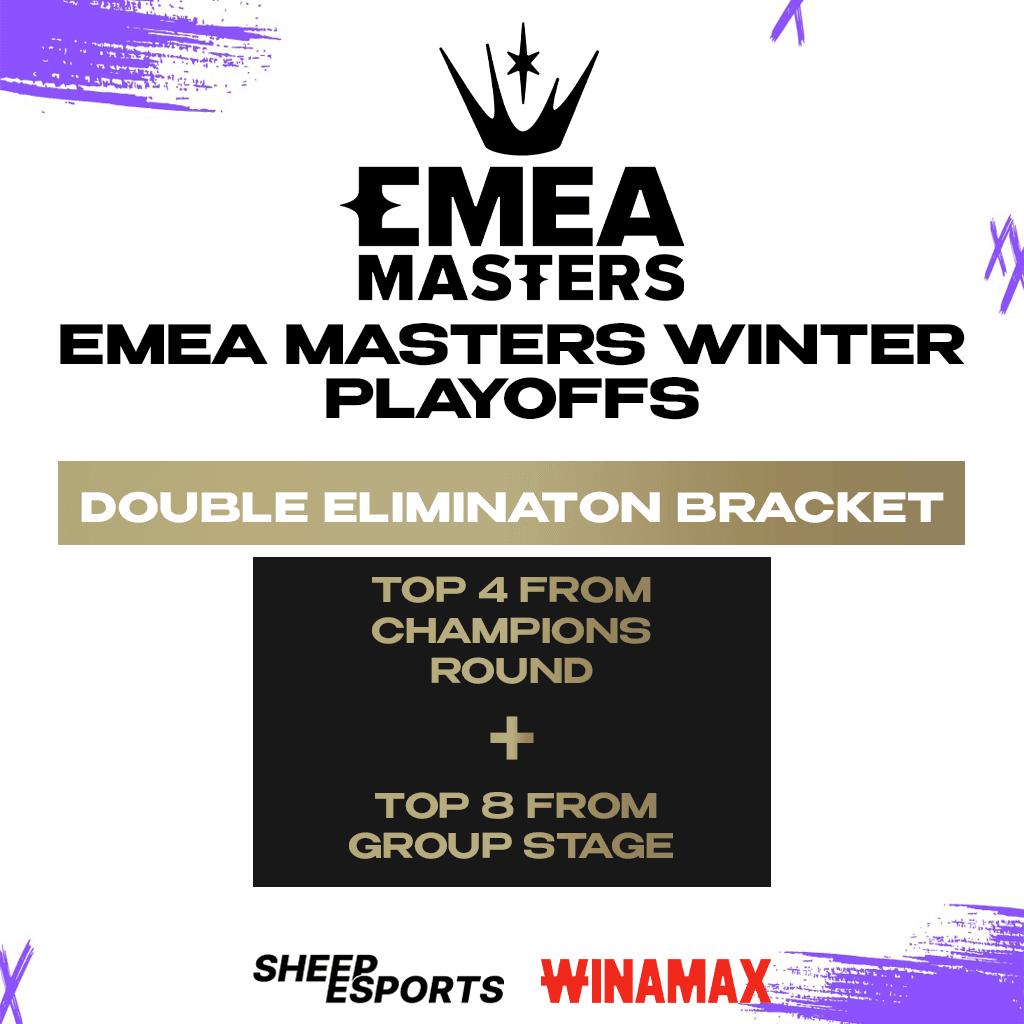
The Playoffs will bring together twelve teams in a double-elimination bracket, using a mix of best-of-three and best-of-five series. Regional protection will apply in Upper Bracket Round 1, and the overall bracket structure will mirror the one used later in EWCQ Phase 2.
Matches will be played across several dates starting March 23 and ending April 21. Notably, the final four rounds will take place in parallel with the ERL Spring Split, with matches scheduled on Tuesdays, typically considered a less popular match day.
EMEA Masters Winter Playoffs – Top 2 qualify to the Main Qualifier
Special rule involving LEC academy teams
While Academy teams can compete in the first qualifier, they will not be able to qualify for the second qualifier (Phase 2) against LEC teams. Because LEC academy teams are often among the strongest teams competing in ERLs, the tournament rules include a contingency scenario to ensure two eligible ERL representatives can still advance, according to sources who spoke with Sheep Esports.
If academy teams block the standings in a way that makes it impossible to clearly determine the second eligible ERL team, an additional decider match will be played. This could happen, for example, if: the first eligible ERL team finishes between 1st and 4th, while other eligible ERL teams end up between 5th–6th or 7th–8th.
In that case, the deciding series will take place on April 18 at 14:00 CET, shortly before the LEC broadcast, and will determine the second ERL team advancing to the next stage.
EWC Qualifier Phase 2 – Main qualifier
The second stage of qualification will introduce LEC teams into the system through a new tournament called EWCQ Phase 2. This competition will feature 12 teams in total: ten LEC teams and two ERL teams qualified from Phase 1. The tournament will use a seeded double-elimination bracket with both best-of-three and best-of-five matches.
Seeding will be partially based on the final LEC Versus standings. The top four LEC teams will start directly in Upper Bracket Round 2, while the LEC teams ranked fifth to tenth and the two ERL representatives will begin their run in Upper Bracket Round 1. The event is scheduled to take place on: April 28–30 and May 14–17.
[@portabletext/react] Unknown block type “pollBlock”, specify a component for it in the `components.types` prop
The final destination
Three teams from EMEA will participate in the Esports World Cup: the two best teams from the EWC Main Qualifier (Phase 2) and the champion of the LEC Spring Split. They will face 13 other international teams who will also qualify through regional qualifiers, with the exception of Gen.G, who have already secured their place after winning last year’s edition.
The tournament will feature a total of 16 teams competing for a prize pool of $2 million. Note that all information shared in this report is the result of a leak and might lack details that should follow in an official announcement soon.