
Introduction
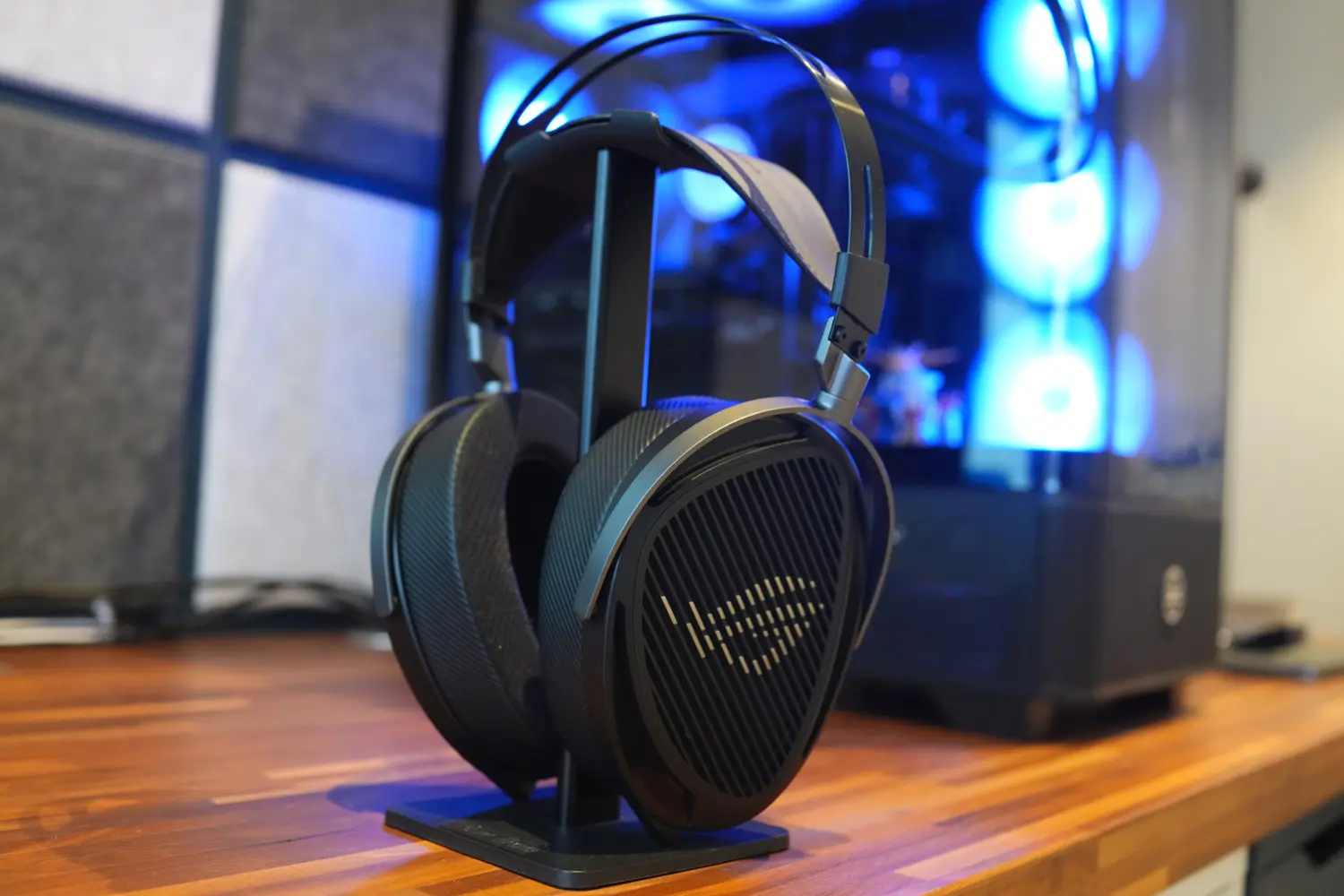
The Kithara unapologetically flies in the face of current gaming headset trends. It doesn’t want to come with you on your morning commute, has no companion app, and won’t light up like a Christmas tree with RGB effects. This is a strictly wired stereo headset that’s purpose built for top-tier sound.
Asus partnered with sound specialist HiFiMan for its first audiophile-grade headset, tweaking the firm’s renowned planar magnetic drivers to be a bit more gaming-friendly and supplying two flavours of cable depending on if you’re in a musical mood or fancy a multiplayer deathmatch. The optional boom mic then sets it apart from open-back studio headphones like the Sennheiser HD 650, which would force you to buy a desktop microphone to stay in touch with your teammates.
At $299/£279 it’s one of the more affordable planar pairs I’ve tried, undercutting the Audeze Maxwell 2. But sound quality aside, the feature list looks a little sparse. Can it compete with better equipped wireless rivals like the Sony InZone H9 II and Logitech G Pro X 2?
Design & build: test your metal
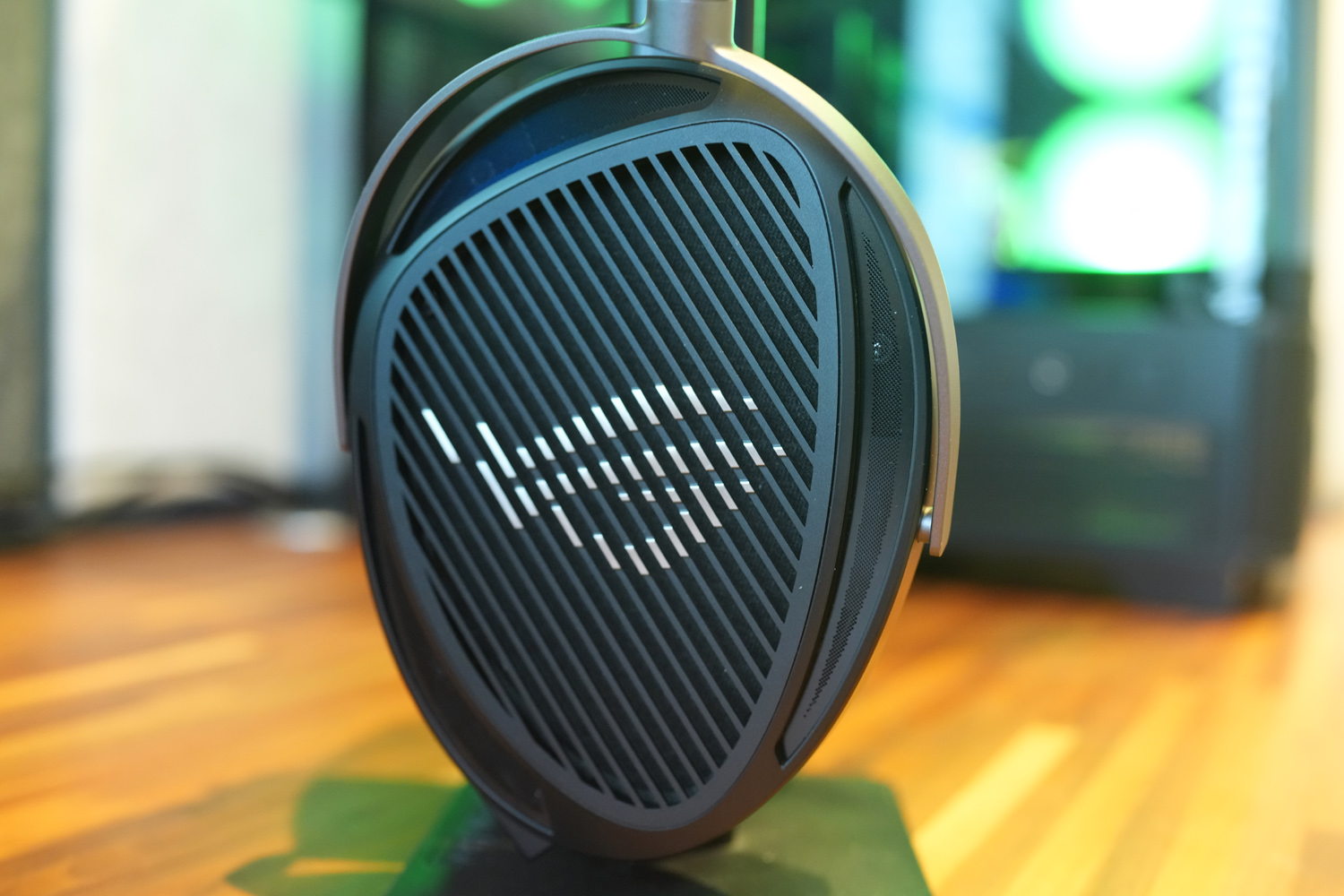
Silver ROG logos on the earcups and Republic of Gamers branding on the headband aside, there’s little here to mark the Kithara out as a gaming headset. The gunmetal frame, skinny suspension-style headband and extra-plush ear cups all scream Hi-Fi. All the materials are suitably high-end, although they contribute to a substantial 420g weight.
Not that it feels that heavy on your bonce, though. The headband has eight levels of adjustment, with the suspension system and well-judged clamping force ensuring the oversized earpads don’t apply vice-like pressure.
My review unit arrived with the leatherette and mesh cushions installed: they were breathable enough to wear for hours at a time without feeling like I was cooking my ears. There’s also a velour pair that are little softer, and which warm up the sound signature a little bit. The ear pads themselves are huge, so there’s no danger of your ears not sitting snugly inside. They’re clipped in place and pop off with a bit of force.
Build quality in general is stellar, with no rattles or loose fittings. The ear cups have plenty of tilt and pivot, and can twist to sit flush around your neck, but can’t be folded down for travel. Not that the open-back design would win you many fans if you tried to listen to it in public.
This is a passive headset with wired connectivity, so the lack of buttons around the ear cup edges make for a refreshing change from the current wireless gaming headset norm.
Features: speak up
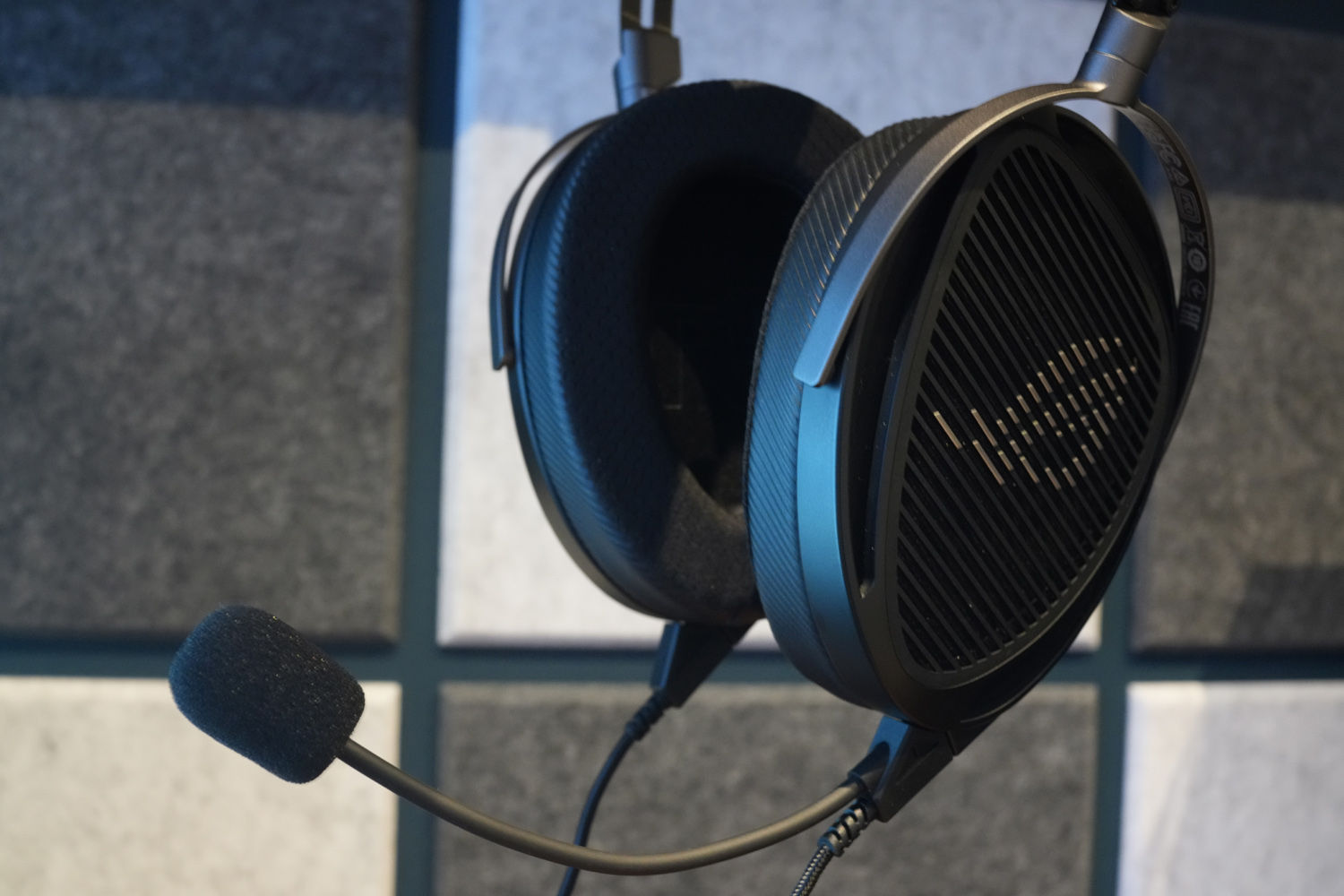
An impressive selection of bundled cables and connectors separate the Kithara from more music-minded planar headphones. It’s a shame Asus doesn’t include some sort of pouch to keep them all in, given the retail box is a biggun.
The finely twisted Hi-Fi cable is the go-to for music. It’s not especially long – only just reaching from the streamer behind by office desk to my head – but terminates in a socket that can accommodate 3.5mm, 6.3mm or 4.4mm balanced analogue connectors. With a 16 ohms impedance, the headphones don’t take a lot of power to drive, so will be just as at home connected to a laptop as a high-grade music streamer or amplifier.
PC gamers will gravitate to the fabric cable with a built-in boom microphone and ending in two 3.5mm jacks (one input, one output to prevent signal crosstalk); console players will likely have to reach for the included USB-C dongle as well. Aside from Xbox hardware, which only supports headphone audio, the combo lets the Kithara handle comms for a PS5, Nintendo Switch, PC-based handheld or smartphone.
Both cables click firmly into the headset’s ear cups and produced little microphonic vibration when rubbing against my clothes. I appreciated the in-line volume and mic mute switch on the boom mic cable too.
The mic itself uses a MEMS array with a wider frequency band and better signal-to-noise ratio than the ECM mics found in cheaper gaming headsets. It’s got a targeted pickup pattern that rejects a good amount of outside noise, meaning my mechanical keyboard clatter wasn’t constantly being broadcast to my teammates during online matches. And all without any software-based noise reduction running in the background.
There’s no software to install here whatsoever, with Asus’ usual Armory Crate utility having nothing to add in terms of EQ, surround sound upmixing or microphone levels. The USB-C dongle is there purely for connecting to devices without 3.5mm ports, so for PC gaming you’ll have to adjust volume using the Windows sound mixer.
That also means what you see here really is what you get. If RGB illumination, spatial audio, Bluetooth connectivity or active noise cancelling are a must-have, you’ll need to look elsewhere.
Sound quality: room to breathe
With huge open-back planar drivers, isolation is not this headset’s strength. Outside noises easily seep in and leakage is definitely a thing too. The trade-offs are a brilliantly spacious presentation and levels sound separation you don’t get from closed-back dynamic headphones. Those in turn deliver a phenomenal sense of positional accuracy.
There may not be any surround sound here, either physical or virtual, but I never missed it: Counter Strike 2‘s audio cues let me clearly distinguish the direction of approaching footsteps and gunshots. Asus hasn’t had to ramp up the treble to achieve it, either – something many dynamic driver gaming headsets are guilty of. The sound signature certificate included in the box (and tied to my review unit’s serial number) confirms the frequency range is essentially flat right the way from 20Hz through to 1KHz, with the mildest of boosted highs in the 2-3KHz and 5-6KHz ranges.
Planar drivers also excel at transience, meaning sound effects don’t linger. Everything sounds crisp, with a level of precision rarely found on traditional gaming headsets. High frequency effects were never harsh or unpleasant, while at the opposite end bass is delivered with more nuance. Rather than arrive in one big punch there are multiple layers, none of which intrude on the mid-range. Gamers used to big boomy explosions might feel a little hard done by here, but I’ll take subtle variation over a sledgehammer of low-end.
The Kithara’s 100mm drivers are also large even for planars, and can be pushed to oppressively loud levels without any noticeable distortion.
All the above also applies to music. There are layers of vinyl crackle and sub-bass on No Prayers by Zed’s Dead I can’t ever recall hearing on another gaming headset. That low-end is impressively well controlled, never once sounding boomy or interfering with the vocal samples – which are given plenty of room around the drum hits and percussion. There’s balance and neutrality here that’ll please anyone wanting studio-grade sound.
ASUS ROG Kithara verdict
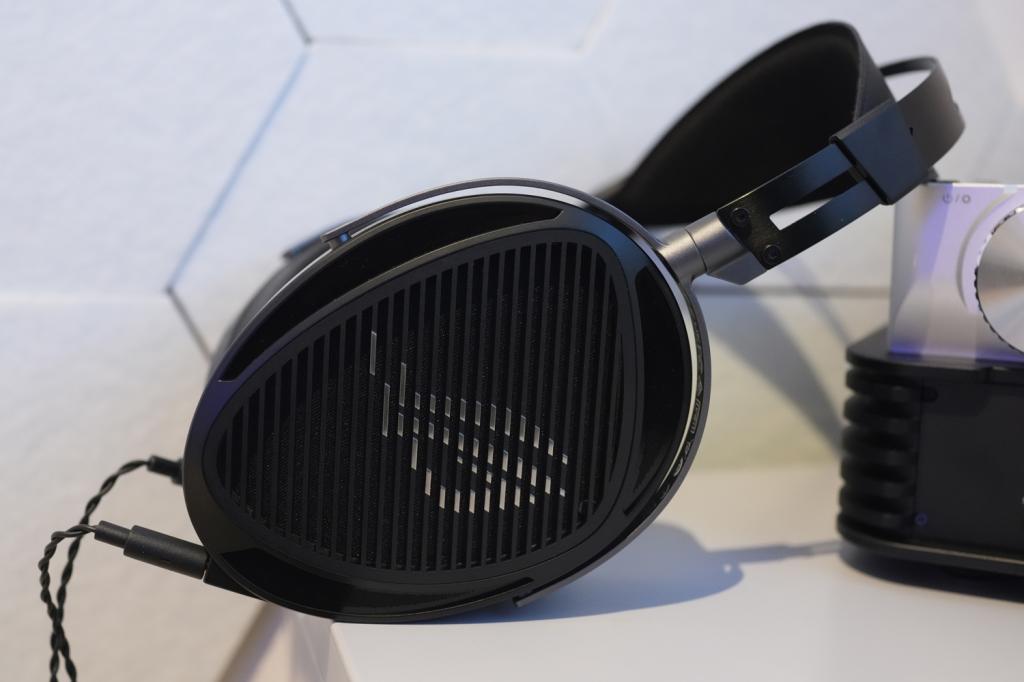
Do music and games carry equal weight for you? Then the Kithara will be your white whale headset. Asus and HiFiMan have delivered something that really can be the best of both worlds, with planar drivers that deliver a reference-grade sound, a clear microphone and a complete set of cables to ensure compatibility with all your kit. For a certain crowd it’ll be deserving of the full five stars.
I’m betting, however, that the majority of gamers will be put off by the wired-only connection, lack of features like surround sound or noise cancelling, and relatively high price. My score here reflects that. Bass-heads may also crave more low-end oomph (however imprecise it may be) and the open-back design isn’t ideal for playing in rooms shared with others. A Razer Blackshark V3 Pro might therefore be more up their alley.
That said, audiophiles with gaming PCs as high-end as their Hi-Fi equipment should form an orderly queue.
ASUS ROG Kithara technical specifications
Drivers100mm planar magneticFrequency response8000Hz – 55,000HzImpedance16 ohmsANCNoConnectivity3.5/4.4.6.3mm analogue, 2×3.5mm (headset), USB-CDimensions260x156x104mm, 420g