
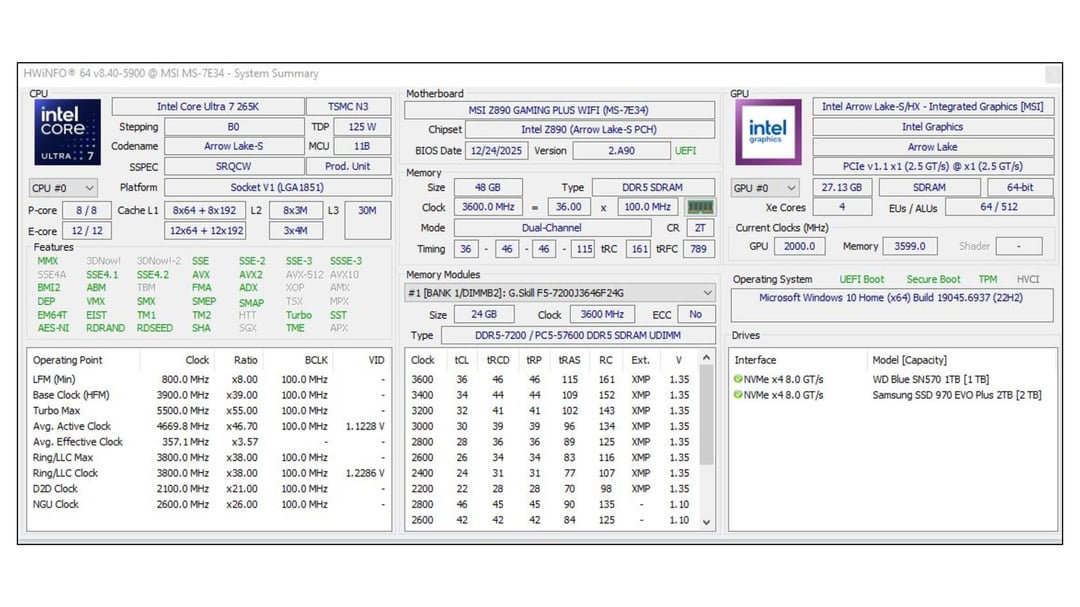
First time trying to overclock and could use a hand understanding things. CPU is a 265K. I did try out 200s boost and it was unstable, I think related to the memory adjacent parameters.
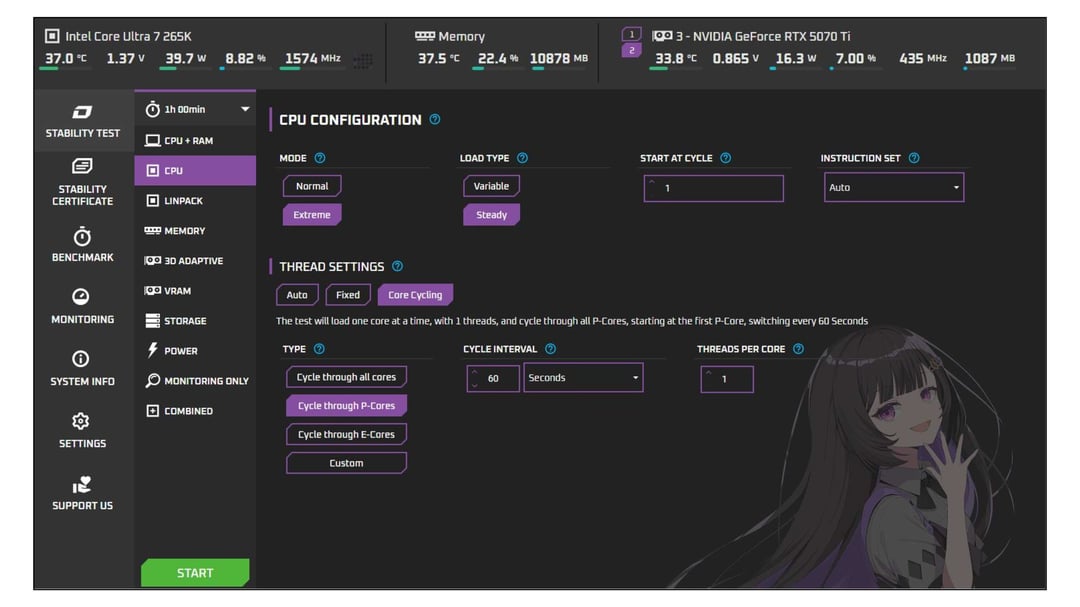
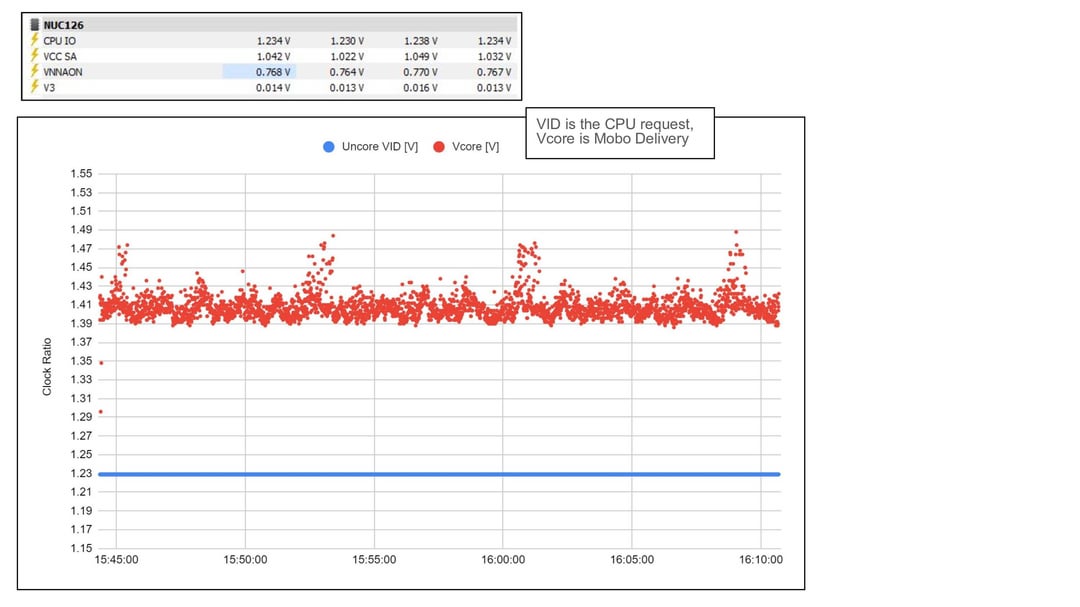
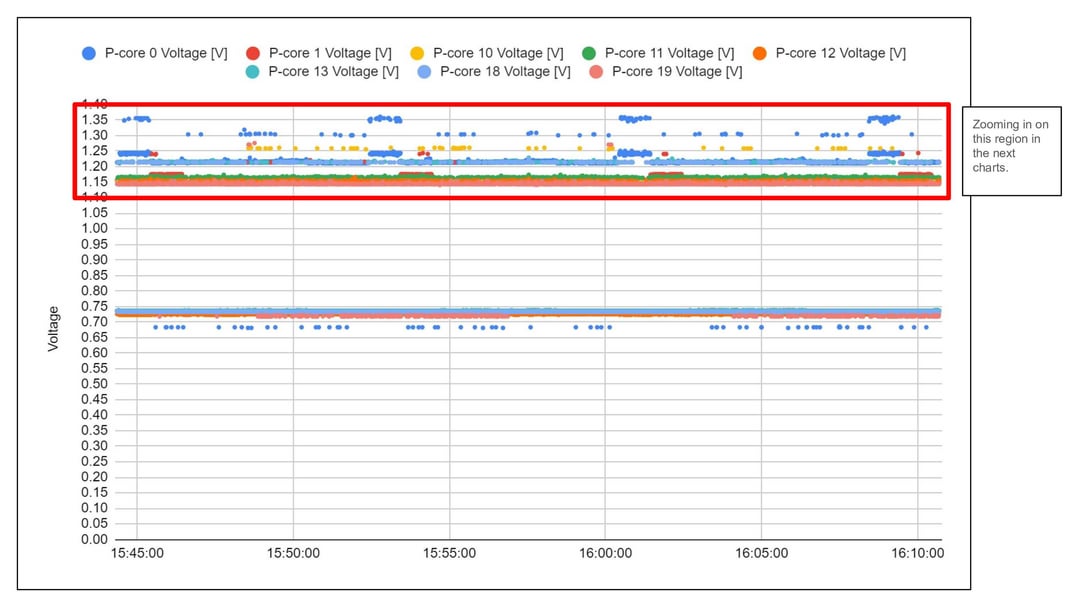
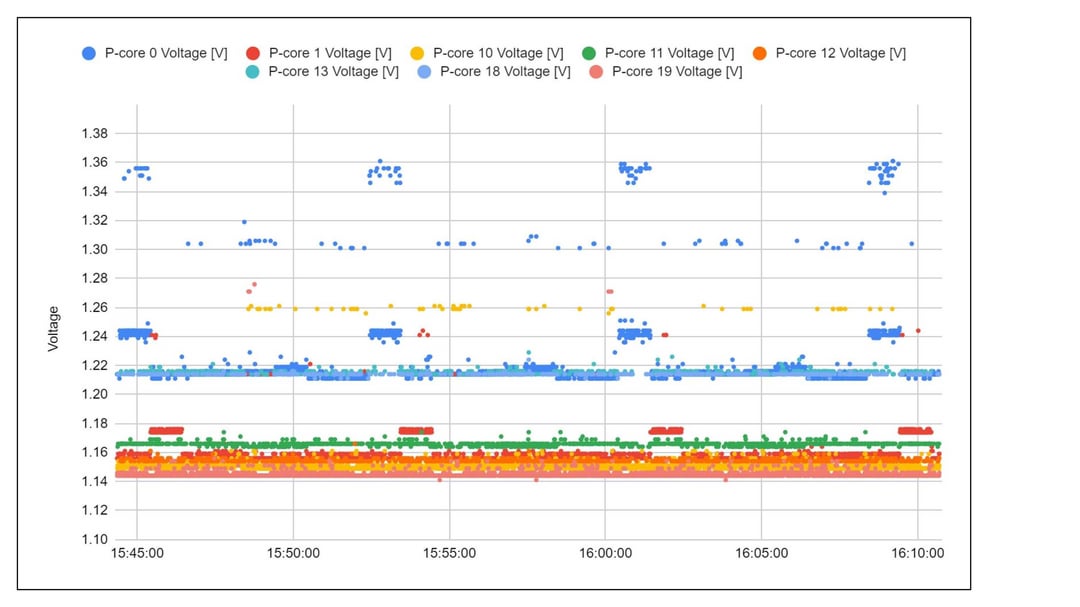
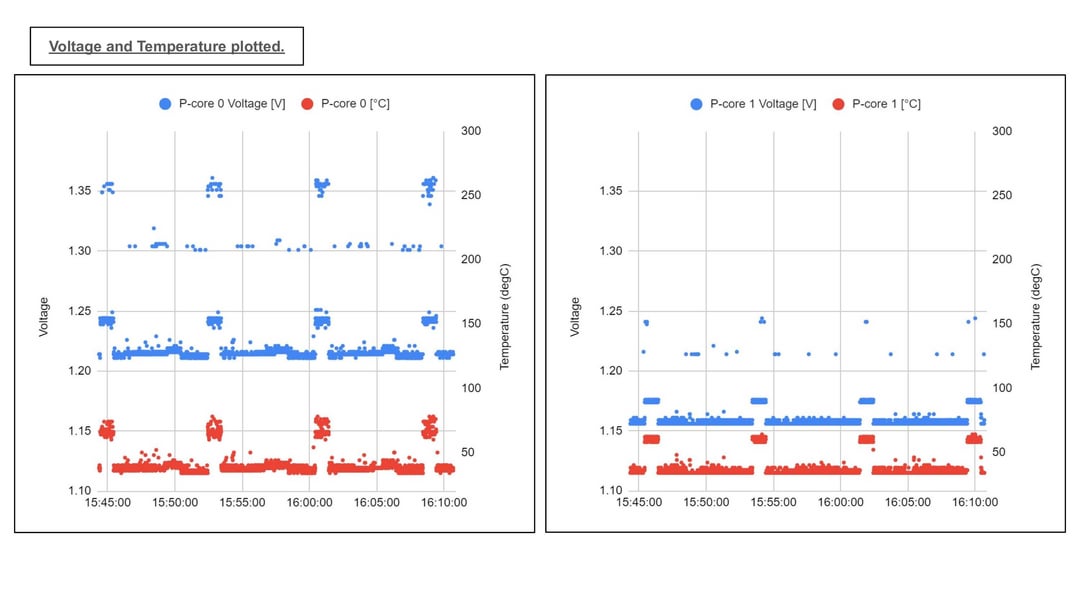
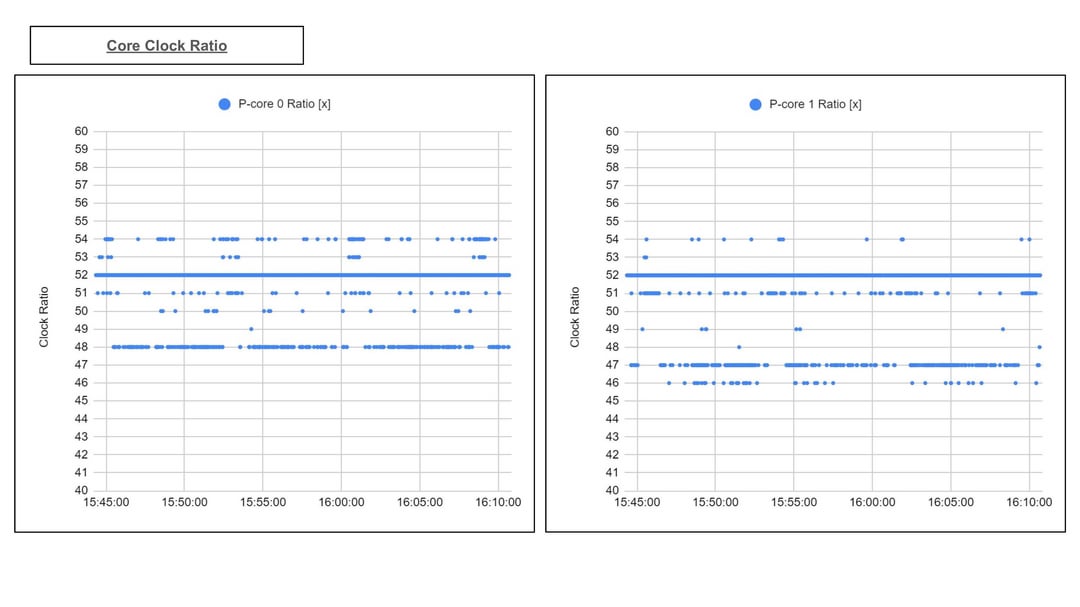
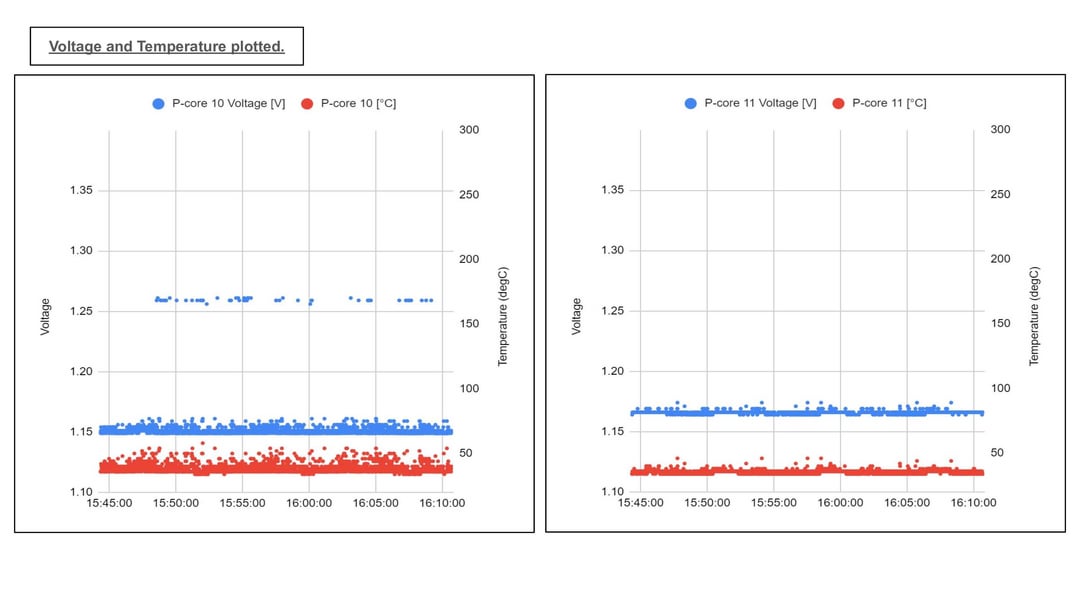
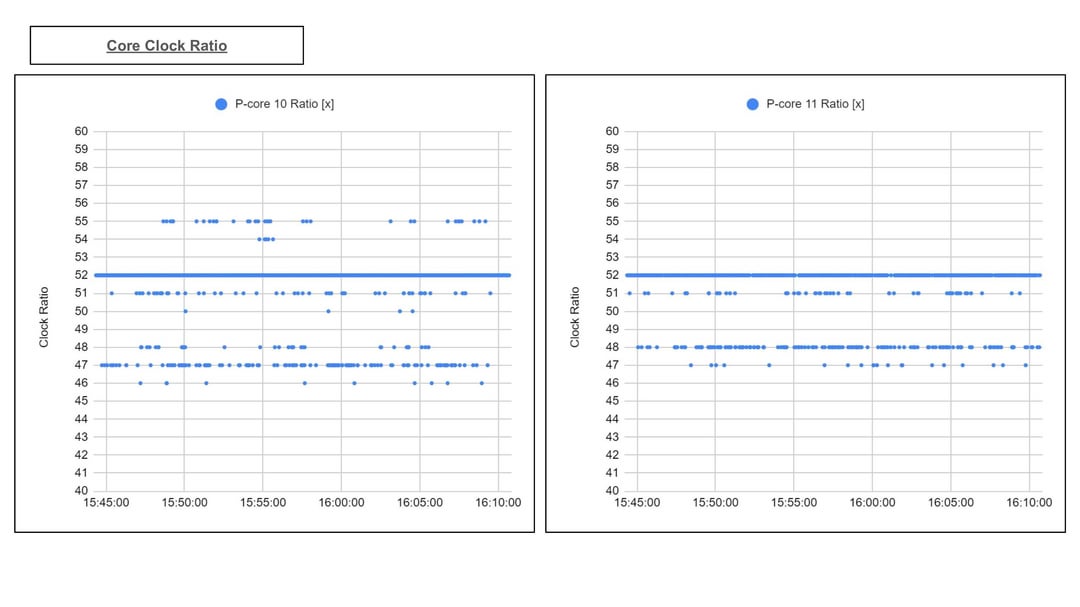
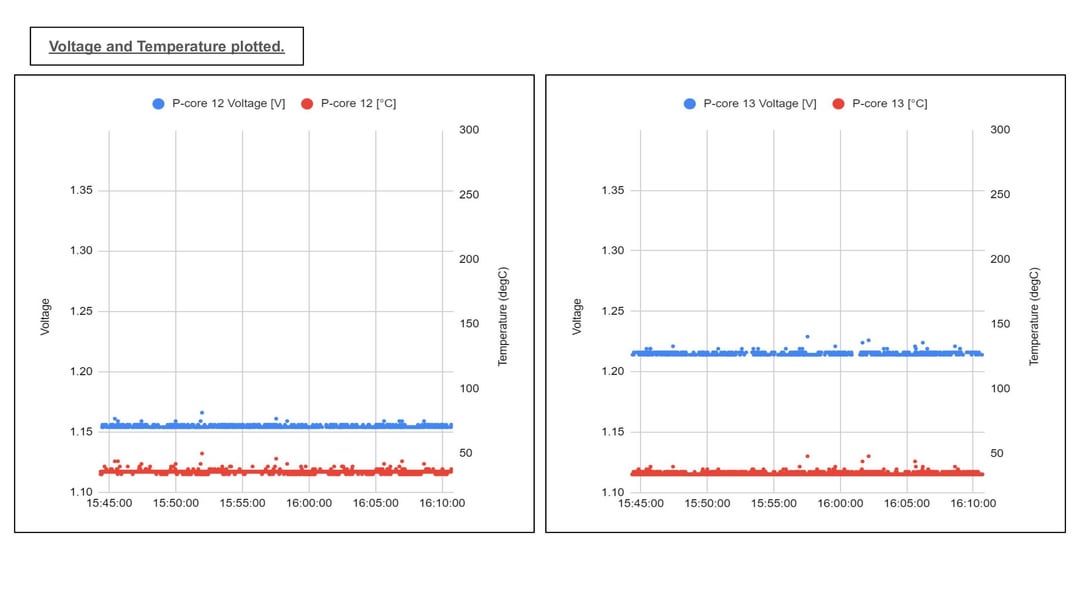
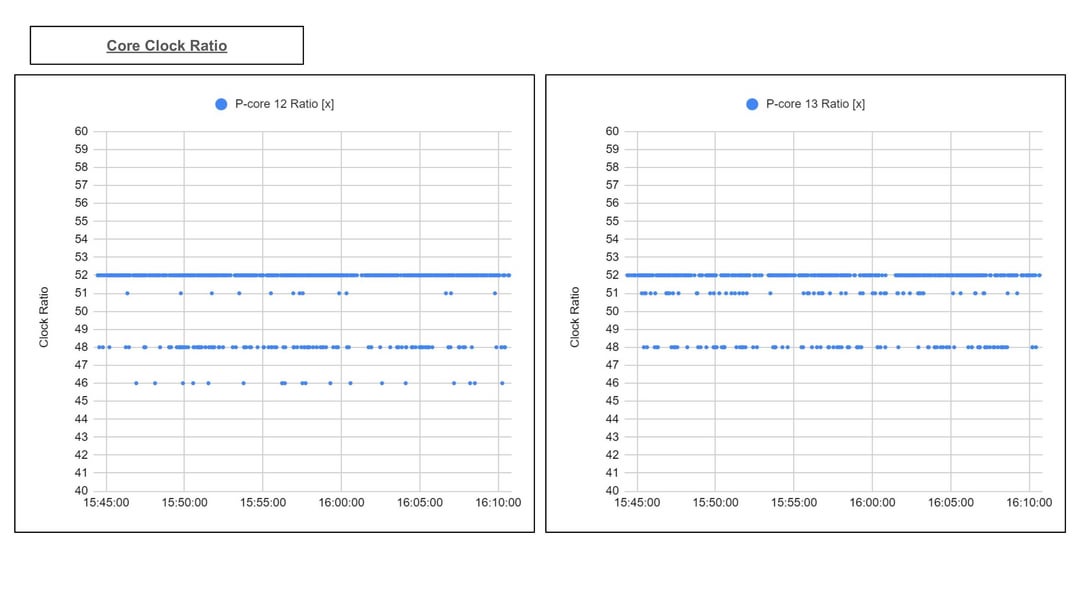
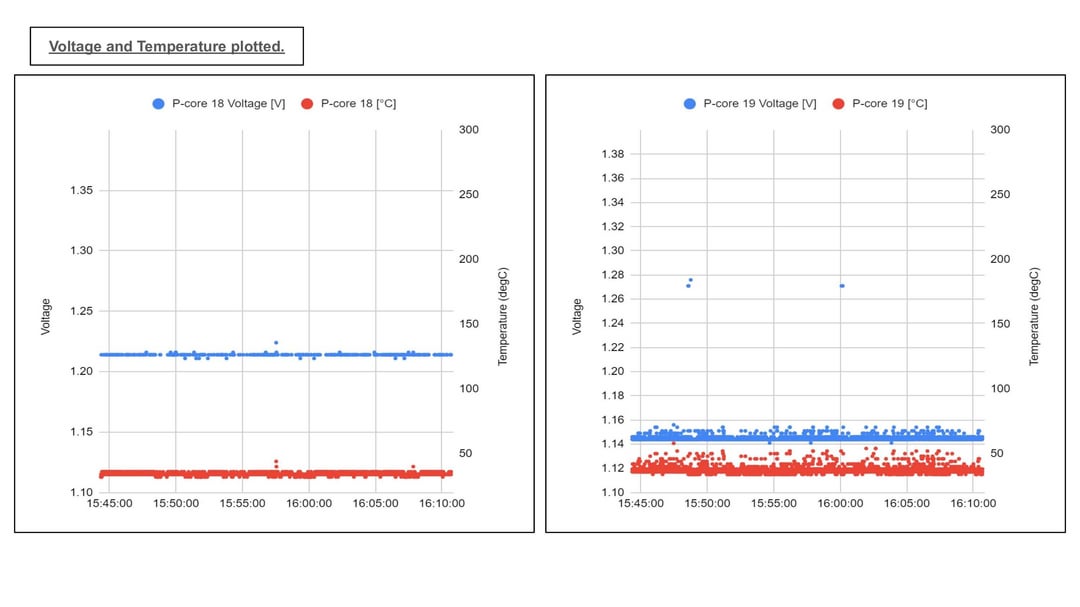
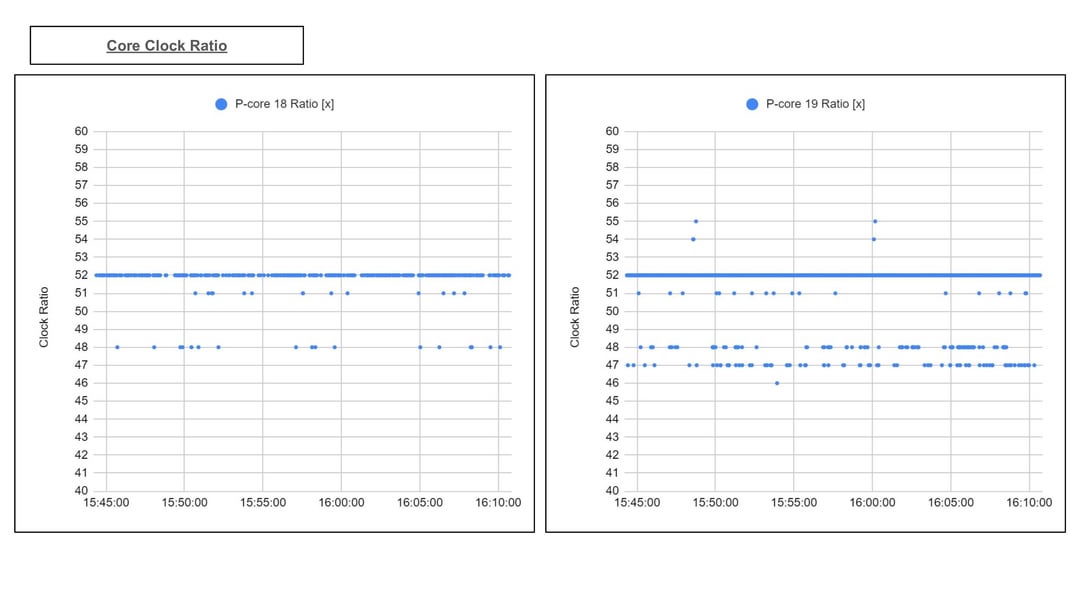
Focusing on the P-Cores to start so that I don't change too many things at once. Compiled a data log of an OCCT core cycling as shown using default bios settings except for XMP on the RAM. This is in the data plot images I've attached. All data is from HWiNFO at a half second polling rate.
Favored p-cores are #10 and #19, but this leads to some behavior that I am confused about:
- Why are p-core 0 and p-core 1 the only two cores that show a noticeable voltage step when OCCT cycles to them (slide 10)? Cores 10, 11, 12, 13, 18, and 19 are relatively flat during the same test.
- Why do favored p-cores 10 and 19 not step up to 55x when cycled to. Instead, they both randomly spike up to 55x sporadically throughout the test duration. This makes me think I am not using OCCT in the way I want to.
- Is it normal for different cores run at such different voltages? On slide 14, p-core 12 runs at 1.156V and p-core 13 runs at 1.214V to get the same 52x clock (on slide 15).
- Does this mean that core 12 is more stable and can likely be tuned higher than core 13?
- related: are the two favored p-cores chosen simply because they are the two cores with the lowest stable voltages, and thus the most room to grow? Favored p-core 10 uses the second lowest 1.49V for its 52x, and favored p-core 19 uses the lowest 1.44V for its 52x.
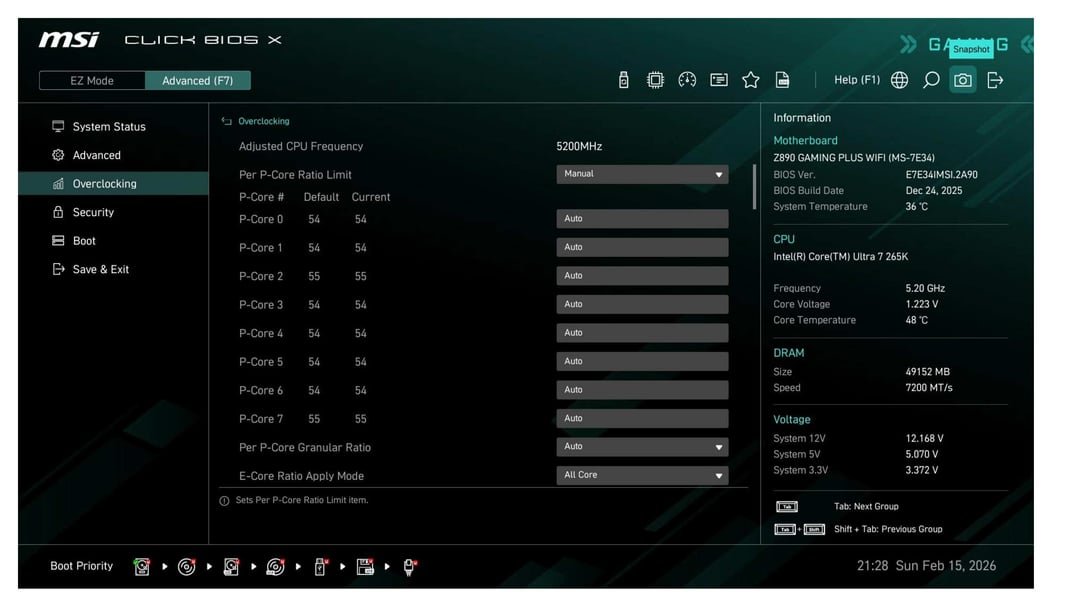
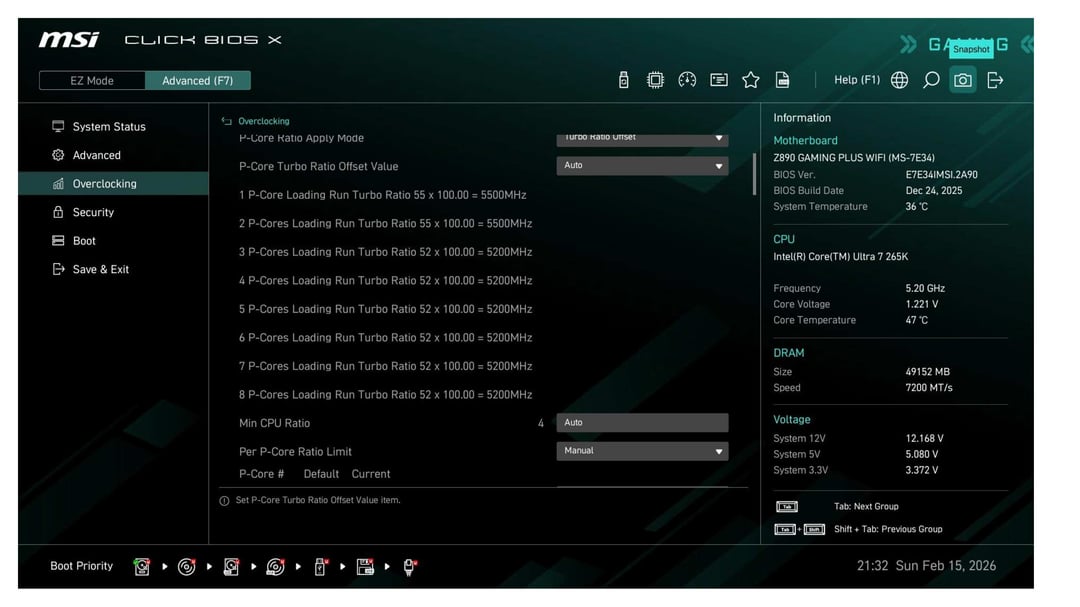
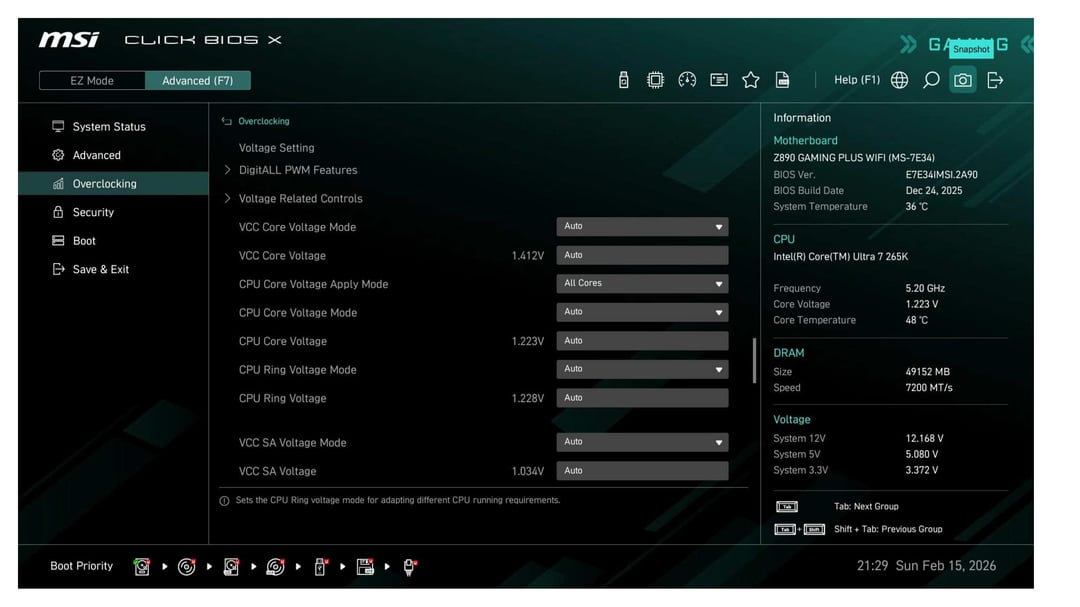
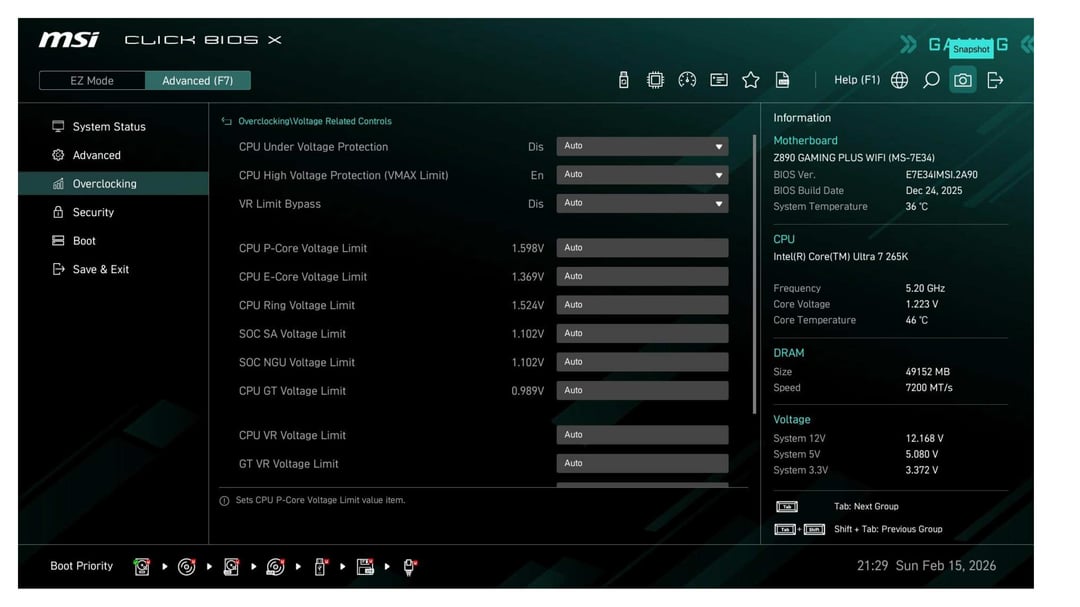
Assuming all this is normal so far, my plan is to go into bios and increase the "per p-core ratio limit" (slide 3), check stability as I go. Should I be setting hard values on the voltage limits in bios or leave as auto? (VCC Core Voltage, CPU Core Voltage, CPU P-Core Voltage Limit).
Thanks.