
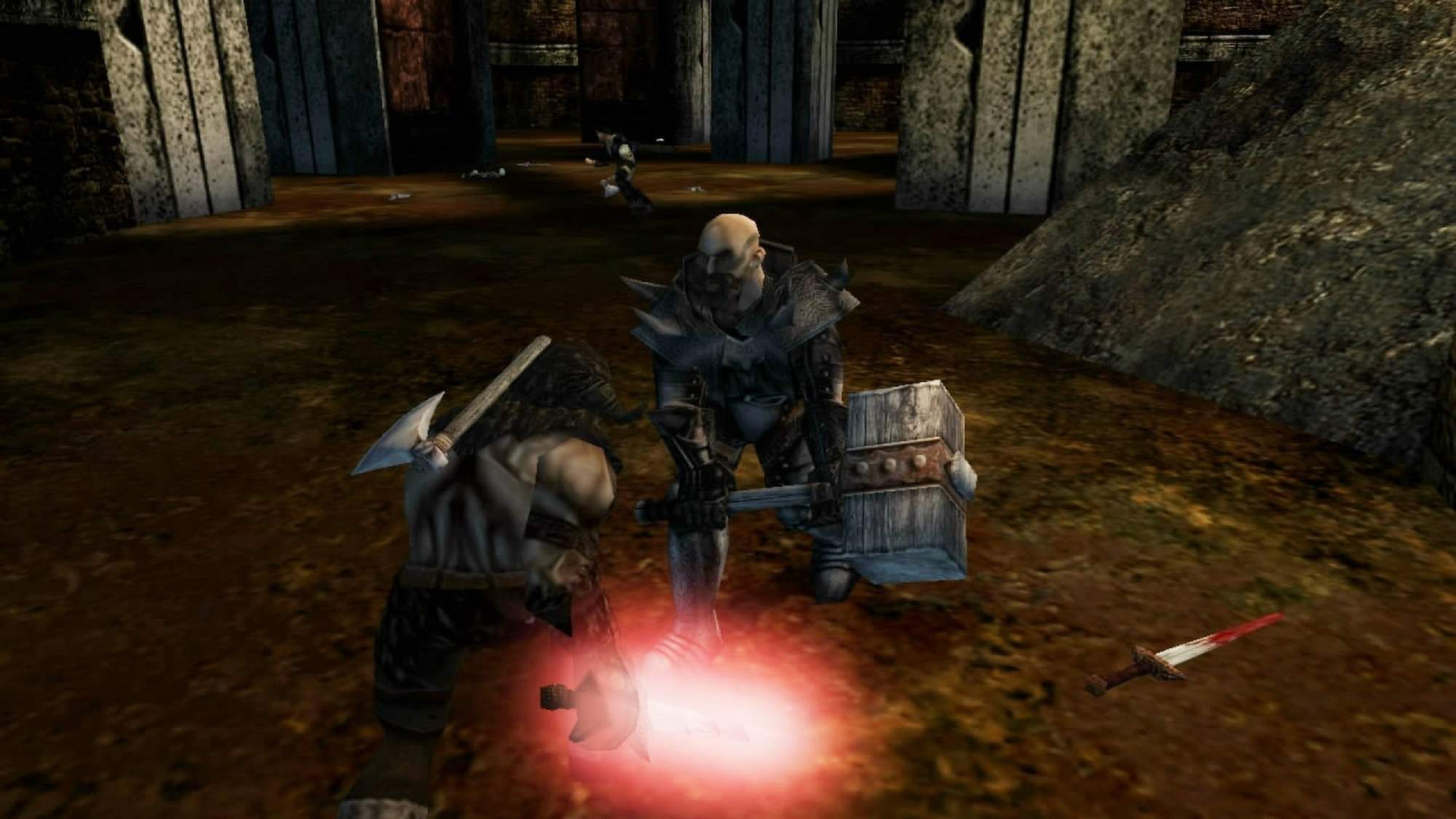
There was a time when melee combat in games felt genuinely dangerous, not because enemies had bloated health bars, but because every swing carried weight and every mistake could end a fight instantly. Before the industry became obsessed with RPG numbers and endless progression systems, some games trusted players to master movement, spacing, and timing instead. Rune was one of those games, and for a certain generation of players, it left a scar in the best possible way.
Rune never chased mass appeal, and it never needed to. It carved out a loyal following through sheer brutality, mechanical depth, and a multiplayer scene that rewarded raw skill over patience or grinding. Its disappearance feels less like a natural fade and more like an unfinished conversation, especially now, in an era where combat-first games are finally being taken seriously again. If there were ever a time for Rune to come back, it would be now.
Rune’s Melee Combat Was Ahead of Its Time
 Courtesy of Human Head Studios
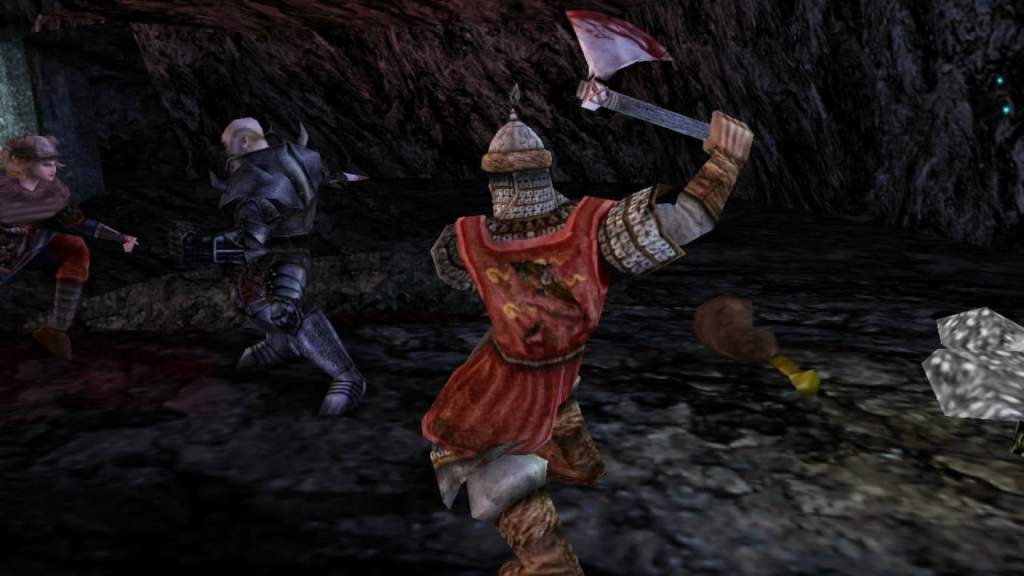
Rune’s greatest strength was how physical its combat felt, especially for an early 2000s action game. Weapons were not just stat sticks; they were tools with distinct ranges, swing arcs, and recovery times that demanded respect, if you wanted to win a fight. A mistimed overhead swing could leave a player wide open, while a well-placed axe throw could completely turn the tide of a fight. Combat was fast, unforgiving, and deeply expressive in a way that feels rare in today’s gaming landscape.
What truly elevated Rune was how much agency it gave players in motion and positioning. Dodging, jumping, and feinting were all core to surviving even basic encounters. In multiplayer, this translated into a large skill ceiling that felt almost limitless, with plenty of room to grow in proficiency. Fights were decided by prediction and execution, not by who had better gear or higher numbers. It was common to watch experienced players dismantle groups of opponents with nothing but movement and perfect timing.
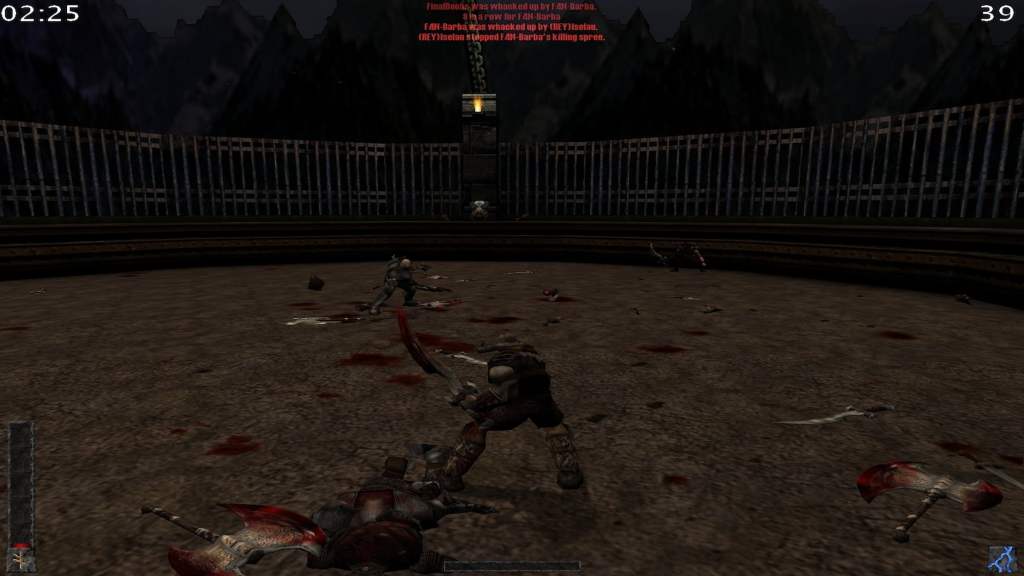
Halls of Valhalla pushed this philosophy even further by embracing Rune’s competitive multiplayer identity as the focal point. It did not try to soften the game or make it more accessible. Instead, it leaned into tight arenas, brutal duels, and modes that highlighted how deep the combat system really was. It was common for players to line up and wait their turn to face the victor of any given arena. There were no hard rules in place for this either, meaning players respected an unspoken honor code to ensure gameplay integrity. For many players, this expansion was the game. The PvP scene thrived because it trusted players to learn and adapt rather than cushioning every mistake.
Community mods like VAS Ultimate Rune only reinforced how strong the core systems were. The RPG overhaul introduced new progression layers, abilities, and balance tweaks, as well as a pseudo-coop element where enemies from Rune’s single player would spawn in multiplayer maps to be killed for RPG-style loot and experience. Despite the vast nature of this overhaul, the foundation held firm. Even with expanded systems, Rune never lost its identity as a combat-first experience. That is the mark of a system that was not just good for its time, but fundamentally well designed.
A Modern Rune Could Thrive in Today’s Combat-Driven Games Market
 Courtesy of Human Head Studios
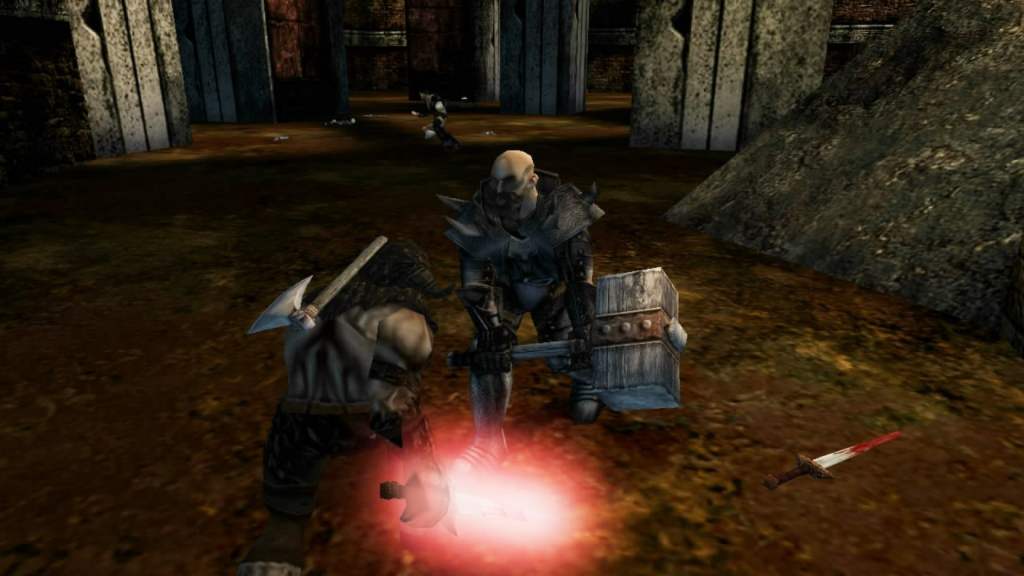
The irony of Rune’s disappearance is that modern gaming is finally catching up to what it was doing decades ago. Players are now hungry for games that emphasize mastery, mechanical depth, and meaningful combat choices. Titles that prioritize feel and skill over endless progression are finding dedicated audiences, especially in multiplayer spaces. For Honor is the closest thing gaming has to the classic Rune experience, but the games don’t really play similarly at all. A modern Rune would not feel outdated, just different; capable of co-existing with For Honor for a more arcade-like experience.
Where Rune’s sequel, Rune 2, went wrong is a cautionary tale in itself. Instead of evolving the series’ strengths, it abandoned them, reshaping the game into a poor survival experience that stripped away everything that made Rune special. The shift toward crafting loops and survival mechanics felt completely disconnected from the franchise’s identity. To top it off, combat lost its precision, and the result was a game that satisfied almost no one, by never making it to release in the first place.
A proper revival would not need to reinvent Rune, only refine it. Modern physics, animation systems, and netcode could elevate its melee combat to entirely new heights. There is also room for Rune to thrive as a live multiplayer platform without sacrificing its core philosophy. Cosmetic progression and community-driven modes could coexist with skill-based combat, as long as the game resists the temptation to dilute its mechanics. The foundation is already proven; it simply needs modern tools.
Rune does not need to be the biggest game in the room to matter again. It only needs to respect what made it special, trust players to rise to the challenge, and embrace the idea that combat itself can be the main attraction. For those who walked the Halls of Valhalla, who memorized swing timings and learned to read opponents mid-fight, the hunger for that experience never really went away. A modern revival would be a showcase of how far ahead Rune truly was.
What do you think? Leave a comment below and join the conversation now in the ComicBook Forum!