
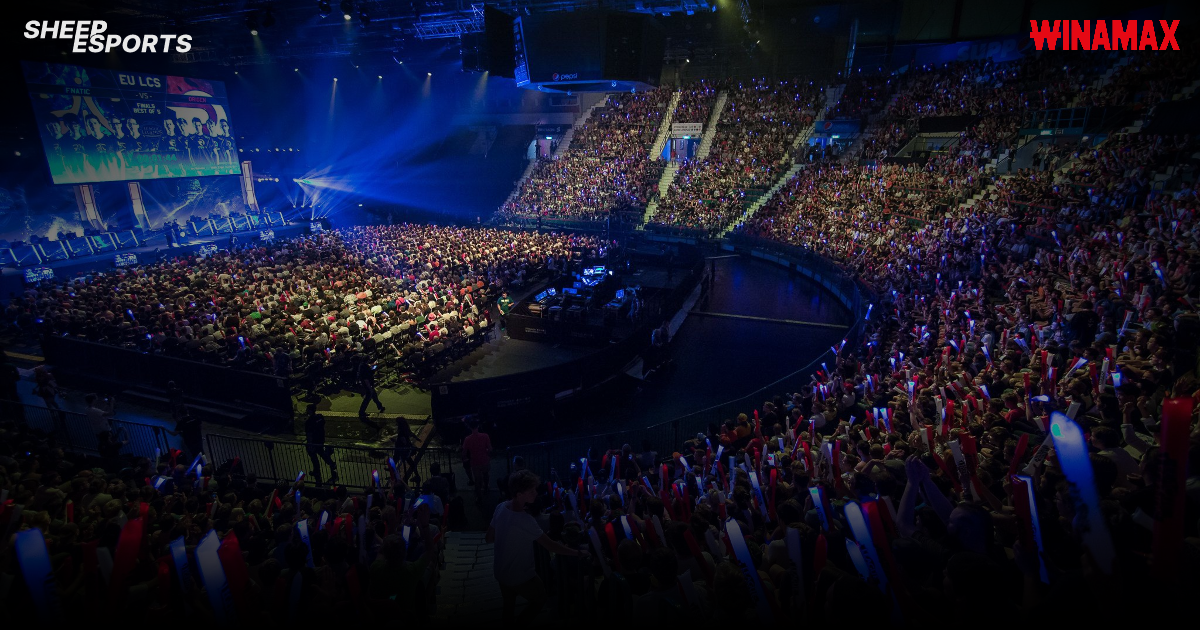
2015, Stockholm, Sweden. Fnatic and Origen face off in the EU LCS Finals. Built from scratch by its midlaner xPeke, Origen had started the year in ranked teams, climbed through Tier 2, and reached Europe’s top league, culminating in a final against Fnatic, xPeke’s former team, led by its new 18-year-old prodigy, Febiven. Fnatic ultimately claimed the title 3–2 in one of the most contested European finals ever played, but both teams went on to qualify for Worlds and reach the semifinals, standing among the best teams in the world.
From EU LCS to LEC
In European League of Legends, Origen was no exception. For years, it was almost a yearly tradition for newly promoted teams to rise through the EU LCS and quickly become contenders. G2 Esports in 2016 and Misfits in 2017 both qualified for Worlds in the same year they earned promotion.
As viewership grew, league esports looked set for a bright future, player salaries increased nearly tenfold in just a few years. But with no guaranteed place in the top league and rapidly rising costs, organisations struggled to build sustainable models. Teams began pushing Riot Games for a closed league that would guarantee permanent slots, sponsorship security, and revenue sharing, going as far as threatening not to play if changes were not made. In 2019, one year after its North American counterpart, Riot introduced franchising in Europe, rebranding the EU LCS into the LEC and removing relegation and promotion tournaments.
Stability at a cost of entry
Franchising did bring short-term improvements to the ecosystem. Guaranteed participation provided organizations with financial stability, enabling long-term planning and reducing the risk of teams collapsing mid-year. Player conditions also improved, with the minimum salary more than doubling to reach €60,000, while sponsors and broadcast partners benefited from a more predictable and stable league structure. However, these gains came at the cost of competitive openness and long-term ecosystem growth, trade-offs that would only become more apparent in the years that followed.
The caveat was that, in order to enter the newly franchised league, teams had to pay a fee: €8 million for organizations already participating in the EU LCS, and €10.5 million for new organizations. By completing this transaction, and after a long application process, accepted teams became owners of their own spots, and this was Riot’s biggest mistake.
Selling your spot to turn profit
Since 2019, the only way for new organizations to enter the LEC has been by acquiring an LEC spot or merging with an existing LEC team. In control of their spot, organizations have driven up the cost of entry. In 2021, Schalke 04 sold their LEC spot for a valuation of €26.5 million. A bit more than two years later, Astralis sold their LEC spot to Karmine Corp for a valuation of approximately €26 million. These are the only two sales whose valuations were publicly announced.
Karmine Corp’s entry into the LEC was not easy and came at the cost of some ownership as well, despite winning EMEA Masters, the highest level of competition below the LEC, four times. While some, like KC, made the financial sacrifice to enter the league, it is impossible to know how many did not, especially as the barrier to Tier 1 has massively reduced incentives for organizations to invest in Tier 2. The ERLs, despite driving huge engagement across regions since their inception, have been in decline in recent years. With no possibility to move up, investments have been limited, and the financial landscape is in a disastrous state.
A league that no longer moves
A perhaps understated downside of closed leagues is how much they reduce dynamism in the LEC landscape, with very few teams changing year to year. Yet novelty in matchups is a major driver of audience growth.
A second, more brutal consequence is that franchising rewards failure more than open leagues do. With no relegation, teams can safely remain at the bottom of the standings without aiming to invest in competitive results or in building a fanbase to support such efforts. While Riot did include provisions in franchise agreements allowing them to remove teams that consistently finish at the bottom of the standings, this has never been enforced.
LEC teams benefit from revenue sharing through the league, and while this model has evolved, some organizations had attempted to limit their spending to what they earn from the league’s revenue. This has led to some bottom LEC teams nearing profitability within the league division alone. As shared by Gen.G’s CEO, who also competes in a franchised league: “I’ll make more profit creating a losing team in League of Legends.” The LEC, which would benefit from international success, has not had all ten of its participants investing with that objective, limiting how much top teams can push each other.
Franchising was a mistake: selling spots dug the grave
It has been admitted from the beginning that closed leagues were introduced for financial reasons. But, while closed leagues increase profits, they reduce fan welfare, as observed in a study by Claflin University on traditional sports. This is a choice that can be made, but in a young sector such as esports, no money can be generated without fans.
Closing the door to fandom is a dangerous decision in a growing ecosystem. In the Overwatch League, was dissolved entirely in favor of a more open regional format, after offering team owners a $6 million termination fee to leave the league. Selling franchise spots is a mistake Riot Games has implicitly admitted with their actions in the past few years.
Riot’s partial course corrections
In 2023, Riot copied the League of Legends model for its rising title, VALORANT. Franchised leagues were introduced for each continent, with VCT EMEA becoming VALORANT’s equivalent of the LEC. However, there was a major difference: teams joined the league for free, with Riot Games remaining the full owner of all league spots.
This year, the VALORANT ecosystem has opened up, with Tier 2 teams now given the ability to compete with Tier 1 teams for international spots. Riot Games intended to introduce a similar change to the LEC, with Worlds qualification on the line. This proposal was declined by LEC teams, resulting in Riot implementing an incomplete version of the format: a single split competition at the start of the year, the LEC Versus.
Already within League of Legends itself, Riot has opened up the North American LCS with the introduction of guest spots. A guest spot was given to a team subject to relegation, Disguised, while partnered teams retain guaranteed participation, and the advantages that come with it.
While the inception of LEC Versus sparked outrage among partnered teams and many fans on social media, the permanent guest spot in the LCS did not trigger the same reaction. There are two main reasons for this. First, LCS viewership has been in a critical and downward state for several years, leading teams to accept more radical changes.
Secondly, and more importantly, Riot Games offered all LCS teams to buy back their spots in November 2023. They offered $6 million dollars, plus debt forgiveness and a payout of any remaining revenue-share money the team was still owed, per Jacob Wolf. This resulted in two teams leaving the league entirely and reducing it to eight participants. 100 Thieves, whose spot was also bought back at a later stage, left the league after competing under a provisional guest spot last year. To replace them, Riot Games granted an LCS spot, free of charge, to Sentinels, giving them a spot they do not own, similar to Riot’s VCT partner model.
Los Ratones brought old fans back
Los Ratones’ entry into the LEC for the Winter Split brought franchising discussions back into the spotlight. A reason was their recent four-game winning streak, upsetting several LEC teams as underdogs. For many fans, it rekindled a feeling they had missed for years: players at the center of a project they had built in the lower leagues, fighting as underdogs and surprising teams comfortable in their position. G2 Esports and Origen, organizations founded by former EU LCS players who climbed to Tier 1, reached Worlds in their first year, and later became franchises, are stories that have not existed since leagues were closed.
Cancelled plans
For 2018, before committing to a franchised league limited to ten teams, Riot Games reportedly explored a very different approach. The plan was to split the EU LCS into four regional leagues and introduce a Champions League–style format. Each region would have hosted its own event space; London, Paris, Berlin, and Barcelona. The system would have featured 24 teams under multi-year licenses, with 16 qualifying for a larger, top-tier competition. Such a structure would have preserved competitive dynamism at the highest level, offered a degree of financial stability, and capitalized on Europe’s strong regional fanbases. Ultimately, Riot Games abandoned these plans.
Instead, Riot committed to a franchised model built around permanent ownership of 10 league spots. While multiple paths exist today to partially open up leagues, relinquishing ownership control and pushing organizations into debt to enter the league has locked Riot into a rigid, non-dynamic system that is extremely difficult to change.
An unsolved problem
Opening up leagues entirely or through guest spots would be an effective way to restore dynamism, create new storylines, and give greater importance to Tier 2. However, LEC teams are justified in their frustration given how much they paid to enter the league. Many organizations paid substantial sums to other teams, making their expenses far higher than the original franchise fee, amounts that cannot be refunded by Riot Games, as they were not paid to Riot in the first place.
Perhaps the most effective solution for fans is simply reopening the LEC by reintroducing promotion and relegation between the bottom LEC teams and EMEA Masters winners, with Riot Games paying their partners a termination fee. Whether Riot Games is willing to bear the financial cost of such a shift, or risk angering its partners by forcing a change, remains an open question. In the meantime, Los Ratones fans will inevitably be left disappointed: regardless of results, their run will come to an end. The same issue will apply to any team earning a spot in the LEC Versus in future years, should the format remain unchanged. Meanwhile, LEC teams may continue to feel frustrated at having paid for a permanent spot that is not so exclusive anymore.