
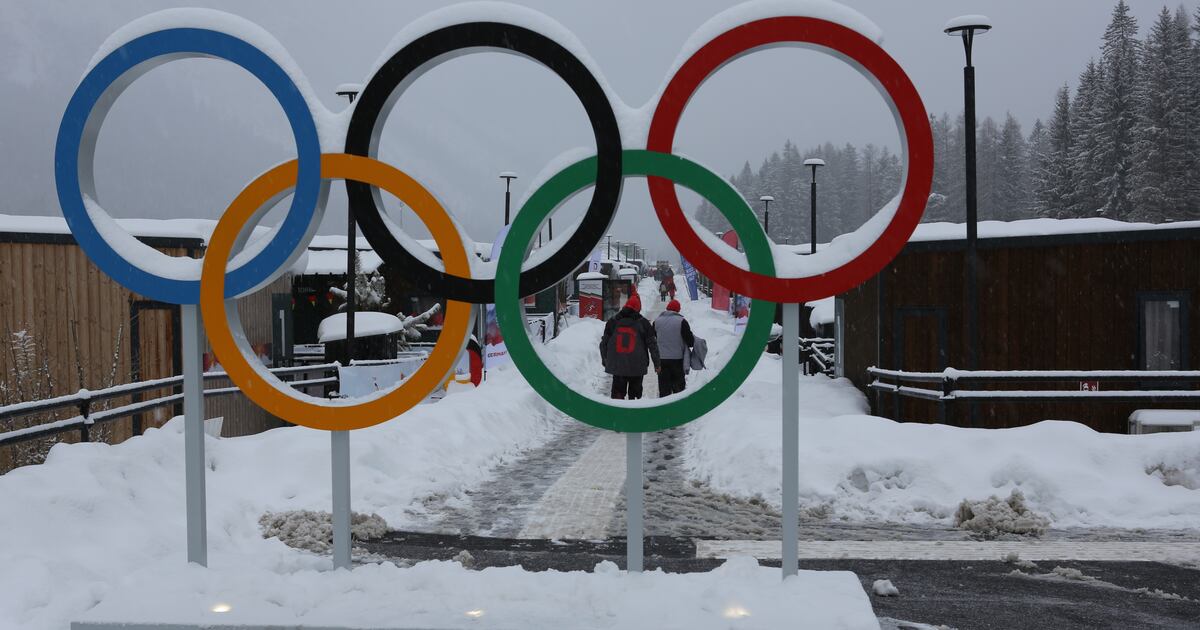
 A view of the Olympic rings at the Cortina Olympic Village, ahead of the 2026 Winter Olympics, in Cortina d’Ampezzo, Italy, Tuesday, Feb. 3, 2026. (AP Photo/Jennifer McDermott)
PREDAZZO, Italy — The Olympics have traditionally been known as a kind of sports melting pot, where competitors from different backgrounds and countries could share meals and trade pins at tight-knit athletes’ villages.
For winter sports, though, those social traditions ground to a halt at the COVID Olympics in China in 2022. And four years later, it turns out they may not be coming back, at least not entirely.
At this year’s Games, to avoid the risk of illness, multiple cross-country ski teams are skipping the athletes’ village and staying at private hotels — with participants even restricting contact with their own family members and loved ones who have come to watch.
“We have decided as a team to stay outside of the village in an off-site hotel during the entirety of the Olympic Games,” one of the American cross-country ski coaches, Kristen Bourne, said in a statement Wednesday. “This was a decision to protect our health and wellness and be more in control of who comes in and out of our living spaces. Our top priority is making sure our athletes and staff stay healthy for the entirety of the Games, and it’s also great to have all of our team together in one place.”
Some athletes have famously pushed through illness to deliver transcendent performances in other sports — like Michael Jordan’s legendary “flu game” in the NBA Finals in 1997, when he scored 38 points after a miserable night of vomiting and diarrhea that he later blamed on tainted pizza.
U.S. cross-country ski star Jessie Diggins even won a silver medal in a long-distance race at the 2022 Games after what she said was her own case of food poisoning.
But cross-country skiers are especially vigilant about respiratory viruses like COVID or the flu because of their sport’s dependence on their lungs. Infection could derail an athlete’s hopes for the full Olympics.
“You definitely get impacted more,” said Kendall Kramer, an American team member from Alaska. “Your body has to be definitely 110% to do the sport on any given day.”
The U.S. team, Kramer said in a phone interview Wednesday, has collectively agreed to form, in effect, an Olympic bubble among themselves.
“Worst-case scenario is someone’s a little more loosey goosey because they don’t have as much on the line. And then they would get some hard-hitters sick,” she said.
That means athletes will miss out on some of the traditional social aspects of the Games, she acknowledged. But it’s also creating a tighter and more private living experience for the team, she said.
“It definitely makes it feel more homey, and more aspects of the experience in our control — which lends itself to better performances,” she said. “And the whole hotel is decorated with U.S. stuff, and cards that people have written us all taped on the walls. We’re kind of surrounded by Olympic stuff all day. So we’re not forgetting the experience.”
At least one other cross-country ski team is on a similar program. The Swedish tabloid Expressen reported that one of the team’s stars, Ebba Andersson, arrived Tuesday in Italy and will isolate from her teammate and boyfriend, Gustaf Berglund, for the first 48 hours after her arrival.
That’s the most likely window for her to start experiencing viral symptoms if she was exposed during travel, the team’s doctor told Expressen.
“We have closed our hotel. We don’t want outsiders in, and we don’t want infections to come in,” the doctor, Rickard Noberius, told the newspaper. “So, it’s just us and the family who run the hotel — and they have been given strict restrictions as well.”
U.S. cross-country skiers also expect to limit contact with family and friends.
Athlete Zak Ketterson said his wife is traveling to the Games from Minnesota. But their time together will likely amount to outdoor hangs or possibly indoors with both of them wearing masks, he said in a text message.
While it can be difficult for everyone on a personal level to limit time with loved ones, Ketterson said, the restrictions totally make sense given how much athletes and the U.S. team have invested in preparing for the Olympics and booking their hotel.
“The Olympics are also just a few weeks every four years,” he said. “So we can lock in a little bit.”