
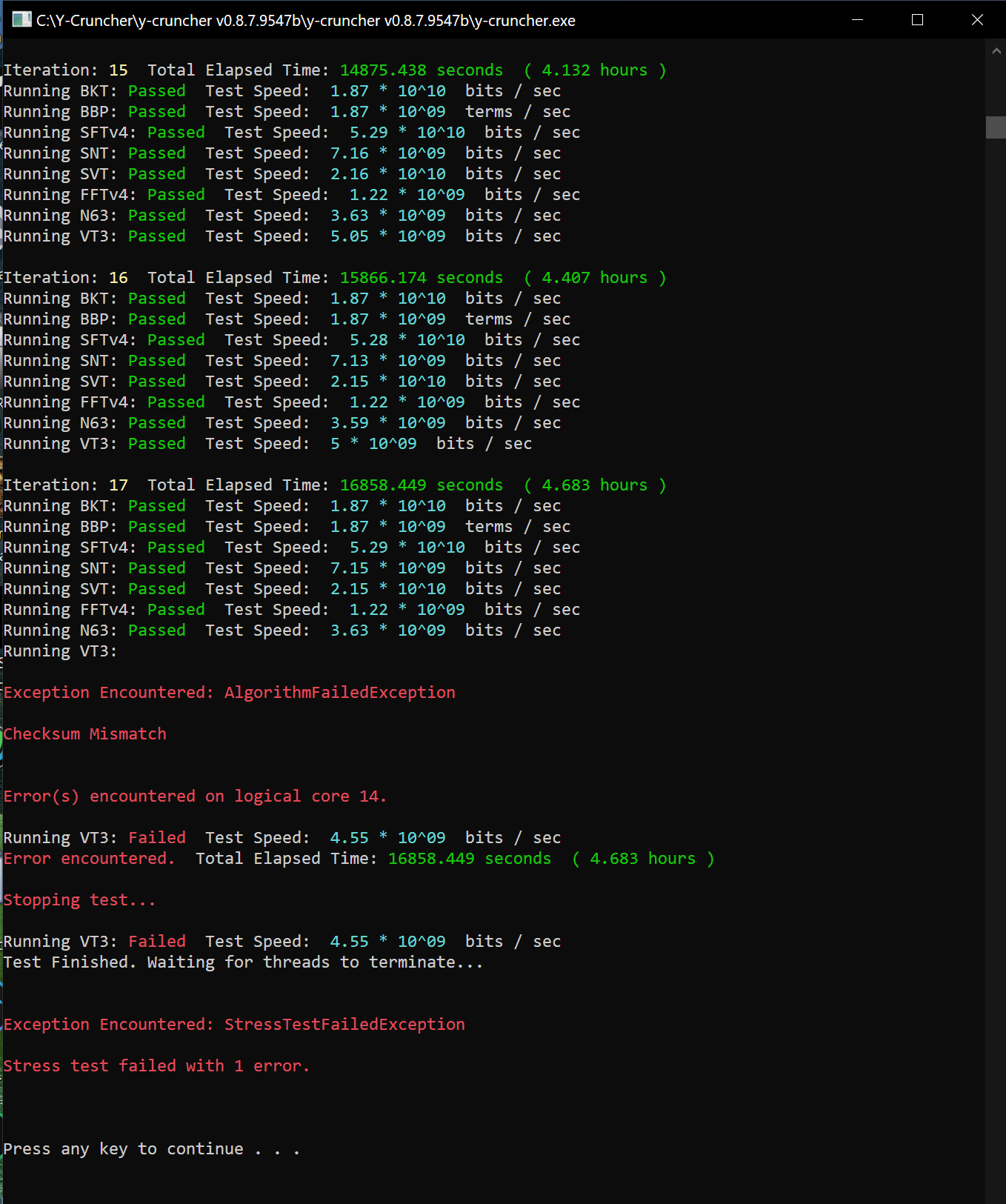
My system is an Asus Z690 TUF Gaming motherboard, 14900K, DDR4 3600 MHz(standard xmp), Running Intel defaults, VCCSA changed to 1.3V from default, IVR limit set to 1.4V (I know Asus bios limits it to 1.55v by default per Intel bios fix).
– No CPU/RAM/GPU overclocking of any kind, unless one considers XMP an overclock.
– My system had been working fine for 2-3 years. Intel updated my CPU from 12K to 14K during the initial Intel BIOS patch updates phase when the original CPU showed signs of degradation.
My system began to act up ~ a month ago.
– Passed (3) cycles TM5 Anta Extreme777, no errors.
– Passed OCCT extreme CPU/RAM tests (large memory model)
– Passed standard windows memory diagnostic, no errors. Extended test would take days(!) to run with my large ram size.
– The highest core temp was 80 °C. Have a 360mm Corsair AIO.
– No/zero gaming… Just use the computer mainly for academic tasks (I'm a grad student). MS Word/Excel/PowerPoint, Simulations (Matlab), Coding (SAS and SPSS), and ML tasks on RTX3090 GPU are the main tasks I run on my system.
– Watch YouTube videos and an occasional Amazon video for entertainment.
Isn't passing almost 17cycles an excellent sign of cpu/memory stability? I was told that passing 4-5 and passing the other tests I mentioned above is enough for stability.
Would upgrading to a ddr4 z790 mobo be a better choice? I know DDR5 is the best choice, but I heavily invested in the 128GB DDR4 RAM I have, and running my computer speeds are fine for what I do. I could use a faster gpu maybe in the future.
Many of my tasks are CPU-bound anyway. Besides ddr5 prices are beyond bonkers, especially on a student budget.